
As an researcher deeply immersed in the field of unmanned aerial systems, I have witnessed the rapid evolution of quadrotor drones from remotely controlled devices to increasingly autonomous platforms. The integration of deep learning, particularly with visual inputs, has revolutionized how quadrotor drones perceive their environment and avoid obstacles, paving the way for fully autonomous operations. In this article, I will provide an extensive review of the current state of deep vision-based autonomous flight perception and obstacle avoidance for quadrotor drones. I aim to synthesize key concepts, methodologies, and advancements, while highlighting critical challenges and future directions. The quadrotor drone, with its simple structure and high maneuverability, serves as an ideal platform for exploring autonomous capabilities, and I will emphasize its role throughout this discussion.
The journey toward autonomy for quadrotor drones is marked by the need for robust perception and reliable obstacle avoidance. Traditional methods often rely on modular approaches, such as Simultaneous Localization and Mapping (SLAM), which can suffer from error accumulation and drift in complex environments. Deep learning offers a promising alternative by enabling end-to-end learning from raw sensor data, such as images, allowing quadrotor drones to directly map visual inputs to control actions. This paradigm shift has garnered significant attention, and I will delve into the details of how deep learning models, especially Convolutional Neural Networks (CNNs), are employed to enhance the autonomy of quadrotor drones. The quadrotor drone’s ability to navigate autonomously hinges on its perception of the surroundings and its capacity to avoid obstacles, which are interdependent yet distinct functions that I will explore in depth.
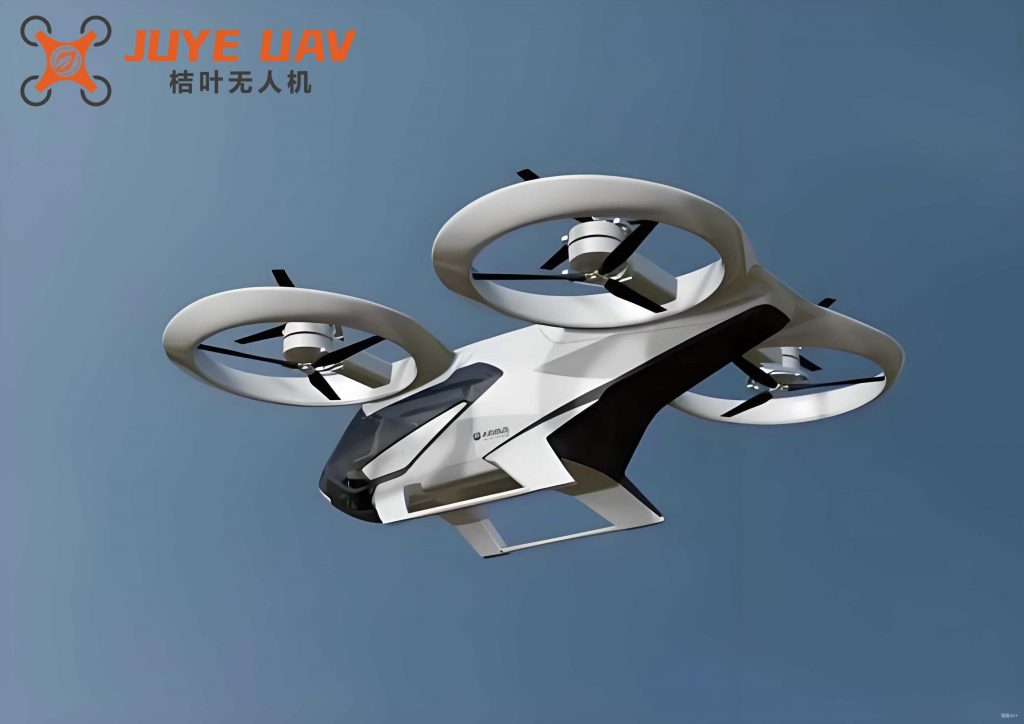
To frame the discussion, I first consider the autonomy levels of unmanned aerial vehicles (UAVs). Autonomy can be defined as the integrated capability to sense, perceive, analyze, communicate, plan, decide, and act to achieve human-specified goals. For quadrotor drones, autonomy levels range from basic remote control (Level 0) to full autonomy without external intervention (Level 10). Most current research on quadrotor drones focuses on intermediate levels, particularly Level 4, which requires the quadrotor drone to detect obstacles and autonomously avoid them. This level serves as a benchmark for many studies in deep vision-based systems, as it encapsulates the core challenges of perception and obstacle avoidance that I will address. The progression toward higher autonomy for quadrotor drones is driven by advances in artificial intelligence, and deep learning stands at the forefront of this evolution.
Deep learning, a subset of machine learning, has demonstrated exceptional performance in various domains, including computer vision and robotics. For quadrotor drones, deep learning models excel at extracting high-level features from visual data, enabling tasks such as object detection, depth estimation, and trajectory prediction. The most commonly used architecture is the Convolutional Neural Network (CNN), which automatically learns spatial hierarchies from images through layers like convolutional layers, pooling layers, and fully connected layers. A typical CNN operation for processing an input image $x$ can be represented as:
$$ y = f(W * x + b) $$
where $*$ denotes the convolution operation, $W$ represents the kernel weights, $b$ is the bias, and $f$ is a non-linear activation function such as ReLU. This formula underpins many perception tasks for quadrotor drones, allowing them to interpret visual scenes. Over time, variants like ResNet, YOLO, and DenseNet have been adapted for quadrotor drone applications, offering improved accuracy and efficiency. I will summarize these network architectures in the context of quadrotor drone autonomy. The quadrotor drone benefits from these models because they reduce the need for explicit feature engineering, enabling more adaptive and robust performance in diverse environments.
| Network Name | Key Features | Application in Quadrotor Drones |
|---|---|---|
| YOLOv3 | Real-time object detection using Darknet and residual connections; estimates bounding boxes via k-means clustering. | Used for 3D object detection and obstacle identification in dynamic environments for quadrotor drones. |
| ResNet | Introduces shortcut connections to address vanishing gradients; enables deeper networks with lower computational cost. | Enables efficient feature extraction for perception tasks, such as gate detection in drone racing for quadrotor drones. |
| DroNet | A forked CNN that predicts steering angles and collision probabilities from single grayscale images. | Facilitates reactive obstacle avoidance and navigation in cluttered spaces for quadrotor drones. |
| VGG-16 | A deep CNN with small convolutional filters; serves as a base for transfer learning in image classification. | Applied for environmental scene understanding and fine-tuning in specific quadrotor drone contexts. |
| PoseNet | Based on GoogLeNet, it performs 6-DOF camera pose estimation from images for real-time localization. | Used for relative pose estimation in autonomous drone racing and navigation for quadrotor drones. |
| DenseNet | Connects each layer to every other layer in a feed-forward manner, enhancing feature reuse and reducing parameters. | Supports lightweight models for onboard processing in resource-constrained quadrotor drones. |
Before deploying deep learning models on physical quadrotor drones, simulation platforms play a crucial role in training and testing. These platforms provide cost-effective, scalable environments for developing autonomous algorithms. I have extensively used several simulators, such as Gazebo, Flightmare, and AirSim, each offering unique advantages for quadrotor drone research. For instance, Gazebo integrates well with the Robot Operating System (ROS) and supports multiple physics engines, making it suitable for navigation studies. Flightmare decouples dynamics simulation from rendering, allowing for flexible sensor simulation, while AirSim, built on Unreal Engine, offers high-fidelity visuals for computer vision tasks. The quadrotor drone community benefits from these tools by accelerating the development cycle and reducing risks associated with real-world testing. Below, I compare these platforms to highlight their relevance for quadrotor drone autonomy.
| Simulation Platform | Operating System | Programming Language | Physics Engine | 3D Rendering Engine | Primary Use for Quadrotor Drones |
|---|---|---|---|---|---|
| Gazebo | Linux/Mac OS | C++/Python | ODE, Bullet, Simbody, DART | OGRE | Navigation, control, and SLAM in unknown environments for quadrotor drones. |
| Flightmare | Linux/Mac OS | Python | ODE, Bullet, Simbody, DART | Unity | Dynamic simulation and reinforcement learning for quadrotor drones. |
| AirSim | Windows/Linux/Mac OS | C++/Python/C#/Java | FastPhysics/PhysX | Unreal Engine | Autonomous driving algorithms and deep learning research for quadrotor drones. |
In addition to simulators, publicly available datasets are essential for training deep learning models for quadrotor drones. These datasets contain annotated images from real or synthetic environments, enabling supervised learning approaches. I have worked with datasets like KITTI, which includes urban driving scenes useful for general perception tasks, and the UAV collision dataset, specifically curated for obstacle avoidance in indoor settings. The SYNTHIA dataset offers synthetic urban images for semantic segmentation, while the IDSIA forest trail dataset provides outdoor trail navigation examples. For quadrotor drones, such datasets reduce data collection costs and facilitate benchmarking. However, the scarcity of diverse, high-quality data remains a challenge, which I will address later. The quadrotor drone’s performance in perception and obstacle avoidance heavily depends on the richness of these datasets, as they enable models to generalize across varying conditions.
Now, I turn to the core of this review: perception for autonomous flight in quadrotor drones. Perception involves understanding the quadrotor drone’s state and its environment, such as detecting obstacles, estimating depth, and localizing the drone relative to landmarks. Deep learning has transformed perception by allowing quadrotor drones to learn directly from visual inputs. For example, monocular visual odometry can be achieved using deep recurrent CNNs that infer pose from RGB images in an end-to-end manner. The process can be modeled as learning a function $f$ that maps a sequence of images $I_1, I_2, …, I_t$ to a pose vector $p_t$:
$$ p_t = f(I_1, I_2, …, I_t; \theta) $$
where $\theta$ represents the network parameters optimized during training. This approach minimizes drift compared to traditional geometric methods. In my experience, depth estimation is another critical perception task for quadrotor drones, as it provides 3D environmental awareness. Networks like DenseNet have been adapted to predict depth maps from single images, enabling obstacle distance calculation. For instance, a joint architecture might combine obstacle detection and depth estimation, where features from a VGG-19 backbone are fed into separate branches for each task. This allows the quadrotor drone to not only identify obstacles but also gauge their proximity, enhancing navigation safety. The quadrotor drone’s perception system must be real-time and robust, and deep learning models often achieve this by leveraging parallel processing on GPUs.
In competitive settings, such as autonomous drone racing, perception plays a pivotal role. I have observed that CNNs are used to detect gates or track paths, with outputs guiding control algorithms. For example, a CNN might predict the center of a gate from an image, and this information is fed into a line-of-sight navigation algorithm to steer the quadrotor drone through the gate. The success rate in such tasks depends on the training data diversity and model architecture. Recent advancements include using PoseNet for real-time camera relocalization, allowing quadrotor drones to estimate their 3D pose relative to gates at high frame rates. The quadrotor drone’s agility in these scenarios demonstrates the efficacy of deep learning for perception under dynamic conditions. I summarize some key applications in the table below, highlighting how perception enables autonomous racing for quadrotor drones.
| Year | Methodology | Outcome for Quadrotor Drones |
|---|---|---|
| 2018 | ADR-Net for gate center detection combined with LOS navigation. | Quadrotor drones successfully pass through gates with high accuracy, outperforming traditional networks. |
| 2019 | Inception network generating control commands from images for gate traversal. | Quadrotor drones achieve stable flight and improved performance with larger training sets. |
| 2020 | DeepPilot network predicting flight instructions from single or mosaic images. | Quadrotor drones autonomously navigate challenging gates in simulated environments like Gazebo. |
| 2022 | Fusion of visual odometry with CNN-based gate corner detection using EKF. | Quadrotor drones reach high speeds (up to 8 m/s) with reduced drift and global gate mapping. |
Moving to obstacle avoidance, this is a fundamental requirement for autonomous quadrotor drones, especially in unstructured environments. Traditional avoidance methods rely on sensors like LiDAR or stereo cameras, but these can be expensive and bulky for small quadrotor drones. Deep learning offers lightweight, vision-based solutions that enable reactive or planned avoidance. I have explored various approaches, including end-to-end methods where CNNs map raw images directly to steering actions. For instance, DroNet predicts steering angles and collision probabilities from grayscale images, allowing a quadrotor drone to adjust its speed and direction to avoid obstacles. The control policy can be expressed as:
$$ a_t = \pi(s_t; \phi) $$
where $a_t$ is the action (e.g., steering angle), $s_t$ is the state derived from the image, and $\pi$ is the policy network with parameters $\phi$. This data-driven approach eliminates the need for explicit mapping and planning, making it suitable for real-time operation on quadrotor drones. In outdoor scenarios, such as forest trails, CNNs have been used to classify trail directions (e.g., left, right, straight) based on input images, enabling quadrotor drones to follow paths while avoiding off-trail obstacles. The quadrotor drone’s ability to learn from human demonstrations or simulated experiences further enhances its avoidance capabilities.
Another promising technique for obstacle avoidance in quadrotor drones involves depth-based methods. Here, CNNs estimate depth from monocular images, and the depth maps are used to compute obstacle distances. For example, a regression CNN might predict the distance to the nearest obstacle in multiple directions, which then modulates the quadrotor drone’s yaw and linear velocities. The depth estimation process can be formulated as learning a function $g$ that maps an RGB image $I$ to a depth map $D$:
$$ D = g(I; \psi) $$
where $\psi$ are the network parameters. This allows the quadrotor drone to perceive 3D structure without additional sensors. I have implemented such systems where the depth map is input to a behavior arbitration algorithm that outputs angular velocities to steer the quadrotor drone away from obstacles and toward goals. In indoor corridors, DenseNet models have been used for image classification to decide movement directions (e.g., forward, left, right), ensuring safe navigation for quadrotor drones. The quadrotor drone’s reliance on visual cues for avoidance underscores the importance of robust perception, as discussed earlier.
Some advanced frameworks for obstacle avoidance in quadrotor drones employ two-stage processes, where perception and decision-making are separated. The first stage uses a CNN for intermediate representations, such as depth and surface normal estimates, while the second stage predicts navigable paths. This can be modeled as:
$$ z_t = h(I_t; \alpha) $$
$$ a_t = k(z_t; \beta) $$
where $z_t$ is the intermediate feature vector from the perception network $h$ with parameters $\alpha$, and $k$ is the decision network with parameters $\beta$ that outputs actions $a_t$. This modular approach allows for more interpretable and controllable avoidance behaviors in quadrotor drones. For instance, in unknown environments, a quadrotor drone might use a CNN to predict collision distances and then a control mechanism to generate avoidance commands. The quadrotor drone’s performance in such systems often exceeds that of traditional methods, particularly in cluttered or dynamic settings. I emphasize that the synergy between perception and avoidance is critical for the autonomy of quadrotor drones, and deep learning facilitates this integration through end-to-end or hybrid architectures.
Despite the progress, deep vision-based autonomous flight for quadrotor drones faces several challenges that I have encountered in my research. First, the cost of training data is high, as collecting real-world datasets for quadrotor drones involves risks like collisions and requires extensive labeling. Synthetic data from simulators can mitigate this, but the sim-to-real gap remains an issue. Second, the reasoning and generalization capabilities of deep learning models are limited; quadrotor drones often struggle in unseen environments due to overfitting to training data. This can be expressed as a generalization error $\epsilon_g$:
$$ \epsilon_g = \mathbb{E}_{(x,y) \sim P_{test}}[L(f(x), y)] – \mathbb{E}_{(x,y) \sim P_{train}}[L(f(x), y)] $$
where $L$ is the loss function, $f$ is the model, and $P_{train}$ and $P_{test}$ are the training and test distributions. Reducing $\epsilon_g$ is essential for reliable quadrotor drone operations. Third, there is a lack of unified evaluation standards; studies use varied metrics like flight distance or success rates, making comparisons difficult. Fourth, hardware constraints, such as limited battery life and computational resources on quadrotor drones, hinder the deployment of complex models. The quadrotor drone’s onboard processing must balance accuracy with efficiency, often requiring model compression techniques.
Looking ahead, I foresee several trends that will shape the future of autonomous quadrotor drones. Multi-source datasets combining real and synthetic images will become more prevalent, reducing data acquisition costs for quadrotor drone research. The integration of deep learning with reinforcement learning (deep RL) will enhance decision-making, allowing quadrotor drones to learn policies through interaction. The policy gradient in RL can be formulated as:
$$ \nabla_\theta J(\theta) = \mathbb{E}_{\tau \sim \pi_\theta} \left[ \sum_{t=0}^T \nabla_\theta \log \pi_\theta(a_t | s_t) R(\tau) \right] $$
where $J(\theta)$ is the expected return, $\pi_\theta$ is the policy, and $R(\tau)$ is the reward for trajectory $\tau$. This will enable quadrotor drones to adapt to dynamic environments more effectively. Additionally, more efficient network architectures tailored for quadrotor drones will emerge, optimizing for low latency and power consumption. Hardware advancements, such as improved GPUs and energy harvesting mechanisms, will alleviate current limitations, empowering quadrotor drones with longer flight times and greater processing capabilities. The quadrotor drone’s role in applications like delivery, surveillance, and environmental monitoring will expand as these technologies mature.
In conclusion, deep vision-based autonomous flight perception and obstacle avoidance for quadrotor drones represent a vibrant and rapidly evolving field. I have reviewed the autonomy levels, deep learning methodologies, simulation platforms, datasets, perception techniques, and obstacle avoidance strategies that underpin this domain. The quadrotor drone serves as a versatile testbed for these innovations, driving progress toward fully autonomous systems. However, challenges related to data, generalization, evaluation, and hardware persist, requiring continued research and collaboration. By addressing these issues, we can unlock the full potential of quadrotor drones, enabling them to operate safely and efficiently in complex real-world scenarios. As I reflect on this journey, it is clear that the fusion of deep learning and computer vision will remain central to the autonomy of quadrotor drones, paving the way for transformative applications across industries.