
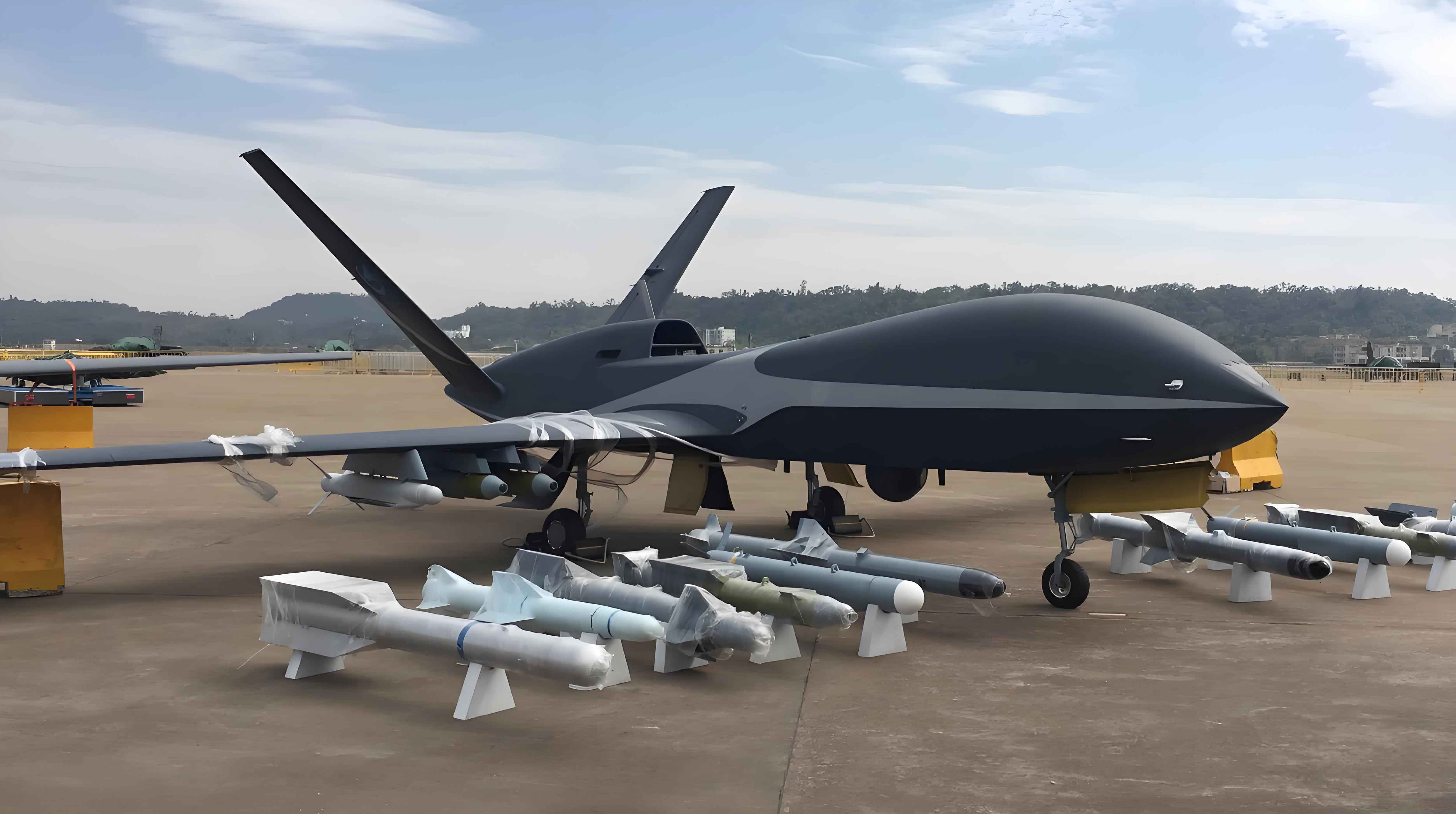
The increasing operational reliance on military UAV platforms for missions ranging from intelligence, surveillance, and reconnaissance (ISR) to precision strikes has elevated the role of the human operator to a critical point of system performance and mission success. Unlike automated systems, the current generation of military UAV operations, particularly in complex tactical environments, demands a high degree of human-in-the-loop control and decision-making. Consequently, the competency of the military UAV operator becomes a paramount concern for force readiness and effectiveness. Traditional evaluation methods, which often focus on singular dimensions of performance or rely on crisp quantitative metrics, frequently fail to capture the multifaceted and inherently uncertain nature of this competency. To address this gap, I propose and detail a robust evaluation framework based on the Fuzzy Analytic Hierarchy Process (FAHP). This model systematically accounts for various influencing factors, handles the fuzziness in subjective judgments, and provides a quantifiable, comprehensive assessment of a military UAV operator’s post competency.
The core challenge in assessing a military UAV operator lies in defining and weighting the diverse skills required. The role is not merely that of a remote pilot; it encompasses aspects of avionics theory, system maintenance, and psychological resilience under simulated or real operational stress. Therefore, the first step in my FAHP-based model is the construction of a hierarchical evaluation index system. This system breaks down the overarching goal—”Operator Post Competency”—into manageable, logically grouped criteria and sub-criteria. Through expert consultation and analysis of military UAV operational tasks, I have identified four primary criterion layers, which are further subdivided into 15 specific indicator layers.
The hierarchical structure is presented in Table 1 below. The first criterion, Flight Skill (A1), is considered the most direct manifestation of operational ability. The second, Flight Theory (A2), provides the necessary knowledge foundation. The third, Maintenance Skill (A3), addresses the practical requirement for operators to perform basic troubleshooting and upkeep, a crucial factor for sustained operations in the field. The fourth, Psychological Quality (A4), accounts for the non-technical but vital capacity to manage stress and make sound decisions under pressure, a well-documented challenge in prolonged military UAV operations.
| Target Layer (Goal) | Criterion Layer (A) | Indicator Layer (B) |
|---|---|---|
| Military UAV Operator Post Competency Assessment | A1: Flight Skill | B1: Take-off, Landing & Turn |
| B2: Hovering & Orbiting | ||
| B3: Dive & Climb | ||
| B4: Roll Maneuvers | ||
| B5: Tactical Maneuvers | ||
| B6: Loop Maneuvers | ||
| A2: Flight Theory | B7: Aircraft Systems Knowledge | |
| B8: Safety & Regulation Knowledge | ||
| B9: Operational Theory & Navigation | ||
| A3: Maintenance Skill | B10: Routine Servicing & Inspection | |
| B11: Preventive Maintenance | ||
| B12: Corrective Maintenance / Troubleshooting | ||
| A4: Psychological Quality | B13: Mental State & Focus | |
| B14: Emotional State & Stability | ||
| B15: Emergency Response & Decision-Making |
With the hierarchy established, the next step is to determine the relative importance, or weight, of each element. This is where the Analytic Hierarchy Process (AHP) is applied. The process begins by constructing pairwise comparison matrices. Experts are asked to compare the importance of two elements at a time relative to their parent element in the hierarchy, using a standardized scale. The fundamental scale for pairwise comparisons, as defined by Saaty, is shown in Table 2.
| Intensity of Importance | Definition | Explanation |
|---|---|---|
| 1 | Equal Importance | Two activities contribute equally to the objective. |
| 3 | Moderate Importance | Experience and judgment slightly favor one activity over another. |
| 5 | Strong Importance | Experience and judgment strongly favor one activity over another. |
| 7 | Very Strong Importance | An activity is favored very strongly over another; its dominance demonstrated in practice. |
| 9 | Extreme Importance | The evidence favoring one activity over another is of the highest possible order of affirmation. |
| 2, 4, 6, 8 | Intermediate Values | Used to compromise between the above judgments. |
For a given set of n elements under a common parent, the pairwise comparison matrix A is constructed, where the entry $a_{ij}$ represents the relative importance of element i to element j.
$$ A = (a_{ij})_{n \times n} = \begin{bmatrix}
1 & a_{12} & \cdots & a_{1n} \\
a_{21} & 1 & \cdots & a_{2n} \\
\vdots & \vdots & \ddots & \vdots \\
a_{n1} & a_{n2} & \cdots & 1
\end{bmatrix} $$
where $a_{ji} = 1 / a_{ij}$ and $a_{ii} = 1$.
Once the matrix is built, the priority vector (weight vector) W must be derived. I employ the geometric mean method for its robustness. First, calculate the geometric mean for each row i:
$$ \tilde{w}_i = \left( \prod_{j=1}^{n} a_{ij} \right)^{1/n} $$
Then, normalize the geometric means to obtain the final weight vector:
$$ w_i = \frac{\tilde{w}_i}{\sum_{j=1}^{n} \tilde{w}_j} $$
This yields $W = [w_1, w_2, …, w_n]^T$.
A critical step is consistency verification. Due to the subjective nature of judgments, inconsistencies can arise (e.g., if A is preferred to B, B to C, but C is preferred to A). We calculate the consistency ratio (CR) to check acceptability. First, we compute the maximum eigenvalue $\lambda_{max}$:
$$ \lambda_{max} = \frac{1}{n} \sum_{i=1}^{n} \frac{(AW)_i}{w_i} $$
where $(AW)_i$ is the i-th element of the vector resulting from the multiplication of matrix A and vector W.
Then, the Consistency Index (CI) is calculated:
$$ CI = \frac{\lambda_{max} – n}{n – 1} $$
Finally, the Consistency Ratio (CR) is:
$$ CR = \frac{CI}{RI} $$
where RI is the Random Index, dependent on matrix size n. A CR value less than 0.10 is generally considered acceptable, indicating that the pairwise comparison judgments are sufficiently consistent.
Applying this AHP process across all levels of the hierarchy for military UAV operator assessment, and synthesizing the judgments from multiple domain experts, I arrived at the comprehensive weights shown in Table 3. The synthesis involves calculating the global weight for each indicator by multiplying its local weight within its criterion by the weight of that criterion.
| Criterion Layer | Local Weight | Indicator Layer | Local Weight | Global Weight |
|---|---|---|---|---|
| A1: Flight Skill | 0.449 | B1: Take-off, Landing & Turn | 0.286 | 0.128 |
| B2: Hovering & Orbiting | 0.104 | 0.047 | ||
| B3: Dive & Climb | 0.162 | 0.073 | ||
| B4: Roll Maneuvers | 0.151 | 0.068 | ||
| B5: Tactical Maneuvers | 0.167 | 0.075 | ||
| B6: Loop Maneuvers | 0.130 | 0.058 | ||
| A2: Flight Theory | 0.080 | B7: Aircraft Systems Knowledge | 0.376 | 0.030 |
| B8: Safety & Regulation Knowledge | 0.263 | 0.021 | ||
| B9: Operational Theory & Navigation | 0.361 | 0.029 | ||
| A3: Maintenance Skill | 0.370 | B10: Routine Servicing & Inspection | 0.362 | 0.134 |
| B11: Preventive Maintenance | 0.362 | 0.134 | ||
| B12: Corrective Maintenance | 0.275 | 0.102 | ||
| A4: Psychological Quality | 0.101 | B13: Mental State & Focus | 0.302 | 0.030 |
| B14: Emotional State & Stability | 0.302 | 0.030 | ||
| B15: Emergency Response | 0.397 | 0.040 |
The weight analysis reveals crucial insights for military UAV training programs. Flight Skill (A1, 0.449) and Maintenance Skill (A3, 0.370) are the dominant criteria, highlighting the hands-on, practical core of the military UAV operator role. Within Flight Skill, basic Take-off, Landing & Turn (B1) carries the highest weight, underscoring its foundational importance for all other maneuvers. The significant weight of Maintenance Skill reflects the reality that operational readiness of a military UAV fleet often depends on the operator’s ability to perform field-level maintenance.
The AHP provides crisp weights, but the evaluation of an operator’s performance on each indicator often involves subjective, “fuzzy” judgments (e.g., “good,” “average”). This is where the fuzzy extension, Fuzzy AHP (FAHP), and fuzzy comprehensive evaluation come into play. First, I define an evaluation comment set V. For practicality, I use a four-level set:
$$ V = \{ v_1, v_2, v_3, v_4 \} = \{ \text{Excellent}, \text{Good}, \text{Average}, \text{Poor} \} $$
A corresponding score vector can be assigned for final quantification:
$$ S_{score} = [90, 75, 60, 45] $$
For a specific operator, a group of evaluators (instructors, peers) assesses the operator’s performance on each lowest-level indicator B and assigns ratings based on V. The frequency distribution of these ratings forms the single-factor evaluation vector for that indicator. For example, if for indicator B1, 40% of evaluators say “Excellent,” 50% say “Good,” and 10% say “Average,” the vector would be $r_{B1} = [0.4, 0.5, 0.1, 0.0]$. Collecting these vectors for all indicators under a criterion forms the fuzzy evaluation matrix R for that criterion.
For criterion A1 with its six indicators, the matrix $R_{A1}$ is:
$$ R_{A1} = \begin{bmatrix} r_{B1} \\ r_{B2} \\ r_{B3} \\ r_{B4} \\ r_{B5} \\ r_{B6} \end{bmatrix} = \begin{bmatrix}
r_{11} & r_{12} & r_{13} & r_{14} \\
r_{21} & r_{22} & r_{23} & r_{24} \\
\vdots & \vdots & \vdots & \vdots \\
r_{61} & r_{62} & r_{63} & r_{64}
\end{bmatrix} $$
The comprehensive fuzzy evaluation vector for criterion A1 is then obtained by combining the evaluation matrix with the local weight vector $W_{A1}$ (from Table 3):
$$ B_{A1} = W_{A1} \circ R_{A1} = [w_{B1}, w_{B2}, …, w_{B6}] \circ \begin{bmatrix}
r_{11} & r_{12} & r_{13} & r_{14} \\
r_{21} & r_{22} & r_{23} & r_{24} \\
\vdots & \vdots & \vdots & \vdots \\
r_{61} & r_{62} & r_{63} & r_{64}
\end{bmatrix} = [b_{A1,1}, b_{A1,2}, b_{A1,3}, b_{A1,4}] $$
The operator $\circ$ typically denotes a fuzzy composition operator, such as the weighted average model: $b_j = \sum_{i=1}^{n} (w_i \cdot r_{ij})$, ensuring $\sum b_j = 1$.
This process is repeated for all criteria (A2, A3, A4), resulting in their respective comprehensive evaluation vectors $B_{A2}, B_{A3}, B_{A4}$. These four vectors then form a new fuzzy evaluation matrix $R_{Total}$ for the target layer.
$$ R_{Total} = \begin{bmatrix} B_{A1} \\ B_{A2} \\ B_{A3} \\ B_{A4} \end{bmatrix} $$
The final, overall fuzzy evaluation vector for the operator’s post competency is calculated using the criterion layer weight vector $W_{Criteria} = [0.449, 0.080, 0.370, 0.101]$:
$$ B_{Final} = W_{Criteria} \circ R_{Total} = [b_1, b_2, b_3, b_4] $$
The vector $B_{Final}$ represents the degree to which the operator’s overall competency belongs to each comment level. To obtain a single composite score $F$, I use the weighted average method with the score vector $S_{score}$:
$$ F = B_{Final} \cdot S_{score}^T = [b_1, b_2, b_3, b_4] \cdot [90, 75, 60, 45]^T $$
This final score $F$ provides a clear, quantitative measure of the military UAV operator’s competency, facilitating comparison and tracking of progress over time.
To demonstrate the practical application of this FAHP model, consider a trainee operator “K” in a military UAV training program. Evaluators assessed K on all 15 indicators. The aggregated membership degrees (the $r_{ij}$ values) for each indicator are shown in Table 4. This table represents the raw fuzzy input data for the model.
| Indicator | Excellent | Good | Average | Poor |
|---|---|---|---|---|
| B1 | 0.385 | 0.615 | 0.000 | 0.000 |
| B2 | 0.308 | 0.692 | 0.000 | 0.000 |
| B3 | 0.077 | 0.692 | 0.231 | 0.000 |
| B4 | 0.000 | 0.385 | 0.615 | 0.000 |
| B5 | 0.000 | 0.077 | 0.846 | 0.077 |
| B6 | 0.000 | 0.077 | 0.538 | 0.385 |
| B7 | 0.077 | 0.615 | 0.231 | 0.077 |
| B8 | 0.692 | 0.308 | 0.000 | 0.000 |
| B9 | 0.308 | 0.615 | 0.077 | 0.000 |
| B10 | 0.538 | 0.385 | 0.077 | 0.000 |
| B11 | 0.077 | 0.308 | 0.615 | 0.000 |
| B12 | 0.000 | 0.231 | 0.615 | 0.154 |
| B13 | 0.538 | 0.462 | 0.000 | 0.000 |
| B14 | 0.385 | 0.615 | 0.000 | 0.000 |
| B15 | 0.000 | 0.692 | 0.308 | 0.000 |
Applying the computational steps, we first compute the criterion-level evaluations. For Flight Skill (A1):
$$ B_{A1} = W_{A1} \circ R_{A1} = [0.286, 0.104, 0.162, 0.151, 0.167, 0.130] \circ \begin{bmatrix}
0.385 & 0.615 & 0.000 & 0.000\\
0.308 & 0.692 & 0.000 & 0.000\\
0.077 & 0.692 & 0.231 & 0.000\\
0.000 & 0.385 & 0.615 & 0.000\\
0.000 & 0.077 & 0.846 & 0.077\\
0.000 & 0.077 & 0.538 & 0.385
\end{bmatrix} $$
Performing the weighted average: $b_{A1,1} = (0.286*0.385)+(0.104*0.308)+…+(0.130*0.000) = 0.155$ (Excellent). Similarly, $b_{A1,2}=0.441$ (Good), $b_{A1,3}=0.342$ (Average), $b_{A1,4}=0.063$ (Poor).
Thus, $B_{A1} = [0.155, 0.441, 0.342, 0.063]$.
Following the same process:
$$ B_{A2} = [0.322, 0.535, 0.115, 0.029] $$
$$ B_{A3} = [0.223, 0.314, 0.337, 0.126] $$
$$ B_{A4} = [0.278, 0.600, 0.122, 0.000] $$
Now, forming the total matrix and computing the final evaluation:
$$ R_{Total} = \begin{bmatrix} 0.155 & 0.441 & 0.342 & 0.063 \\ 0.322 & 0.535 & 0.115 & 0.029 \\ 0.223 & 0.314 & 0.337 & 0.126 \\ 0.278 & 0.600 & 0.122 & 0.000 \end{bmatrix} $$
$$ B_{Final} = W_{Criteria} \circ R_{Total} = [0.449, 0.080, 0.370, 0.101] \circ R_{Total} $$
$$ B_{Final} = [0.206, 0.418, 0.299, 0.077] $$
The final composite score is:
$$ F = [0.206, 0.418, 0.299, 0.077] \cdot [90, 75, 60, 45]^T = 71.28 $$
Analyzing the results for this military UAV trainee, the final membership vector $B_{Final}$ shows the highest degree of membership (0.418) is to the “Good” level, which aligns with the composite score of 71.28, closer to the “Good” threshold of 75 than to “Average” at 60. This quantitative output provides a nuanced picture. While the overall competency is rated as “Good,” the breakdown reveals specific areas for improvement. The evaluation for Maintenance Skill (A3) shows a significant membership in “Average” (0.337), higher than its membership in “Good” (0.314). This pinpoints a relative weakness in maintenance capabilities, a critical area for military UAV operators as indicated by its high criterion weight. The Flight Skill (A1) evaluation also shows a substantial “Average” component (0.342), suggesting that advanced maneuvers (like B5, B6) may need more practice. This level of diagnostic detail is invaluable for tailoring individual training programs for military UAV personnel.
In conclusion, the effective employment of military UAV assets is inextricably linked to the proficiency of their human operators. The Fuzzy Analytic Hierarchy Process model I have presented offers a structured, scientific, and operational method for assessing this complex competency. By decomposing the problem into a logical hierarchy, incorporating expert judgment to derive meaningful weights, and using fuzzy set theory to manage evaluative imprecision, the model generates a comprehensive and actionable assessment. The case study demonstrates its practical utility, not only in delivering an overall score but also in diagnosing strengths and weaknesses across flight skills, theoretical knowledge, maintenance ability, and psychological fitness. For organizations operating military UAV systems, adopting such a multifaceted evaluation framework can enhance training efficiency, inform personnel selection, and ultimately contribute to higher mission success rates and operational safety. The model’s flexibility also allows for adaptation, where the criteria and weights can be refined to suit specific types of military UAV platforms or mission profiles, making it a versatile tool for human performance management in this rapidly evolving domain.