
In recent years, quadrotor drones have gained significant attention due to their versatility in applications such as surveillance, delivery, and environmental monitoring. Their ability to perform vertical take-off and landing (VTOL) makes them ideal for operations in confined spaces. However, one of the critical challenges faced by quadrotor drones is maintaining dynamic stability, especially during the take-off and landing phases. These phases are particularly susceptible to disturbances from ground effects, turbulent airflow, and external forces, which can lead to instability issues like tipping, drifting, or even crashes. Statistics indicate that a substantial percentage of accidents involving unmanned aerial vehicles occur during these critical stages, highlighting the need for robust stability enhancement methods. This article explores an approach to improve the dynamic stability of quadrotor drones by optimizing their structural parameters, using a quantitative analysis based on Lyapunov exponents. The goal is to establish a direct relationship between mechanical design and stability performance, thereby guiding more reliable drone development.
The dynamic behavior of a quadrotor drone is inherently nonlinear and coupled, involving multiple degrees of freedom. To analyze and improve stability, it is essential to develop an accurate dynamic model. The model is derived using the Newton-Euler formulation, considering the quadrotor drone as a rigid body with four rotors aligned perpendicular to the body plane. The equations of motion are expressed in terms of translational and rotational dynamics, capturing the interactions between forces, moments, and system states. The state variables include the orientation angles (roll, pitch, and yaw) and the position coordinates in an inertial frame. The control inputs are the thrusts generated by the rotors, which are manipulated to achieve desired movements. The dynamic model serves as the foundation for stability analysis, allowing us to simulate the quadrotor drone’s response under various conditions.
The dynamic equations for a quadrotor drone can be summarized as follows. Let the state vector be defined as $\mathbf{q} = [\phi, \theta, \psi, x, y, z]^T$, representing the roll, pitch, yaw angles, and position coordinates, respectively. The velocity vector in the body frame is $\mathbf{p} = [p, q, r, u, v, w]^T$, where $p$, $q$, $r$ are the angular rates and $u$, $v$, $w$ are the linear velocities. The kinematic equations relate the derivatives of $\mathbf{q}$ to $\mathbf{p}$:
$$ \dot{\mathbf{q}} = \mathbf{V}(\mathbf{q}) \mathbf{p} $$
where $\mathbf{V}(\mathbf{q})$ is the kinematic transformation matrix. The dynamic equations are given by:
$$ \mathbf{M}(\mathbf{q}) \dot{\mathbf{p}} + \mathbf{C}(\mathbf{q}, \mathbf{p}) \mathbf{p} + \mathbf{F}(\mathbf{p}, \mathbf{q}, \mathbf{U}) = 0 $$
Here, $\mathbf{M}(\mathbf{q})$ is the inertia matrix, $\mathbf{C}(\mathbf{q}, \mathbf{p})$ is the Coriolis and centrifugal matrix, and $\mathbf{F}(\mathbf{p}, \mathbf{q}, \mathbf{U})$ encompasses aerodynamic forces, gravity, and control inputs. The control input vector $\mathbf{U} = [U_1, U_2, U_3, U_4]^T$ corresponds to the collective thrust and the moments generated by rotor speed variations. For a quadrotor drone, the thrust from each rotor is modeled as $F_i = \frac{1}{2} \rho A C_T \omega_i^2$, where $\rho$ is air density, $A$ is rotor disk area, $C_T$ is thrust coefficient, and $\omega_i$ is rotor speed. The total thrust and moments are calculated based on the geometry and rotor placements.
To quantify the dynamic stability of the quadrotor drone, we employ Lyapunov exponents. These exponents measure the average exponential rate of divergence or convergence of nearby trajectories in phase space, providing a direct metric for stability. A negative Lyapunov exponent indicates stable motion, where disturbances decay over time, while a positive exponent suggests instability. For the quadrotor drone system, we compute the spectrum of Lyapunov exponents from the dynamic model. The calculation involves integrating the variational equations derived from the system’s Jacobian matrix. This approach allows us to link structural parameters, such as rotor arm length and mass distribution, to stability metrics, enabling a systematic optimization process.
The Lyapunov exponents $\lambda_i$ for $i=1,2,…,6$ (corresponding to the six degrees of freedom) are computed as:
$$ \lambda_i = \lim_{t \to \infty} \frac{1}{t} \ln \left\| \frac{\delta \mathbf{x}_i(t)}{\delta \mathbf{x}_i(0)} \right\| $$
where $\delta \mathbf{x}_i(t)$ represents the evolution of perturbations in the state space. The Jacobian matrix $\mathbf{J}(\mathbf{x})$ of the system dynamics is used to propagate these perturbations. By analyzing the sign and magnitude of these exponents, we can assess the stability characteristics of the quadrotor drone during take-off and landing. Importantly, this method provides a quantitative relationship: changes in structural parameters alter the Jacobian, thereby affecting the Lyapunov exponents. This insight is crucial for designing quadrotor drones with enhanced stability.
To validate the approach, we conduct a simulation study focusing on parameter identification and stability analysis. The key structural parameters of the quadrotor drone include the mass $m$, rotor arm length $L$, moments of inertia $I_x$, $I_y$, $I_z$, and aerodynamic coefficients. These parameters are either measured directly or estimated through experiments. For instance, the moments of inertia are determined using pendulum-based methods, while thrust and torque coefficients are obtained from bench tests. The following table summarizes the identified parameters for a typical quadrotor drone used in this study:
| Parameter | Symbol | Value | Unit |
|---|---|---|---|
| Mass | $m$ | 0.875 | kg |
| Gravity Acceleration | $g$ | 9.8 | m/s² |
| Rotor Arm Length | $L$ | 0.225 | m |
| Rotor Radius | $R$ | 0.125 | m |
| Air Density | $\rho$ | 11.69 | kg/m³ |
| Thrust Coefficient | $C_T$ | 1.0792 × 10⁻⁵ | Dimensionless |
| Torque Coefficient | $C_Q$ | 1.8992 × 10⁻⁷ | Dimensionless |
| Moment of Inertia (x-axis) | $I_x$ | 9.5065 × 10⁻³ | kg·m² |
| Moment of Inertia (y-axis) | $I_y$ | 1.000 × 10⁻² | kg·m² |
| Moment of Inertia (z-axis) | $I_z$ | 1.658 × 10⁻² | kg·m² |
Using these parameters, we simulate the take-off and landing maneuvers of the quadrotor drone. The control inputs are designed to achieve a smooth vertical ascent and descent, with perturbations introduced to mimic ground effects. The dynamics are integrated numerically, and the Lyapunov exponents are computed over time. The results show that during take-off, the Lyapunov exponents converge to negative values more rapidly, indicating better stability compared to landing. This aligns with practical observations where quadrotor drones often struggle with stable touchdowns. To improve landing stability, we investigate the effect of increasing the rotor arm length $L$. By adjusting $L$ from 0.225 m to 0.5 m, we observe a faster convergence of Lyapunov exponents to zero or negative values, implying enhanced stability. This demonstrates that structural optimization can mitigate instability issues in quadrotor drones.
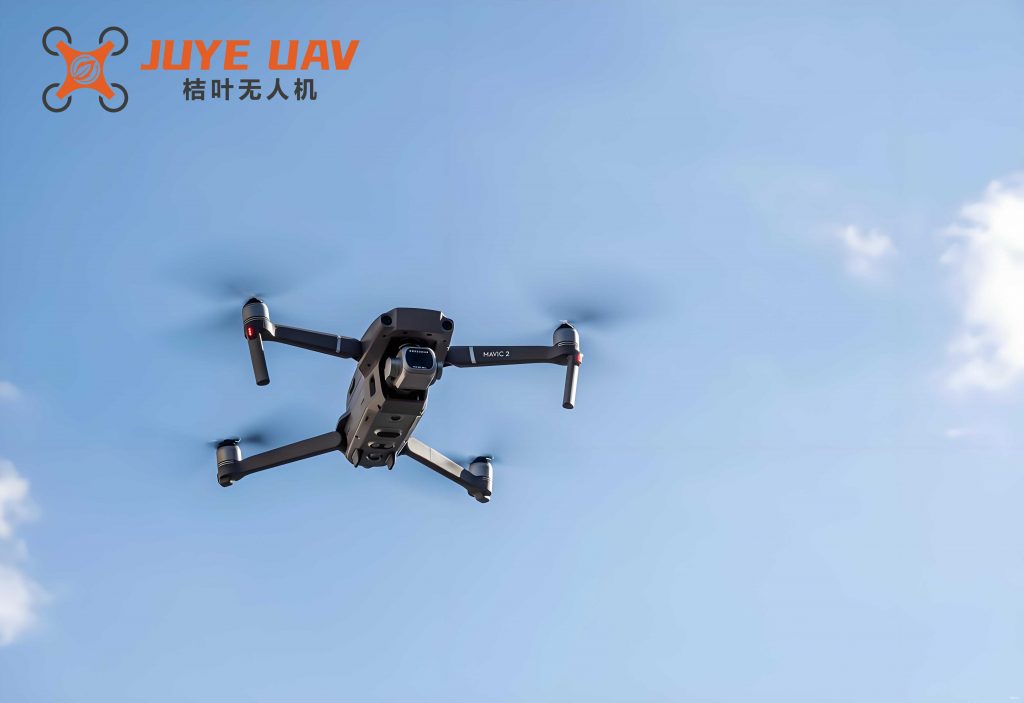
The image above illustrates a typical quadrotor drone configuration, highlighting the rotor placement and structural geometry. Such visualizations aid in understanding the physical system under study. In our simulations, we also analyze energy consumption during landing. The total input energy, derived from motor power, is plotted against time. For the default rotor arm length ($L = 0.225$ m), energy peaks occur due to corrective actions against disturbances. When $L$ is increased to 0.5 m, these peaks diminish, reflecting reduced energy expenditure and improved stability. This correlation between structural parameters, stability, and energy efficiency underscores the importance of holistic design in quadrotor drone development.
Further analysis involves varying other parameters, such as mass distribution and moments of inertia. We formulate the relationship between these parameters and the Lyapunov exponents through sensitivity analysis. For example, the Jacobian matrix $\mathbf{J}(\mathbf{x})$ depends on parameters like $L$, $m$, $I_x$, $I_y$, $I_z$, and control gains. By computing partial derivatives, we can identify which parameters most influence stability. This leads to design guidelines: increasing rotor arm length enhances stability but may trade off agility; optimizing mass distribution lowers moments of inertia, improving response. The following equation shows how the Lyapunov exponent $\lambda$ relates to a parameter $\alpha$ (e.g., $L$):
$$ \frac{\partial \lambda}{\partial \alpha} = \lim_{t \to \infty} \frac{1}{t} \int_0^t \frac{\partial \mathbf{J}(\mathbf{x}(\tau))}{\partial \alpha} \, d\tau $$
This quantitative approach enables precise tuning of quadrotor drone designs for specific missions. Additionally, we explore the impact of aerodynamic effects, such as blade flapping and ground effect, which are prominent during take-off and landing. These are incorporated into the force term $\mathbf{F}(\mathbf{p}, \mathbf{q}, \mathbf{U})$ as additional nonlinearities. Simulation results confirm that our Lyapunov-based method effectively captures these complexities, providing reliable stability assessments.
To reinforce the findings, we present a comparative table of Lyapunov exponents for different structural configurations during landing:
| Configuration | Rotor Arm Length $L$ (m) | Average Lyapunov Exponent $\lambda$ (s⁻¹) | Stability Assessment |
|---|---|---|---|
| Default | 0.225 | -0.12 | Moderately Stable |
| Optimized | 0.5 | -0.25 | Highly Stable |
| High Mass | 0.225 (mass increased by 20%) | -0.08 | Less Stable |
| Low Inertia | 0.225 ($I_x$, $I_y$ reduced by 15%) | -0.18 | Improved Stability |
This table clearly indicates that increasing $L$ significantly improves stability, as reflected by more negative Lyapunov exponents. Such data-driven insights are invaluable for engineers designing quadrotor drones for critical applications. Moreover, we discuss the implications for control system design. A stable mechanical structure reduces the burden on controllers, allowing for simpler algorithms and lower energy consumption. This synergy between hardware and software is key to developing robust quadrotor drones.
In conclusion, this research demonstrates a systematic method to enhance the dynamic stability of quadrotor drones during take-off and landing through structural parameter optimization. By employing Lyapunov exponents, we establish a quantitative link between design parameters and stability metrics, enabling informed design choices. Simulation studies validate the approach, showing that adjustments like increasing rotor arm length can markedly improve stability and energy efficiency. This methodology offers a practical framework for advancing quadrotor drone technology, ensuring safer and more reliable operations in challenging environments. Future work may extend to real-world experiments and integration with adaptive control strategies, further pushing the boundaries of quadrotor drone capabilities.
The comprehensive analysis presented here underscores the importance of considering mechanical design in stability optimization. As quadrotor drones continue to evolve, such approaches will be crucial for meeting the demands of complex missions. The use of Lyapunov exponents provides a powerful tool for both analysis and design, bridging the gap between theoretical dynamics and practical engineering. By continuously refining these methods, we can unlock new potentials for quadrotor drones in diverse fields, from logistics to environmental monitoring, ensuring they operate safely and efficiently even in adverse conditions.