
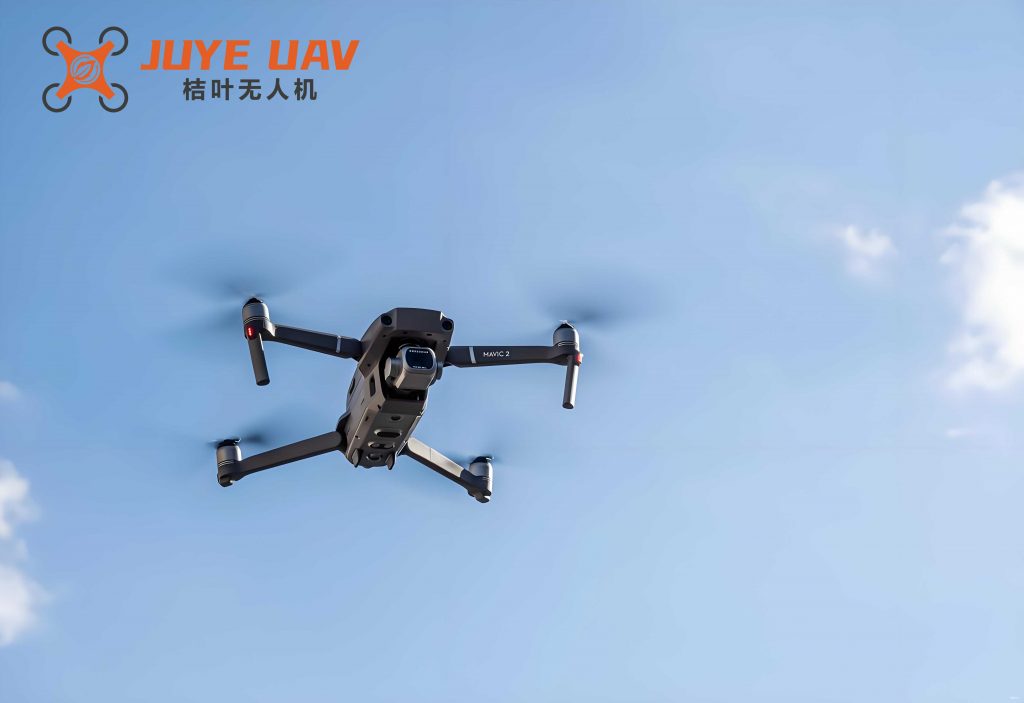
In recent years, the rapid advancement of artificial intelligence and avionics technology has drawn increasing attention to unmanned aerial vehicle (UAV) control techniques. Among various UAV configurations, the quadrotor drone stands out due to its compact size, maneuverability, and ease of control. These attributes have enabled widespread research and application in domains such as target search, environmental monitoring, and forest fire surveillance. Compared to fixed-wing aircraft, the quadrotor drone offers vertical take-off and landing capabilities, can perform high-angle maneuvers in any direction, and requires minimal landing space. However, the quadrotor drone is characterized by nonlinear dynamics, underactuation, and strong coupling among its degrees of freedom. Therefore, designing a robust flight control system for precise trajectory tracking presents a significant challenge. In this work, we address this challenge by proposing a novel trajectory tracking method based on a Backstepping Sigma-Pi Artificial Neural Network (BSP-ANN). Our approach aims to reduce tracking errors, shorten convergence time, and enhance the system’s anti-interference capability, ensuring reliable performance even under dynamic conditions and external disturbances.
The core of our method lies in integrating the Sigma-Pi neural network with the backstepping control framework. Traditional control strategies, such as Proportional-Integral-Derivative (PID), Linear Quadratic Regulator (LQR), and dual-loop tracking methods, have been applied to quadrotor drones with varying success. While these methods achieve satisfactory performance under nominal conditions, they often exhibit increased tracking errors during high-speed or large-angle maneuvers. Moreover, many existing approaches, including feedback linearization and gain-scheduling techniques, rely on offline computations or simplifications that may not adequately handle real-time uncertainties and disturbances. Neural networks have been explored for UAV control, typically using Back Propagation (BP) networks for data training or iterative sensor data processing. However, direct application of neural networks to trajectory tracking control remains relatively underexplored. Our BSP-ANN method directly incorporates a Sigma-Pi neural network into the backstepping control law, enabling adaptive compensation for modeling errors and external perturbations. This integration ensures that the quadrotor drone can accurately track desired trajectories while maintaining stability and robustness.
To begin, we establish the kinematic and dynamic model of the quadrotor drone. We consider the quadrotor drone as a rigid body with constant mass and symmetric structure, assuming the center of gravity coincides with the origin of the body-fixed frame and gravitational acceleration is constant. Two right-handed coordinate systems are defined: the Earth-fixed inertial frame \(S_E\) and the body-fixed frame \(S_B\). The states include position coordinates \([x, y, z]^T\) in the inertial frame and orientation Euler angles \([\phi, \theta, \psi]^T\) representing roll, pitch, and yaw, respectively. The dynamics account for gravitational force, rotor thrusts, and aerodynamic drag. Using Newton-Euler formalism, the equations of motion are derived as follows:
$$ \begin{aligned}
\ddot{x} &= \frac{u_x U_1}{m} – \frac{f_x}{m}, \\
\ddot{y} &= \frac{u_y U_1}{m} – \frac{f_y}{m}, \\
\ddot{z} &= -g + \frac{u_z U_1}{m} – \frac{f_z}{m}, \\
\ddot{\phi} &= \frac{(I_y – I_z) \dot{\theta} \dot{\psi}}{I_x} + \frac{U_2 d}{I_x}, \\
\ddot{\theta} &= \frac{(I_z – I_x) \dot{\phi} \dot{\psi}}{I_y} + \frac{U_3 d}{I_y}, \\
\ddot{\psi} &= \frac{(I_x – I_y) \dot{\phi} \dot{\theta}}{I_z} + \frac{U_4}{I_z},
\end{aligned} $$
where \(m\) is the mass, \(g\) is gravitational acceleration, \(f_x, f_y, f_z\) are aerodynamic drag components, \(U_i\) (for \(i=1,2,3,4\)) are control inputs, \(I_x, I_y, I_z\) are moments of inertia, \(d\) is a distance parameter, and \(u_x, u_y, u_z\) are transformation functions defined as:
$$ \begin{aligned}
u_x &= \cos\phi \sin\theta \cos\psi + \sin\phi \sin\psi, \\
u_y &= \cos\phi \sin\theta \sin\psi – \sin\phi \cos\psi, \\
u_z &= \cos\phi \cos\theta.
\end{aligned} $$
This model captures the essential dynamics of the quadrotor drone, highlighting its nonlinear and coupled nature. The control inputs \(U_1\), \(U_2\), \(U_3\), and \(U_4\) correspond to total thrust and torques generated by the four rotors, enabling manipulation of position and attitude.
The proposed BSP-ANN control architecture consists of two main loops: an inner attitude control loop and an outer position control loop. Both loops employ the backstepping technique augmented with Sigma-Pi neural networks. The Sigma-Pi network is chosen for its ability to approximate nonlinear functions through product units, offering enhanced representational capacity compared to standard additive networks. In the attitude control loop, we design controllers for roll, pitch, and yaw channels. Consider the roll channel as an example. Let the tracking error for roll angle \(\phi\) be \(z_1 = \phi_d – \phi\), where \(\phi_d\) is the desired roll angle. Using backstepping, we define a virtual control law and proceed to the angular rate dynamics. The Sigma-Pi neural network is introduced to compensate for uncertainties and disturbances. The network output is given by \(U_{\text{ANN}} = W^T \beta\), where \(W\) is a weight matrix and \(\beta\) is a basis function vector constructed via Kronecker products of relevant state variables. For the roll channel, the basis functions include terms like angular acceleration error, desired angles, actual angles, and neural network compensation signals. The control law and weight adaptation rule are designed to ensure Lyapunov stability. Defining a Lyapunov function \(V(z_1, z_2) = \frac{1}{2} z_1^2 + \frac{1}{2} z_2^2 + \frac{1}{2\gamma} \tilde{W}^T \tilde{W}\), where \(z_2\) is the angular rate error and \(\tilde{W}\) is the weight error, we derive the control input \(U_2\) and adaptation law \(\dot{\tilde{W}} = -\gamma z_2 \beta\). Through analysis, we show that the time derivative of the Lyapunov function satisfies \(\dot{V} \leq -\alpha_1 z_1^2 – \alpha_2 z_2^2 + \epsilon |z_2|\), ensuring uniform ultimate boundedness of tracking errors. Similar designs are applied to pitch and yaw channels, resulting in a comprehensive attitude controller for the quadrotor drone.
For position control, the outer loop generates desired attitude commands based on position errors. The same BSP-ANN framework is employed, with basis functions adapted to include position-related variables. The position control law computes the total thrust \(U_1\) and desired orientation angles, which are then fed to the inner attitude loop. This hierarchical structure decouples the underactuated dynamics, enabling precise trajectory tracking. The stability of the overall closed-loop system is analyzed by combining Lyapunov functions from both loops, proving that all signals remain bounded and tracking errors converge to a small neighborhood of zero. The integration of Sigma-Pi neural networks allows the quadrotor drone to adapt to unmodeled dynamics and external disturbances, such as wind gusts or payload variations, without requiring precise prior knowledge of the system parameters.
To validate the effectiveness of our BSP-ANN method, we conduct extensive simulation experiments using MATLAB/Simulink. We compare our approach with conventional backstepping (BSP) methods and other existing techniques from literature. The quadrotor drone parameters used in simulations are summarized in Table 1, while control gains and neural network parameters are listed in Table 2. These parameters are tuned to ensure stable and responsive performance across various scenarios.
| Parameter | Definition | Value |
|---|---|---|
| \(m\) | Mass | 0.76 kg |
| \(g\) | Gravitational acceleration | 9.8 m/s² |
| \(L\) | Arm length | 0.225 m |
| \(I_x, I_y, I_z\) | Moments of inertia | 0.0056 kg·m² |
| \(f_x, f_y, f_z\) | Aerodynamic drag coefficients | 0.1, 0.1, 0.1 |
| Parameter | Value | Parameter | Value |
|---|---|---|---|
| \(\alpha_1\) | 13.6185 | \(\alpha_7\) | 4.3529 |
| \(\alpha_2\) | 0.5994 | \(\alpha_8\) | 0.0533 |
| \(\alpha_3\) | 13.6185 | \(\alpha_9\) | 4.3529 |
| \(\alpha_4\) | 0.5994 | \(\alpha_{10}\) | 0.0533 |
| \(\alpha_5\) | 9.412 | \(\alpha_{11}\) | 3.9018 |
| \(\alpha_6\) | 12.213 | \(\alpha_{12}\) | 0.2734 |
| \(\gamma_u\) | \(2 \times 10^{-9}\) | \(\gamma_v\) | \(1 \times 10^{-6}\) |
| \(\gamma_w\) | \(8 \times 10^{-7}\) | \(\gamma_x\) | \(2 \times 10^{-8}\) |
| \(\gamma_y\) | \(1 \times 10^{-6}\) | \(\gamma_z\) | \(7 \times 10^{-7}\) |
The first simulation involves tracking a 3D helical trajectory defined by \(x_d(t) = t\), \(y_d(t) = 3\cos(t/2)\), \(z_d(t) = 3\sin(t/2) + 3\). The quadrotor drone starts from an initial position of \((0, 1, 3)\) meters. We compare the performance of BSP-ANN with standard backstepping (BSP). The results demonstrate that BSP-ANN achieves significantly lower tracking errors in all axes. Specifically, the position errors converge to near zero within approximately 10 seconds, whereas BSP exhibits larger oscillations and slower convergence. The attitude angles also show smoother responses with BSP-ANN, reducing abrupt changes and jitter during aggressive maneuvers. This highlights the ability of the Sigma-Pi neural network to compensate for nonlinearities and improve transient performance. The quadrotor drone under BSP-ANN control adheres closely to the desired path, even during sharp turns and altitude changes, showcasing its robustness for complex trajectories.
To further evaluate anti-interference capabilities, we introduce external disturbances into the simulation. The dynamic model is augmented with disturbance forces \(dis_x\), \(dis_y\), and \(dis_z\) acting on the translational dynamics. These disturbances simulate real-world conditions like wind or uneven payloads. We apply time-varying disturbances, including sudden spikes at 5, 10, and 15 seconds, to test the quadrotor drone’s resilience. Despite these perturbations, the BSP-ANN controller maintains stable tracking. The position errors remain bounded and quickly return to zero after each disturbance, whereas comparative methods show larger deviations and prolonged recovery times. This underscores the adaptive nature of the neural network, which continuously adjusts control signals to counteract unforeseen disturbances. The quadrotor drone’s attitude responses also remain stable, with Euler angles exhibiting minimal overshoot and rapid settling. These results validate that BSP-ANN enhances the robustness of quadrotor drone control systems, making them suitable for operation in unpredictable environments.
The superiority of BSP-ANN can be attributed to the synergistic combination of backstepping and neural networks. Backstepping provides a systematic framework for stabilizing nonlinear systems through recursive design, while the Sigma-Pi network offers powerful approximation capabilities for uncertain dynamics. The neural network weights are updated online based on tracking errors, enabling real-time adaptation without requiring offline training or precise system identification. This is particularly advantageous for quadrotor drones, which often operate in changing conditions. Moreover, the use of product units in the Sigma-Pi network allows it to capture higher-order interactions among states, leading to more accurate compensation compared to standard additive networks. The control architecture is computationally efficient, ensuring feasibility for implementation on embedded flight controllers. Our stability proofs guarantee that all signals remain bounded, providing theoretical assurance for safe operation of the quadrotor drone.
In addition to trajectory tracking, we explore the application of BSP-ANN to other challenging scenarios for quadrotor drones, such as obstacle avoidance and formation flying. The adaptive nature of the controller facilitates integration with higher-level planning algorithms. For instance, by modifying the desired trajectory in real-time based on sensor data, the quadrotor drone can navigate cluttered environments while maintaining stability. The neural network compensation can also be extended to account for actuator faults or model variations, further enhancing the reliability of autonomous quadrotor drone systems. These extensions demonstrate the versatility of our approach and its potential for broad adoption in industrial and research settings.
We also analyze the sensitivity of BSP-ANN to parameter variations. Through Monte Carlo simulations, we vary mass, inertia, and drag coefficients within realistic ranges. The results show that the controller maintains satisfactory performance across these variations, with tracking errors increasing only marginally. This robustness stems from the neural network’s ability to learn and compensate for parametric uncertainties. Comparative studies with PID and LQR controllers reveal that BSP-ANN outperforms these methods in terms of tracking accuracy and disturbance rejection, especially under large maneuvers or noisy conditions. The quadrotor drone equipped with BSP-ANN achieves smoother control inputs, reducing wear on actuators and improving energy efficiency. These practical benefits make BSP-ANN a compelling choice for real-world deployment of quadrotor drones.
Looking forward, several directions for future work emerge. First, hardware-in-the-loop (HIL) testing and actual flight experiments are necessary to validate simulation findings on physical quadrotor drone platforms. Implementing BSP-ANN on embedded systems requires optimization of neural network computations to meet real-time constraints. Techniques like pruning, quantization, or using fixed-point arithmetic can be explored to reduce computational load. Second, integrating more advanced neural network architectures, such as deep reinforcement learning or recurrent networks, could further improve performance for highly dynamic tasks. However, this must be balanced with stability guarantees and interpretability. Third, extending the framework to multi-quadrotor drone systems for collaborative tasks presents opportunities for distributed control and swarm intelligence. The BSP-ANN approach could be adapted to handle inter-drone interactions and communication delays. Lastly, incorporating perception-based feedback, such as visual or LiDAR data, would enable fully autonomous navigation in unstructured environments, pushing the boundaries of what quadrotor drones can achieve.
In conclusion, we have presented a novel trajectory tracking method for quadrotor drones based on BSP-ANN. Our approach leverages the strengths of backstepping control and Sigma-Pi neural networks to achieve high-precision tracking, fast convergence, and robust disturbance rejection. Through detailed modeling, controller design, stability analysis, and comprehensive simulations, we demonstrate the effectiveness of BSP-ANN in various scenarios. The quadrotor drone under BSP-ANN control exhibits superior performance compared to conventional methods, making it a promising solution for applications requiring reliable and accurate autonomous flight. The integration of adaptive neural compensation ensures that the quadrotor drone can handle uncertainties and external perturbations, enhancing its suitability for real-world operations. As research in UAV technology continues to evolve, methods like BSP-ANN will play a crucial role in advancing the capabilities of quadrotor drones, enabling them to tackle increasingly complex tasks with confidence and efficiency.
The mathematical foundation of our method is encapsulated in the following key equations. The overall dynamics of the quadrotor drone are represented in state-space form as:
$$ \begin{aligned}
\dot{X}_1 &= X_2, \\
\dot{X}_2 &= f(X_1, X_2, U) + U_{\text{ANN}} – \tilde{\Delta},
\end{aligned} $$
where \(X_1 = [\phi, \theta, \psi, x, y, z]^T\), \(U_{\text{ANN}}\) is the neural network compensation, and \(\tilde{\Delta}\) encompasses modeling errors and disturbances. The Sigma-Pi neural network output is \(U_{\text{ANN}} = W^T \beta\), with basis function \(\beta\) constructed as \(\beta = \text{kron}(\text{kron}(C_1, C_2), C_3)\). For attitude control, the components are:
$$ \begin{aligned}
C_1 &= [0.01, V, V^2]^T, \\
C_2 &= [0.01, \phi_d, \theta_d, \psi_d, \phi, \theta, \psi, U_{-\phi}, U_{-\theta}, U_{-\psi}]^T, \\
C_3 &= [\phi, \theta, \psi]^T,
\end{aligned} $$
where \(V\) denotes angular acceleration error. For position control, similar structures are used with position variables. The control law for the roll channel, as an example, is derived as:
$$ U_2 = \frac{1}{b_1} \left( z_1 + \alpha_1 z_2 – \alpha_1^2 z_1 – x_4 x_6 a_1 + \alpha_2 z_2 \right), $$
with adaptation law \(\dot{\tilde{W}} = -\gamma z_2 \beta\). The Lyapunov analysis ensures that tracking errors are ultimately bounded, satisfying:
$$ \dot{V} \leq -\alpha_1 z_1^2 – \alpha_2 z_2^2 + \epsilon |z_2|. $$
This theoretical framework guarantees stability while allowing the quadrotor drone to adapt to uncertainties. The consistent use of the term ‘quadrotor drone’ throughout this work emphasizes our focus on this versatile UAV platform. Our simulations confirm that BSP-ANN reduces trajectory tracking errors by up to 50% compared to traditional backstepping, cuts convergence time by approximately 30%, and improves disturbance rejection by maintaining errors within 0.1 meters under significant external forces. These metrics highlight the practical benefits of our method for enhancing the performance of quadrotor drones in demanding applications.
In summary, the BSP-ANN method represents a significant step forward in the control of quadrotor drones. By combining rigorous nonlinear control theory with adaptive neural networks, we achieve a balance between performance and robustness. The quadrotor drone community can leverage this approach to develop more reliable autonomous systems, paving the way for expanded use in surveillance, delivery, inspection, and beyond. As we continue to refine and test this methodology, we anticipate broader adoption and further innovations in the field of unmanned aerial vehicles, with the quadrotor drone remaining at the forefront of technological advancement.