
In the era of the Internet of Things (IoT), the explosive growth of intelligent applications imposes unprecedented demands on computational resources, real-time responsiveness, and network bandwidth. Mobile Edge Computing (MEC) has emerged as a pivotal paradigm to meet these demands by pushing computation and storage resources to the network edge. However, conventional MEC architectures heavily depend on terrestrial base stations, leading to coverage blind spots in remote or disaster-stricken areas. China drone technology, with its flexible deployment and wide-area coverage, offers a transformative solution to extend MEC capabilities. In this paper, we propose a novel China drone-assisted dynamic-weight edge computing offloading strategy that integrates cooperative caching, fine-grained partial offloading, and an adaptive optimization algorithm to minimize the total system overhead under resource constraints.
We first construct a three-layer microcloud–edge–local network architecture comprising a central base station equipped with a high-performance edge server, multiple China drones each carrying a caching-enabled edge server, and numerous mobile terminal devices. The China drone edge servers pre-cache selected programs based on a utility maximization principle to reduce backhaul transmission costs. We adopt a fine-grained partial offloading model where each task is decomposed into interdependent sub-tasks represented by a Directed Acyclic Graph (DAG). This allows a mixture of local execution and edge offloading, effectively balancing computation and transmission latencies. To handle the scenario where a terminal device is covered by multiple China drones, we devise a drone selection function that considers real-time load, distance, and comprehensive overhead, ensuring balanced resource utilization and avoiding overloaded nodes.
We then propose the Cooperative Caching-Adaptive Hierarchical MultiVerse Optimizer (CCAH-MVO) algorithm, which enhances the standard Multi-Verse Optimizer (MVO) by introducing a hybrid coding scheme, constraint handling mechanisms, and a dynamic environment response mechanism. A key innovation is the dynamic weight mechanism that adaptively adjusts the trade-off between delay and energy consumption based on the system’s energy state. To mathematically formulate the problem, let us define the following key parameters:
$$
\begin{align}
& N = \{n_1, n_2, \ldots, n_N\} \quad \text{(set of China drones)} \\
& M = \{m_1, m_2, \ldots, m_M\} \quad \text{(set of terminal devices)} \\
& L = \{l_1, l_2, \ldots, l_k\} \quad \text{(set of tasks)} \\
& J = \{j_1, j_2, \ldots, j_k\} \quad \text{(set of programs)}
\end{align}
$$
For each China drone \(n\), the caching decision is represented by a binary variable \(c_{j,n} \in \{0,1\}\). The utility function for caching a program is given by:
$$
U = \varepsilon_t T + \varepsilon_e E
$$
where \(T\) and \(E\) are the total delay and energy consumption, respectively, and \(\varepsilon_t + \varepsilon_e = 1\). The potential utility improvement from caching program \(j\) is:
$$
\Delta U_j = U_j^0 – U_j^1
$$
The communication model adopts an OFDMA scheme to ensure interference-free transmissions. The channel gain from terminal \(m\) to China drone \(n\) is:
$$
h_{m,n} = \frac{h_0}{h_{\text{uav}}^2 + d_{m,n}^2}
$$
where \(h_0\) is the reference channel gain at 1 m distance, \(h_{\text{uav}}\) is the hovering altitude, and \(d_{m,n}\) is the horizontal distance. The uplink data rate is:
$$
R_{m,n}^{\text{up}} = b_m B \log_2\left(1 + \frac{P_m h_{m,n}}{N_0}\right)
$$
For local computing, the delay and energy are:
$$
T_m^{\text{loc}} = \frac{W_m}{F_m^l}, \quad E_m^{\text{loc}} = \kappa \cdot (F_m^l)^3 \cdot T_m^{\text{loc}}
$$
For edge computing on a China drone, the total offloading delay and energy include uplink transmission, possible backhaul download, execution, and flight energy:
$$
\begin{aligned}
T_b &= T_{m,n}^{\text{up}} + I(c_{\phi(m),n}=0) \cdot T_{m,n}^{\text{bs}} + T_{m,n}^u \\
E_b &= E_{m,n}^{\text{up}} + I(c_{\phi(m),n}=0) \cdot E_{m,n}^{\text{bs}} + E_{m,n}^u + E_{m,n}^{\text{fly}}
\end{aligned}
$$
With fine-grained offloading, each task \(l_i\) is divided into \(t\) sub-tasks. The dependency is modeled by:
$$
f_{t,t+1}^{(i)} = \begin{cases}
1 & \text{if } l’_t \text{ is direct predecessor of } l’_{t+1} \\
0 & \text{otherwise}
\end{cases}
$$
The execution location is indicated by \(a_{t,n} \in \{0,1\}\). The total delay for a task becomes a function of the DAG structure, e.g., for a typical chain-parallel structure:
$$
T_l = T_1 + \max\left((T_2+T_4), (T_3+T_4), (T_3+T_5)\right) + T_6
$$
The overall system overhead is defined as the sum of normalized task overheads:
$$
H_l = \beta \frac{T_l}{T^{\text{loc}}} + (1-\beta) \frac{E_l}{E^{\text{loc}}}, \quad H_L = \sum_{l=1}^k H_l
$$
The optimization problem is subject to constraints on task assignment, cache capacity, coverage, computational resources, bandwidth, energy budgets, and task dependencies. To solve this complex problem, we propose the CCAH-MVO algorithm, which incorporates a dynamic weight \(\beta\) that adapts based on the current energy state. When the weighted norm of normalized delay and energy lies within a margin zone \(\delta\), we set \(\beta=1\) to prioritize delay. Otherwise, \(\beta\) is set to \(\frac{T_l/T^{\text{loc}}}{\sqrt{(T_l/T^{\text{loc}})^2+(E_l/E^{\text{loc}})^2}}\) to shift focus toward energy saving. The drone selection function for a terminal \(m\) and China drone \(n\) is:
$$
S_{mn} = \begin{cases}
\frac{(1-\rho_{\text{load}})}{\sqrt{(d_{m,n}^{\text{real}})^2 + (h_{m,n}^\Delta)^2}} \cdot \frac{1}{C_j} \cdot \frac{1}{H_b}, & d_{m,n}^{\text{real}} < D_n \text{ and } \rho_{\text{load}} < 1 \\
0, & \text{otherwise}
\end{cases}
$$
where \(\rho_{\text{load}}\) is the real-time load, \(d_{m,n}^{\text{real}}\) and \(h_{m,n}^\Delta\) are the actual horizontal and vertical distances, \(C_j\) is the coverage, and \(H_b\) is the comprehensive overhead derived from the dynamic weight mechanism.
The CCAH-MVO algorithm begins by clustering ground terminals using K-means++ to determine initial China drone deployment positions. Each universe (solution) is encoded as a mixed vector \([A_i, C_i, R_i]\) representing offloading decisions, caching decisions, and resource allocations. The fitness function integrates penalty terms for constraint violations:
$$
F(V_i) = -\left( H_L(V_i) + \lambda \cdot \text{Penalty}(V_i) \right)
$$
The update rules are designed for each component:
$$
\begin{aligned}
& a_{k,n}^{\text{new}} = \begin{cases}
a_{k,n}^{\text{best}}, & r_1 < NZ(V_{\text{best}}) \\
R(s_{m,n}), & r_1 \geq NZ(V_{\text{best}})
\end{cases} \\
& c_{j,n}^{\text{new}} = \begin{cases}
1 – c_{j,n}^{\text{current}}, & r_3 < P_w \cdot P_t \\
c_{j,n}^{\text{current}}, & r_3 \geq P_w \cdot P_t
\end{cases} \\
& b_m^{\text{new}} = b_m^{\text{best}} \pm P_t \cdot r \cdot (v – \xi), \quad r_3 < P_w
\end{aligned}
$$
After each update, active repair mechanisms enforce cache capacity and dependency constraints. The algorithm also periodically detects environmental changes (e.g., device mobility) and recalculates the selection matrix if the relative distance change exceeds a threshold \(\delta\).
We conduct extensive simulations in a 400 m × 400 m area with 5 China drones and 50 mobile terminals. The key simulation parameters are summarized in Table 1.
| Parameter | Value |
|---|---|
| Number of China drones N | 5 |
| Number of terminal devices M | 50 |
| Total bandwidth B | 20 MHz |
| Transmission power P_m | 0.2 W |
| Noise spectral density N_0 | -168 dBm/Hz |
| Reference channel gain h_0 | -60 dB |
| Backhaul capacity R_b | 100 Mbps |
| Coverage angle θ | π/6 |
| Sub-task data size D_m^in | [0.2, 0.4] MB |
| CPU cycles required W_m | [1.0, 1.6] Giga-cycles |
| Device computation capacity F_m^l | 0.5 GHz |
| China drone computation capacity F_n^l | [10, 15] GHz |
| Drone flight speed υ | 15 m/s |
| Drone transmission power P_u | 0.6 W |
| Energy coefficient κ | 1.0 × 10^{-27} |
| Drone storage capacity Q_n | 300 MB |
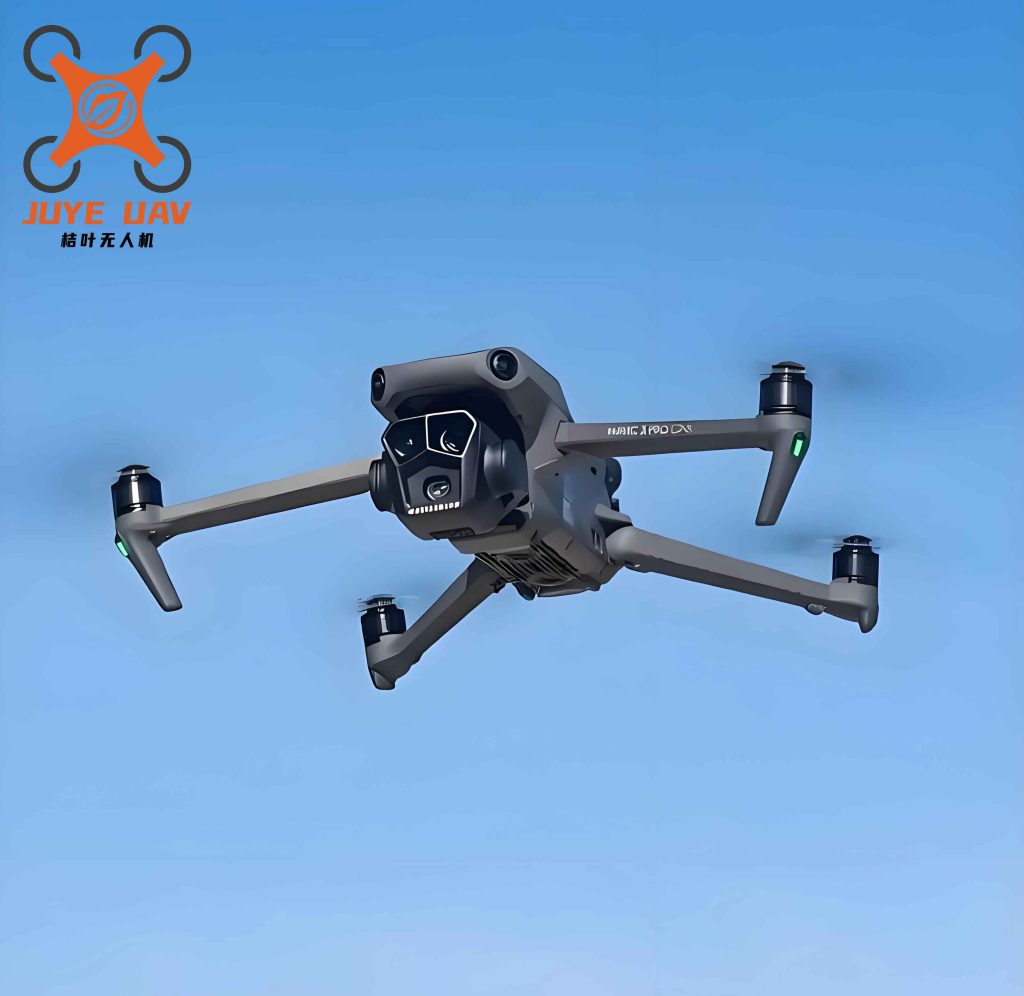
Figure 1 (please insert the China drone image here) illustrates the coverage distribution of multiple China drones over the terminal cluster.
We compare the proposed dynamic-weight CCAH-MVO algorithm with several baselines: Standard MVO, Successive Convex Approximation (SCA), Particle Swarm Optimization-Grey Wolf hybrid (PSO-GWO), Improved Ant Colony Optimization (I-ACO), and fixed-weight CCAH-MVO variants. The performance metrics are average task delay, total energy consumption, and overall system overhead.
From Figure 2 (delay comparison), we observe that our CCAH-MVO algorithm achieves the lowest delay across all task volumes. The superiority is especially pronounced when the number of tasks exceeds 60, due to the dynamic weight mechanism that prioritizes delay within the margin zone. Table 2 summarizes the delay values for different algorithms at selected task counts.
| Algorithm | 20 tasks | 50 tasks | 80 tasks | 100 tasks |
|---|---|---|---|---|
| CCAH-MVO (dynamic) | 0.42 | 0.68 | 0.89 | 1.02 |
| PSO-GWO | 0.51 | 0.85 | 1.18 | 1.45 |
| SCA | 0.48 | 0.82 | 1.25 | 1.60 |
| I-ACO | 0.55 | 1.10 | 1.80 | 2.30 |
| Standard MVO | 0.60 | 1.00 | 1.50 | 1.90 |
Regarding energy consumption, Figure 3 shows that our algorithm maintains controlled energy usage, staying below the critical threshold except under extreme loads. Table 3 provides the total energy consumption values.
| Algorithm | 20 tasks | 50 tasks | 80 tasks | 100 tasks |
|---|---|---|---|---|
| CCAH-MVO (dynamic) | 35 | 78 | 120 | 145 |
| Fixed-weight β=0.7 | 38 | 85 | 140 | 180 |
| Fixed-weight β=0.3 | 30 | 65 | 105 | 135 |
| All local | 50 | 125 | 200 | 250 |
| All edge | 40 | 95 | 170 | 230 |
The overall system overhead (a weighted combination of normalized delay and energy) is presented in Figure 4. The dynamic-weight CCAH-MVO achieves the lowest overhead across all task volumes, demonstrating its ability to adaptively balance the two objectives. In particular, when task count exceeds 80, the dynamic mechanism shifts focus to energy saving, preventing a sharp increase in overhead that plagues fixed-weight strategies.
In conclusion, this paper presents a comprehensive China drone-assisted edge computing offloading framework that integrates cooperative caching, fine-grained task partitioning, adaptive dynamic weight optimization, and intelligent drone selection. The proposed CCAH-MVO algorithm effectively mitigates resource constraints and high system overheads in complex multi-UAV MEC environments. Extensive simulations validate that our strategy achieves superior delay performance, controlled energy consumption, and minimal total overhead compared to state-of-the-art baselines. The dynamic weight mechanism is key to adapting optimization priorities based on real-time system states, ensuring robust performance under varying loads. Future work will extend this framework to multi-node collaborative scenarios and further optimize energy efficiency while maintaining low latency, contributing to the advancement of China drone-enabled edge computing for next-generation IoT applications.