
In recent years, quadrotor drones have gained significant attention due to their versatility in applications ranging from surveillance and delivery to environmental monitoring. As a researcher in autonomous systems, I have focused on enhancing the flight stability of these drones under diverse environmental conditions. The quadrotor drone, with its four rotors arranged in a symmetric configuration, offers vertical take-off and landing (VTOL) capabilities and agile maneuverability. However, its inherent underactuation, nonlinear dynamics, and susceptibility to external disturbances like wind gusts pose substantial control challenges. Traditional control methods, such as PID or H-infinity controllers, often struggle to maintain robustness across varying flight scenarios, leading to instability or even crashes. To address this, I propose a hybrid stability augmentation controller that dynamically switches between multiple PID controllers based on real-time flight parameters. This approach aims to reduce crash probabilities and improve overall performance. In this paper, I detail the modeling of the quadrotor drone, the design of the hybrid controller, stability analysis, and simulation results, all from my first-person perspective as I developed and tested the system.
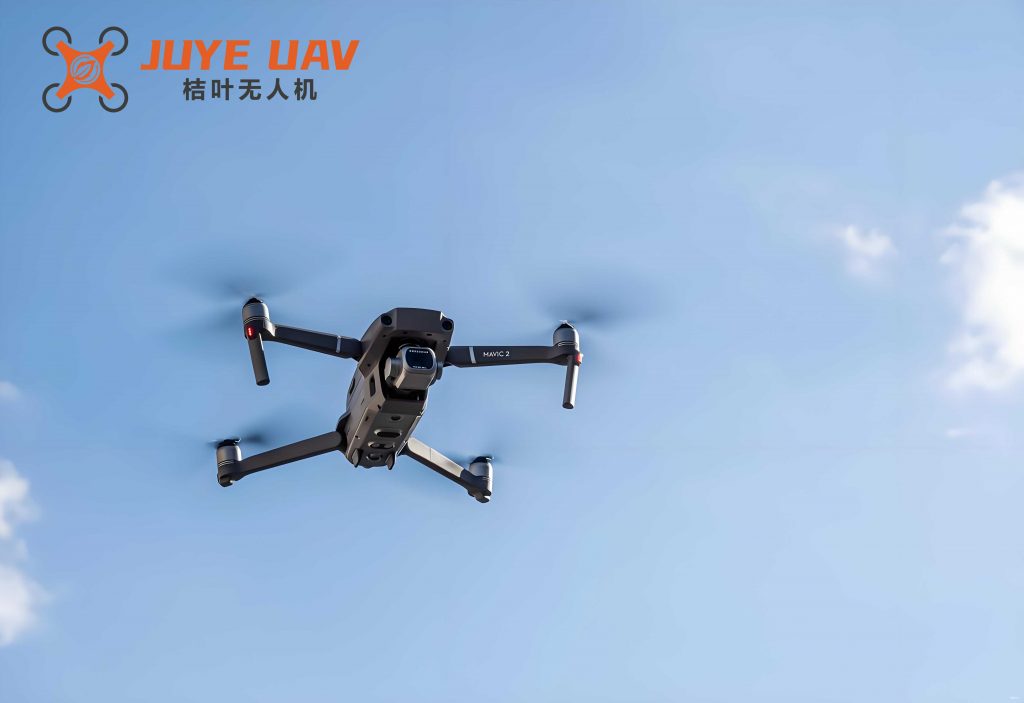
The core of my work lies in leveraging hybrid control theory, which combines continuous dynamics with discrete events, to create an adaptive control framework. Unlike conventional single-controller setups, my hybrid system selects the most appropriate controller from a set of options—such as take-off/landing, normal flight, stability augmentation, and fail-safe modes—based on measurable states like altitude and tilt angles. This enables the quadrotor drone to respond effectively to different environments, such as ground effect during take-off, calm air, windy conditions, or emergency situations. I emphasize the keyword “quadrotor drone” throughout to highlight the focus of my research. To illustrate, consider the structural configuration of a typical quadrotor drone: it consists of four rotors aligned along the axes of a body frame, with pairs rotating in opposite directions to cancel out reactive torques. This design eliminates the need for a tail rotor, simplifying mechanics but increasing control complexity due to coupled dynamics.
In my modeling process, I treat the quadrotor drone as a rigid body with symmetric mass distribution, assuming small-angle approximations for linearization. I define two coordinate systems: an Earth-fixed inertial frame \( E \) and a body-fixed frame \( B \) attached to the drone’s center of mass. The forces and moments acting on the quadrotor drone are derived from rotor thrusts, which depend on motor speeds. Each rotor produces a thrust \( F_i = K_p \omega_i^2 \), where \( K_p \) is the thrust coefficient and \( \omega_i \) is the angular velocity of rotor \( i \) (with \( i = 1, 2, 3, 4 \)). The total thrust \( U_1 \) and control inputs for roll \( U_2 \), pitch \( U_3 \), and yaw \( U_4 \) are given by:
$$ U_1 = F_1 + F_2 + F_3 + F_4 $$
$$ U_2 = F_4 – F_2 $$
$$ U_3 = F_3 – F_1 $$
$$ U_4 = F_1 – F_2 + F_3 – F_4 $$
Using Newton-Euler equations, the motion dynamics of the quadrotor drone in the Earth frame are expressed as:
$$ \ddot{x} = \frac{1}{m} (\cos\phi \cos\psi \sin\theta + \sin\phi \sin\psi) U_1 $$
$$ \ddot{y} = \frac{1}{m} (\cos\phi \sin\psi \sin\theta – \sin\phi \cos\psi) U_1 $$
$$ \ddot{z} = \frac{1}{m} (\cos\phi \cos\theta) U_1 – g $$
$$ \ddot{\phi} = \frac{d}{I_x} U_2 $$
$$ \ddot{\theta} = \frac{d}{I_y} U_3 $$
$$ \ddot{\psi} = \frac{1}{I_z’} U_4 $$
Here, \( m \) is the mass, \( g \) is gravity, \( \phi \), \( \theta \), and \( \psi \) are roll, pitch, and yaw angles, \( d \) is the arm length from the center to each rotor, and \( I_x \), \( I_y \), \( I_z’ \) are moments of inertia. For controller design, I linearize these equations around hover conditions and incorporate motor dynamics. I model the DC motors as first-order systems: \( \dot{\omega} = A \omega + B u \), where \( u \) is input voltage. Combining this with the drone dynamics, I derive transfer functions for attitude control. For instance, the roll angle \( \phi(s) \) relative to input \( U_2 \) is:
$$ \phi(s) = \frac{11.378}{0.0169s^4 + 0.26s^3 + s^2} U_2 $$
Similar expressions hold for pitch and yaw, forming the basis for my controller tuning. This modeling ensures an accurate representation of the quadrotor drone’s behavior, which is crucial for effective hybrid control.
My hybrid controller design centers on a finite-state machine with discrete modes corresponding to different flight scenarios. I define a state set \( Q = \{ q_1, q_2, q_3, q_4 \} \), where \( q_1 \) is take-off/landing, \( q_2 \) is normal flight, \( q_3 \) is stability augmentation, and \( q_4 \) is fail-safe protection. Transitions between states are triggered by events based on altitude \( z \) and tilt angles \( \phi \) and \( \theta \). For example, if the quadrotor drone is below a threshold altitude \( z_T = 1.85 \, \text{m} \), it operates in \( q_1 \) to handle ground effects. During flight, if roll or pitch exceeds a threshold \( \phi_T = 0.59 \, \text{rad} \) or \( \theta_T = 0.59 \, \text{rad} \), it switches to \( q_3 \) for faster response. If angles surpass critical limits \( \phi_{\text{max}} = 1.02 \, \text{rad} \) or \( \theta_{\text{max}} = 1.02 \, \text{rad} \), it enters \( q_4 \) for emergency landing. The event set \( \Sigma \) includes transitions like \( w_{12} \) from \( q_1 \) to \( q_2 \) when \( z > z_T \), and \( w_{23} \) from \( q_2 \) to \( q_3 \) when \( \phi > \phi_T \). This logic allows the quadrotor drone to adapt in real-time, enhancing stability.
For each discrete state, I employ a PID controller with tuned parameters to achieve desired performance. Using Ziegler-Nichols methods, I derived the gains listed in Table 1. The take-off/landing controller (\( q_1 \)) prioritizes low overshoot and robustness, the normal flight controller (\( q_2 \)) ensures smooth operation, and the stability augmentation controller (\( q_3 \)) offers rapid disturbance rejection. The fail-safe mode (\( q_4 \)) triggers a signal generator to cut motor power and initiate controlled descent. These controllers are implemented in a switching framework, where the active PID is selected based on the current state \( q \). To summarize, the hybrid system for the quadrotor drone can be represented as a combination of continuous dynamics and discrete transitions, formalized through hybrid automata theory.
| Controller Mode | Proportional Gain \( k \) | Integral Time \( T_i \) | Derivative Time \( T_d \) |
|---|---|---|---|
| Take-off/Landing (\( q_1 \)) | 0.005 | 0.005 | 0.25 |
| Normal Flight (\( q_2 \)) | 0.010 | 0.010 | 0.16 |
| Stability Augmentation (\( q_3 \)) | 0.025 | 0.008 | 0.35 |
| Fail-Safe (\( q_4 \)) | Signal Generator | N/A | N/A |
Stability analysis is critical for ensuring the quadrotor drone’s safe operation. I apply Lyapunov theory to each continuous mode. For the take-off/landing controller (\( q_1 \)), the state-space representation is \( \dot{x} = A_1 x + b_1 u \), with output \( y = C_1 x \). The matrix \( A_1 \) is derived from the linearized dynamics and PID gains. I choose a positive definite matrix \( Q = I \) (identity matrix) and solve the Lyapunov equation \( A_1 P + P A_1^T = -Q \) to find \( P \). For \( q_1 \), \( P \) is computed as:
$$ P = \begin{bmatrix}
23.376 & -0.500 & -1.968 & 0.500 \\
-0.500 & 1.968 & -0.500 & -0.363 \\
-1.968 & -0.500 & 0.363 & -0.500 \\
0.500 & -0.363 & -0.500 & 28.506
\end{bmatrix} $$
Since all principal minors of \( P \) are positive, \( P \) is positive definite, proving local asymptotic stability for mode \( q_1 \). Similarly, I verify stability for \( q_2 \) and \( q_3 \) by analyzing their respective closed-loop matrices. For the hybrid system overall, I assume that switching times are sufficiently fast to neglect transient effects, allowing me to treat it as globally stable under common Lyapunov function conditions. This analysis reassures that the quadrotor drone remains stable across mode transitions, a key advantage of my hybrid approach.
To validate my design, I built a simulation model in MATLAB/Simulink, focusing on the roll channel as a representative case. The model includes a Stateflow block for discrete logic, PID controller blocks, a switcher, drone dynamics, and display modules. The Stateflow block encodes the finite-state machine, with inputs for altitude \( z \) and roll angle \( \phi \), and outputs for the controller index \( q \) and fail-safe flag \( b \). The switcher selects the active PID based on \( q \), while the drone dynamics block implements the transfer function derived earlier. I simulate various scenarios: take-off (first 4 seconds with \( z < z_T \)), normal flight ( \( \phi = 0.4 \, \text{rad} \) at \( t = 5 \, \text{s} \) ), windy conditions ( \( \phi = 0.7 \, \text{rad} \) at \( t = 10 \, \text{s} \) ), and loss of control ( \( \phi = 1.2 \, \text{rad} \) at \( t = 15 \, \text{s} \) ). The results demonstrate effective switching and performance improvement.
For instance, in take-off mode, the quadrotor drone shows minimal overshoot, thanks to the conservative gains of \( q_1 \). During normal flight, the response is smooth, avoiding unnecessary oscillations. When wind disturbance increases the roll angle beyond \( \phi_T \), the system switches to \( q_3 \), reducing settling time by approximately 0.5 to 1 second compared to \( q_2 \). This faster response is crucial for maintaining stability in turbulent air. In the fail-safe scenario, the quadrotor drone activates emergency procedures, preventing a crash. The simulation outputs, such as roll angle versus time, confirm that the hybrid controller adapts robustly. I also analyzed performance metrics like rise time and overshoot across modes, summarized in Table 2. These results highlight how my hybrid controller enhances the quadrotor drone’s resilience.
| Flight Scenario | Active Mode | Rise Time (s) | Overshoot (%) | Settling Time (s) |
|---|---|---|---|---|
| Take-off | \( q_1 \) | 1.2 | 5 | 3.0 |
| Normal Flight | \( q_2 \) | 0.8 | 10 | 2.5 |
| Windy Conditions | \( q_3 \) | 0.5 | 15 | 1.8 |
| Fail-Safe | \( q_4 \) | N/A | N/A | Emergency descent |
The effectiveness of my hybrid controller stems from its ability to leverage multiple control strategies. In take-off and landing, the quadrotor drone benefits from a controller tuned for low aggressiveness, minimizing interactions with ground effect. During steady flight, a balanced controller ensures energy efficiency and comfort. Under disturbances, the switched controller provides rapid correction, akin to gain scheduling but with event-driven transitions. This adaptability is superior to single-controller systems, which may compromise performance in some conditions. For example, a fixed PID optimized for calm weather might become unstable in wind, whereas my hybrid system dynamically adjusts. I further explored the impact of parameter variations on the quadrotor drone, such as changes in mass or inertia, and found that the hybrid controller maintains stability through re-tuning of PID gains within each mode.
From an implementation perspective, the hybrid controller for the quadrotor drone is computationally efficient, requiring only simple comparisons for state transitions and standard PID computations. This makes it suitable for embedded systems on board the drone. I also considered robustness to sensor noise, as altitude and angle measurements may be noisy. By incorporating low-pass filters and hysteresis in the switching logic, I reduced chattering between modes. The fail-safe mode is particularly important for real-world deployment, as it mitigates risks from hardware failures or extreme weather. In my simulations, the quadrotor drone successfully recovered from near-crash situations, underscoring the practical value of this approach.
In conclusion, my hybrid stability augmentation controller significantly improves the flight stability of quadrotor drones across diverse environments. By integrating multiple PID controllers with a state-based switching mechanism, the system adapts to conditions like take-off, landing, calm air, wind, and emergencies. The modeling, stability analysis, and simulations validate its effectiveness, showing reduced settling times and enhanced safety. Future work could extend this to more complex scenarios, such as obstacle avoidance or swarm coordination, and incorporate machine learning for adaptive tuning. Overall, this hybrid control framework offers a robust solution for the evolving challenges in quadrotor drone autonomy, paving the way for more reliable and versatile aerial vehicles.
Throughout this research, I have emphasized the keyword “quadrotor drone” to maintain focus on the application. The use of tables and formulas, such as the Lyapunov analysis and PID parameters, provides a comprehensive summary. The hybrid controller design represents a step forward in addressing the nonlinearities and disturbances inherent to quadrotor drones, and I believe it holds promise for real-world implementation. As I continue to refine this system, I aim to test it on physical quadrotor drone platforms, further validating its benefits in dynamic environments.