
In recent years, quadrotor drones have seen extensive applications in military, firefighting, police, and reconnaissance operations. The integration of launch systems onto quadrotor drones, enabling the deployment of special ammunition, offers significant advantages in challenging environments, such as breaching windows in anti-terror or emergency scenarios. However, the launch process generates recoil forces that can destabilize the quadrotor drone, posing risks to operational safety. This study focuses on investigating the dynamics of a quadrotor drone equipped with a multi-tube launcher during hovering launch. I aim to analyze the effects of recoil impulses on flight stability, develop a comprehensive dynamic model, and determine theoretical thresholds for safe operation. Through numerical simulations and validation, I provide insights into the design and control of such systems, ensuring reliable performance in real-world applications.
The quadrotor drone, as an underactuated system, relies on four rotors to generate lift and control attitude. When mounted with a launcher, the internal ballistic process of ammunition firing induces反向冲击 forces, potentially disrupting the drone’s equilibrium. Thus, understanding the interplay between launch dynamics and flight control is critical. In this work, I establish an interior ballistic model to compute recoil impulses, derive a six-degree-of-freedom (6-DOF) dynamic model using Newton-Euler equations, and implement a PID controller for stability. Simulations under various launch conditions confirm the quadrotor drone’s ability to maintain stability, and I further explore the theoretical limits of recoil impulses for safe hovering launch.
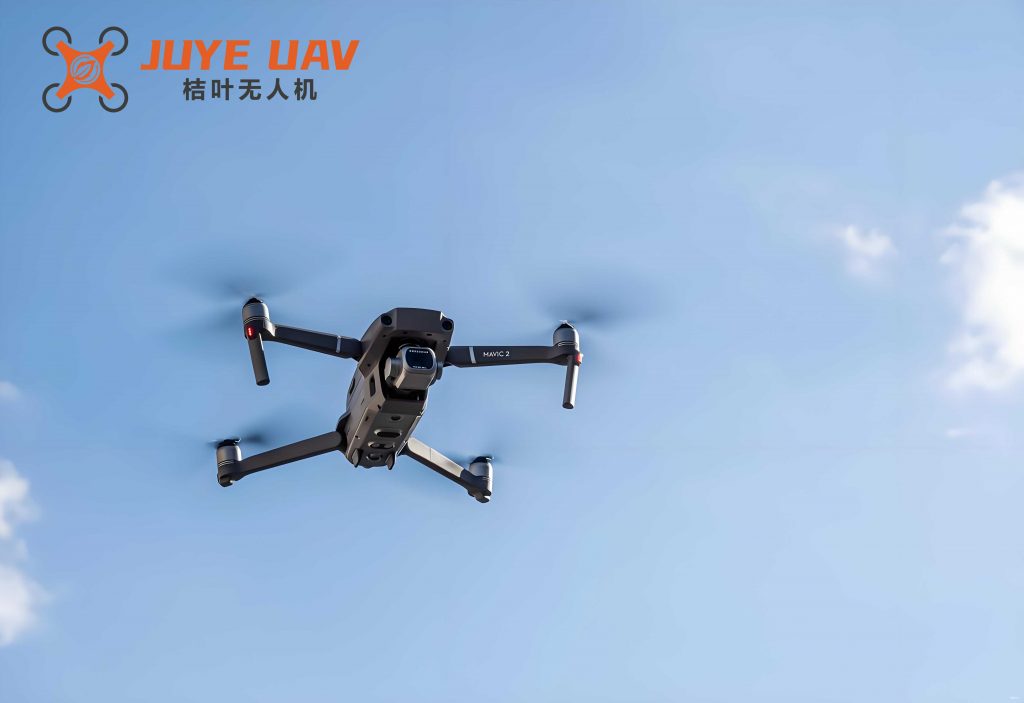
To begin, I consider a small quadrotor drone carrying a multi-tube launcher designed for special ammunition. The ammunition has specific parameters, as summarized in Table 1. These parameters are essential for modeling the interior ballistic process, which governs the recoil generation. The quadrotor drone’s ability to withstand these forces depends on its mass, inertia, and control system, making accurate modeling paramount.
| Parameter | Value |
|---|---|
| Projectile Diameter | 48 mm |
| Launch Tube Length | 498 mm |
| Total Mass | 820 g |
| Core Mass | 680 g |
| Core Length | 177 mm |
| Propellant Type | 3# Small-grain Black Powder |
The interior ballistic process involves complex phenomena, but for computational tractability, I adopt standard assumptions: the propellant burns following geometric laws,燃气 obeys the Nobel-Abel equation, and heat losses are accounted for via an increased specific heat ratio. The governing equations are derived based on these assumptions, leading to a set of differential equations that describe pressure, velocity, and travel over time. The interior ballistic equations can be expressed as follows:
$$ \psi = \chi Z (1 + \lambda Z + \mu Z^2) $$
$$ \frac{dZ}{dt} = \frac{u_1}{e_1} p^n $$
$$ S p = \phi_1 m \frac{dv}{dt} $$
$$ v = \frac{dl}{dt} $$
$$ S p (l_\psi + l) = f m_z \psi – \frac{\theta_1}{2} \phi_1 m v^2 $$
where $$ l_\psi = l_0 \left[ 1 – \frac{\rho_z}{\rho_p} (1 – \psi) – \alpha \rho_z \psi \right] $$.
In these equations, $\psi$ represents the relative burned volume of propellant, $Z$ is the relative burned thickness, $p$ is the pressure, $v$ is the projectile velocity, $l$ is the travel distance, and other terms are constants defined by propellant and gun characteristics. The parameters for interior ballistic calculation are listed in Table 2, which I use to initialize the numerical solution.
| Parameter | Value |
|---|---|
| Launch Tube Cross-sectional Area | 0.181 dm² |
| Chamber Volume | 0.0164 dm³ |
| Covolume | 1.0 dm³/kg |
| Propellant Force | 1300 kJ/kg |
| Propellant Density | 1.61 kg/dm³ |
| Grain Diameter | 0.0045 dm |
| Shape Characteristic $\lambda$ | -0.5 |
| Shape Characteristic $\chi$ | 2 |
| Initial Pressure | 1000 kPa |
| Pressure Exponent $n$ | 1 |
To solve these equations, I employ a fourth-order Runge-Kutta method, a high-precision numerical technique suitable for such differential systems. The computation yields the pressure-time curve, showing a peak pressure of approximately 1.835 MPa. This result aligns with engineering expectations for the propellant type. From the pressure distribution, I derive the recoil force by calculating the force at the breech, assuming a Lagrange pressure profile. The recoil force over time is computed, and its integral gives the recoil impulse. For validation, I conduct experimental tests using force sensors to measure the recoil during ammunition firing. The comparison between calculated and measured recoil forces shows good agreement, with a peak force of 3322 N from calculation and 3214 N from experiment, an error of 3.36%. Thus, the recoil impulse for a single shot is determined to be 11.26 N·s. This impulse serves as a key input for the dynamic analysis of the quadrotor drone.
Moving to the dynamic modeling of the quadrotor drone, I treat the entire system—drone and launcher—as a rigid body with six degrees of freedom. This approach allows me to capture both translational and rotational motions induced by launch recoil. I define two coordinate systems: an earth-fixed frame $x_D y_D z_D$ and a body-fixed frame $xyz$ attached to the quadrotor drone. The earth frame serves as the reference for describing position and orientation, while the body frame simplifies the expression of forces and moments. To streamline the analysis, I make several assumptions: the center of mass lies on the x-axis of the body frame, Earth’s rotation is negligible, gravity is constant, mass loss due to firing is ignored, and aerodynamic disturbances are omitted during hovering. These assumptions focus the model on the primary dynamics affected by recoil.
Using the Newton-Euler formulation, I derive the equations of motion. The translational dynamics are governed by:
$$ \ddot{x} = (F_1 + F_2 + F_3 + F_4) \frac{\cos\theta \sin\phi \cos\gamma + \sin\theta \sin\gamma}{m_v} – \frac{F_0}{m_v} $$
$$ \ddot{y} = (F_1 + F_2 + F_3 + F_4) \frac{\cos\theta \sin\phi \sin\gamma – \sin\theta \cos\gamma}{m_v} $$
$$ \ddot{z} = (F_1 + F_2 + F_3 + F_4) \frac{\cos\theta \cos\phi}{m_v} – g $$
where $F_i$ (for $i=1,2,3,4$) are the lift forces from the four rotors, $m_v$ is the total mass of the quadrotor drone system, $F_0$ is the recoil force, $\theta$, $\phi$, $\gamma$ are pitch, roll, and yaw angles, and $g$ is gravitational acceleration. The rotational dynamics are given by:
$$ \dot{\omega}_x = \frac{l (F_3 – F_1) + M_{F_0} – \omega_y \omega_z (I_z – I_y)}{I_x} $$
$$ \dot{\omega}_y = \frac{l (F_4 – F_2) – \omega_x \omega_z (I_x – I_z)}{I_y} $$
$$ \dot{\omega}_z = \frac{d (F_2 – F_1 + F_4 – F_3) – \omega_x \omega_y (I_y – I_x)}{I_z} $$
Here, $\omega_x, \omega_y, \omega_z$ are angular velocities, $l$ is the arm length from the center of mass to each rotor, $d$ is a drag coefficient related to rotor torque, $I_x, I_y, I_z$ are moments of inertia, and $M_{F_0}$ is the moment due to recoil force. The inertia values for the quadrotor drone system are computed from a simplified 3D model: $I_x = 0.1034 \, \text{kg} \cdot \text{m}^2$, $I_y = 0.1717 \, \text{kg} \cdot \text{m}^2$, and $I_z = 0.1015 \, \text{kg} \cdot \text{m}^2$.
The quadrotor drone achieves attitude control by varying rotor speeds, which adjust the lift forces. The relationship between lift and rotor speed is typically quadratic: $F_i = K \Omega_i^2$, where $K$ is a lift coefficient and $\Omega_i$ is the rotational speed. To manage pitch, roll, yaw, and altitude, I define control inputs based on rotor forces:
$$ U_1 = F_1 + F_2 + F_3 + F_4 $$
$$ U_2 = F_3 – F_1 $$
$$ U_3 = F_4 – F_2 $$
$$ U_4 = F_2 – F_1 + F_4 – F_3 $$
$U_1$ controls vertical motion, $U_2$ controls pitch, $U_3$ controls roll, and $U_4$ controls yaw. These inputs are regulated using a PID controller, a widely used linear control strategy. The PID controller calculates an output $u(t)$ based on the error $e(t)$ between desired and actual values:
$$ u(t) = k_P e(t) + k_I \int_0^t e(\tau) d\tau + k_D \frac{de(t)}{dt} $$
where $k_P$, $k_I$, and $k_D$ are proportional, integral, and derivative gains, respectively. For the quadrotor drone, I implement separate PID loops for position and attitude control. The position control uses PD controllers for x, y, and z coordinates, while attitude control employs PID controllers for pitch, roll, and yaw angles. The control system structure is illustrated in a block diagram, though I omit the visual here for brevity, focusing on mathematical descriptions.
To simulate the quadrotor drone’s response during ammunition launch, I build a model in Simulink, incorporating the dynamic equations and PID controllers. The simulation parameters are set as in Table 3, reflecting the physical system and launch conditions. The recoil force $F_0$ is applied as a pulse with duration 0.01 s, starting at time 10 s, to mimic the instantaneous nature of firing.
| Parameter | Value |
|---|---|
| Total System Mass | 12.5 kg |
| Recoil Force Duration | 0.01 s |
| Recoil Start Time | 10 s |
| Gravity Acceleration | 9.85 m/s² |
| Recoil Impulse | 11.26 N·s |
The PID control gains are tuned for stability, as shown in Table 4. These values are selected based on preliminary simulations to ensure effective disturbance rejection post-launch.
| Control Loop | Proportional Gain | Integral Gain | Derivative Gain |
|---|---|---|---|
| Altitude | 40 | – | 25 |
| Pitch | 3 | 0.1 | 1.2 |
| Roll | 3 | 0.1 | 1.2 |
| Yaw | 3 | 0.1 | 1.2 |
The multi-tube launcher has six launch positions, but due to symmetry, they can be grouped into four distinct firing scenarios, labeled as Positions 1 to 4. Additionally, the launch angle $\alpha_f$ can be varied; I consider 0°, 15°, 30°, and 45° angles to represent different aiming configurations. Thus, there are 16 simulation scenarios in total. For each, I compute the quadrotor drone’s attitude and position changes after firing. As an example, for Position 2 with a 0° launch angle, the quadrotor drone experiences a maximum pitch change of -6.68°, peaking around 0.4 s after launch, and returns to the initial attitude after approximately 2.79 s. The altitude increases from 10 m to 10.25 m due to reduced mass and control adjustments, stabilizing back after 2.2 s. Similar patterns are observed across scenarios, with pitch being the most affected angle. The maximum pitch deviations for all scenarios are summarized in Table 5, demonstrating that the quadrotor drone can recover stability in all cases.
| Position | $\alpha_f = 0^\circ$ | $\alpha_f = 15^\circ$ | $\alpha_f = 30^\circ$ | $\alpha_f = 45^\circ$ |
|---|---|---|---|---|
| 1 | -5.72° | -5.52° | -4.95° | -4.04° |
| 2 | -6.68° | -6.44° | -5.94° | -4.18° |
| 3 | -5.70° | -5.34° | -5.10° | -4.31° |
| 4 | -6.91° | -6.28° | -5.61° | -4.09° |
To validate the simulation, I conduct a field test with the quadrotor drone firing ammunition from Position 2 at 0° angle. Using high-speed cameras and sensors, I measure a maximum pitch change of -6.14°, compared to the simulated -6.68°, an error of 8.80%. The altitude rise is 0.53 m in the test versus 0.25 m in simulation, attributed to the lack of altitude control in the model. Overall, the agreement confirms the model’s accuracy. These results indicate that the PID-controlled quadrotor drone can safely handle single-shot launches under various conditions, maintaining hover stability despite recoil disturbances.
Beyond nominal cases, I investigate the theoretical threshold of recoil impulse that the quadrotor drone can withstand without losing control. By incrementally increasing the impulse in simulations, I find that at 114.3 N·s, the rotor speeds required for pitch control reach their limits, causing significant attitude deviations. At 124 N·s, the quadrotor drone descends rapidly from 10 m to ground level, and at 136.1 N·s, both altitude and attitude become uncontrollable. Thus, the theoretical safety threshold for recoil impulse is 136.1 N·s. This value provides a design guideline for launcher development, ensuring that ammunition choices do not exceed the quadrotor drone’s capacity. The analysis highlights the importance of impulse management in enhancing the robustness of quadrotor drone systems.
In conclusion, this study comprehensively analyzes the dynamics of a quadrotor drone during special ammunition hovering launch. Through interior ballistic modeling, I compute recoil impulses and validate them experimentally. The 6-DOF dynamic model, coupled with PID control, successfully simulates the quadrotor drone’s response to launch disturbances, showing stable recovery across multiple firing scenarios. The theoretical impulse threshold of 136.1 N·s offers a safety benchmark for system design. These findings contribute to the advancement of quadrotor drone technology in tactical applications, enabling reliable deployment in demanding environments. Future work could explore adaptive control strategies, multi-shot sequences, and environmental factors to further optimize performance.
The integration of launch systems with quadrotor drones represents a significant step forward in unmanned aerial capabilities. By mastering the dynamics involved, I pave the way for safer and more effective operations. The quadrotor drone, as a versatile platform, continues to evolve, and studies like this ensure its readiness for complex missions. As technology progresses, the synergy between aerial mobility and payload delivery will only strengthen, solidifying the role of quadrotor drones in modern security and emergency response.