
The landscape of modern warfare is undergoing a profound transformation, increasingly characterized by unmanned and remotely operated systems. Within this shift, military UAV platforms have become indispensable assets, performing critical roles in tactical and strategic reconnaissance, target acquisition, battle damage assessment, electronic warfare, and communications intelligence. The operational demand for these systems is intense, placing extraordinary pressure on maintenance and support structures to ensure high levels of availability and mission readiness. However, the support infrastructure for military UAV fleets often lags behind their technological sophistication. Traditional maintenance planning, relying on historical data and generalized assumptions, struggles to cope with the complex, multi-echelon support chains, diverse failure modes, and stringent cost constraints inherent to modern unmanned systems. This gap between operational need and support capability creates a critical vulnerability, potentially grounding expensive assets and compromising mission success.
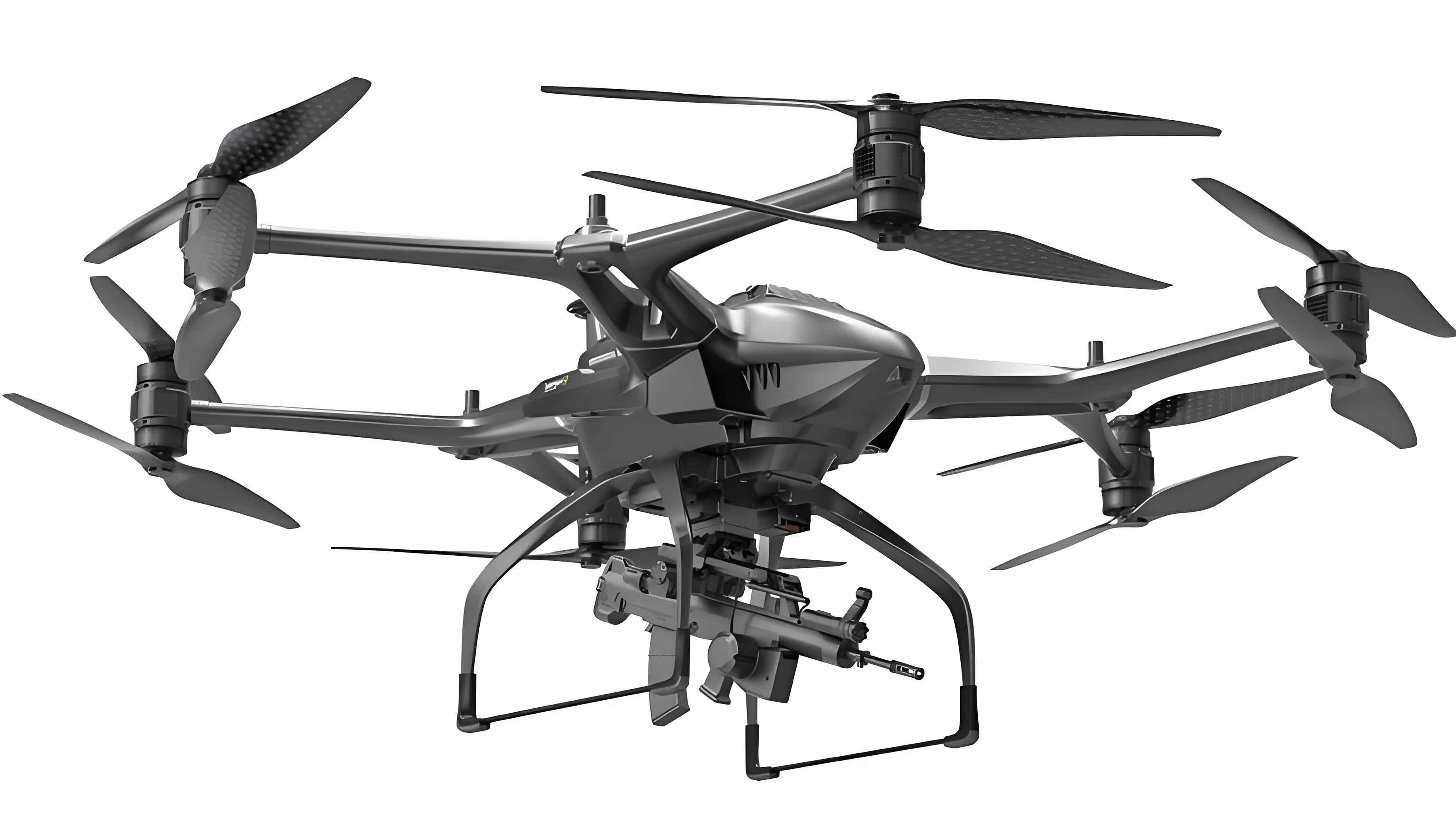
The challenge is compounded by the relatively recent fielding of advanced military UAV systems. While development cycles may span years, comprehensive supportability engineering and detailed maintenance modeling are frequently not prioritized to the same degree as performance parameters. This results in support strategies built on best guesses rather than analytical optimization, leading to inefficient spare part inventories, suboptimal staffing levels, and unpredictable maintenance turnaround times. The consequences are measurable: inflated lifecycle costs, reduced fleet availability, and an inability to accurately predict and sustain operational tempo. To transition from a reactive to a proactive, predictive, and precision-driven support paradigm, maintenance organizations require advanced analytical tools capable of modeling the intricate interplay between equipment reliability, maintenance operations, and logistics supply chains.
This is where specialized software suites like Systecon ILS (Integrated Logistics Support) become pivotal. Developed over nearly four decades, Systecon ILS represents a mature, field-proven solution for supportability analysis, maintenance simulation, and logistics optimization. Its adoption by major defense forces and aerospace primes—including entities like the US Air Force, Boeing, and Lockheed Martin—testifies to its robustness and effectiveness. Reported benefits from annual user reviews indicate potential savings of 20–40% in maintenance costs and 20–30% in spare parts expenditures through its application. For complex, technology-intensive systems like military UAVs, the potential return on investment from such analytical rigor is significant. This article explores, from a practitioner’s perspective, the core functionalities of the Systecon ILS software, with a focus on its Opus10 and SIMLOX modules, and details a comprehensive framework for its application in optimizing the maintenance and support of military UAV fleets.
Deconstructing the Systecon ILS Toolkit: Opus10 and SIMLOX
The Systecon ILS suite is comprised of several interoperable tools, but two are central to maintenance and support optimization: Opus10, designed for logistics and spare part optimization, and SIMLOX, built for operational availability and mission capability simulation. Together, they form a powerful cycle of analysis and validation.
Opus10: The Foundation of Spares Optimization
Opus10 serves as the analytical engine for determining the optimal inventory of spare parts across a multi-echelon support network. Its power lies in constructing a detailed, hierarchical model of the equipment system and its accompanying support organization.
System Modeling: The process begins with defining the indenture structure of the military UAV. Every system is decomposed into Line Replaceable Units (LRUs), which are further broken down into Shop Replaceable Units (SRUs), Parts, and so on. Opus10 supports a virtually unlimited number of indenture levels, allowing for a granular representation. Each item is classified with a specific maintainability code:
| Component Type | Abbreviation | Description |
|---|---|---|
| Line Replaceable Unit | LRU | Removed and replaced at the operational site. |
| Shop Replaceable Unit | SRU | Removed and replaced at the workshop/depot. |
| Partially Repairable Unit | PRU | Partially repaired on-site, then sent deeper. |
| Discardable Unit | DU | Not repaired, always replaced. |
Support Network Modeling: Next, the maintenance and logistics network is mapped. Sites are defined by their function:
- Operating Site (OP): Where the military UAV is based and flown. Can perform LRU swaps but holds minimal stock.
- Workshop (WS):
- Performs repairs but does not hold inventory.
- Depot (DEPOT): Performs major repairs and holds strategic inventory.
- Store (STORE): Holds inventory only, no repair capability.
The flow of failed and serviceable items between these nodes, including transportation times and costs, is specified to create a realistic logistics pipeline.
Optimization and Analysis: With the models built, Opus10 uses mathematical algorithms (often based on marginal analysis or multi-indenture, multi-echeton techniques) to calculate the optimal stock level for each part at each location. The objective is typically to achieve a target system availability or fill rate at the lowest possible total cost. Key analyses include:
- Generating Cost-Effectiveness (C/E) curves, showing the relationship between invested cost (in spares) and achieved availability.
- Identifying high-cost, long-lead-time, or high-demand critical items that dominate support costs.
- Evaluating trade-offs, such as repairing versus discarding a component, or stocking an item at the OP versus the DEPOT.
The core optimization problem for a single site can be simplified as maximizing operational availability $A_o$ subject to a budget constraint $B$:
$$
\text{Maximize } A_o(S_1, S_2, …, S_n) = \frac{MTBM}{MTBM + MDT}
$$
$$
\text{Subject to: } \sum_{i=1}^{n} c_i \cdot S_i \leq B
$$
Where $S_i$ is the stock level for item $i$, $c_i$ is its cost, $MTBM$ is Mean Time Between Maintenance, and $MDT$ is Mean Down Time (heavily influenced by spare part availability). For a multi-echelon system for a military UAV fleet, the model becomes a complex, nonlinear integer programming problem that Opus10 is designed to solve efficiently.
SIMLOX: The Dynamics of Mission Simulation
While Opus10 provides a static, probabilistic optimization, SIMLOX introduces the dimension of time and discrete events. It is a simulation tool that models the stochastic behavior of equipment operation, failure, maintenance actions, and logistics delays to evaluate the dynamic performance of a support solution.
Model Framework: SIMLOX requires two primary models: the Mission System (the military UAV fleet and its tasks) and the Support System (the maintenance organization).
1. Mission System Modeling:
- Equipment Tree: Similar to Opus10, the UAV’s physical breakdown structure is defined.
- Operational Units: UAVs are grouped into squadrons or flights.
- Mission Profiles: Detailed flight schedules, sortie rates, and usage intensity are specified. Mission abort rules due to critical failures can be defined.
- Failure & Reliability Data: Mean Time Between Failures (MTBF), time-to-failure distributions, and battle damage rates are input for each component.
2. Support System Modeling:
- Organization & Resources: The network of maintenance sites (OP, WS, DEPOT) is created. Crucially, finite resources like personnel (with shift patterns), test equipment, and facility bays are defined.
- Maintenance Processes: Repair tasks are broken down into sequences of job steps. Each step consumes time and specific resources. Preventive maintenance and inspections are scheduled.
- Inventory Policy: The stock levels calculated by Opus10 can be imported directly as a starting point.
- Transportation Logic: Rules for shipping items between sites, including delays and batch sizes, are configured.
Simulation and Output: SIMLOX then runs a discrete-event simulation over a specified time horizon (e.g., one year of operations). It tracks every failure, repair job, part request, and resource utilization. Outputs are rich and graphical, including:
- Fleet Availability over time.
- Mission Capability Rate (percentage of scheduled missions successfully launched).
- Resource utilization rates for technicians and equipment.
- Spare part consumption and wait-time statistics.
- Bottleneck identification in the maintenance flow.
The fundamental output, Operational Availability ($A_o$), is computed dynamically as a time average:
$$
A_o = \frac{1}{T} \int_{0}^{T} \frac{N_{operational}(t)}{N_{total}} dt
$$
Where $T$ is the simulation time and $N_{operational}(t)$ is the number of serviceable military UAVs at time $t$.
| Feature | Opus10 (Analytical Optimization) | SIMLOX (Discrete-Event Simulation) |
|---|---|---|
| Primary Purpose | Calculate optimal spare part inventories and locations. | Evaluate dynamic mission effectiveness and resource utilization. |
| Modeling Focus | Static system structure and cost-availability trade-off. | Dynamic processes, queues, schedules, and resource constraints. |
| Core Methodology | Mathematical algorithms (Marginal Analysis, METRIC variants). | Stochastic, time-stepped simulation of discrete events. |
| Key Output | Stocking lists, C/E curves, lifecycle cost estimates. | Availability timelines, mission success rates, bottleneck analysis. |
| Role for Military UAV | Determine what to buy and where to put it. | Determine how well the support system will perform under realistic operational stress. |
A Structured Application to Military UAV Maintenance
The integration of Opus10 and SIMLOX provides a closed-loop, evidence-based methodology for designing and validating the support system for a military UAV fleet. The application can be structured across the lifecycle, from acquisition through sustainment.
Phase 1: Acquisition & Initial Fielding Support Package Design
During the production phase, the Original Equipment Manufacturer (OEM) should utilize Systecon ILS to design the initial support package that will be fielded with the military UAV system.
Action (Using Opus10): The OEM models the complete UAV system—airframe, propulsion, payloads (EO/IR, SAR, SIGINT), ground control station, and data links—using reliability predictions from design analyses. A proposed multi-echelon support network (e.g., Squadron OP, Theater WS, Central DEPOT) is modeled. Opus10 is then run to generate the optimized initial provisioning list: the precise type and quantity of spares for LRUs and SRUs to be deployed to each level of maintenance. This moves beyond rule-of-thumb “spares kits” to a scientifically justified inventory that balances high readiness against constrained initial budget. The analysis will explicitly identify critical, long-lead-time components unique to the military UAV, such as specialized gimbals for payload sensors or composite wing spars, ensuring they receive appropriate stocking priority.
Action (Using SIMLOX): The OEM uses SIMLOX to validate this support package against anticipated operational tempos. They simulate the first year of operations, including training sorties and potential deployment scenarios. The simulation reveals if the proposed maintenance manpower is adequate, if test equipment will become a bottleneck, and predicts the expected operational availability. This “digital twin” of the support system allows for refinement before a single physical spare part is ordered or a technician is trained.
Phase 2: In-Service Optimization & Adaptive Support
Once the military UAV fleet is operational, real-world failure data and usage patterns replace predictions. Maintenance units can now use the software for continuous improvement.
Action – Spares Inventory Re-optimization: Field failure data (MTBFs) and actual repair turnaround times are fed back into Opus10. The model is recalibrated and re-optimized periodically (e.g., annually or before a major deployment). This adapts the inventory to reality, potentially reducing overstock of low-failure items and increasing stock of newly identified high-wear components. The economic order quantity for consumables and discardable items can be refined using inventory models. A common model used within such frameworks is a $(s, S)$ policy optimized for cost and availability. The probability of a demand during lead time $T$ for a part with demand rate $\lambda$ is Poisson-distributed:
$$
P_{fill}(s) = \sum_{k=0}^{s} \frac{e^{-\lambda T} (\lambda T)^k}{k!}
$$
Where $s$ is the reorder point. Opus10 performs this calculation across thousands of parts simultaneously, considering their interdependencies.
Action – Maintenance Manpower and Resource Planning (Using SIMLOX): This is a critical application for military UAV units. SIMLOX can model the detailed workflow in a hangar: how many UAVs can be simultaneously inspected, how many technicians with specific certifications (avionics, airframe, propulsion, payload) are needed per shift, and the utilization of scarce test stands. By simulating different staffing levels and skill mixes, the unit can identify the optimal personnel configuration to maximize throughput without unnecessary overstaffing. For example, the simulation can answer: “If we increase our certified payload technicians from 2 to 3, what is the expected reduction in average turnaround time for a sensor-related fault?”
Action – Maintenance Policy Development and Comparison: SIMLOX is an ideal tool for evaluating competing maintenance strategies for the military UAV fleet.
- Condition-Based Maintenance (CBM) vs. Scheduled Overhauls: Simulate the impact of replacing a hard-time engine overhaul interval with a CBM policy based on simulated engine health monitoring data. Compare costs, availability, and resource implications.
- Repair-vs-Discard Decisions: Model the cost and availability impact of repairing a specific LRU (like a flight computer) at the theater WS versus always discarding it and replacing it with a new unit. The model accounts for the repair time, cost, required test equipment, and the resulting demand on the spare part pipeline.
- Contingency and Deployment Planning: Develop and test “what-if” scenarios. What is the expected mission capability if the fleet is forward-deployed with only 50% of its usual spares? How does availability degrade if the supply line is extended? SIMLOX provides data-driven answers, enabling robust contingency planning.
Phase 3: Knowledge Management and Technical Data Updates
A centralized, model-based approach fosters superior knowledge management. The evolving Systecon ILS models become a digital repository of support knowledge for the military UAV platform. OEMs can deliver updated model files reflecting engineering changes, new failure modes, or improved repair procedures. These can be seamlessly integrated by the using unit to update their optimization and simulation parameters. Furthermore, SIMLOX can be used to generate standardized, optimized maintenance plans for common failure scenarios and pre/post-flight check packages, ensuring consistency and efficiency across different maintenance crews.
| Application Area for Military UAV | Primary Systecon ILS Tool | Key Modeling Inputs | Expected Output/Benefit |
|---|---|---|---|
| Initial Spares Provisioning | Opus10 | System Bill of Materials (BOM), predicted MTBFs, target availability, support network structure. | Optimized buy list for initial fielding, minimizing cost for a given readiness target. |
| In-Service Inventory Management | Opus10 | Actual field failure data, repair cycle times, holding/ordering costs. | Dynamic re-stocking recommendations, reduction in carrying costs, improved fill rates. |
| Maintenance Manpower Optimization | SIMLOX | Detailed task times, technician skills/shifts, facility & tool constraints. | Optimal crew size and mix, identification of manpower bottlenecks, efficient shift scheduling. |
| Maintenance Policy Evaluation | SIMLOX | Alternative repair procedures, CBM logic, different organizational structures. | Comparative analysis of policy impacts on availability and cost; data-driven policy selection. |
| Deployment & Contingency Analysis | SIMLOX | Modified mission profiles, constrained supply lines, elevated failure rates. | Prediction of mission capability under stress, identification of single points of failure in the support chain. |
Prerequisites and Implementation Considerations
The successful application of Systecon ILS software to military UAV maintenance is contingent upon several key factors:
1. Data Foundation: The models are only as good as the data fed into them. Implementing this approach requires a commitment to disciplined data collection: accurate failure reports, precise repair times, correct component indentures, and realistic mission profiles. Integrating the software with existing Fleet Management or Maintenance Information Systems is highly advantageous to enable automated data flow.
2. Expertise Development: Users must possess a dual competency: deep knowledge of military UAV systems and their maintenance processes, and the analytical skill to correctly construct and interpret models. Mis-specified models will yield misleading optimizations. Investment in dedicated training for maintenance planners and logistics officers is essential.
3. Organizational Collaboration: The full benefit is realized through a collaborative loop between the using military unit and the OEM. The unit provides operational data; the OEM provides updated engineering reliability data and model refinements. This requires established, trust-based channels for technical data exchange, which can be a hurdle in traditional customer-contractor relationships.
4. Cultural Shift: Moving from experience-based decision-making to model-driven optimization represents a cultural shift for many maintenance organizations. It requires leadership buy-in to trust the software’s outputs, even when they contradict established practices, provided the underlying models are valid.
The cost of the software itself, while significant, must be evaluated against the potential savings. For a fleet of high-value military UAVs, avoiding even one grounded aircraft due to a missing $10,000 part during a critical mission, or eliminating 15% of an inefficient spare part inventory, can justify the investment many times over. The real value is not just in cost avoidance, but in the enhanced, predictable readiness of the fleet.
Conclusion: Toward Precision Support for Unmanned Systems
The complexity and operational criticality of modern military UAV systems demand an equally sophisticated approach to their maintenance and sustainment. The era of relying on generalized logistics rules and incremental improvements is inadequate for platforms where mission success hinges on precise availability. Systecon ILS software, through the synergistic use of Opus10 for static optimization and SIMLOX for dynamic simulation, provides a powerful, evidence-based framework to design, validate, and continuously improve support systems.
By applying this toolkit, maintainers of military UAV fleets can transition from reactive troubleshooters to proactive sustainment managers. They can determine the scientifically optimal mix of spares, people, and procedures required to meet readiness goals. They can test support strategies in a risk-free digital environment before committing real resources. Ultimately, this leads to a more resilient, responsive, and cost-effective support infrastructure—transforming maintenance from a cost center into a genuine force multiplier. As unmanned systems continue to proliferate and their roles expand, the imperative for such analytical, model-driven support solutions will only intensify. Implementing them today is an investment in the assured operational readiness of the military UAV fleets of tomorrow.