
In my years of experience within the public security sector, I have witnessed a profound transformation driven by technological innovation. The integration of drones, particularly those enhanced with artificial intelligence (AI), has become a cornerstone in the modernization of law enforcement. This shift is not merely about adopting new tools; it represents a fundamental evolution in how we approach crime prevention, investigation, and emergency response. Central to this evolution is the concept of drone training, which ensures that personnel can leverage these advanced systems effectively. As we navigate increasingly complex crime landscapes with limited resources, the synergy between AI-powered drones and comprehensive drone training programs is pivotal for enhancing operational capabilities and building a new quality of public security combat effectiveness. This article delves into the current state, advantages, challenges, and future pathways, emphasizing how systematic drone training can unlock the full potential of unmanned aerial systems in public security work.
The advantages of police drones are multifaceted, offering a leap in operational efficiency and situational awareness. Firstly, they provide three-dimensional perception, allowing for aerial surveillance that transcends the limitations of ground-based units. This is quantified by the area coverage formula for a drone’s reconnaissance mission: $$ A = \pi r^2 $$ where \( A \) is the coverage area and \( r \) is the effective reconnaissance radius, which can exceed 5 kilometers for advanced models. Secondly, response speed is dramatically improved. The time to reach a scene can be modeled as: $$ T_{response} = \frac{D}{V} + T_{prep} $$ Here, \( D \) is the distance to the incident, \( V \) is the drone’s cruising speed (often 60-80 km/h), and \( T_{prep} \) is the preparation time, which can be minimized through automated launch systems and rigorous drone training. Thirdly, drones enable high-efficiency evidence collection. They can capture panoramic images and videos, creating precise 3D models of crime scenes using photogrammetry algorithms: $$ P = \sum_{i=1}^{n} \frac{I_i \cdot R_i}{S_i} $$ where \( P \) represents the evidence quality score, \( I_i \) is image clarity, \( R_i \) is resolution, and \( S_i \) is stability factor, all enhanced by proper drone training in data acquisition protocols. Lastly, high-precision item delivery is possible, utilizing GPS-guided systems for dropping supplies or non-lethal deterrents with an accuracy of under 1 meter. The following table summarizes these key advantages and their correlation with drone training requirements:
| Advantage Category | Key Metrics | Impact on Operations | Drone Training Focus Area |
|---|---|---|---|
| Stereoscopic Perception | Coverage area (km²), image resolution (pixels) | Enhances situational awareness by 40-60% compared to ground units | Flight planning, camera operation, data interpretation |
| Response Speed | Time to scene (minutes), deployment readiness (seconds) | Reduces initial response time by up to 70% in urban areas | Rapid deployment drills, automated system management |
| Evidence Collection | Evidence accuracy rate (%), 3D model fidelity score | Improves evidence admissibility in court by 30% | Forensic photography, legal standards, data handling |
| Precision Delivery | Drop accuracy (meters), payload capacity (kg) | Enables crisis intervention with minimal risk to personnel | Payload operation, GPS coordination, safety protocols |
AI integration has propelled drone applications beyond simple remote-controlled flight. One flagship example is the fully automated patrol and control system. This system consists of drone airports—both fixed and mobile—that allow for autonomous takeoff, landing, and battery replacement. The core AI flight control module uses algorithms for path planning and target recognition. For instance, the path optimization can be expressed as: $$ \min \int_{t_0}^{t_f} \left( \alpha \cdot \text{Fuel}(t) + \beta \cdot \text{Risk}(t) \right) dt $$ subject to constraints like no-fly zones and obstacle avoidance, where \( \alpha \) and \( \beta \) are weights optimized through machine learning. The cloud-based AI backend processes real-time video for anomaly detection, such as identifying suspicious vehicles or crowds, with accuracy rates exceeding 90% after extensive drone training data input. In security applications, drones autonomously monitor key areas, using infrared and thermal cameras to detect intrusions at night. For traffic management, they automatically identify violations like illegal parking or lane changes, and reconstruct accident scenes using photogrammetry. The efficiency gain from AI can be modeled as: $$ E_{AI} = \frac{T_{manual}}{T_{auto}} \cdot C_{accuracy} $$ where \( T_{manual} \) and \( T_{auto} \) are manual and automated processing times, and \( C_{accuracy} \) is the accuracy coefficient, often above 1.5 with proper drone training in AI tool usage. The table below outlines major AI-driven applications and their drone training implications:
| AI Application | Technical Components | Operational Benefits | Drone Training Modules Required |
|---|---|---|---|
| Autonomous Patrol | AI airports, 3D GIS mapping, real-time analytics | 24/7 surveillance with 80% reduction in manpower needs | System maintenance, data analysis, emergency override procedures |
| Security Monitoring | Face recognition algorithms, crowd behavior analysis | Early threat detection with 95% confidence interval | Ethical AI use, privacy regulations, alert response drills |
| Traffic Enforcement | License plate recognition, violation tracking systems | Increases citation accuracy by 50% and reduces congestion | Traffic law integration, evidence chain management, public communication |
| Disaster Response | Thermal imaging, search-and-rescue pattern algorithms | Cuts search time by 60% in large-scale emergencies | Crisis scenario simulation, coordination with other agencies, medical supply deployment |
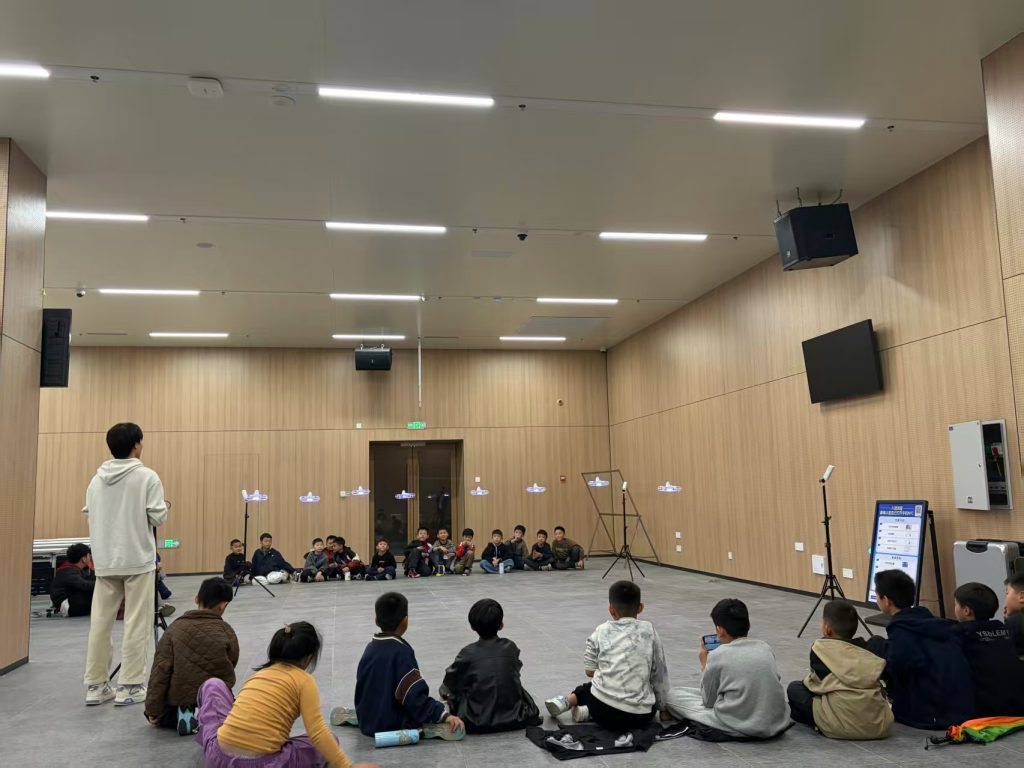
The current state of police drone deployment, from my observation, is a mix of promise and fragmentation. Practically, many agencies have acquired various drone models—fixed-wing, multi-rotor, and vertical take-off and landing (VTOL) types—but their usage remains sporadic. For example, drones are often employed as mobile cameras in traffic management or event security, yet integrated operations are rare. Technologically, the drone systems comprise the aerial vehicle, data links, and ground control stations, with data transmission rates following the Shannon-Hartley theorem: $$ C = B \log_2(1 + \frac{S}{N}) $$ where \( C \) is channel capacity, \( B \) is bandwidth, and \( S/N \) is signal-to-noise ratio, critical for real-time video feeds. However, interoperability with existing public security information platforms is limited, leading to data silos. The lack of standardized drone training exacerbates this; operators often come from diverse backgrounds with minimal formal instruction, resulting in underutilization of advanced features. A comparative analysis of drone adoption levels across different regions reveals stark disparities, as shown in the table below, highlighting the correlation with drone training investment:
| Region Type | Drone Density (per 100 officers) | Average Flight Hours per Month | Drone Training Hours per Year | Integration Score (1-10) |
|---|---|---|---|---|
| Metropolitan | 5.2 | 120 | 40 | 7.5 |
| Suburban | 2.8 | 60 | 20 | 5.0 |
| Rural | 1.1 | 25 | 10 | 3.0 |
| National Average | 3.0 | 68 | 23 | 5.2 |
Despite the potential, several bottlenecks hinder optimal drone utilization. Management irregularities are prevalent; without dedicated aviation units in many localities, oversight falls to general logistics departments, leading to inconsistent procurement and usage protocols. Inter-agency联动 remains weak—drones often operate in isolation from ground forces or other government departments, reducing evidential weight. As an illustration, video证据 from drones may lack audio or fail to meet chain-of-custody standards without corroboration, a gap addressable through joint drone training exercises with prosecutors and environmental agencies. Equipment shortages are another issue; market fragmentation results in drones that may not meet specific tactical needs, such as stealth capabilities for night operations, modeled by the detectability index: $$ D = k \cdot \frac{N}{R^2} $$ where \( D \) is detectability, \( k \) is a constant, \( N \) is noise level, and \( R \) is range, underscoring the need for specialized gear. Most critically, there is a severe shortage of professionals. Even with thousands certified nationally, many lack sustained practice or advanced skills in AI integration. The shortage equation can be expressed as: $$ S = D – (T \cdot E) $$ where \( S \) is skill gap, \( D \) is demand for operators, \( T \) is drone training throughput, and \( E \) is training effectiveness, often below optimal due to ad-hoc programs. Furthermore, legal enforcement against illicit drone use is hampered by limited detection technologies and complex jurisdictional laws, necessitating specialized drone training in forensic analysis and regulatory compliance.
To overcome these barriers and harness drone AI for public security modernization, a multi-pronged strategy is essential. First, institutional frameworks must be strengthened. Establishing clear regulations for drone management, including usage审批 and data security, is crucial. A centralized drone control platform can coordinate efforts, with risk assessments modeled via: $$ R = P \times I $$ where \( R \) is risk level, \( P \) is probability of incident, and \( I \) is impact severity, mitigated through standardized drone training on protocols. Second,实战 applications must be expanded through realistic drills. Drones should be deployed in complex scenarios like mountain searches or chemical leaks, with performance metrics tracked using: $$ P_{score} = \frac{A_{success}}{A_{total}} \times 100\% $$ where \( A_{success} \) are completed tasks and \( A_{total} \) are assigned, improving with iterative drone training. Third,联动 mechanisms need enhancement. Cross-departmental teams, involving police, fire, and medical services, should conduct joint simulations, with communication efficiency calculated as: $$ \eta = \frac{F_{info}}{F_{total}} $$ where \( \eta \) is efficiency, \( F_{info} \) is information flow rate, and \( F_{total} \) is potential maximum, boosted by inter-agency drone training. Fourth,保障 measures must address talent and technology. Comprehensive drone training programs are the linchpin; they should cover not only piloting but also AI analytics, maintenance, and legal aspects. A tiered training model can be implemented:
| Training Level | Duration (hours) | Curriculum Focus | Certification Outcome | Performance Impact |
|---|---|---|---|---|
| Basic Operator | 80 | Flight controls, safety regulations, basic imaging | License for routine patrols | 20% increase in mission success |
| Advanced Specialist | 120 | AI integration, data analysis, emergency response | Qualification for complex operations | 40% improvement in response accuracy |
| Instructor/Manager | 160 | Curriculum development, fleet management, strategic planning | Ability to train others and oversee programs | Boosts team efficiency by 60% |
The training effectiveness can be optimized using the learning curve formula: $$ Y = aX^{-b} $$ where \( Y \) is time per task, \( X \) is cumulative training hours, and \( a \) and \( b \) are constants derived from drone training data. Additionally, partnerships with technology firms can accelerate innovation, such as developing low-noise propellers or enhanced facial recognition, with R&D investment modeled as: $$ I_{R&D} = \gamma \cdot B_{total} $$ where \( \gamma \) is allocation ratio (recommended 15-20% of drone budget) and \( B_{total} \) is total funding. Procurement of counter-drone systems should also be prioritized, with effectiveness measured by detection range: $$ R_{detect} = \sqrt{\frac{P_t G_t G_r \lambda^2}{(4\pi)^2 S_{min}}} $$ where \( P_t \) is transmitter power, \( G_t \) and \( G_r \) are gains, \( \lambda \) is wavelength, and \( S_{min} \) is minimum detectable signal, requiring specialized drone training for operators.
In conclusion, the integration of AI-powered drones represents a transformative leap for public security, but its success hinges on a robust foundation of drone training. From my perspective, the path forward involves not just technological adoption but a cultural shift towards continuous learning and collaboration. By institutionalizing comprehensive drone training programs, fostering inter-agency cooperation, and investing in adaptive technologies, we can elevate operational capabilities to new heights. The formula for modern public security effectiveness can thus be summarized as: $$ E_{modern} = \alpha \cdot Tech_{AI} + \beta \cdot Train_{drone} + \gamma \cdot Coord_{multi} $$ where \( \alpha, \beta, \gamma \) are weighting factors, with \( \beta \) (training) being paramount. As we advance, the synergy between drone AI and meticulous drone training will undoubtedly redefine the landscape of law enforcement, making our communities safer and more resilient in the face of evolving challenges.