
The landscape of modern warfare is undergoing a profound transformation, driven by the proliferation and increasing sophistication of unmanned aerial vehicles (UAVs), or drones. These systems, characterized by their flexibility, modularity, and ability to operate in high-risk environments, are now integral to military strategy and tactics. Consequently, the process of evaluating their effectiveness—known as drone training or operational testing—has become critically important. Traditional, linear testing paradigms often fall short in capturing the intricate, dynamic, and unpredictable nature of modern combat environments where drones must perform. This necessitates a new framework for understanding and managing the drone training process itself.
Complex Adaptive Systems (CAS) theory, pioneered by John Holland, provides a powerful lens for such analysis. A CAS is composed of numerous, interacting “agents” that are capable of learning and adapting. Through their interactions, these agents produce nonlinear effects, leading to the evolution of the entire system. The hallmark of a CAS is the emergence of novel, system-level properties (like collective intelligence or adaptive behavior) that are not present in the individual agents, a phenomenon known as “emergence.” The theory identifies four key properties—Aggregation, Nonlinearity, Flows, and Diversity—and three key mechanisms—Tagging, Internal Models, and Building Blocks—that govern how agents interact and the system evolves.
This article posits that a drone training event is a quintessential Complex Adaptive System. The various participating entities (test units, evaluation teams, development contractors, and operational troops) act as adaptive agents. Their interactions, driven by shared goals and conflicting constraints, are nonlinear and produce outcomes greater than the sum of their parts. The success of the drone training—measured by the quality of the evaluation and the utility of the recommendations—directly depends on the effectiveness of this collaborative interplay. By analyzing drone training through the CAS framework, we can derive actionable insights to optimize test methodologies, improve management, and ultimately enhance the warfighting capability delivered by drone systems.
The Adaptive Agents in Drone Training
In a CAS, agents are the fundamental units that perceive their environment, process information, and act. In the context of drone training, the primary agents are not individuals, but the organized participating units. Each unit has distinct goals, resources, and knowledge bases, and they must interact to accomplish the overarching test mission. These agents form a multi-layered network, exchanging information, resources, and influence. A simplified view of their hierarchical structure and partial responsibilities is presented in Table 1.
| Adaptive Agent | Primary Function During Drone Training |
|---|---|
| Test Management Unit | Defines overall test objectives, coordinates resources, and oversees the entire drone training process. |
| Test Design & Argumentation Unit | Develops the operational scenario (test “script”), designs simulation frameworks, and proposes evaluation criteria. |
| Test Evaluation Unit | Reviews test plans, conducts independent assessment during execution, and produces the final evaluation report. |
| Development/Contractor Unit | Provides technical expertise on the drone system, supports test execution, and implements fixes or adjustments based on findings. |
| Operational Test Force | Operates the drone system in the simulated combat environment, provides feedback on usability and tactical integration, and executes the test missions. |
The Operational Test Force itself can be broken down into further agent sub-components: the flight control team, payload operators, mission commanders, and maintenance crews. Each sub-agent follows rules (doctrines, manuals, procedures) but must adapt these rules in real-time based on interactions with other agents (e.g., a controller adapting to a new type of jamming reported by intelligence) and environmental feedback (e.g., unexpected weather). This layered structure of learning and adapting agents is the foundation of the drone training CAS.
CAS Properties Manifested in Drone Training
The four universal properties of CAS are vividly displayed in drone training exercises, explaining the complexity and dynamic nature of the process.
1. Aggregation
Aggregation refers to the formation of larger, meta-agents through the bonding of simpler ones. In drone training, this is not just about forming teams, but about the emergence of shared mental models and collaborative strategies. For instance, the Operational Test Force (aggregating pilots, analysts, technicians) and the Evaluation Unit aggregate around the shared goal of assessing a specific payload. They develop a common understanding of success criteria, failure modes, and data collection protocols. This aggregation allows for a coordinated focus that is more effective than isolated efforts. The emergent result is a coherent test narrative and a robust set of findings that no single agent could produce alone.
2. Nonlinearity
In a linear system, output is proportional to input. In the nonlinear world of drone training, small changes can have disproportionately large effects, and causes and effects are not straightforward. The performance of a drone is not simply the sum of its platform performance, payload accuracy, and operator skill. It is a product of their complex interaction. For example, a minor degradation in communication link quality (a “small change”) can lead to a cascading failure: delayed sensor data forces the operator to make a late decision, which causes a missed engagement window, which ultimately leads to mission failure (a “large effect”). This nonlinearity is captured by relationships where the output $P$ (mission performance) is a complex, non-additive function of multiple inputs:
$$P = f(S_k, C_q, E_e, I_i, …) + \epsilon$$
where $S_k$ represents platform states, $C_q$ represents command/control quality, $E_e$ represents environmental factors, $I_i$ represents inter-agent interactions, and $\epsilon$ represents emergent, unpredictable effects.
3. Flows
The lifeblood of the drone training CAS is the movement of resources through networks of agents. These resources are multi-faceted, as shown in Table 2. The efficiency and fidelity of these flows determine the adaptive capacity of the entire system.
| Resource Type | Examples | Impact on Drone Training |
|---|---|---|
| Data Flows | Telemetry, sensor feeds, mission logs, after-action reviews. | Enable real-time adaptation and post-test analysis. Latency or corruption in data flow can cripple evaluation. |
| Knowledge/Experience Flows | Tactical insights from operators, technical expertise from developers, evaluation methodologies from analysts. | Agents learn from each other, refining their internal models. A developer learns about real-world constraints; an operator learns system limitations. |
| Material/Logistic Flows | Spare parts, fuel, access to ranges, simulation time. | Constrains or enables test activities. A break in this flow can halt the entire process. |
These flows exhibit “multiplier effects.” Sharing a novel tactic (knowledge flow) from the test force with the developers can lead to a software update (material/logistic flow), which then generates new performance data (data flow), enriching all agents.
4. Diversity
A resilient CAS thrives on diversity, which provides a richer set of responses to environmental challenges. Drone training exhibits diversity in several key dimensions:
- Platform & Payload Diversity: A single airframe can be configured for ISR, strike, or electronic warfare, each requiring different test approaches and agent interactions.
- Test Phase Diversity: Training spans simulation-based rehearsal, live-fly missions in controlled ranges, and integration into large-scale exercises, each with unique collaborative demands.
- Agent Interaction Diversity: Collaboration occurs through formal channels (briefings, reports, structured data links) and informal channels (side conversations, shared observations, tacit understanding). Both are essential for robust system function.
This diversity ensures that the drone training system does not become brittle. If one test approach fails (e.g., live-fly canceled due to weather), the system can adapt by pivoting to high-fidelity simulation, leveraging the diverse capabilities of its agents.
CAS Mechanisms Governing Interaction in Drone Training
The properties above are enabled by specific mechanisms that agents use to interact and learn.
1. Tagging (Identification)
Tags are mechanisms for filtering, coordination, and selection. They allow agents to identify relevant partners and information efficiently. In drone training, tagging is crucial for managing complexity. Tags can be categorized as shown in Table 3.
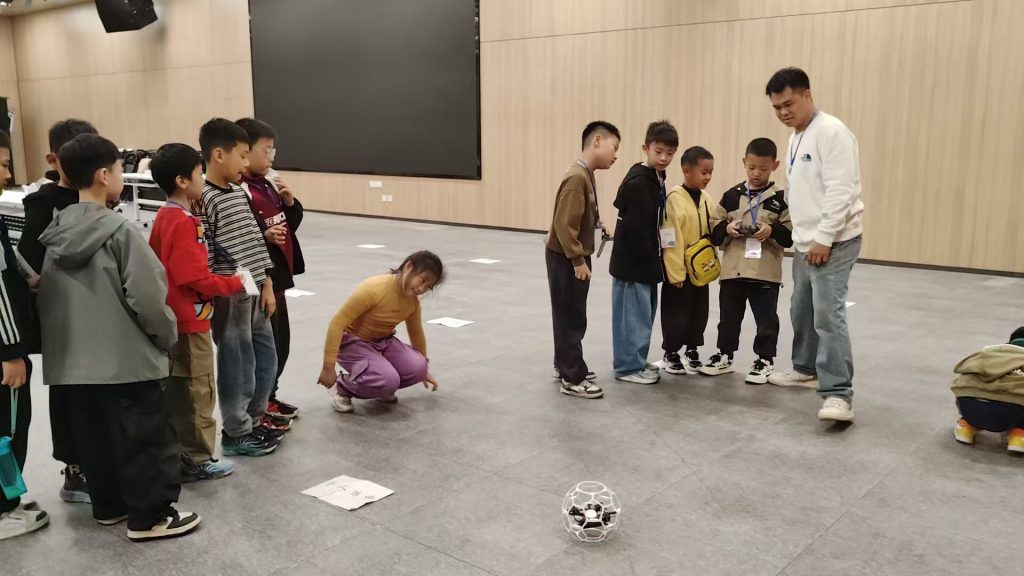
This image illustrates the critical role of capability tagging. Before engaging in complex drone training, operators must undergo rigorous simulation and practical training to earn the “qualification” tag, ensuring they possess the necessary skills to safely and effectively interact with the system and other agents.
| Tag Type | Purpose in Drone Training | Example |
|---|---|---|
| Capability Tag | To identify qualified agents for specific roles. | An operator must be “tagged” as qualified on a specific drone model and payload before being allowed to participate in the test. |
| Technical/Functional Tag | To define the boundaries and interfaces of system components. | A datalink is tagged with a specific frequency and protocol, defining which control stations it can interact with. A payload is tagged with its performance envelope (e.g., resolution, range). |
| Mission/Role Tag | To organize agents and resources around a specific objective. | A test event is tagged as “Suppression of Enemy Air Defenses (SEAD) Evaluation.” This tag automatically attracts relevant agents (electronic warfare experts, threat simulators) and configures the test environment accordingly. |
2. Internal Models
An internal model is an agent’s condensed “recipe” or set of rules for anticipating the outcome of a situation. It is a learned response pattern. During drone training, agents constantly build and refine these models. For example, a test controller develops an internal model for “response to loss of satellite communication.” This model might be: `IF SATCOM lost, THEN switch to redundant terrestrial link AND notify mission commander AND alter flight path to maintain line-of-sight.` This model was learned through previous experiences or simulations and allows for rapid, effective response without deliberate, slow reasoning during a critical moment. The collective set of internal models across all agents constitutes the institutional knowledge and standard operating procedures for drone training.
The learning process can be abstractly represented. An agent has a current model $M_t$. It perceives a stimulus $S$ from the environment or other agents, takes an action $A = M_t(S)$, and observes an outcome $O$. If the outcome is unsatisfactory, it updates its model: $M_{t+1} = Update(M_t, S, A, O)$. Over the course of repeated drone training events, these models become more robust and accurate.
3. Building Blocks
This is the principle of recombination. Complex systems are built from simpler, reusable components that can be arranged in novel ways. In drone training, these building blocks exist at multiple levels:
- System Level: The drone itself is a building block (platform + selected payload + chosen ground control station). Different combinations create different “test articles.”
- Process Level: Standard test procedures (e.g., “pre-flight check,” “data capture sequence,” “post-mission debrief”) are building blocks. They can be rearranged to create a test plan for a new mission type.
- Organizational Level: Teams (the building blocks) from different units can be assembled into new, ad-hoc task forces for specific test objectives.
The power of this mechanism is that novelty and adaptation do not require inventing everything from scratch. A new test for a drone’s “loyal wingman” capability can be constructed by recombining the building blocks of manned aircraft test procedures, drone swarm test procedures, and communication interoperability tests. The new, higher-order building block (“loyal wingman test protocol”) can then be used in future, even more complex drone training events.
Strategies for Optimizing Drone Training Based on CAS Theory
Understanding drone training as a CAS leads directly to practical strategies for enhancing its effectiveness and efficiency. The goal is to foster the conditions where positive emergence—superior evaluation insights and stronger warfighter capabilities—is more likely.
1. Enhance Agent Adaptive Capacity through Managed Learning
The core of a CAS is adaptive agents. We must actively manage their learning cycles. This involves structured “feedback loops” where experiences from the test floor are rapidly translated into updated rules, models, and skills.
- Implement Tiered, Cross-Functional Training: Move beyond siloed training. Create learning events where developers train with operators, and evaluators train with mission planners. This exposes agents to the stimuli and mental models of other agents, enriching their own internal models. The training should be tiered:
- Strategic/Conceptual Tier: For management and design agents, focusing on CAS principles and test philosophy.
- Tactical/Methodological Tier: For evaluation and analysis agents, focusing on data flows, metric design, and adaptive evaluation techniques.
- Technical/Operational Tier: For developers and operators, focusing on hands-on system skills and emergent failure mode recognition.
- Formalize After-Action Review (AAR) as a Model-Update Mechanism: AARs should not just discuss what happened, but explicitly focus on updating the “rules.” Questions should include: “What internal model did we use? Did it work? What new rule or tag should we create for next time?” This turns experience into codified, shareable knowledge.
2. Architect the Network for Optimal Flows and Reduced Interaction Friction
The structure of the agent network directly influences the efficiency of resource flows. We must design interaction pathways to minimize latency and distortion.
- Create Redundant, Multi-Path Communication Channels: Relying on a single, hierarchical chain of command for information flow creates bottlenecks. Establish direct, sanctioned links between operational and technical agents. For example, during a test of manned-unmanned teaming (MUM-T), a pilot in a manned aircraft should have a direct data and voice channel to the drone’s test evaluation lead, not just to their own command, which then relays to the test command, which then talks to the evaluation unit. This “flatter” network enables faster adaptation. The current model and an optimized model can be contrasted:
Current Hierarchical Flow:
Manned Aircraft → Aircraft Command → Test Control Center → Evaluation Unit → Feedback
Proposed CAS-Optimized Flow:
Manned Aircraft ⇄ Evaluation Unit & Test Control Center
- Standardize Data Tags and Interfaces: To facilitate smooth data flows, all agents must use a common “language.” This means enforcing standard data formats, ontologies, and protocol tags for telemetry, events, and findings. A shared digital test environment where all data flows are tagged, searchable, and linkable acts as a powerful coordination mechanism.
3. Foster Diversity and Recombination to Catalyze Emergent Innovation
The goal is to create an environment where novel, effective solutions and insights can emerge from agent interactions.
- Deliberately Mix Agent Types in Planning and Analysis: When designing a test scenario or analyzing results, deliberately assemble teams with high diversity—a mix of operators, engineers, analysts, and tacticians. This “cognitive diversity” increases the chance of novel combinations of building blocks (ideas) leading to breakthrough insights about drone employment or limitation.
- Promote a “Sandbox” for Building Block Experimentation: Dedicate time and resources for exploratory drone training that is not tied to a specific, high-stakes evaluation. In these sessions, agents are encouraged to freely recombine system configurations, tactics, and test procedures in unusual ways. The emergent behaviors observed—both successful and failed—become valuable new internal models for the entire community.
- Leverage Simulation as an “Emergence Engine”: Live-fly drone training is resource-intensive and slow. High-fidelity, agent-based simulation allows for thousands of iterations of a test scenario in the time it takes to run one live event. By modeling the participating units as adaptive agents within the simulation itself, we can experiment with different interaction patterns, communication architectures, and decision rules. The emergent outcomes from these simulations can then inform and optimize the planning of the much more limited live-fly events, ensuring they focus on the most critical, uncertain, or novel interactions. The relationship between micro-level interactions and macro-level emergence in drone training can be conceptualized as a function:
$$E_{macro} = \Phi( \sum_{i \neq j} I(A_i, A_j, R) )$$
Where $E_{macro}$ is the emergent training outcome (e.g., a profound tactical insight), $\Phi$ is the nonlinear transformation function, $I$ is the interaction function between agents $A_i$ and $A_j$, and $R$ is the set of resources (data, knowledge) flowing between them. Our management strategies aim to maximize the productivity of the $I$ function and the transformativity of the $\Phi$ function.
Conclusion
Drone training is a inherently complex endeavor, far more than a simple sequence of checkboxes and flight hours. It is a dynamic, evolving ecosystem of interacting, learning entities—a true Complex Adaptive System. By applying the lens of CAS theory, we move from a mechanistic view of testing to an organic view of collaborative discovery. We recognize that the quality of the evaluation is inextricably linked to the quality of the interactions between the test force, evaluators, developers, and trainers.
The analysis of Aggregation, Nonlinearity, Flows, and Diversity, along with the mechanisms of Tagging, Internal Models, and Building Blocks, provides a structured framework for diagnosing friction points and designing more effective drone training regimes. The proposed strategies—enhancing adaptive learning, optimizing interaction networks, and fostering innovative emergence—are direct applications of this theory. They aim to transform drone training from a potentially contentious, linear process into a synergistic, learning-oriented collaboration. The ultimate payoff is not just a more accurate test report, but a faster, more effective pathway to fielding drone systems that provide decisive advantage in the complex, adaptive landscape of modern conflict. The future of effective drone training lies in mastering the science of collaboration within complex systems.