
As an educator deeply involved in technical and vocational education, I have observed the transformative impact of drone technology across numerous sectors, from precision agriculture and forestry monitoring to geographic surveying, cinematography, and emergency response. This rapid industrial expansion has created a surging demand for skilled professionals proficient in unmanned aerial vehicle (UAV) operation and application. In response, technical institutes have actively established specialized programs in drone technology. However, through my experience and analysis, I have identified significant gaps between the current educational output and the dynamic needs of the industry. The effectiveness of our drone training is often hindered by several systemic issues. This article outlines a comprehensive, first-person perspective on the challenges and proposes a multi-dimensional strategy to refine drone training curricula, ensuring graduates are not only theoretically sound but also exceptionally skilled and industry-ready.
Current Challenges in Drone Training Pedagogy
The first major hurdle lies in curriculum design. Frequently, the course content fails to keep pace with technological advancements. For instance, while teaching communication systems, the integration of 5G for enhanced drone command and data links is often overlooked. Similarly, courses on image processing may not adequately cover the application of deep learning and AI for automated aerial image analysis. The structure itself is problematic, with an imbalance heavily favoring theoretical instruction over hands-on practice. This disconnect prevents students from translating knowledge into practical competency. Furthermore, courses are often siloed, lacking integration to form a coherent knowledge framework essential for comprehensive drone training.
The core of any effective drone training program is practical application, yet this area is notably deficient. Many institutes struggle with outdated, insufficient, or poorly maintained drone fleets and related equipment like diagnostic tools and simulation software. The lack of dedicated, safe, and regulation-compliant flight fields severely limits actual flight time. Moreover, the prevailing teaching model is overly simplistic—typically instructor demonstration followed by student mimicry—which fails to simulate real-world project scenarios or foster critical problem-solving and innovative thinking skills.
A critical bottleneck is the shortage of qualified instructors. As a relatively new field, there is a scarcity of educators who possess both a deep systematic knowledge of drone technology and substantial practical, industry-relevant experience. Without robust mechanisms for continuous professional development, teachers find it challenging to incorporate cutting-edge industry trends into their drone training modules, further widening the gap between academia and practice.
Finally, the assessment paradigm is misaligned with the program’s goals. Evaluation remains predominantly focused on theoretical examinations, undervaluing practical skills, professional ethics, safety consciousness, and innovative capability. The reliance on a single assessment type and assessor (the teacher) provides an incomplete picture of student growth and teaching efficacy, offering little actionable feedback for continuous improvement in the drone training process.
| Challenge Area | Specific Issues | Impact on Drone Training |
|---|---|---|
| Curriculum System | Static content, theory-practice imbalance, poor course integration. | Graduates lack relevant, applied skills and holistic understanding. |
| Practical Instruction | Inadequate facilities, limited flight space, passive learning models. | Students gain insufficient hands-on operational and troubleshooting experience. |
| Faculty Development | Shortage of experienced instructors, limited industry exposure for teachers. | Teaching fails to reflect real-world applications and latest technologies. |
| Assessment Framework | Over-reliance on written exams, lack of comprehensive skill evaluation. | Fails to accurately measure or drive the development of core competencies. |
A Multifaceted Strategy for Optimizing Drone Training
To address these challenges, a holistic and proactive approach is required. The following strategies are proposed from the viewpoint of an educational practitioner committed to elevating the standard of drone training.
1. Optimizing the Curriculum with an Industry-Centric Focus
The curriculum must be dynamic. We need to establish formal channels for regular industry consultation, ensuring course content evolves with technological and market trends. For example, new modules on drone applications in smart city management or infrastructure inspection should be incorporated promptly.
The structural imbalance must be corrected by significantly increasing the weight of practical modules. A target ratio of theoretical to practical instruction should be aggressively pursued:
$$ R = \frac{T_p}{T_t} \approx 1.5 \text{ to } 2.0 $$
where $T_p$ represents hours of practical training and $T_t$ represents hours of theoretical instruction.
Furthermore, a modular, competency-based curriculum architecture is essential. This structure better organizes knowledge and skills for effective drone training:
| Module | Core Components | Objective |
|---|---|---|
| Foundation | Mathematics, Physics, Computer Fundamentals, Aerial Regulations. | Build essential scientific and regulatory knowledge base. |
| Core Technology | UAV Architecture, Flight Dynamics & Control, Communication & Navigation, Sensors & Payloads. | Develop deep understanding of drone systems and principles. |
| Application Specialization | Precision Agriculture, Surveying & Mapping, Cinematography, Inspection & Monitoring. | Equip students with industry-specific operational workflows. |
| Innovation & Development | Drone Programming (e.g., DroneKit, ROS), Data Processing & AI, Advanced Mission Planning. | Foster advanced skills for customization and technological innovation. |
2. Innovating Teaching and Learning Methodologies
Moving beyond traditional lectures is crucial for engaging drone training. Project-Based Learning (PjBL) is highly effective. Students can work in teams on semester-long projects like “Creating a 3D Map of the Campus” or “Simulated Agricultural Spraying Mission.” This approach integrates skills from flight planning and data acquisition to processing and analysis, mirroring real job roles. The final grade for such a project can be a weighted sum:
$$ \text{Project Score} = w_1 \cdot P + w_2 \cdot D + w_3 \cdot A $$
where $P$ represents planning documentation, $D$ represents data quality/execution, and $A$ represents analysis and reporting, with $w_1 + w_2 + w_3 = 1$.
Theory-practice integration should occur in real-time. “Learn and Do” sessions, where theoretical concepts like flight stability are immediately demonstrated and practiced on actual drones or simulators, solidify understanding. Furthermore, leveraging immersive technologies like VR/AR for simulated flight training and maintenance procedures allows for risk-free, repetitive skill practice, enhancing the safety and depth of drone training.
3. Strengthening the Practical Training Ecosystem
Substantial investment in modern, diverse drone platforms (multi-rotor, fixed-wing) and supporting lab equipment (repair stations, photogrammetry software) is non-negotiable. More importantly, forging strong partnerships with drone service companies and manufacturers to create off-campus training bases is vital. These partnerships provide access to real-world projects, current industry practices, and potential employment pathways.
Practical drone training must encompass the full lifecycle: assembly, calibration, pre-flight checks, mission execution, post-flight data handling, and routine maintenance. Diversifying training formats—through mandatory internships, internal “drone rodeos,” and participation in national/international UAV competitions—adds rigor and motivation. A comprehensive practical skill assessment rubric is needed to evaluate performance objectively across these varied activities.
4. Building a Robust and Industry-Connected Faculty
A dual-strategy of recruiting and upskilling is required. Actively hiring instructors with prior industry experience in drone operations brings invaluable practical insight into the drone training program. Concurrently, establishing mandatory periodic upskilling programs for existing faculty, including internships at partner companies and certification courses, is essential to keep their knowledge current.
Developing a “Dual-Qualified” teaching team is a cornerstone strategy. This involves formally inviting industry experts, certified pilots, and engineers as adjunct faculty or guest lecturers. Their role is to teach specialized application modules, lead workshops, and provide guidance on final-year projects, ensuring the drone training remains aligned with actual workplace demands.
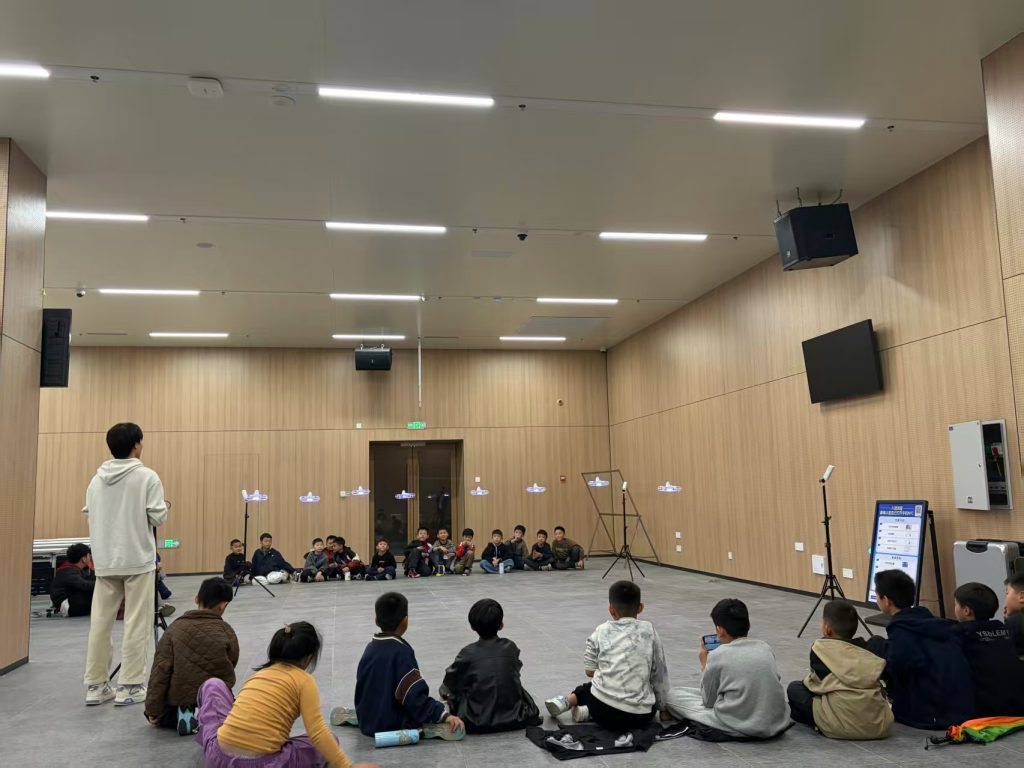
Furthermore, fostering a culture of collaborative pedagogical research among faculty to develop and share effective teaching resources, lesson plans, and assessment tools for drone training will elevate the overall teaching quality.
5. Reforming the Assessment and Evaluation System
A multi-stakeholder, multi-method assessment framework is necessary to truly gauge the effectiveness of drone training. The evaluation should be a continuous process, not a single event.
| Evaluation Dimension | Methods & Tools | Primary Assessor |
|---|---|---|
| Theoretical Knowledge | Written exams, quizzes, concept maps. | Instructor |
| Practical & Operational Skills | Checklist-based flight tests, simulation scores, equipment assembly speed/accuracy. | Instructor, Peer Assessment |
| Project & Problem-Solving | Project portfolios, case study analysis, innovation in mission design. | Instructor, Industry Mentor |
| Professionalism & Safety | Behavioral observation, logbook review, adherence to pre-flight checklists. | Instructor, Self-Assessment |
| Overall Competency & Employability | Final integrated project, internship supervisor report, capstone project defense. | Panel (Instructor, Industry Expert, Academic Lead) |
The key is to leverage assessment data for continuous improvement. Formative feedback should be provided to students throughout their drone training to guide learning. Similarly, aggregated evaluation results should inform annual curriculum reviews, teaching method adjustments, and resource allocation decisions, creating a closed-loop system for enhancing drone training quality.
Conclusion
The responsibility placed on technical institutes to supply the drone industry with competent, skilled professionals is significant. By systematically addressing the gaps in curriculum design, teaching methodology, practical exposure, faculty competence, and outcome evaluation, we can transform our drone training programs. The implementation of a dynamic, industry-aligned curriculum, coupled with active learning pedagogies, robust practical partnerships, a strong “dual-qualified” faculty, and a comprehensive assessment system, will produce graduates who are truly ready to contribute. This strategic overhaul will not only elevate the quality and reputation of drone training at the institutional level but also provide the sustained, high-quality talent pipeline necessary to support the long-term growth and innovation of the global drone industry. The journey requires commitment and collaboration, but the payoff—a generation of highly skilled drone technicians and innovators—is undoubtedly worth the endeavor.