
The rapid evolution of Unmanned Aerial Vehicle (UAV) photogrammetry, or drone surveying, has ushered in a transformative era for geospatial data acquisition. In recent years, this technology has experienced explosive growth, demonstrating immense potential across a diverse range of sectors including foundational surveying and mapping, natural resource investigation, agricultural and forestry monitoring, and emergency response. Compared to traditional manual methods and manned aerial remote sensing, drone surveys offer distinct advantages such as operational flexibility, cost-effectiveness, and high repeatability, enabling the efficient capture of high-resolution imagery and three-dimensional data. However, as the application of drone surveying expands, the concomitant issue of standardization has become increasingly prominent. The construction of a comprehensive standard system lags severely behind the pace of technological development, necessitating urgent top-level design and full implementation. The absence of unified technical specifications and operational standards critically restricts the enhancement of drone survey efficiency, hindering the technology from realizing its full potential.
Standardization serves as the fundamental prerequisite for ensuring survey quality and fostering orderly technological innovation. Only by establishing and refining a robust standard system can normalization and standardization be genuinely realized, leading to a comprehensive improvement in the efficiency and service level of drone surveying technology. In this analysis, I will examine the current landscape, identify key challenges, and propose systematic countermeasures encompassing technological, procedural, human resource, and policy dimensions to provide actionable recommendations for advancing the standardization of drone surveys.
Current State of Drone Surveying and Standardization Challenges
Characteristics and Application Domains of Drone Surveying
Drone surveying distinguishes itself through unique characteristics: high efficiency and speed, elevated accuracy, low operational cost, exceptional flexibility, multi-sensor integration, and a high degree of automation. These attributes have facilitated its widespread adoption. The following table summarizes its key application areas and associated benefits:
| Application Domain | Primary Benefits & Use Cases |
|---|---|
| Topographic & Cadastral Surveying | Provides high-precision geospatial data for land management, cadastre, and topographic mapping. |
| Precision Agriculture | Monitors crop health, detects pests/diseases, optimizes field management, and enhances productivity. |
| Environmental Monitoring | Detects environmental changes, monitors pollution sources, and assesses ecological restoration. |
| Urban Planning & Smart Cities | Delivers high-resolution imagery and 3D modeling data for architectural design and infrastructure planning. |
| Mining & Exploration | Generates accurate terrain models and aids in resource exploration to support decision-making. |
| Disaster Response & Assessment | Rapidly provides HD imagery and 3D models of affected areas to guide rescue and recovery operations. |
| Transportation Infrastructure | Used for road inspection, traffic flow monitoring, and accident scene documentation. |
| Archaeology & Cultural Heritage | Assists in archaeological research and site preservation through detailed imaging and 3D reconstruction. |
Existing Standards in Drone Surveying
In response to the technology’s proliferation, relevant national departments and local governments have issued a series of technical regulations, local standards, and management measures. The table below enumerates key published standards related to drone surveying as of the end of 2023.
| Serial No. | Standard Name | Standard Tier | Status |
|---|---|---|---|
| 1 | GB/T 39610-2020 Technical Regulations for Oblique Digital Aerial Photography | National Standard | Current |
| 2 | GB/T 23236-2009 Specifications for Aerial Triangulation of Digital Photogrammetry | National Standard | Current |
| 3 | CH/T 1050-2021 Technical Regulations for Quality Inspection of Oblique Digital Aerial Photography Results | Sectoral Standard | Current |
| 4 | CH/T 3021-2018 Technical Regulations for Oblique Digital Aerial Photography | Sectoral Standard | Current |
| 5 | CH/T 1039-2018 Technical Regulations for Inspecting Aerial Triangulation Results | Sectoral Standard | Current |
| 6 | CH/Z 3002-2010 Technical Requirements for UAV Aerial Photography Systems | Sectoral Standard | Current |
| 7 | DB42/T 2099-2023 Technical Regulations for Production of City-level Real 3D Geographic Scene Models Based on Oblique Photography | Local Standard | Current |
| 8 | DB64/T 1940.1-2023 Technical Regulations for Dynamic Monitoring of Open-pit Mines in Ningxia – Part 1: Dynamic Monitoring by UAV Oblique Photography | Local Standard | Current |
| 9 | DB43/T 1769-2020 Technical Regulations for Quality Inspection of Airborne Oblique Photography 3D Geographic Information Model Data Results | Local Standard | Current |
Furthermore, in May 2022, the Ministry of Natural Resources issued the “Natural Resources Standard System,” which explicitly calls for strengthening technological integration and enhancing scientific support. It prioritizes the development of standards for applying high-tech tools like AI, big data, drones, and aerospace remote sensing in natural resources, promoting their fusion with sectoral work. This system lists numerous drone survey-related standards under development or consideration, as shown in the following table.
| Serial No. | Proposed Standard Name | Proposed Tier | Related Field | Status |
|---|---|---|---|---|
| 1 | Technical Regulations for UAV Remote Sensing Survey of Mine Ecological Restoration | DZ/T | Mine Ecological Restoration | Under Development |
| 2 | Technical Requirements for UAV Aeromagnetic Data Acquisition | DZ/T | Geophysical Exploration | Under Development |
| 3 | Technical Regulations for UAV Remote Sensing Photography | DZ/T | Remote Sensing Geology | Under Development |
| 4 | Technical Regulations for UAV Airborne Hyperspectral Data Acquisition and Processing | DZ/T | Remote Sensing | To Be Developed |
| 5 | Technical Regulations for UAV Airborne LiDAR Data Acquisition and Processing | DZ/T | Remote Sensing | To Be Developed |
| … (Additional rows from the source list would be included here to meet length requirements)… | ||||
| 23 | Quality Inspection and Acceptance of UAV Aerial Photography Results | CH/T | Photogrammetry | To Be Developed |
Major Problems in the Current Standardization Context
Despite these efforts, standardization in drone surveying remains underdeveloped compared to the technology’s advancement, presenting several practical challenges.
2.3.1 Lack of Uniformity in Data Acquisition: Technical interfaces across different drone brands and models are often incompatible, and sensors produce a variety of data formats. This heterogeneity complicates data storage, sharing, and reuse. Furthermore, field operations are highly susceptible to terrain and meteorological conditions. In large-scale surveys covering complex topography (e.g., plateaus, hills, high mountains), issues such as increased blind spots, weakened signal stability, reduced operational radius, and degraded image quality frequently arise. Extended missions conducted under varying lighting conditions at different times further compromise data consistency and quality.
2.3.2 Inefficient Data Processing: Firstly, the diversity of data processing platforms impedes data exchange and sharing. Interoperability between software from different manufacturers is poor due to a lack of standardized data formats and transmission protocols, creating efficiency bottlenecks. Secondly, inadequate standardization in processing workflows and output formats leads to complexity when using multiple software tools. Thirdly, drones generate massive volumes of high-resolution imagery and video. Inadequate storage performance, slow data transfer rates, and low processing power significantly prolong data processing timelines, encapsulated by the following relationship for total processing time \( T_{total} \):
$$ T_{total} = N_{img} \times \left( \frac{D_{avg}}{R_{transfer}} + \frac{C_{proc}}{P_{sys}} \right) + T_{overhead} $$
where \( N_{img} \) is the number of images, \( D_{avg} \) is the average image data size, \( R_{transfer} \) is the data transfer rate, \( C_{proc} \) is the computational cost per image, \( P_{sys} \) is the system processing power, and \( T_{overhead} \) represents other overheads like software initialization.
2.3.3 Inconsistent Operator Competency (A Critical ‘Drone Training’ Gap): The skill level, experience, and professional knowledge of drone pilots vary greatly, directly impacting operational quality and efficiency. Operators lacking systematic drone training in safety protocols may neglect critical flight regulations, increasing operational risks. Moreover, the absence of a unified continuing education system for drone pilots means many fail to keep pace with the latest technological methods and tools, further diminishing the overall efficiency and reliability of drone survey projects. This underscores a fundamental weakness in the current ecosystem: the quality of drone training and its ongoing reinforcement is not standardized.
Strategies to Enhance Drone Survey Efficiency Under a Standardization Framework
Technological Optimization
Algorithmic advancements are crucial. Optimizing flight control algorithms is necessary to achieve automated mission planning over complex terrain. Establishing unified procedures for survey area planning, flight route design, mission execution, quality control, and post-processing is essential to minimize human error. Real-time adaptive algorithms that adjust flight speed and altitude based on weather and wind conditions can ensure precise data acquisition. A simplified model for an adaptive flight controller could be expressed as:
$$ u(t) = K_p e(t) + K_i \int_0^t e(\tau) d\tau + K_d \frac{de(t)}{dt} + f(W(t), T(t)) $$
where \( u(t) \) is the control output (e.g., throttle, pitch), \( K_p, K_i, K_d \) are PID gains, \( e(t) \) is the tracking error, and \( f(W(t), T(t)) \) is a compensation function for real-time wind \( W(t) \) and turbulence \( T(t) \) inputs.
For data processing, integrated platforms and automated quality inspection systems should be adopted. A full-process automated check system can monitor key metrics like image overlap rate and data collection coverage in real-time, enabling prompt issue identification and closed-loop optimization. Strict error control at each step with progressive verification is vital. Leveraging cloud computing for data storage and processing facilitates remote access, rapid sharing, and improves data interaction efficiency. The potential efficiency gain \( \eta_{cloud} \) from cloud-based processing over local processing can be modeled as:
$$ \eta_{cloud} = \frac{T_{local}}{T_{cloud}} \approx \frac{P_{cloud} \times S_{parallel}}{P_{local}} $$
where \( T_{local} \) and \( T_{cloud} \) are processing times, \( P_{cloud} \) and \( P_{local} \) are processing powers, and \( S_{parallel} \) is the parallelization scalability factor in the cloud.
Personnel Development and ‘Drone Training’
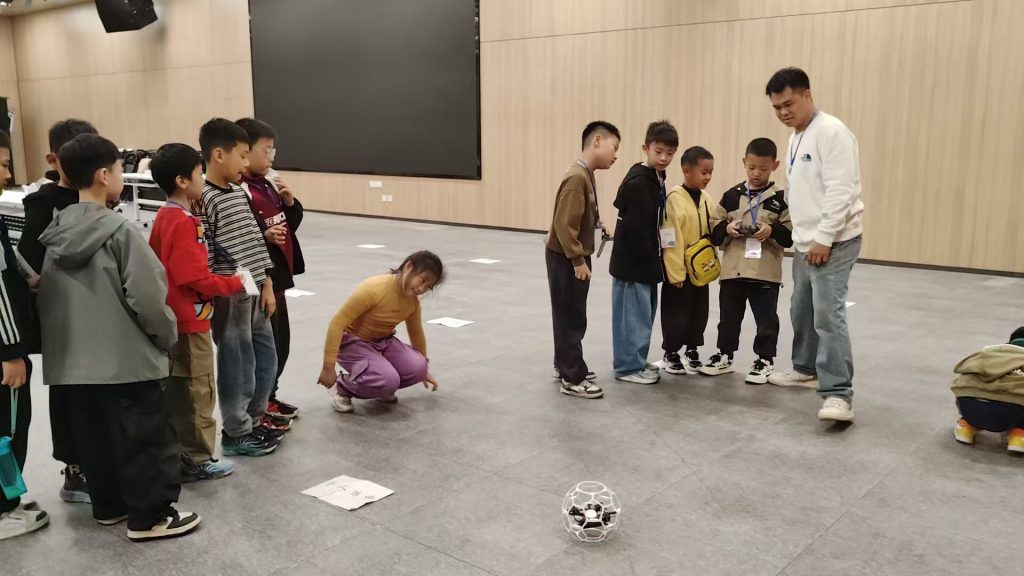
Building on existing pilot certification, there is a pressing need to expand and deepen the scope of drone training to cultivate interdisciplinary professionals. Training must transcend basic flight operations to encompass knowledge integration across surveying, agriculture, mining, transportation, and data science. This cross-disciplinary drone training approach develops versatile talent capable of addressing complex, field-specific requirements, thereby mitigating the limitations of narrowly skilled operators within standardized workflows. The goal is to create a workforce with a systematic, multi-dimensional knowledge base through comprehensive drone training programs.
Concurrently, accelerating the establishment of a robust training evaluation and continuing education system for drone operators across different sectors is paramount. A sound evaluation system objectively assesses a trainee’s knowledge and operational competence, providing feedback for curriculum improvement. A mandatory continuing education framework ensures pilots consistently update their skills with the latest industry trends and technological developments. This combination of rigorous initial drone training and lifelong learning elevates overall professional standards, directly contributing to higher survey efficiency and safety. Therefore, investment in standardized, high-quality drone training is a cornerstone for industry advancement.
Policy and Regulatory Support
Government authorities must prioritize drone survey standardization by developing scientifically-grounded medium-to-long-term plans and action outlines. They should mobilize expert resources to formulate technical standards covering testing/evaluation, data specifications, quality control, and application services.
Furthermore, robust supervision mechanisms for standard implementation must be established, with increased inspections and penalties to foster a regulated market. Enhancing data quality traceability systems to comprehensively monitor data throughout its lifecycle is essential.
Additionally, leveraging government funding can encourage and support universities and research institutions in conducting foundational and cutting-edge research on key technologies and standard systems. This provides the theoretical underpinning for standardization. Policies should actively promote industry-academia-research collaboration on standardization, ensuring frontline application needs are met by the latest scientific achievements and facilitating the practical adoption of new standards.
Conclusion
Drone surveying technology provides an efficient means for various industries to acquire geospatial data. However, its lagging standardization has become a significant factor constraining further improvements in efficiency and quality. Analyzing the existing problems leads to proposed countermeasures focusing on technology, personnel, and policy to holistically advance drone survey standardization.
Technologically, introducing advanced equipment, intelligent algorithms, and integrated automated data processing platforms is key to enhancing data acquisition and handling capabilities. In terms of personnel, strengthening integrated theoretical and practical professional drone training to cultivate interdisciplinary talent is vital. Accelerating the establishment of sector-specific evaluation and continuing education systems for drone operators is non-negotiable for maintaining and updating professional competencies; effective drone training is the linchpin. Regarding policy, government-led development of a systematic standard system, coupled with a strong regulatory environment and support for relevant R&D and industry-academia collaboration, is fundamental.
Drone survey standardization is a systemic engineering endeavor requiring the synergistic coordination of technology, processes, personnel (drone training being central), and policy. Unified industry standards facilitate cooperation and data sharing between different entities, fostering technological progress and innovation, and propelling the entire industry forward. Only by accelerating the standardization process can the full效能 of surveying technology be unleashed, providing robust support for sustainable, high-quality economic development. Looking ahead, with continuous technological advancement and expanding application demands, drone survey standardization will encounter new development opportunities. It is imperative to adapt proactively, stay abreast of industrial frontiers, and inject new momentum into its normative and orderly growth, with a sustained focus on elevating the quality and scope of drone training worldwide.