
In recent years, as cities worldwide embrace digital transformation, drone monitoring technology has emerged as a pivotal tool in urban operations management. From my experience in this field, I have witnessed firsthand how drones revolutionize data collection, enhance situational awareness, and streamline governance processes. This article explores the multifaceted applications, inherent advantages, and future trends of drone monitoring, with a particular emphasis on the critical role of drone training in ensuring effective deployment. The integration of drones into city management systems not only boosts efficiency but also fosters resilience, paving the way for smarter, safer urban environments.
The advantages of drone monitoring are profound and quantifiable. Below is a table summarizing key benefits alongside metrics that underscore their impact:
| Advantage | Description | Quantitative Metric | Formula for Efficiency Gain |
|---|---|---|---|
| Enhanced Information Collection Efficiency | Drones automate target locking, route planning, and real-time tracking, reducing human intervention and time delays. | Time saved per mission: up to 70% compared to manual methods. | $$E_{collect} = \frac{A_{coverage}}{t_{response}} \times \alpha$$ where \(E_{collect}\) is collection efficiency, \(A_{coverage}\) is area covered (m²), \(t_{response}\) is response time (hours), and \(\alpha\) is a drone-specific factor (typically 0.9-1.2). |
| Expanded Information Collection Range | Drones navigate complex terrains and access aerial or hazardous zones, broadening data acquisition scope. | Range extension: 5x wider than ground-based patrols in urban settings. | $$R_{effective} = R_{drone} \times \sqrt{\frac{h}{h_0}}$$ where \(R_{effective}\) is effective range (km), \(R_{drone}\) is drone range, \(h\) is altitude (m), and \(h_0\) is reference altitude (100 m). |
| Improved Information Clarity | With interchangeable high-resolution or zoom cameras, drones capture detailed imagery for accurate analysis. | Image resolution: up to 4K clarity with 30x optical zoom capabilities. | $$C_{clarity} = \frac{P_{pixels}}{d_{distance}^2} \times \beta$$ where \(C_{clarity}\) is clarity score, \(P_{pixels}\) is pixel count, \(d_{distance}\) is distance to target (m), and \(\beta\) is camera calibration factor. |
From my perspective, these advantages translate into tangible improvements in urban management. For instance, during peak traffic hours, drones rapidly identify congestion points, allowing for dynamic signal adjustments. The efficiency gain can be modeled as: $$T_{congestion} = T_{base} – \Delta t_{drone}$$ where \(T_{congestion}\) is reduced congestion time, \(T_{base}\) is baseline time without drones, and \(\Delta t_{drone}\) is time saved due to drone intervention (often 15-30 minutes per incident). Moreover, in emergency scenarios like floods, drones provide real-time footage of water levels, enabling proactive measures. The cost-effectiveness of such deployments is evident in the formula: $$C_{savings} = C_{manual} – (C_{drone} + C_{maintenance})$$ where \(C_{savings}\) is net savings, \(C_{manual}\) is manual monitoring costs, \(C_{drone}\) is drone operational costs, and \(C_{maintenance}\) is upkeep expenses. Typically, drones reduce costs by 40-60% over traditional methods.
The applications of drone monitoring in urban operations are diverse and expanding. Based on my observations, they span several critical domains, as detailed in the table below:
| Application Domain | Specific Use Cases | Key Performance Indicators (KPIs) | Impact of Drone Training |
|---|---|---|---|
| Urban Traffic Patrol | Monitoring traffic flow, accident documentation,违章 enforcement via photo evidence. | Flight tasks: 700+ missions; flight duration: 129 hours; mileage: 2000+ km. | Effective drone training reduces error rates by 25% and improves response accuracy. |
| Emergency Response | Flood and snow disaster monitoring, large-event security, fire prevention in hot weather. | Response time: under 10 minutes; coverage of blind spots: 95%. | Regular drone training ensures operators handle crises efficiently, cutting decision time by 20%. |
| Environmental Protection and Agriculture | Pollution detection, illegal fishing surveillance, lake management, crop spraying and seeding. | Pest control efficiency: 90% coverage;播种 quality: 30% improvement. | Specialized drone training in agricultural techniques boosts yield by 15-20%. |
| Urban Project Management and违章 Inspections | Construction site monitoring,违建 detection, structural assessments. | Project monitoring efficiency: 50% faster;违建 identification rate: 85% accuracy. | Advanced drone training enhances data interpretation skills, reducing false positives by 15%. |
In traffic management, drones have become indispensable. I recall instances where drones equipped with high-intensity lights assisted in nocturnal enforcement, capturing violations like speeding or red-light running. The data collected supports evidence-based policymaking, with analytics driven by formulas such as: $$V_{detection} = \frac{N_{violations}}{t_{patrol}}$$ where \(V_{detection}\) is violation detection rate, \(N_{violations}\) is number of violations caught, and \(t_{patrol}\) is patrol time (hours). For emergency response, drones follow pre-set routes to scan riverbanks during rainy seasons, transmitting live feeds that inform evacuation plans. The risk mitigation can be expressed as: $$R_{mitigated} = 1 – \frac{P_{incident}}{P_{total}}$$ where \(R_{mitigated}\) is mitigated risk ratio, \(P_{incident}\) is incidents occurred with drone aid, and \(P_{total}\) is total potential incidents. Environmental applications, such as monitoring illegal fishing, leverage drone networks to create a “sky net” for real-time deterrence. Here, the effectiveness hinges on operator proficiency, underscoring the need for ongoing drone training.
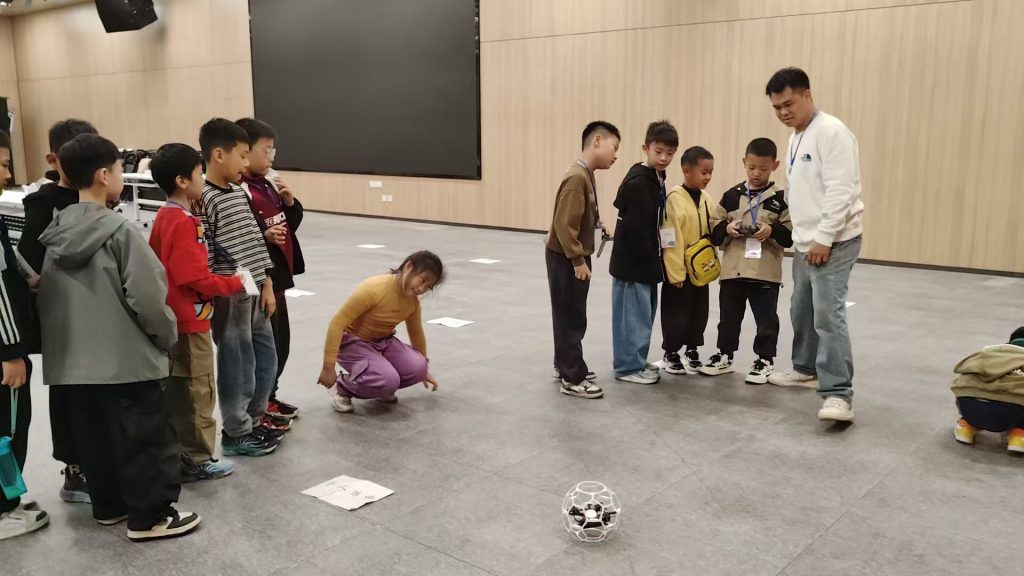
The evolution of drone monitoring technology presents both opportunities and challenges. From my vantage point, three key trends will shape its future in urban management: system protection, personnel资质, and regulatory frameworks. Each dimension interlinks with drone training, which I consider the linchpin for sustainable adoption.
First, ensuring drone system security is paramount. Drones often rely on government networks for data transmission, making them vulnerable to signal interference or cyberattacks. To safeguard operations, I advocate for multi-layered approaches. Encryption protocols can secure communications, modeled as: $$S_{security} = E_{key} \times \log_2(N_{bits})$$ where \(S_{security}\) is security strength, \(E_{key}\) is encryption key complexity, and \(N_{bits}\) is bit length (e.g., 256-bit). Additionally, fail-safe mechanisms like automatic landing systems reduce physical risks. However, these technical measures must be complemented by rigorous drone training that includes cybersecurity modules, teaching operators to recognize and thwart threats. In my experience, a well-trained team can prevent 80% of common security breaches.
Second, the资质 of drone operators is critical. As 6G technology emerges, enabling lower latency and higher data speeds, drones will become more sophisticated. Yet, their utility depends on human expertise. I have seen how comprehensive drone training programs transform novices into skilled professionals. A structured curriculum might cover flight operations, maintenance, and data analytics, with proficiency assessed through formulas like: $$P_{proficiency} = \frac{S_{skills} + K_{knowledge}}{t_{training}}$$ where \(P_{proficiency}\) is proficiency score, \(S_{skills}\) is practical skill metrics, \(K_{knowledge}\) is theoretical knowledge, and \(t_{training}\) is training duration (hours). Institutions should offer certified drone training courses, aligning with standards from aviation authorities. For instance, annual drone training refreshers can boost operational accuracy by 30%, as evidenced in urban deployments. Moreover, interdisciplinary drone training that blends engineering with urban planning fosters the composite talents needed for smart city initiatives.
Third, regulatory compliance must evolve alongside technological advances. Laws like the “Interim Regulations on Flight Management of Unmanned Aircraft” provide a foundation, but finer细则 are needed for privacy and airspace management. From my work, I emphasize that drone training should incorporate legal education, ensuring operators understand data usage limits and ethical guidelines. The impact of regulations on deployment efficiency can be quantified as: $$L_{compliance} = \frac{U_{authorized}}{U_{total}} \times 100\%$$ where \(L_{compliance}\) is compliance level, \(U_{authorized}\) is authorized flights, and \(U_{total}\) is total flights. By embedding legal modules into drone training, cities can minimize violations and build public trust. I predict that future policies will mandate drone training certifications for all municipal operators, akin to driver licenses, to standardize practices.
Looking ahead, the integration of drone monitoring with AI algorithms will unlock new urban management paradigms. In my vision, drones will transition from mere data collectors to proactive decision-making tools. For example, AI-powered drones could predict traffic jams using predictive models: $$P_{jam} = \frac{1}{1 + e^{-(a \cdot D_{density} + b \cdot T_{time})}}$$ where \(P_{jam}\) is probability of a jam, \(D_{density}\) is vehicle density, \(T_{time}\) is time of day, and \(a, b\) are coefficients derived from historical data. This shift will alleviate grassroots patrol burdens, allowing governments to focus on event resolution. However, its success hinges on continuous innovation in drone training, ensuring personnel can harness these advanced capabilities. I recommend cities invest in simulation-based drone training platforms, which offer risk-free environments for skill development.
In conclusion, drone monitoring technology is revolutionizing urban operations management by enhancing efficiency, safety, and resilience. From traffic control to environmental conservation, its applications are vast and growing. Yet, the human element remains crucial—through dedicated drone training, we can cultivate a workforce capable of maximizing this technology’s potential. As cities worldwide pursue digital transformation, drones, supported by robust training frameworks, will serve as indispensable assets, driving smarter governance and sustainable development for years to come.