
In my extensive experience working with emergency response systems, I have witnessed a profound transformation in firefighting operations, largely driven by the integration of drone technology. The advent of drones has not only enhanced communication capabilities but also redefined rescue strategies, making them more efficient and safer. This article delves into the application of drone technology in firefighting communications from a first-person perspective, emphasizing the critical role of drone training and leveraging technical elements like tables and formulas to summarize key concepts. The evolution of drones, from simple remote-controlled devices to sophisticated aerial platforms, aligns with the increasing frequency of disasters and the urgent need for reliable communication in hazardous environments. Drones, equipped with high-definition cameras, infrared thermography, and other sensors, provide real-time data that is indispensable for assessing fire dynamics, smoke dispersion, and personnel locations, thereby optimizing rescue efforts.
The functional architecture of drones is fundamental to their effectiveness in firefighting communications. Based on my observations, a drone’s system can be broken down into several interconnected components, each contributing to its operational prowess. Below is a table summarizing these elements:
| Component | Description | Key Functions in Firefighting |
|---|---|---|
| Flight Control System | Includes flight controllers, gyroscopes, accelerometers, motors, and propellers. | Ensures stable flight, attitude control, and navigation in complex environments. |
| Communication System | Comprises wireless communication modules, antennas, and data links. | Transmits flight data, images, videos, and commands between drones and ground stations. |
| Sensor System | Features cameras, infrared thermal imagers, radar, and meteorological sensors. | Gathers environmental data, detects targets, monitors fire spread, and assesses hazards. |
| Payload System | Carries devices like HD cameras, gas sensors, and loudspeakers. | Executes specific tasks such as image capture, search operations, and command dissemination. |
| Data Processing and Storage System | Involves embedded processors, memory, and image processing algorithms. | Processes and stores real-time data for analysis and decision-making. |
| Navigation and Positioning System | Utilizes GPS, inertial navigation systems, and compasses. | Provides accurate location information and guidance for precise maneuvering. |
| Power System | Relies on batteries, fuel cells, or generators. | Supplies electrical power to all drone components for sustained operation. |
From a technical standpoint, the flight control system often employs Proportional-Integral-Derivative (PID) controllers to maintain stability. The control law can be expressed as:
$$u(t) = K_p e(t) + K_i \int_0^t e(\tau) d\tau + K_d \frac{de(t)}{dt}$$
where \( u(t) \) is the control output, \( e(t) \) is the error signal, and \( K_p \), \( K_i \), and \( K_d \) are tuning parameters. This ensures drones can hover steadily in turbulent fire zones, a capability enhanced through rigorous drone training programs that simulate real-world conditions.
The advantages of drone technology in firefighting communications are multifaceted, as I have seen in numerous operations. These benefits not only improve response times but also safeguard personnel. To encapsulate this, consider the following table:
| Advantage | Explanation | Impact on Firefighting |
|---|---|---|
| Rapid Deployment and Flexibility | Drones can be quickly launched and maneuvered in diverse terrains without extensive setup. | Enables immediate communication support in hard-to-reach areas, reducing initial response delays. |
| Aerial Perspective and Wide Coverage | High-altitude views from cameras provide comprehensive situational awareness. | Helps command centers visualize fire extent, hotspots, and victim locations for better coordination. |
| Communication Relay and Signal Enhancement | Drones act as airborne relays, extending signal range and bridging communication gaps. | Ensures uninterrupted communication between responders, even in signal-dead zones. |
| Adaptive Network Formation | Drones can create self-organizing networks for decentralized data transmission. | Facilitates resilient communication networks that adapt to dynamic fireground conditions. |
| Post-Disaster Assessment and Rescue Support | Drones conduct rapid surveys and search operations over large areas. | Accelerates victim detection and damage evaluation, guiding rescue teams efficiently. |
| Risk Reduction for Personnel | Drones replace humans in dangerous zones, minimizing exposure to hazards. | Protects firefighters from extreme heat, toxic gases, and structural collapses. |
Mathematically, the communication range enhancement can be modeled using the Friis transmission equation. For a drone acting as a relay, the received power \( P_r \) at a ground station is given by:
$$P_r = P_t G_t G_r \left( \frac{\lambda}{4\pi d} \right)^2$$
where \( P_t \) is the transmitted power, \( G_t \) and \( G_r \) are antenna gains, \( \lambda \) is the wavelength, and \( d \) is the distance. This formula underscores how drones boost signal strength, a concept integral to drone training that covers radio frequency principles.
In practice, the application paths for drones in firefighting communications are diverse and impactful. From my involvement, I categorize them into several key areas. First, in command and rescue operations, drones provide real-time imagery and video feeds, allowing commanders to monitor fire progression and allocate resources dynamically. For instance, infrared sensors detect heat signatures through smoke, enabling the identification of trapped individuals. The data transmission rate \( R \) from a drone to a base station can be expressed as:
$$R = B \log_2 \left(1 + \frac{P_r}{N_0 B}\right)$$
where \( B \) is the bandwidth and \( N_0 \) is the noise spectral density. This ensures high-quality video streams for informed decision-making, a skill honed through continuous drone training on data link management.
Second, drones excel in situational awareness and detection. They deploy sensors to monitor environmental parameters like temperature, humidity, and gas concentrations. For example, a drone might measure carbon monoxide levels, with the concentration \( C \) modeled by diffusion equations:
$$\frac{\partial C}{\partial t} = D \nabla^2 C – \vec{v} \cdot \nabla C + S$$
where \( D \) is the diffusion coefficient, \( \vec{v} \) is wind velocity, and \( S \) is the source term. Such data helps assess toxicity risks, guiding evacuation routes. Additionally, drones use acoustic sensors to pick up distress calls, with sound intensity \( I \) decaying as:
$$I = \frac{P}{4\pi r^2}$$
where \( P \) is the sound power and \( r \) is the distance. This technical prowess requires operators to undergo specialized drone training in sensor interpretation and data analysis.
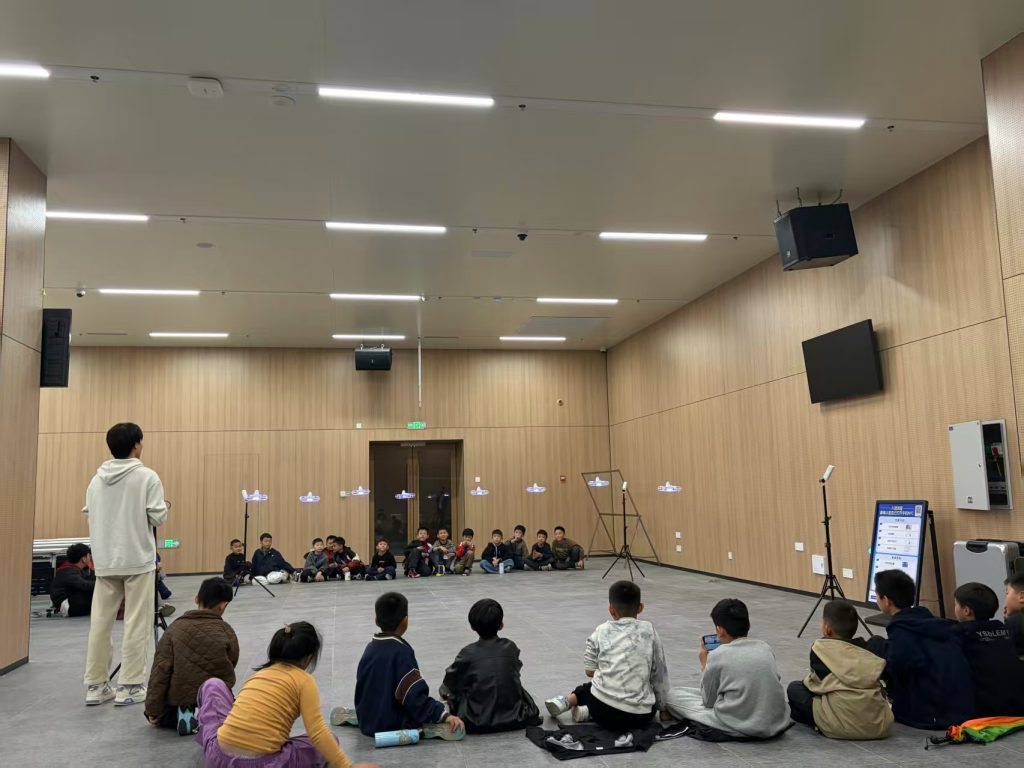
Third, drones facilitate dynamic command transmission using loudspeaker systems. By broadcasting instructions, they ensure that rescue directives reach personnel amid noise and chaos. The sound pressure level \( L_p \) in decibels is given by:
$$L_p = 20 \log_{10} \left( \frac{p}{p_0} \right)$$
where \( p \) is the measured sound pressure and \( p_0 \) is the reference pressure. Drones optimize this for clarity, a feature emphasized in drone training modules on public address operations. This capability is vital for coordinating complex rescue maneuvers and issuing safety alerts in multiple languages.
However, to fully harness these applications, several recommendations and reflections are necessary, based on my professional insights. A cornerstone of this is enhancing drone training programs. I believe that comprehensive drone training is not just an option but a necessity for operational success. It encompasses technical skills, safety protocols, and ethical considerations. For instance, training should cover flight mechanics, which can be described by equations of motion. The drone’s position \( \vec{r}(t) \) in 3D space follows:
$$\vec{r}(t) = \vec{r}_0 + \vec{v}_0 t + \frac{1}{2} \vec{a} t^2$$
where \( \vec{r}_0 \) is the initial position, \( \vec{v}_0 \) is the initial velocity, and \( \vec{a} \) is the acceleration. Mastering such concepts through drone training ensures precise navigation in confined spaces.
Moreover, institutional frameworks must be strengthened to support drone integration. This involves establishing regulations for privacy, data security, and inter-agency collaboration. A risk assessment model might use probabilistic formulas, such as the failure rate \( \lambda \) in reliability engineering:
$$R(t) = e^{-\lambda t}$$
where \( R(t) \) is the reliability over time \( t \). Regular drone training on compliance and emergency procedures mitigates risks, fostering a culture of safety. Additionally, maintenance protocols are crucial; for example, battery life \( T \) can be estimated as:
$$T = \frac{C}{I}$$
with \( C \) being battery capacity and \( I \) the current draw. Scheduled maintenance, informed by such calculations, prevents mid-operation failures, a topic integral to advanced drone training courses.
To quantify the impact of drone training, consider a performance metric like mission success probability \( P_s \). It can be expressed as a function of training hours \( H \) and experience factors \( \alpha \):
$$P_s = 1 – e^{-\alpha H}$$
This highlights the diminishing returns of training, underscoring the need for ongoing education. In my view, drone training should also address ethical dilemmas, such as data privacy, using frameworks like differential privacy equations:
$$\Pr[\mathcal{M}(D) \in S] \leq e^{\epsilon} \Pr[\mathcal{M}(D’) \in S]$$
where \( \mathcal{M} \) is a mechanism, \( D \) and \( D’ \) are datasets, and \( \epsilon \) is the privacy budget. Embedding this in drone training curricula promotes responsible usage.
In conclusion, drone technology has revolutionized firefighting communications, offering unparalleled advantages in speed, coverage, and safety. From my perspective, its effectiveness hinges on robust technical foundations and, importantly, comprehensive drone training. Through detailed tables and formulas, I have illustrated how drones function, their benefits, and application methodologies. The integration of drones into firefighting is not merely a technological shift but a paradigm change that demands continuous learning and adaptation. As we advance, prioritizing drone training will ensure that these aerial tools are wielded skillfully, saving lives and protecting communities in an increasingly volatile world. The future of firefighting communications lies in the skies, guided by well-trained operators and innovative technologies.