
The evolution of modern warfare into the information age has fundamentally altered the operational landscape, demanding rapid, precise, and resilient medical support systems. In this context, Unmanned Aerial Vehicles (UAVs), or drones, have emerged as a transformative force for casualty search and rescue (SAR). Moving beyond their traditional reconnaissance roles, UAVs are being integrated into joint SAR architectures to locate, assess, stabilize, and evacuate wounded personnel. This paradigm shift promises to overcome traditional limitations imposed by terrain, threat exposure, and the critical time constraints of the “Golden Hour” and “Platinum Ten Minutes.” However, the effective integration of UAVs into a cohesive SAR system presents significant technological, operational, and human-factor challenges. Central to overcoming these challenges is the development of comprehensive and standardized drone training protocols for all personnel involved. This article explores the architecture of a UAV-mediated joint SAR system, analyzes its inherent advantages and persistent problems, and underscores why advanced drone training is the cornerstone of its successful implementation.
The core advantage of a UAV-mediated system lies in its ability to establish a non-contact, rapid-response loop between the casualty and the medical chain. This capability can be broken down into sequential, interdependent functions, as summarized in the table below.
| SAR Phase | Traditional Method Challenges | UAV-Mediated Solution | Key Enabling Technologies |
|---|---|---|---|
| 1. Detection & Location | Slow, personnel-intensive patrols; limited by visibility and terrain. | Rapid aerial sweep using wide-area sensors. | Multispectral imaging, AI-powered visual recognition, signals intelligence (SIGINT) to locate beacon signals. |
| 2. Triage & Assessment | Medics must reach the point of injury, risking further casualties. | Remote, real-time physiological monitoring and visual assessment. | High-resolution/thermal cameras, vital sign monitoring via radio frequency or laser systems. |
| 3. Initial Stabilization | Delay until medic arrival; limited carried supplies. | Precision airdrop of critical medical payloads. | Autonomous navigation, guided parachute systems, containerized medical kits (e.g., tourniquets, hemostatics, AEDs). |
| 4. Evacuation Planning | Route planning based on incomplete information; slow adaptation. | Dynamic, real-time 3D route optimization for evacuation assets. | LiDAR, real-time terrain mapping, obstacle detection algorithms, predictive analytics for threat zones. |
| 5. Casualty Evacuation (CASEVAC) | Ground ambulances or manned helicopters are slow and vulnerable. | Direct evacuation via unmanned casualty evacuation (UCASEV) drones. | Heavy-lift UAV platforms, integrated patient loading/stabilization systems, autonomous flight management. |
The efficacy of this system can be modeled mathematically. A primary objective is to minimize the total time from injury to definitive care, \( T_{total} \). This can be expressed as:
$$ T_{total} = T_{detect} + T_{assess} + T_{stabilize} + T_{evac} $$
Where \( T_{detect} \) is the time to locate the casualty, \( T_{assess} \) is the time for remote triage, \( T_{stabilize} \) is the time to deliver initial care (which may be concurrent with \( T_{evac} \)), and \( T_{evac} \) is the transport time to a medical facility. A UAV system aims to reduce each component. For instance, \( T_{detect} \) is a function of search area (\(A\)), UAV speed (\(v\)), and sensor swath width (\(w\)):
$$ T_{detect} \approx \frac{A}{v \cdot w \cdot \eta} $$
Here, \( \eta \) represents search efficiency, heavily dependent on the sensor’s capability and the operator’s skill—a direct link to drone training. Advanced drone training in sensor interpretation can significantly increase \( \eta \), reducing detection time.
The logistical heart of the system is the precision delivery of medical supplies. The problem of delivering an Automated External Defibrillator (AED) can be framed as an optimization problem. The goal is to minimize the time \( t_{delivery} \) for a drone to travel from its base \( B \) to the casualty location \( C \), considering no-fly zones and wind conditions. A simplified cost function \( J \) for path planning could be:
$$ J = \int_{B}^{C} \frac{1}{v(s) \cdot (1 – r(s))} ds $$
where \( v(s) \) is the UAV’s velocity along path segment \( s \), and \( r(s) \) is a risk factor for that segment (0 for safe, approaching 1 for high threat). Minimizing \( J \) finds the fastest, safest route. Operationalizing this requires sophisticated drone training in mission planning software and understanding airspace constraints.
Despite the clear advantages, the deployment of a UAV-mediated SAR system is fraught with challenges that extend beyond pure engineering. These challenges are multifaceted and often interdependent.
| Challenge Category | Specific Issues | Potential Mitigations |
|---|---|---|
| Technical & Operational | Limited endurance/range; payload capacity vs. speed trade-offs; vulnerability to jamming and cyber-attacks; operation in degraded GPS environments (GNSS denial). | Development of hybrid propulsion, aerial refueling/recharging, swarm logistics, anti-jam communications, vision/LiDAR-based navigation, and comprehensive drone training in contingency procedures. |
| Safety & Airspace Deconfliction | Mid-air collision risk with other UAVs, manned aircraft, or obstacles; crash risk to ground personnel; unreliable system failure modes. | Implementation of Detect-and-Avoid (DAA) systems, unified traffic management (UTM) for battlefields, rigorous pre-flight risk assessment protocols, and stringent maintenance drone training. |
| Human Factors & Cognitive Load | High cognitive demand on remote pilots/operators leading to fatigue and error; sensor interpretation fatigue; moral injury from remote witnessing of trauma. | Ergonomic human-machine interface design, AI-assisted decision support, structured crew resource management, and mandatory resilience and mental health components in drone training curricula. |
| Regulatory & Legal | Lack of clear rules for autonomous medical delivery and evacuation in combat zones; liability in case of malfunction; data security and patient privacy concerns. | Development of international protocols and Rules of Engagement (ROE) for medical UAVs, robust encryption for data links, and legal frameworks taught as part of operational drone training. |
| Integration & Interoperability | Seamless data sharing between UAV platforms, ground forces, and medical command centers; standardizing communication protocols across different military branches and allied nations. | Adoption of common data standards (e.g., C2 systems, medical data formats), joint exercises, and cross-disciplinary drone training involving pilots, medics, and intelligence personnel. |
The human factors challenge is particularly critical. The mental workload (\( WL \)) of a UAV operator can be conceptualized as a function of multiple variables:
$$ WL = f(T_{task}, C_{task}, S_{interface}, E_{environment}, A_{autonomy}) $$
Where \( T_{task} \) is task complexity, \( C_{task} \) is the number of concurrent tasks, \( S_{interface} \) is the quality of the human-system interface, \( E_{environment} \) is operational stress, and \( A_{autonomy} \) is the level of automation (with both relieving and complicating effects). Poorly managed workload leads to performance degradation and error. Therefore, effective drone training must not only teach controls but also cognitive strategies for workload management and situational awareness maintenance.
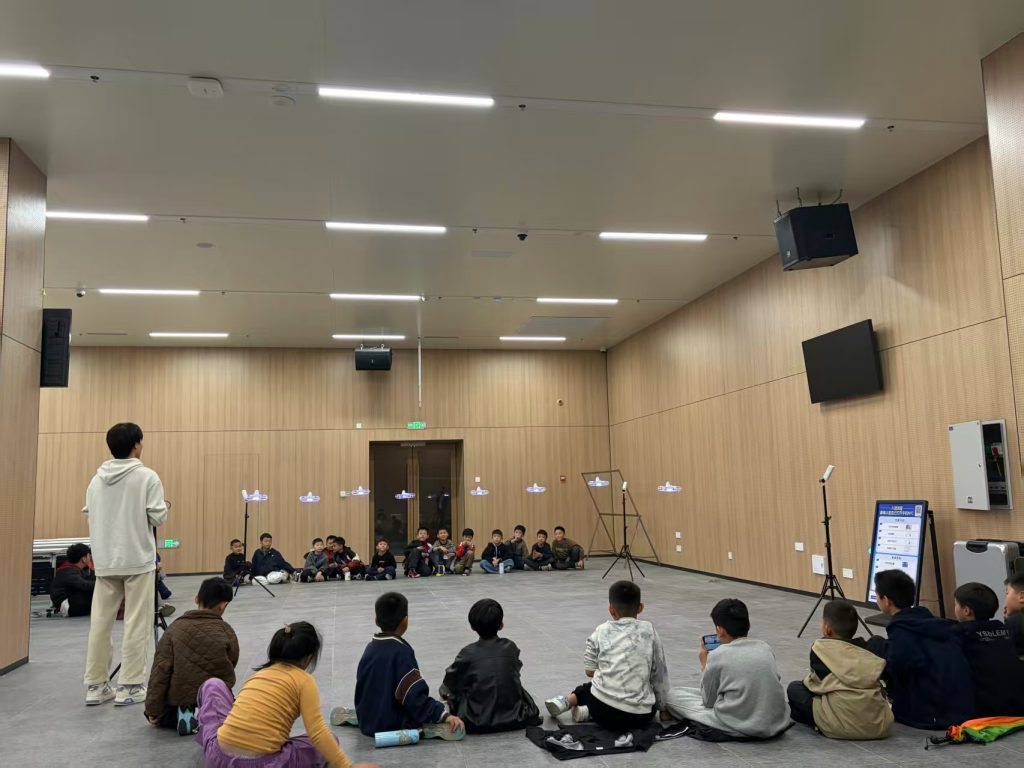
Building an effective UAV-mediated SAR system is not merely an acquisition program; it is an ecosystem development challenge. The central pillar of this ecosystem is a multi-tiered, continuous drone training and education framework. This framework must cater to diverse roles within the joint force.
The competency of a UAV SAR operator (\( C_{op} \)) can be modeled as a vector sum of distinct skill domains, each developed through targeted drone training:
$$ C_{op} = \sqrt{ (K_{tech})^2 + (S_{pil})^2 + (S_{med})^2 + (K_{tac})^2 + (A_{cog})^2 } $$
- \( K_{tech} \): Technical Knowledge (UAV systems, sensors, data links).
- \( S_{pil} \): Piloting Skills (flight control, navigation, emergency procedures).
- \( S_{med} \): Medical/Triage Skills (remote assessment, medical payload knowledge).
- \( K_{tac} \): Tactical Knowledge (ROE, airspace management, threat avoidance).
- \( A_{cog} \): Cognitive Abilities (situational awareness, decision-making, stress management).
A holistic drone training program must address all these components. The table below outlines a proposed structure for such a curriculum.
| Training Phase | Primary Audience | Core Objectives | Key Elements |
|---|---|---|---|
| Foundation | All SAR Personnel | Familiarization with UAV capabilities and limitations in medical support. | UAV types and roles, basic medical payloads, communication protocols for requesting UAV support, safety procedures around operating UAVs. |
| Technical Qualification | Pilots & Technicians | Achieve proficiency in operating specific UAV platforms and maintaining them. | Flight theory, pre-flight checks, manual and automated flight operations, basic troubleshooting, maintenance procedures. This is the core technical drone training. |
| Medical Integration | Medics & UAV Pilots | Enable effective remote casualty assessment and medical supply utilization. | Interpreting UAV sensor data (visual/thermal) for triage, selecting appropriate medical payloads for given injuries, instructing casualties via drone-mounted speakers. |
| Tactical Employment | Mission Commanders & Pilots | Plan and execute UAV SAR missions in contested environments. | Mission planning software, dynamic re-tasking, threat evasion tactics, electronic warfare awareness, joint fires deconfliction, data security protocols. |
| Joint & Collective Training | Entire SAR Task Force | Integrate UAVs seamlessly into the full SAR operational cycle with ground and air assets. | Large-scale field exercises, simulated complex environments (urban, jungle, maritime), high-fidelity casualty scenarios, after-action reviews focused on UAV integration. |
| Sustainment & Advancement | All Qualified Personnel | Maintain proficiency and integrate new technologies/tactics. | Regular simulator training, recertification exercises, lessons-learned workshops, advanced courses on new sensor systems or AI tools. |
The resource allocation for such a system must also be optimized. A cost-effectiveness analysis for a UAV SAR program versus traditional methods must consider not just monetary cost but operational value. A simplified model for the value (\( V \)) of a SAR system per mission could be:
$$ V = P_{success} \cdot (L_{saved} + M_{retained}) – (C_{opex} + C_{risk}) $$
Where \( P_{success} \) is the probability of successful rescue, \( L_{saved} \) is the value of a saved life, \( M_{retained} \) is the military value of retained experienced personnel, \( C_{opex} \) is the operational cost of the mission (fuel, maintenance, personnel time), and \( C_{risk} \) is the cost associated with risks to rescue forces. A well-trained UAV system increases \( P_{success} \) while drastically reducing \( C_{risk} \) by minimizing personnel exposure, justifying the investment in both hardware and, crucially, in extensive drone training.
Looking forward, the system will evolve towards greater autonomy and swarm intelligence. Future swarms of heterogeneous drones (scout, logistics, evacuation) could autonomously coordinate SAR missions. The command paradigm may shift from direct piloting to mission-level supervision. This evolution does not eliminate the need for drone training; it transforms it. Training will focus less on stick-and-rudder skills and more on swarm management ethics, AI oversight, and interpreting complex autonomous system behavior. The fundamental equation for system reliability (\( R_{system} \)) in an autonomous swarm highlights this:
$$ R_{system} = R_{hardware} \cdot R_{software} \cdot R_{human} $$
Even with perfect hardware (\( R_{hardware} \approx 1 \)) and robust software (\( R_{software} \approx 1 \)), the human oversight factor (\( R_{human} \)) remains crucial and is solely dependent on the quality of drone training for the autonomous era.
In conclusion, the construction of a UAV-mediated joint battlefield casualty search and rescue system represents a necessary leap forward in combat medicine. Its potential to save lives within the golden hour by providing rapid location, remote stabilization, and safe evacuation is unparalleled. Yet, this potential is locked behind a series of technical, operational, and human barriers. The master key to unlocking this potential is not found solely in better batteries or more agile airframes, but in the systematic, rigorous, and continuous drone training of a new generation of operators, medics, and commanders. This training must forge individuals who are not merely drone pilots, but integrated SAR specialists capable of managing complex human-machine teams under extreme duress. Therefore, strategic investment in drone training infrastructure, curriculum development, and joint exercise programs is not an ancillary support activity; it is the foundational investment that determines whether a UAV SAR system will be a game-changing asset or a fragile, underutilized technology. The future of battlefield medicine will be written by those who best learn to harness the sky, and that journey begins on the training ground.