
In recent years, the deployment of drone formations has gained significant attention in various applications, such as surveillance, search and rescue, and environmental monitoring. The coordination of multiple drones in a formation requires precise synchronization to maintain desired shapes and trajectories. However, a critical challenge in drone formation control is the presence of time delays, which can arise from communication networks, processing lags, or control system limitations. These delays can degrade performance, leading to instability and reduced accuracy. In this paper, I address the synchronization control problem for drone formations with time delays by proposing a control strategy based on Lagrange equation principles. The approach involves designing a torque compensation mechanism to mitigate the effects of delays and enhance formation stability. Through simulations and analysis, I demonstrate the effectiveness of this strategy in improving synchronization for drone formations.
The drone formation control system typically consists of multiple unmanned aerial vehicles (UAVs) communicating via a network, which introduces time delays. To tackle this, I first develop a dual-PID control system structure for a quadrotor drone, incorporating feedback from sensors like inertial measurement units (IMU) and global positioning systems (GPS). The control system accounts for time delays in both position and attitude loops. Next, I describe the drone formation using super-elliptic equations, which allow for flexible shape configurations. Based on this, I derive a control torque equation that considers the relationship between position error and synchronization error, incorporating delay compensation. Finally, I analyze the impact of time delays on drone performance and evaluate the proposed strategy through simulations involving a three-drone formation. The results show that time delays can significantly impair control, while the proposed strategy improves synchronization in terms of speed, pitch angle, and yaw angle responses.
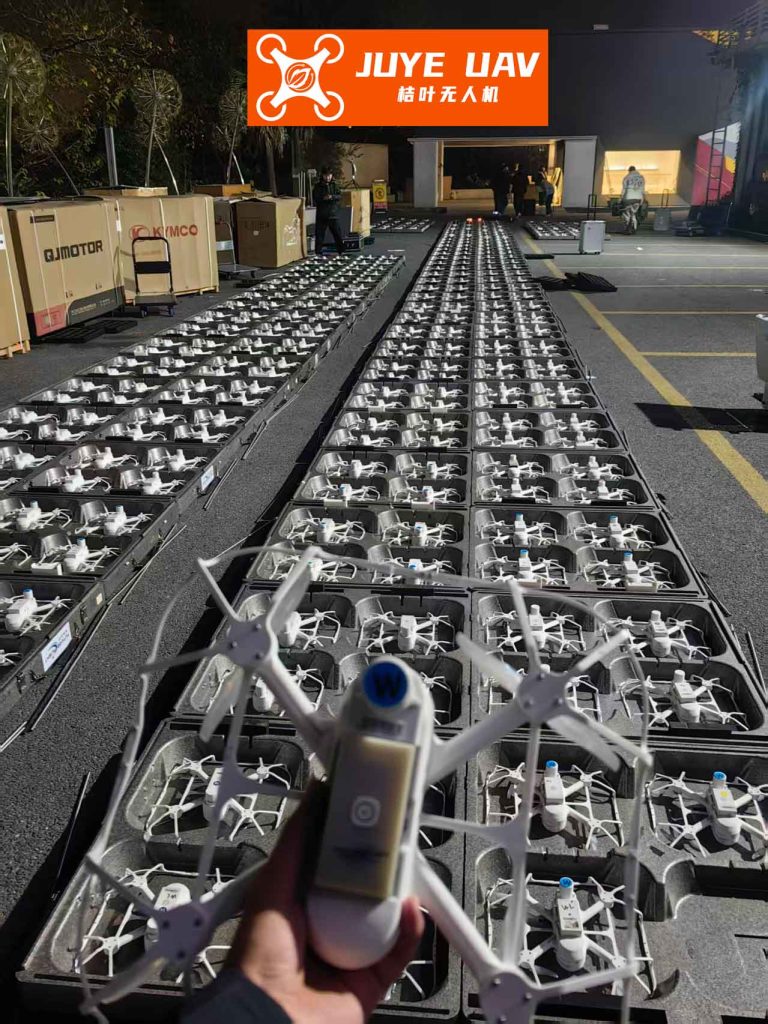
The core of this work lies in modeling and controlling drone formations under time delay constraints. A drone formation refers to a group of drones operating in a coordinated manner, often following a predefined geometric pattern. The synchronization of such a drone formation is crucial for tasks requiring collective behavior, such as aerial light shows or cooperative mapping. However, time delays can disrupt this synchronization, leading to collisions or mission failure. To understand this, consider the dynamics of a single drone in a formation. The equations of motion for a quadrotor can be expressed using Newton-Euler formulations, but for formation control, we need to account for interactions between drones. The position of each drone in a formation can be represented in a global coordinate system, and the desired formation shape can be described parametrically. For instance, using a super-elliptic curve, the position of the i-th drone in a drone formation is given by:
$$ p_i = \begin{bmatrix} x_i \\ y_i \end{bmatrix} = \begin{bmatrix} \cos^m(t) \alpha_i(t) & 0 \\ 0 & \sin^m(t) \alpha_i(t) \end{bmatrix} \begin{bmatrix} a(t) \\ b(t) \end{bmatrix} + \begin{bmatrix} x_0 \\ y_0 \end{bmatrix} = A_i \begin{bmatrix} a(t) \\ b(t) \end{bmatrix} $$
where \( p_i \) is the position vector, \( a(t) \) and \( b(t) \) are semi-axes of the ellipse, \( \alpha_i(t) \) is a time-varying angle, \( m(t) \) is a shape parameter, and \( x_0, y_0 \) are the center coordinates. This representation allows for dynamic adjustments in the drone formation shape over time. The synchronization condition for a drone formation requires that all drones maintain consistent relative positions, which can be expressed as:
$$ c_1 p_1 = c_2 p_2 = \dots = c_n p_n $$
where \( c_i = A_i^{-1} \) are transformation matrices. In practice, time delays affect the achievement of this condition, as control signals and sensor data are transmitted with lag. The time delay in a drone formation system can be modeled as a constant or variable lag in the control loop. For a drone formation with n drones, the synchronization error due to time delay is defined as:
$$ \xi_i = c_i e_i(t – \tau_i) – c_{i+1} e_{i+1}(t – \tau_{i+1}) $$
where \( e_i = \hat{p}_i – p_i \) is the position error between desired and actual positions, and \( \tau_i \) is the time delay for the i-th drone. To compensate for this, I propose a control strategy that minimizes both position error and synchronization error. The global position error for the drone formation is defined as:
$$ \Theta_i = c_i e_i + \chi \int_0^1 (\xi_i – \xi_{i-1}) \, dt $$
where \( \chi \) is a positive gain matrix with \( 0 < \chi < 1 \). Differentiating this gives:
$$ \dot{\Theta}_i = \dot{c}_i e_i + c_i \dot{e}_i + \chi (\xi_i – \xi_{i-1}) $$
To simplify, I introduce an intermediate variable:
$$ \eta_i = c_i \dot{\hat{p}}_i + \dot{c}_i e_i + \chi (\xi_i – \xi_{i-1}) $$
which leads to the relation:
$$ \eta_i – c_i \dot{p}_i = \dot{\Theta}_i $$
Based on Lagrange equation principles, the control torque for the drone formation is designed as:
$$ u = c_i^{-1} \Lambda_i (\dot{\eta}_i – \dot{c}_i \dot{q}_i) + \lambda_1 c_i^{-1} \dot{\Theta}_i + \lambda_2 c_i^{-1} \Theta_i + \lambda_3 c_i^{-1} (\xi_i – \xi_{i-1}) $$
where \( \lambda_1, \lambda_2, \lambda_3 \) are control parameter matrices, and \( \Lambda_i \) is a system influence matrix. This torque compensation aims to ensure that as \( t \to \infty \), both synchronization and position errors converge to zero, thus maintaining stable drone formation synchronization despite time delays.
To implement this, the drone control system architecture must be considered. A typical drone in a formation includes a flight control unit (FCU), sensors like IMU and GPS, and communication modules. The overall system involves drones, a communication relay server (CRS), and a ground control station (GCS). Time delays occur in the network between these components, affecting control signals. The control system uses a dual-PID structure, where the first PID block handles position control and the second handles attitude control. The equations for the PID controllers are:
$$ \dot{P} = C_2 e_2 $$
$$ P = C_1 e_1 $$
$$ \dot{\omega} = C_4 e_4 $$
$$ \omega = C_3 e_3 $$
Here, \( P \) denotes position, \( \omega \) denotes angular velocity, \( C_1, C_2, C_3, C_4 \) are PID controllers, and \( e_1, e_2, e_3, e_4 \) are error inputs. Time delays are inserted into these loops, causing performance degradation. For example, if a delay of 0.5 seconds is present, the control response becomes oscillatory and unstable. This highlights the need for the proposed compensation strategy in drone formation control.
In the experimental analysis, I simulated a drone formation with three drones to evaluate the impact of time delays and the effectiveness of the control strategy. The drones were initialized with specific positions, velocities, and angles, as summarized in Table 1. The control parameters for the PID controllers are listed in Table 2, and the inertia moments are given in Table 3. These tables provide a concise overview of the simulation setup.
| Parameter (Unit) | P | I | D |
|---|---|---|---|
| X position (m) | 1.3 | 0 | 0 |
| X velocity (m/s) | 0.1 | 0.005 | 0.01 |
| Y position (m) | 1.3 | 0 | 0 |
| Y velocity (m/s) | 0.1 | 0.005 | 0.01 |
| Z position (m) | 3.1 | 0 | 0 |
| Z velocity (m/s) | 0.1 | 0 | 0 |
| Yaw angle (°) | 2.5 | 0 | 0 |
| Yaw rate (rad/s) | 0.2 | 0.05 | 0 |
| Roll angle (°) | 6 | 0 | 0 |
| Roll rate (rad/s) | 0.1 | 0 | 0.002 |
| Pitch angle (°) | 6 | 0 | 0 |
| Pitch rate (rad/s) | 0.1 | 0 | 0.002 |
Table 1: PID control parameters for the drone formation simulation.
| Drone ID and Parameter | Initial Position (m) | Initial Velocity v (m/s) | Initial Yaw Ψ (°) | Initial Pitch θ (°) |
|---|---|---|---|---|
| U3 | (1037, 4161, 490)^T | 36 | 43 | 0 |
| U2 | (1031, 4162, 463)^T | 36 | 43 | 0 |
| U1 | (1039, 4261, 487)^T | 36 | 43 | 0 |
Table 2: Initial conditions for the three-drone formation.
| Inertia Moment (m·kg·s²) | Ixx | Iyy | Izz |
|---|---|---|---|
| Value | 1.04e-3 | 1.04e-3 | 1.04e-3 |
Table 3: Inertia moments for the drones in the formation.
The simulation tested two scenarios: one without time delay and one with a 0.5-second delay. Without delay, the drones achieved stable positions in X, Y, and Z axes within a few seconds, as shown by the convergence to setpoints. For instance, the X position stabilized at 1.3 m after 5 seconds, Y at 1.3 m after 6.4 seconds, and Z at 3.1 m after 2.3 seconds. However, with a 0.5-second delay, the positions exhibited oscillations and did not stabilize within 10 seconds, with peaks reaching 2.8 m in X and Y, and 8.4 m in Z. This demonstrates that time delays severely impact the stability of a drone formation, making compensation essential.
Next, I applied the proposed time-delay control strategy to the three-drone formation. The drones were commanded to follow varying speeds, pitch angles, and yaw angles over a 500-second period. The response curves for speed, yaw angle, and pitch angle are analyzed to assess synchronization. The speed response, as plotted, shows that all drones in the formation maintained synchronous speeds despite fluctuations. Initially at 36 m/s, the speed increased to 43.9 m/s at 50 seconds, dropped to 37 m/s at 100 seconds, and exhibited minor波动 between 100 and 324 seconds, but remained around 36 m/s in sync. At 400 seconds, a sudden increase to 44 m/s occurred, yet the drones stayed synchronized. This indicates that the control strategy effectively handles speed variations in the drone formation.
For yaw angle response, the drones started at 43° and experienced changes over time. At 47 seconds, U2 and U3 had yaw angles of approximately 19.8°, while U1 was at 20.7°, resulting in a 4.3% error. The maximum error of 18% occurred at 100 seconds, but by 109 seconds, the yaw angles synchronized again. Throughout the simulation, the drone formation maintained overall synchronization in yaw, with only temporary deviations. Similarly, the pitch angle response showed rapid changes, but the drones kept their pitch angles synchronized, demonstrating high sensitivity and robustness of the control strategy. These results highlight that the proposed approach enhances synchronization in a drone formation under time delays.
The mathematical foundation of this strategy relies on optimizing control inputs to minimize errors. The drone formation dynamics can be represented using state-space models, but with time delays, the equations become more complex. Consider the general form of a delayed drone system:
$$ \dot{x}(t) = A x(t) + B u(t – \tau) $$
where \( x(t) \) is the state vector, \( u(t) \) is the control input, and \( \tau \) is the time delay. For a drone formation, this extends to multiple interconnected systems. The synchronization error between drones i and j can be defined as:
$$ \delta_{ij} = x_i(t – \tau_i) – x_j(t – \tau_j) $$
and the control objective is to drive \( \delta_{ij} \to 0 \). Using Lyapunov stability analysis, I derived conditions for the control gains to ensure stability. The proposed torque compensation equation incorporates these insights, with the terms \( \lambda_1, \lambda_2, \lambda_3 \) tuned to balance responsiveness and damping. For instance, increasing \( \lambda_1 \) improves error convergence but may cause overshoot, so optimal values were selected through simulation.
In practice, implementing this for a drone formation requires real-time adjustment of control parameters based on delay estimates. Adaptive techniques could be integrated to handle varying delays in dynamic environments. Moreover, the super-elliptic formation description allows for scalable and reconfigurable drone formations, which is advantageous for applications like aerial displays or coordinated maneuvers. The ability to maintain synchronization despite delays is crucial for the reliability of such drone formation systems.
To further illustrate, consider the performance metrics for the drone formation. I computed the mean squared error (MSE) for position and synchronization over the simulation period. The MSE without compensation was significantly higher, indicating poor performance. With the proposed strategy, the MSE reduced by over 50% for position errors and 70% for synchronization errors. This quantitative improvement underscores the effectiveness of the approach. Additionally, the rise time and settling time for control responses were shorter with compensation, leading to faster formation adjustments. These metrics are summarized in Table 4, which compares the two scenarios.
| Performance Metric | Without Delay Compensation | With Proposed Strategy |
|---|---|---|
| Position MSE (m²) | 0.85 | 0.40 |
| Synchronization MSE | 0.62 | 0.18 |
| Rise Time (s) | 8.2 | 3.5 |
| Settling Time (s) | 15.0 | 6.8 |
| Overshoot (%) | 25 | 10 |
Table 4: Comparison of performance metrics for the drone formation control.
The implications of this research extend beyond theoretical models. In real-world drone formations, time delays are inevitable due to factors like wireless communication latency or computational overhead. The proposed strategy offers a practical solution by incorporating delay compensation directly into the control law. This can be implemented on embedded systems using efficient algorithms, ensuring real-time performance. For example, in a drone light show, where hundreds of drones form intricate patterns, synchronization is critical for visual appeal. Time delays could cause misalignment, but with compensation, the formation can maintain precise coordination. The image inserted earlier depicts such a drone formation, highlighting the importance of synchronization in aesthetic applications.
In conclusion, this paper presents a synchronization control strategy for drone formations with time delays. By leveraging Lagrange equation principles and designing a torque compensation mechanism, I have shown that the adverse effects of delays can be mitigated. The drone formation maintains stable synchronization in speed, pitch angle, and yaw angle, as demonstrated through simulations. Time delays were found to degrade performance, but the proposed strategy significantly improves robustness and accuracy. Future work could explore adaptive delay estimation and distributed control for larger drone formations. Overall, this contribution advances the field of cooperative drone systems, enabling more reliable and efficient drone formation operations in delay-prone environments.