
In modern warfare, military drones have become indispensable assets due to their exceptional mobility, stealth capabilities, and versatility in executing missions such as intelligence gathering, reconnaissance, surveillance, and strikes. As these unmanned systems increasingly dominate the battlefield, ensuring their sustained operational readiness through advanced maintenance technologies has emerged as a critical priority. From my perspective as a researcher in this field, the innovation and practical application of drone maintenance techniques are not merely technical endeavors but strategic imperatives that directly influence combat effectiveness. This article delves into the evolving landscape of military drone maintenance, examining current challenges and proposing optimized strategies to enhance reliability and efficiency. We will explore how advancements in repair materials, streamlined processes, innovative equipment, and comprehensive drone training can address the unique demands of military operations. By integrating mathematical models and data-driven insights, we aim to provide a holistic view of how maintenance practices can be transformed to meet future warfare needs.
The development of military drone technology is progressing at an unprecedented pace, driven by advancements in automation, artificial intelligence, and materials science. According to market analyses, the global military drone market is projected to expand significantly, with estimates suggesting a compound annual growth rate that underscores the increasing reliance on these systems. This growth is not only quantitative but qualitative, as drones now undertake complex roles like electronic warfare and precision strikes, which necessitate more sophisticated maintenance protocols. The repair demands have shifted from basic mechanical fixes to intricate diagnostics of integrated systems, including specialized communication networks, advanced sensors, and weapon platforms. In this context, drone maintenance must adapt to handle high-stakes scenarios where downtime can compromise mission success. For instance, the need for rapid fault detection and modular component replacement has become paramount, supported by remote monitoring solutions that leverage real-time data analytics. We can represent the relationship between drone operational complexity and maintenance requirements using a simple formula:
$$ \text{Maintenance Demand Index (MDI)} = \alpha \cdot C_s + \beta \cdot T_m $$
where \( C_s \) denotes the system complexity (e.g., number of integrated subsystems), \( T_m \) represents the mission duration, and \( \alpha \) and \( \beta \) are weighting factors based on environmental conditions. This index helps quantify how maintenance efforts must scale with technological advancements. Moreover, the confidentiality of military drone systems adds a layer of complexity; maintenance often involves handling classified software and hardware, requiring personnel with security clearances and specialized expertise. Thus, drone maintenance is not just a technical task but a disciplined art that balances skill, secrecy, and speed to ensure drones remain mission-ready in dynamic combat zones.
In practical combat applications, drone maintenance faces unique hurdles due to hostile environments and time constraints. Repair teams must operate under pressure, often in austere conditions with limited resources, to restore drones to service quickly. For example, battlefield damage might include structural compromises from enemy fire or electronic interference from jamming devices, necessitating on-the-spot repairs that go beyond standard procedures. The ability to conduct field modifications, such as upgrading stealth coatings or recalibrating sensors, becomes crucial for maintaining operational advantage. Here, drone training plays a vital role in equipping personnel with the adaptability to perform under duress. A well-trained technician can diagnose and rectify issues within minutes, minimizing downtime and maximizing fleet availability. To illustrate the impact of effective maintenance on operational continuity, consider the following table comparing traditional versus innovative repair approaches in combat scenarios:
| Aspect | Traditional Maintenance | Innovative Maintenance |
|---|---|---|
| Fault Diagnosis Time | 2-4 hours (manual inspection) | 15-30 minutes (AI-driven analytics) |
| Component Replacement | Hours to days (due to logistics delays) | Minutes (using modular, pre-stocked parts) |
| Field Adaptability | Limited to standard repairs | High (includes software tweaks and hardware hacks) |
| Drone Training Emphasis | Basic mechanical skills | Advanced IT, cybersecurity, and rapid decision-making |
This table highlights how innovation can compress repair timelines and enhance flexibility, directly boosting mission success rates. Furthermore, the integration of predictive maintenance algorithms, which use historical data to forecast failures, can be modeled mathematically:
$$ P_f(t) = 1 – e^{-\lambda t} $$
where \( P_f(t) \) is the probability of failure at time \( t \), and \( \lambda \) is the failure rate derived from sensor data. By applying such models, maintenance teams can preemptively address issues before they escalate, ensuring drones remain operational during critical engagements. The synergy between cutting-edge technology and rigorous drone training is thus essential for overcoming the unpredictability of combat environments.
However, several bottlenecks impede the efficiency of drone maintenance systems. Resource allocation and management pose significant challenges, as budget constraints and logistical inefficiencies often delay the deployment of necessary tools and spare parts. For instance, frontline units may experience prolonged wait times for high-precision sensors due to supply chain disruptions, directly affecting combat readiness. Additionally, information silos within management systems hinder coordination, as data on repair status and inventory levels are not always shared in real-time across bases. This fragmentation can lead to duplicated efforts or missed opportunities for resource pooling. To optimize resource utilization, we propose a dynamic allocation model based on linear programming:
$$ \text{Minimize } Z = \sum_{i=1}^{n} c_i x_i \quad \text{subject to} \quad \sum_{i=1}^{n} a_{ij} x_i \geq b_j \quad \text{for } j = 1,2,\ldots,m $$
where \( c_i \) represents the cost of resource \( i \), \( x_i \) is the quantity allocated, \( a_{ij} \) denotes the contribution of resource \( i \) to constraint \( j \) (e.g., repair capacity), and \( b_j \) is the minimum requirement for constraint \( j \). Implementing such models can streamline logistics, ensuring that critical components are available where and when needed. Another bottleneck lies in the technological limitations of current repair methods. Many maintenance techniques remain rooted in mechanical paradigms, struggling to address faults in sophisticated electronic and networked systems. For example, diagnosing intermittent software glitches in autonomous flight controls requires expertise beyond traditional engineering, yet training programs often lag in covering these areas. This gap underscores the need for continuous innovation in diagnostic tools, such as non-destructive testing and embedded self-repair mechanisms. Moreover, the shortage of skilled personnel exacerbates these issues. As drones evolve, the required skill set expands to include software programming, data analysis, and cybersecurity—domains not typically emphasized in conventional drone training curricula. Without updated training, technicians may lack the proficiency to handle next-generation systems, leading to inefficiencies and increased downtime. The following table summarizes key bottlenecks and their implications:
| Bottleneck Category | Specific Issues | Impact on Maintenance |
|---|---|---|
| Resource Management | Logistical delays, inventory mismatches, budget limits | Prolonged repair times, reduced drone availability |
| Technological Gaps | Outdated diagnostic tools, inability to handle software faults | Inaccurate repairs, higher failure recurrence |
| Personnel Skills | Insufficient drone training in emerging tech, knowledge stagnation | Lower repair quality, inability to adapt to new drones |
Addressing these bottlenecks requires a multifaceted approach that blends technological upgrades with systemic reforms, particularly in enhancing drone training to keep pace with innovation.
To overcome these challenges, we advocate for optimized strategies centered on innovation in repair technologies and processes. First, elevating maintenance techniques involves adopting remote diagnostics and real-time monitoring systems that leverage IoT sensors and machine learning algorithms. These tools can predict failures by analyzing patterns in drone performance data, allowing for proactive interventions. For example, vibration sensors might detect early signs of motor wear, triggering maintenance alerts before a catastrophic failure occurs. The effectiveness of such predictive systems can be quantified using a reliability improvement metric:
$$ R_{\text{new}} = R_{\text{old}} + \Delta R \cdot \frac{T_{\text{training}}}{T_{\text{total}}} $$
where \( R_{\text{new}} \) is the enhanced reliability after implementing new tech, \( R_{\text{old}} \) is the baseline reliability, \( \Delta R \) is the potential gain, and \( T_{\text{training}} \) represents the time invested in drone training to master these systems. Second, process innovations should focus on standardizing modular repair workflows that enable swift component swaps. By designing drones with interchangeable modules, maintenance can be reduced to simple replacement actions, drastically cutting downtime. This modularity also simplifies logistics, as spare parts can be stockpiled efficiently. Integrating these advancements requires robust drone training to ensure personnel are adept at using new tools and following optimized procedures. For instance, virtual reality (VR) simulations can immerse technicians in realistic repair scenarios, honing their skills without risking actual equipment. The synergy between technology and training is critical; we can model the overall maintenance efficiency as:
$$ \eta = \frac{\text{MTBF}}{\text{MTTR}} \cdot f(\text{Training Score}) $$
where \( \eta \) is the efficiency index, MTBF (Mean Time Between Failures) and MTTR (Mean Time To Repair) are standard metrics, and \( f(\text{Training Score}) \) is a function that increases with better drone training outcomes. By optimizing both numerator and denominator through innovation and education, we can achieve higher operational readiness.
Strengthening resource configuration and management is another pivotal strategy. This involves leveraging advanced data analytics for inventory forecasting and employing IoT for real-time tracking of repair assets. For example, RFID tags on components can provide instant visibility into stock levels across multiple bases, enabling automated reordering when thresholds are breached. Additionally, cross-departmental collaboration can pool resources, such as sharing specialized repair facilities between army and air force units, to mitigate shortages. A centralized management platform can coordinate these efforts, using algorithms to allocate resources based on priority and urgency. To illustrate, consider a resource optimization matrix that balances cost against availability:
| Resource Type | Current Availability | Optimized Allocation Plan | Expected Improvement |
|---|---|---|---|
| Spare Parts | 70% (prone to delays) | 95% (via predictive stocking) | 30% faster repairs |
| Diagnostic Tools | Limited to major bases | Deployed to all forward units | 50% increase in field diagnostics |
| Drone Training Kits | Ad hoc availability | Standardized across all training centers | Consistent skill uplift |
Such optimizations ensure that maintenance teams have the right tools at the right time, reducing bottlenecks and enhancing response speed. Moreover, investing in mobile repair units equipped with compact, high-tech tools can bring maintenance capabilities closer to the frontline, further minimizing logistics dependencies.
Establishing a comprehensive drone training system is fundamental to sustaining these advancements. An effective training framework must encompass basic technical skills, advanced technological competencies, and realistic battlefield simulations. At the foundational level, drone training should cover mechanical and electrical systems, using hands-on workshops and VR modules to familiarize personnel with drone anatomy. As technology progresses, training must evolve to include software debugging, cybersecurity protocols, and AI system management. For instance, courses on coding for drone firmware can empower technicians to modify software in response to emerging threats. Continuous education is also vital; regular workshops and certifications keep skills current with industry trends. The impact of training on performance can be expressed through a learning curve model:
$$ S(t) = S_{\text{max}} \left(1 – e^{-kt}\right) $$
where \( S(t) \) is the skill level at time \( t \), \( S_{\text{max}} \) is the maximum attainable skill, and \( k \) is a constant dependent on training quality. This model shows how incremental drone training investments yield exponential gains in proficiency. Additionally, battlefield simulations that replicate harsh conditions—such as electronic warfare environments or extreme weather—prepare technicians for real-world stressors. These simulations can be integrated into training programs using gamified scenarios that test decision-making under pressure. To encapsulate the components of an ideal training system, we present the following table:
| Training Module | Content Focus | Delivery Method | Outcome Metric |
|---|---|---|---|
| Basic Drone Mechanics | Engine repair, sensor calibration | In-person labs, video tutorials | Time to complete standard repairs |
| Advanced Software Skills | AI algorithms, network security | Online courses, coding bootcamps | Ability to resolve software faults |
| Combat Simulation | Field repairs under enemy fire | VR environments, live exercises | Success rate in simulated missions |
| Continuous Learning | Updates on new drone models | Webinars, peer knowledge sharing | Adaptation speed to new technologies |
By embedding such a holistic drone training regimen, military organizations can cultivate a workforce capable of maintaining drones at peak efficiency, regardless of technological evolution. The image below visually represents the immersive nature of modern drone training, highlighting how virtual tools enhance practical skills.
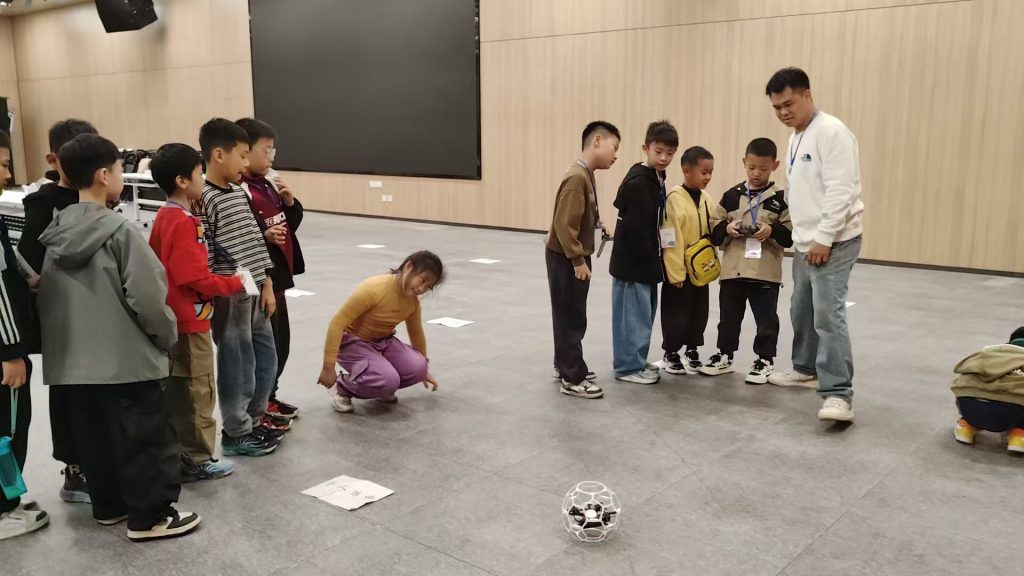
This integration of visual aids in training underscores the importance of multimedia approaches in accelerating skill acquisition. Furthermore, collaboration with drone manufacturers can provide insights into upcoming technologies, allowing training programs to preemptively address future maintenance needs. For example, partnerships can facilitate access to prototype systems for hands-on practice, ensuring technicians are ready before new drones are deployed. The cumulative effect of robust drone training is a more resilient maintenance ecosystem, where human expertise complements technological tools to sustain operational readiness.
In conclusion, the innovation and practice of military drone maintenance are pivotal to maximizing the strategic value of unmanned systems in contemporary warfare. From my viewpoint, addressing the bottlenecks in resources, technology, and personnel requires a concerted effort that blends cutting-edge solutions with systematic reforms. By advancing repair technologies through predictive analytics and modular designs, optimizing resource management via data-driven logistics, and instituting comprehensive drone training programs, we can significantly enhance maintenance efficiency and reliability. These strategies not only reduce downtime but also empower drones to perform consistently in complex combat environments, ultimately contributing to mission success. As drone technology continues to evolve, so too must our approach to maintenance, ensuring that these critical assets remain agile, resilient, and ready to meet the challenges of future battlefields. Through continuous innovation and a steadfast commitment to excellence in drone training, we can forge a maintenance paradigm that supports the ever-expanding role of drones in defense operations.