
Control gates serve as critical hydraulic structures for water level regulation and flood management, where concrete integrity directly impacts operational safety. Traditional defect identification methods suffer from sensitivity variations during image enhancement, leading to coarse classification and low Intersection-over-Union (IOU) metrics. Our methodology integrates drone technology with advanced image processing to overcome these limitations through three key innovations: optimized spatial acquisition protocols, spectral enhancement techniques, and multi-scale semantic fusion.
Spatial Acquisition Framework for UAV Imaging
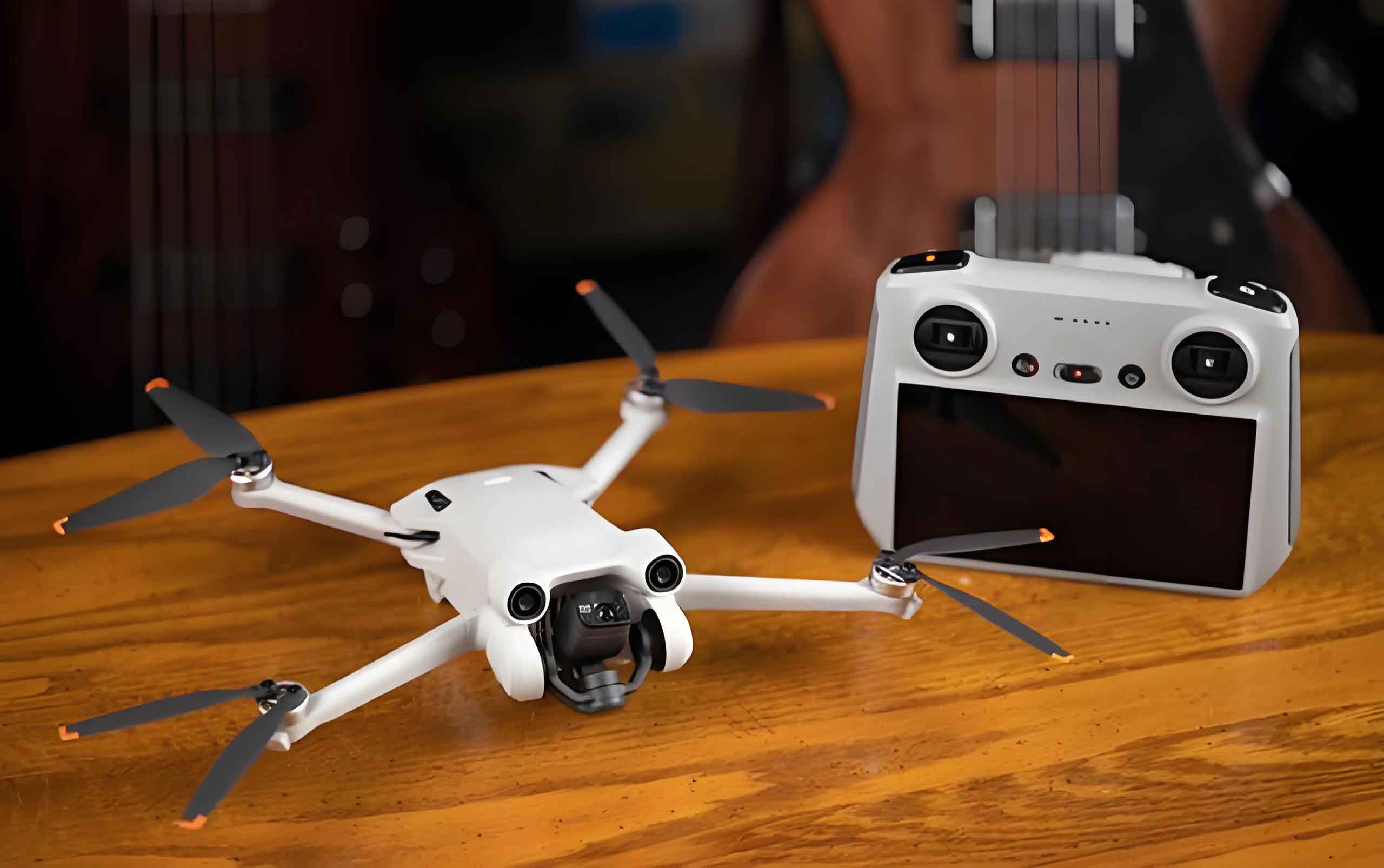
Our Unmanned Aerial Vehicle (UAV) deployment employs Context Capture software for geospatial transmission and collision-aware path planning. The acquisition domain is defined within constrained coordinates to ensure operational safety:
$$ \begin{Bmatrix} x,y,z \mid x_{\min} < x < x_{\max}, \ y_{\min} < y < y_{\max}, \ z_{\min} < z < z_{\max} \end{Bmatrix} $$
Multi-index processing eliminates defect-free zones, concentrating on high-probability defect regions through elevation modeling:
$$ h = h_0 + \sum_{i=1}^{n} h_i \exp\left[ -\left( \frac{x – x_{oi}}{x_{si}} \right)^2 – \left( \frac{y – y_{oi}}{y_{si}} \right)^2 \right] $$
where $h$ denotes concrete surface elevation, $(x_{oi}, y_{oi})$ represent optimal acquisition coordinates, and $(x_{si}, y_{si})$ are spatial weighting factors. This approach minimizes collision risks while maximizing defect detection probability.
Multi-Spectral Image Enhancement Protocol
Raw UAV imagery undergoes affine transformation to generate enhancement matrices addressing illumination inconsistencies:
$$ \mathbf{M} = \begin{bmatrix} \cos\theta & \sin\theta & 0 \\ -\sin\theta & \cos\theta & 0 \\ 0 & 0 & 1 \end{bmatrix} $$
Laplacian sharpening enhances defect edges through gradient operators:
$$ \nabla f = \frac{\partial f}{\partial x} + \frac{\partial f}{\partial y} $$
Bilateral filtering then refines texture details while preserving edges:
$$ g(x,y) = \left[ f(x,y) \oplus b(x,y) – f(x,y) \ominus b(x,y) \right] * \left[ \frac{\max{X}}{\lg(\max{X} + 1)} \cdot \nabla f \right] $$
where $\oplus$ and $\ominus$ denote morphological dilation and erosion operators, respectively. The final defect feature extraction is formalized as:
$$ D_B = \min \left[ g(x,y) \oplus B, r \right] $$
with $B$ representing structural enhancement elements and $r$ the texture parameter.
Transformer-Based Defect Classification
Our classification framework employs a Transformer encoder with semantic fusion modules (SFM) to address multi-scale defect variations. The SFM architecture integrates:
| Module | Function | Output Dimension |
|---|---|---|
| Overlap Patch Embedding | Feature initialization | 512×512 |
| Efficient Multi-head Attention | Cross-scale correlation | 256×256 |
| MLP Layer | Non-linear transformation | 128×128 |
| Semantic Fusion | Multi-resolution aggregation | 64×64 |
The classification threshold adapts dynamically to feature scales through long-range dependency modeling:
$$ \text{IOU} = \frac{TP}{TP + FN + FP} $$
where $TP$, $FN$, and $FP$ represent true positives, false negatives, and false positives respectively.
Experimental Validation and Performance Metrics
We deployed UAVs equipped with RS-series cameras under diverse environmental conditions. Camera specifications include:
| Parameter | Value |
|---|---|
| Spectral Range | 900-1700nm |
| Spatial Pixels | 320 |
| Pixel Size | 30μm |
| Imaging Speed | 200Hz |
| Stray Light | <0.5% |
Testing covered five illumination conditions and four concrete surface states across 8,200 annotated images. Performance comparison demonstrates significant IOU improvements over conventional methods:
| Iteration Count | Proposed Method | Vision-Driven | Variational Decomposition |
|---|---|---|---|
| 20 | 87.3% | 76.2% | 70.1% |
| 50 | 91.8% | 82.4% | 72.9% |
| 80 | 93.5% | 85.7% | 74.3% |
The drone-based solution maintained >90% IOU under obstruction scenarios including uneven illumination, chemical spills, and physical occlusions. Error reduction stems from three technological advantages: spatial acquisition optimization minimizes UAV collision risks; Laplacian pyramid processing enhances micro-crack visibility; adaptive thresholding in SFM modules resolves classification ambiguities for rust spots and spalling.
Conclusion
Integrating drone technology with multi-stage image enhancement significantly advances control gate concrete inspection. Our Unmanned Aerial Vehicle framework achieves 93.5% mean IOU through collision-avoidant spatial sampling, spectral defect enhancement, and Transformer-based multi-scale classification. Future work will integrate real-time edge processing for on-drone defect localization, further leveraging UAV mobility for hydraulic infrastructure monitoring.