
The deep integration of industry and education is a strategic imperative for modern vocational education, driving the organic linkage of the education chain, talent chain, industrial chain, and innovation chain. In this context, the co-construction of practical training bases between educational institutions and enterprises has emerged as a critical model for cultivating high-quality technical skills talent. The drone surveying technology specialty, characterized by its strong practical demands, rapid technological iteration, and wide application fields, presents a quintessential case for such integration. This article, from the perspective of our institution’s exploration, delves into the pathways, challenges, and optimized strategies for collaboratively building industry-education integrated drone training bases.
The evolution of national policies consistently emphasizes the centrality of industry-education integration. From the foundational documents promoting the linkage between education chains and industrial chains, to recent action plans explicitly demanding the integration of industrial needs into the entire talent cultivation process, the policy trajectory is clear. The directive to build municipal industry-education consortiums and sectoral integration communities further solidifies this approach as a core reform task. Our institution’s drone surveying technology program initially engaged in enterprise cooperation primarily through faculty secondment. Recognizing the need for deeper collaboration to truly enhance educational quality and graduate employability, we embarked on a journey to co-construct a substantive, shared drone training base. This exploration holds practical value for improving our specific program and offers a reference model for other emerging technical specialties.
Connotations of an Industry-Education Integrated Training Base
An industry-education integrated training base is not merely a physical space with equipment; it is a dynamic ecosystem co-created by vocational colleges and enterprises based on mutually beneficial development needs. It leverages the respective resource advantages of both parties to establish a hub integrating teaching, production, skill development, professional literacy cultivation, technological innovation, and social service, all closely aligned with industrial and sectoral demands.
Core Philosophy: Seamless Education-Industry Articulation
Specialty development must originate from the actual needs of industrial development. This necessitates the dynamic adjustment of specialty orientation and teaching content to ensure talent cultivation keeps pace with industry technological advancements. Enterprises transition from passive “observers” to active “participants,” engaging in the entire process of talent training scheme formulation, curriculum development, practical instruction, and evaluation feedback, thereby fostering a “dual-subject” education ecology. The symbiotic relationship is clear: schools supply well-suited talent to enterprises, while enterprises empower the educational process through technology transfer and practical platform provision. This facilitates the对接 of educational systems with industrial needs and promotes the synergistic development of talent cultivation and technological innovation chains.
Operational Mechanism: Resource Integration and Co-construction/Sharing
The operational efficacy hinges on profound resource integration. Enterprises contribute equipment, cutting-edge technology, real-world case studies, and authentic job scenarios. Schools provide space, foundational faculty, and theoretical support. Together, they build productive or simulated productive training environments. A key mechanism is the transformation of actual enterprise production tasks—such as product R&D or process optimization—into teaching projects. Students master practical capabilities through “work-study alternation.” Joint instruction by enterprise engineers and school teachers, employing a “theory + practice” dual-line teaching model, significantly elevates students’ technical application skills. Post-training, the school utilizes enterprise evaluations and graduate employment tracking to continuously optimize teaching content, forming a closed loop of “teaching-practice-feedback-improvement.”
Characteristics of the Drone Surveying Technology Specialty
The inherent attributes of the drone surveying specialty make it exceptionally suitable for industry-education integration and base co-construction.
Strong Practical Orientation, Demanding Real-scenario Training
The program aims to cultivate technically skilled personnel with strong operational capabilities. Mastery of drone piloting, data acquisition, and processing necessitates training in real or highly realistic work environments. An enterprise-co-constructed base provides the most authentic production and professional setting, making it the optimal venue for vocational skill training. Furthermore, it naturally evolves into an incubation site for student employment, entrepreneurship, and upskilling of enterprise employees.
Rapid Technological Updates, Requiring Enterprise Involvement in Curriculum Development
The breakneck speed of drone technology development, with constant emergence of new hardware, software, and techniques, poses a significant challenge. The pace of formal educational program development often lags behind the industry. Therefore, schools must collaborate with enterprises to co-develop curriculum systems, integrating industry standards and practical demands into the teaching content to ensure its relevance. This is crucial for effective drone training.
Wide Application Fields, Necessitating校企 Cooperation to Expand Employment Channels
Drone surveying technology finds extensive applications across diverse sectors like topographic mapping, disaster monitoring, urban planning, and agricultural plant protection. The校企协同 mechanism, by搭建产教融合 platforms, promotes precise alignment between professional awareness and industrial needs, significantly enhancing the匹配效能 between talent supply and labor market demands.
Pathways for Co-constructing the Drone Training Base
Based on our practical experience, we have identified and implemented several key pathways for successful base co-construction.
1. Precise Alignment of Training Content with Industry Demands
The curriculum and content must directly mirror industry requirements. Our approach involves:
Practical-Centric Course Design: We ensure practical teaching accounts for no less than 50% of total credit hours, solidifying an application-oriented talent cultivation system. Core courses like “Drone Pilot Technology,” “Aerial Survey Data Processing,” and “3D Modeling” were established based on extensive enterprise research, focusing on skills like drone operation and geospatial data handling.
Integration of Vocational Skill Standards: The standards and content of vocational skill level certificates (e.g., for drone piloting, drone surveying) are organically embedded into the practical teaching流程. This creates a dynamic coupling mechanism between certification and curriculum development, systematically enhancing the alignment of talent supply with industry needs. The effectiveness of integrating such standards can be modeled by considering the improvement in student skill competency $S$ over time $t$, influenced by the alignment factor $\alpha$ (0 ≤ α ≤ 1) representing the depth of standard integration:
$$ S(t) = S_0 + \int_{0}^{t} \alpha \cdot I(\tau) \, d\tau $$
where $S_0$ is the baseline skill level and $I(\tau)$ represents the intensity of industry-relevant training at time $\tau$.
Fusion of Content with Industry Applications: We introduce real enterprise cases and incorporate application scenarios like emergency surveying, agricultural plant protection, and power line inspection. This achieves a “zero-time-delay”对接 between teaching content and industrial application, cultivating compound talents proficient in both drone operation and domain-specific applications. In collaboration with our partner enterprise, we co-developed a distinctive course, “Drone Simulated Flight,” which incorporates the latest technological achievements and real cases, effectively elevating student proficiency.
2. Combination of Training Projects and Scenario Applications
Our drone training projects focus on frontier areas like high-precision 3D modeling, low-altitude remote sensing data processing, and intelligent route planning, providing technical support for low-altitude economy applications such as emergency mapping and smart city management. By simulating authentic and complex scenarios—including compliant surveying in no-fly zones and handling sensitive data—we cultivate students’ practical operational capabilities within the regulatory and technical frameworks of the emerging low-altitude economy.
3. Co-construction and Sharing of the Training Platform
A foundational step was the joint development of a drone simulation flight platform with our enterprise partner, which significantly reduced risks associated with physical equipment damage during initial drone training. Furthermore, by leveraging the enterprise’s case library and industry standards, we established a repository for graduation project topics and a bank for skill assessment tests.
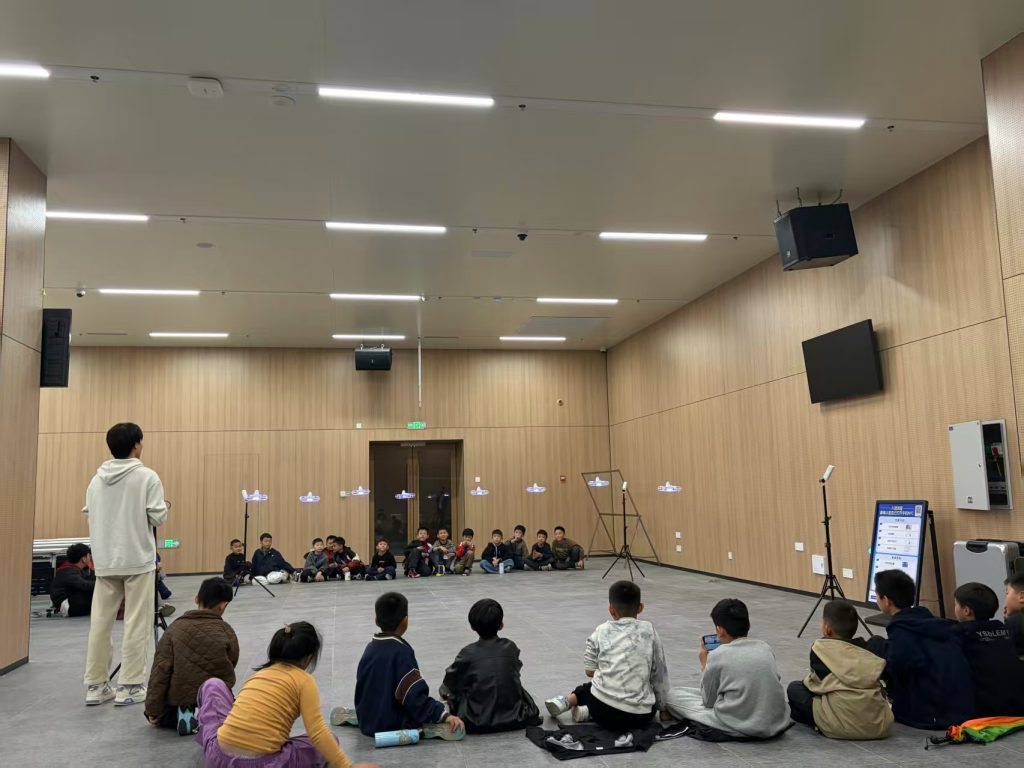
The core strategy involves integrating genuine enterprise project requirements into curriculum standards. We create simulated实训 platforms that replicate real workplace environments to enhance hands-on operational skills. Additionally, in partnership with the enterprise, we established a dynamic graduate tracking platform. Utilizing data analytics, this platform provides continuous feedback for optimizing the cultivation plan, achieving a closed-loop system for resource sharing and collaborative talent development.
4. The Training Base Undertaking Social Service Functions
Extending the base’s functionality beyond internal teaching maximizes its value and impact.
Serving Community Education: The co-constructed base opens to the public, transforming from a singular teaching facility into a multi-functional center. It engages in technology R&D services for enterprises,成果转化 for the industry, and技能培训 for the community. For instance, our institution, utilizing both on- and off-campus bases, collaborated with a local community to establish an “industry-education integration” community learning center. This center addresses diverse resident needs in theoretical learning, skill enhancement, study tours, practical activities, and cultural entertainment.
Serving the Local Economy: The base’s development direction is aligned with regional economic priorities, such as serving the local low-altitude economy. Our contributions include:
- Data Services: Providing city-scale 3D models generated via drone surveying to support landing point planning for urban air mobility initiatives.
- Industry Application Expansion: Developing application solutions for hydraulic facility inspection and interfacing with regional flight service data platforms.
- Ecological Monitoring: Participating in wetland monitoring projects using drones, contributing directly to regional ecological civilization construction goals.
5. Enriching Student Campus Life through the Training Base
The base acts as a catalyst for vibrant, skill-oriented extracurricular activities.
Stimulating Competition Enthusiasm: Traditional campus life is augmented by enterprise合作. Co-organizing events like drone competitions with our partner enterprise provides students a platform to exercise professional skills, showcase talent, and foster creativity and teamwork by applying knowledge to solve practical challenges.
Igniting Entrepreneurial Passion: By configuring parts of the base as innovation workshops or孵化 spaces, we can激发 student entrepreneurial热情. With enterprise mentors regularly stationed at our drone training labs to offer guidance and consultation, it has become common for students in our program to launch startup projects during their studies, covering areas like青少年 drone education and aerial photography services.
6. Two-Way Flow of Training Instructors
A dynamic师资队伍 is vital for delivering relevant drone training.
Introducing Enterprise Talent into Teaching: We integrate enterprise-certified drone instructors and engineers into our instructional team. They lead practical courses, serve as co-supervisors for graduation projects and internships (establishing a dual-mentor system), and deliver expert lectures on industry trends and career planning.
School Faculty Training at Enterprises: Our teachers participate in mandatory summer internships at partner enterprises, engaging in real-world low-altitude surveying projects to accumulate frontline experience. They also attend targeted technology workshops at external training bases, significantly boosting their practical expertise and teaching capability through hands-on operation and case analysis.
7. Perfecting the Evaluation System
A scientific, multi-dimensional, and operational evaluation system is essential for the sustainable development of the co-constructed base. We have established a comprehensive evaluation system for our drone surveying technology drone training base, as summarized in the table below.
| Primary Indicator | Secondary Indicator | Tertiary Indicator | Weight | Evaluation Standard |
|---|---|---|---|---|
| Infrastructure & Equipment (30) | Equipment Completeness (10) | Advanced Equipment Ratio | 5 | Full score if coverage of industry-mainstream equipment ≥ 80%. |
| Equipment Update Frequency | 5 | Full score if annual new equipment acquisition ratio ≥ 10%. | ||
| Site Safety (10) | Safety Facility Completeness | 5 | Full score if firefighting, first-aid equipment齐全. | |
| Site Layout Rationality | 5 | Full score if training area ≥ 100 sq.m, layout conforms to workflow. | ||
| Equipment Utilization Rate (10) | Annual Training Hours | 10 | Full score if ≥ 1000 hours/year. | |
| Practical Teaching & Talent Cultivation (30) | Student Training Performance (10) | Skill Assessment Score | 5 | Full score if average score ≥ 85. |
| Enterprise Evaluation Feedback | 5 | Full score if average professional literacy rating ≥ 85. | ||
| Enterprise Guidance (10) | Guidance Frequency | 5 | Full score if enterprise mentor on-site guidance ≥ 3 times/week. | |
| Guidance Effectiveness | 5 | Full score if student satisfaction on skill improvement ≥ 80%. | ||
| Teaching Implementation (10) | Training Project Design | 5 | Full score if real-case proportion in projects ≥ 70%. | |
| Teaching Methodology & Assessment | 5 | Full score for diverse methods (theory+simulation+practice) and assessment with skill考核占比 ≥ 60%. | ||
| Social Service & Radiation Effect (20) | Social Training Volume (5) | Annual Trainee Headcount | 3 | Full score if ≥ 500 person-times/year. |
| Training Satisfaction | 2 | Full score if trainee feedback score ≥ 85. | ||
| Voc Qualification Certification (5) | Annual Certification Candidates | 3 | Full score if ≥ 100 person-times/year. | |
| Certification Pass Rate | 2 | Full score if ≥ 90%. | ||
| Cultural Heritage & Innovation (10) | Host Skill Competitions | 5 | Full score if hosting ≥ 1 city-level or above competition/year. | |
| 校企 Culture Fusion Cases | 5 | Full score if organizing ≥ 2 professional lectures/year with industry experts. | ||
| Management Operation & Mechanism Innovation (20) | 校企 Coordination Mechanism (5) | Joint Management Committee | 3 | Full score if established for joint decision-making. |
| Clarity of Rights/Responsibilities | 2 | Full score if clearly defined in agreement. | ||
| Resource Sharing Efficiency (10) | Faculty Exchange Ratio | 5 | Full score if enterprise mentor proportion ≥ 30%. | |
| Co-developed Course Quantity | 5 | Full score if ≥ 4 courses jointly developed. | ||
| Informatization Management Level (5) | Training Management System Application | 3 | Full score if system used for real-time student training data recording. | |
| Data Analysis & Feedback | 2 | Full score if regular analytical reports are generated. |
The total performance score $P_{total}$ for the base can be conceptualized as a weighted sum of the scores $S_i$ from each primary indicator area $i$, with weights $w_i$ derived from their assigned points (e.g., $w_{infrastructure} = 0.3$):
$$ P_{total} = \sum_{i} w_i \cdot S_i $$
where $S_i$ itself is an aggregate of the lower-level indicator scores based on the defined evaluation standards. This quantitative approach facilitates objective assessment and year-on-year comparison.
Summary and Reflective Analysis
The co-construction of the drone training base with enterprise partners has yielded significant benefits: marked improvement in talent cultivation quality, facilitation of technological innovation and成果转化, and substantial enhancement of faculty’s practical expertise. However, our journey has also revealed persistent challenges that require strategic solutions.
Identified Challenges:
- Insufficient Enterprise Participation Motivation: A fundamental divergence exists between the school’s public welfare educational focus and the enterprise’s profit-driven calculus. When perceived returns on investment are inadequate, enterprise enthusiasm for deep, sustained integration wanes, potentially stalling collaborative projects.
- Inadequate Policy and Funding Implementation: Successful base co-construction requires robust institutional support. Issues such as insufficient financial backing and ill-defined benefit-sharing mechanisms are common. When incentive policies fail to materialize effectively,校企 cooperation risks becoming superficial.
- Lag in Professional Course Content: The rapid iteration of drone technology can cause a disconnect between curriculum content and industry needs, resulting in graduates whose skills may not fully meet the fast-evolving demands of the drone industry.
Proposed Optimization Strategies:
- Deepen the校企 Collaborative Mechanism: Promote the evolution of partnerships from “short-term projects” to “strategic alliances.” Institutionalizing this through structures like a Joint Management Committee co-chaired by enterprise CTOs and academic program leaders can ensure sustained, high-level engagement.
- Innovate Benefit-Linkage Mechanisms: Explore hybrid models such as “technology equity stake + talent cultivation,” where both parties share intellectual property收益 according to agreed proportions. Regular audits of policy implementation are necessary to ensure incentive measures are effectively落地.
- Advance Dynamic Curriculum System Adjustment: Institutionalize the process of joint curriculum development with enterprises. The curriculum update rate $R_{update}$ should be a function of technological change velocity $V_{tech}$ and industry feedback intensity $F_{ind}$:
$$ R_{update} = k \cdot \log(1 + V_{tech} \cdot F_{ind}) $$
where $k$ is an institutional agility constant. This ensures the continuous integration of industry standards, technological advancements, and job role requirements into the core of drone training programs, maintaining their relevance and efficacy.
The pathways outlined, combined with a critical awareness of the challenges and a commitment to adaptive strategies, provide a robust framework for building effective, sustainable industry-education integrated training bases. Such bases are indispensable for cultivating the highly skilled, industry-ready workforce required to propel the drone surveying sector and the broader low-altitude economy forward.