
The relentless passage of time, compounded by environmental factors and anthropogenic pressures, poses a continuous threat to our global cultural heritage. Traditional methods of documentation, monitoring, and conservation often grapple with significant limitations. These include physical inaccessibility to fragile or elevated structures, the high cost and time investment required for comprehensive surveys, and the potential invasive nature of certain assessment techniques. In this context, Unmanned Aerial Vehicle (UAV) technology has emerged as a transformative force. By leveraging aerial platforms equipped with advanced sensors, we can now approach heritage preservation with unprecedented efficiency, precision, and, crucially, a non-invasive ethos.
At its core, a UAV is an aircraft operated without a human pilot onboard, controlled remotely or autonomously via pre-programmed flight plans. Modern systems integrate sophisticated navigation (like GNSS and IMUs), stable flight controllers, and the capacity to carry a diverse payload of imaging and sensing devices. This synergy enables the execution of highly repeatable and accurate data acquisition missions over culturally significant sites, from ancient ruins and historic urban centers to vast archaeological landscapes and monuments.
Core Applications of UAVs in Heritage Stewardship
The integration of drone technology revolutionizes several key phases of heritage management, creating a seamless workflow from data capture to informed decision-making.
1. Aerial Photogrammetry and 3D Modeling
This is one of the most prevalent and powerful applications. Drones equipped with high-resolution RGB cameras perform systematic aerial surveys, capturing hundreds or thousands of overlapping images. Using the principles of Structure-from-Motion (SfM) and Multi-View Stereo (MVS) photogrammetry, these images are processed to generate highly detailed georeferenced outputs.
- Orthomosaics: A perfectly scaled, top-down map where every pixel corresponds to a real-world coordinate, eliminating distortions. Essential for planning and baseline documentation.
- Digital Surface Models (DSMs) and Digital Terrain Models (DTMs): Representing the elevation of the terrain including buildings and vegetation (DSM) or the bare earth (DTM).
- 3D Textured Models: Photorealistic, measurable three-dimensional representations of the site or structure. These models serve as a permanent digital record, facilitate virtual tourism, and are indispensable for condition assessment, restoration planning, and scholarly research.
The photogrammetric process relies on solving the collinearity equations for each image. For a point \(P(X, Y, Z)\) in object space projected onto image coordinates \((x, y)\), the relationship is given by:
$$
x – x_0 = -f \frac{[m_{11}(X-X_0) + m_{12}(Y-Y_0) + m_{13}(Z-Z_0)]}{[m_{31}(X-X_0) + m_{32}(Y-Y_0) + m_{33}(Z-Z_0)]}
$$
$$
y – y_0 = -f \frac{[m_{21}(X-X_0) + m_{22}(Y-Y_0) + m_{23}(Z-Z_0)]}{[m_{31}(X-X_0) + m_{32}(Y-Y_0) + m_{33}(Z-Z_0)]}
$$
where \((X_0, Y_0, Z_0)\) are the coordinates of the perspective center, \(f\) is the focal length, \((x_0, y_0)\) are the coordinates of the principal point, and \(m_{ij}\) are the elements of a 3D rotation matrix defined by the image’s orientation angles \((\omega, \phi, \kappa)\). The SfM algorithm solves for these parameters simultaneously for all images and points.
2. LiDAR Surveying and Structural Analysis
For sites obscured by dense vegetation or for capturing the finest geometric details of complex structures, LiDAR (Light Detection and Ranging) sensors mounted on drones are invaluable. LiDAR actively emits laser pulses and measures their return time to create dense “point clouds” representing the precise 3D geometry of surfaces. Unlike photogrammetry, it is largely independent of lighting conditions and can filter through vegetation to map the ground surface. This is critical for archaeological prospection in forested areas and for creating accurate as-built models of intricate architectural features. Point cloud data can be analyzed for deformation monitoring by comparing sequential surveys. The deviation \(\Delta\) at a point \(i\) between two epochs is calculated as:
$$
\Delta_i = \sqrt{(X_{i,t2} – X_{i,t1})^2 + (Y_{i,t2} – Y_{i,t1})^2 + (Z_{i,t2} – Z_{i,t1})^2}
$$
Significant deviations can indicate subsidence, structural movement, or material loss.
3. Multispectral and Thermal Inspection
Beyond the visible spectrum, drones equipped with specialized sensors unlock diagnostic capabilities. Thermal (infrared) cameras detect variations in surface temperature. This can reveal:
- Moisture infiltration behind facades (evaporative cooling causes lower temperatures).
- Delamination of mosaics or plasters.
- Subsurface voids or structures due to differences in thermal inertia.
Multispectral sensors capture data in specific wavelength bands (e.g., near-infrared). Analysis of spectral signatures, often using indices like the Normalized Difference Vegetation Index (NDVI), helps in monitoring vegetation stress on and around monuments, which can threaten structural integrity.
$$
NDVI = \frac{(NIR – Red)}{(NIR + Red)}
$$
Sustained low or declining NDVI values around foundations may indicate harmful root systems or water stress from leaks.
4. Routine Monitoring and Inspection
Drones enable rapid, frequent, and safe inspections of hard-to-reach areas like rooftops, spires, tall walls, and bridge undersides. High-resolution imagery from consistent angles and positions allows for change detection over time, identifying cracks, material erosion, biological growth, or vandalism early on. This proactive approach shifts conservation from reactive repair to preventive maintenance.
| Sensor Type | Data Output | Primary Applications in Heritage | Key Metrics/Indices |
|---|---|---|---|
| RGB Camera | High-resolution imagery | Photogrammetry, 3D modeling, visual inspection, archiving | Ground Sampling Distance (GSD), overlap (%) |
| Multispectral | Reflectance in discrete bands | Vegetation health monitoring, material classification | NDVI, NDWI, other spectral indices |
| Thermal Infrared | Surface temperature maps | Detecting moisture, delamination, voids | Temperature range (\(\Delta T\)), thermal contrast |
| LiDAR | 3D Point Cloud | Terrain modeling under vegetation, precise structural geometry | Point density (pts/m²), accuracy (cm) |
The Critical Role of Specialized Drone Training
The sophisticated hardware and software involved demand a high level of operator competence. Effective drone training for heritage professionals is not merely about learning to fly; it is a multidisciplinary curriculum encompassing regulation, mission planning, data acquisition science, and basic data processing. A comprehensive drone training program is the bridge between purchasing technology and generating reliable, actionable conservation data.
First and foremost, drone training must cover aviation regulations and airspace authorization. Operators need to know how to obtain necessary permits for flying in controlled airspace or near sensitive locations. This legal foundation is non-negotiable. Following this, technical drone training focuses on mission planning software. Operators learn to design efficient flight paths that ensure sufficient image overlap (e.g., 70-80% frontal, 60-70% side) for robust 3D reconstruction, calculated based on desired Ground Sampling Distance (GSD):
$$
GSD = \frac{(Sensor\ Width\ (mm) \times Flight\ Height\ (m) \times 1000)}{(Focal\ Length\ (mm) \times Image\ Width\ (pixels))}
$$
They also learn to manage variables like weather, battery life, and emergency procedures.
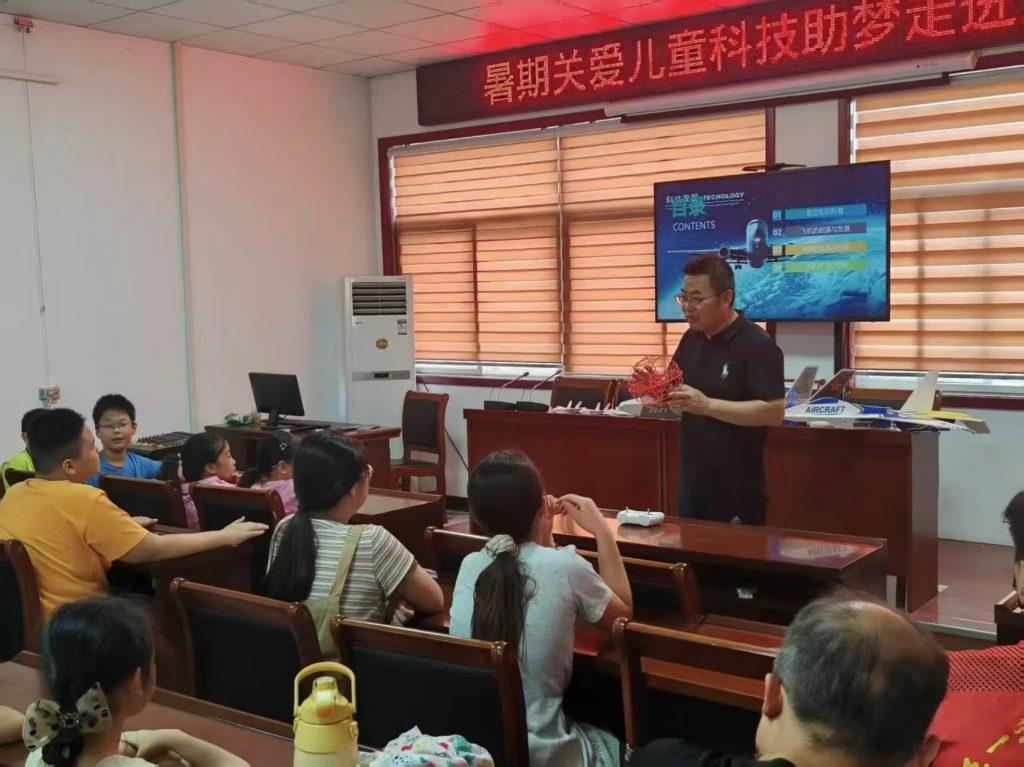
Furthermore, sensor-specific drone training is crucial. For photogrammetry, this includes understanding the impact of lighting (diffuse light is best) and shadow on image quality. For thermal surveys, drone training involves learning how environmental factors (time of day, recent weather, material emissivity) influence results. Data management and processing form another core pillar of advanced drone training. Operators should be proficient in using software to create orthomosaics, models, and basic analyses, understanding the parameters that affect quality.
| Training Module | Key Components | Outcome for the Trainee |
|---|---|---|
| Regulations & Safety | National aviation rules, risk assessment, insurance, privacy laws (e.g., GDPR). | Ability to plan and execute legal, safe, and ethical flights. |
| Flight Operations & Planning | UAV mechanics, pre-flight checks, manual piloting, automated mission planning software use. | Proficiency in designing and flying efficient, repeatable data capture missions. |
| Sensor Technology & Data Acquisition | Principles of RGB, multispectral, thermal, LiDAR; optimal settings for heritage scenarios. | Knowledge to select the right sensor and configure it to answer specific conservation questions. |
| Data Processing Fundamentals | Workflow in photogrammetry (e.g., Agisoft Metashape, Pix4D) and point cloud software (e.g., CloudCompare). | Skill to transform raw data into accurate, georeferenced maps, models, and preliminary analyses. |
| Heritage Science Integration | How drone data integrates with GIS, BIM for heritage (HBIM), and condition assessment protocols. | Ability to contextualize drone outputs within broader conservation practice and research. |
Confronting Challenges and Ethical Considerations
Despite its promise, the application of drone technology is not without significant hurdles that require thoughtful solutions.
Technical and Logistical Limitations
Current constraints include limited flight endurance (typically 20-45 minutes for standard systems), payload capacity restricting sensor combinations, and sensitivity to high winds or precipitation. Furthermore, processing large datasets from high-resolution sensors or LiDAR requires substantial computational power and specialized expertise. Continuous innovation in battery technology, lightweight materials, and edge computing is alleviating these issues. Meanwhile, cloud-based processing platforms are making powerful computation more accessible.
Regulatory and Safety Frameworks
Airspace regulations are complex and vary by country. Flying near urban heritage sites often involves controlled airspace, necessitating approvals. Safety risks to the monument itself (e.g., from a crash) and to the public must be meticulously managed through thorough risk assessments and safety protocols. This reinforces the necessity for certified drone training. The development of standardized operational protocols specific to cultural heritage settings is an ongoing need within the community.
Ethical, Privacy, and Community Engagement
Heritage sites are often living spaces, sacred grounds, or tourist attractions. Drone operations can raise concerns about:
- Privacy: Intrusive imagery of private properties adjacent to sites.
- Cultural Sensitivity: The act of flying over sacred or culturally sensitive areas may be deemed disrespectful.
- Community Perception: Noise and the presence of drones can disrupt the visitor experience or local life.
Therefore, a successful project must prioritize engagement. This involves transparent communication with local communities, authorities, and site managers from the outset, explaining the purpose and benefits. Flight schedules should be coordinated to minimize disruption. Ethical guidelines must be developed, ensuring that the technology serves the interest of preserving heritage for its community, not just as an academic exercise.
Future Trajectories and Global Synergy
The future of drones in heritage is converging with other cutting-edge technologies. The integration of UAV data with Heritage Building Information Modeling (HBIM) creates dynamic, information-rich digital twins of structures. Artificial Intelligence and Machine Learning are being applied to automatically detect and classify pathologies (e.g., crack detection, material decay) from drone imagery, quantified by metrics like the F1-score for algorithm accuracy:
$$
Precision = \frac{TP}{TP + FP}, \quad Recall = \frac{TP}{TP + FN}, \quad F1 = 2 \cdot \frac{Precision \cdot Recall}{Precision + Recall}
$$
where \(TP\) are true positives, \(FP\) false positives, and \(FN\) false negatives. Swarm robotics, where multiple drones cooperate autonomously, could revolutionize the mapping of large, complex sites.
However, the most significant accelerator will be international cooperation and knowledge sharing. Cultural heritage is a shared human legacy. Establishing global networks for sharing best practices, standardized workflows, and even open-access datasets will democratize access and accelerate learning. Joint drone training initiatives and workshops across borders can build capacity worldwide. International bodies can play a key role in advocating for clear regulatory pathways for heritage drone use and fostering collaborative research projects that tackle global challenges, such as monitoring the impact of climate change on vulnerable sites.
Conclusion
Drone technology has unequivocally established itself as a cornerstone of modern cultural heritage preservation. Its ability to provide rapid, high-resolution, and non-invasive documentation and diagnosis addresses critical gaps in traditional methodologies. From generating immortal digital twins through 3D modeling to detecting hidden threats via thermal diagnostics, the applications are profound and growing. The path forward hinges on responsible implementation. This requires continuous technological refinement, the development of robust ethical and regulatory frameworks, and, fundamentally, a deep investment in specialized drone training for heritage stewards. By cultivating a generation of professionals who are as skilled in data science and regulation as they are in conservation principles, we can harness this technology to its fullest potential. Through global collaboration and a commitment to knowledge exchange, we can ensure that drones serve as a unifying tool in the vital mission of safeguarding our collective past for the inspiration and education of future generations.