
As a professional deeply involved in the field of maritime safety and emergency response, I have witnessed firsthand the critical challenges faced during rescue operations at sea. The ocean is an unforgiving environment, where time is the most precious commodity and conditions can shift from manageable to life-threatening in moments. The primary mission—to save lives, minimize property loss, and protect the marine environment—is constantly tested by the sea’s inherent dangers. In recent years, the rapid advancement of unmanned aerial vehicle (UAV) technology, fueled by progress in information, communication, and control systems, has presented a transformative opportunity for our field. While drones have seen widespread adoption in military and various civilian sectors, their application in specialized maritime search and rescue (SAR) is still in its nascent stages. This article, from my professional perspective, explores the integration of drone technology into maritime SAR operations, analyzes its potential to overcome current limitations, and outlines the specific developmental needs and strategic measures, with a particular emphasis on the indispensable role of comprehensive drone training, required to fully realize this potential.
The current paradigm of maritime rescue, while supported by dedicated and well-equipped fleets, reveals significant operational constraints when confronted with reality. The most profound limitation is the severe degradation of efficiency and the exponential increase in risk during恶劣 weather conditions. Modern rescue vessels are engineered to withstand fierce storms, but actively conducting rescue operations within them is a different matter entirely. The act of a rescue ship approaching a distressed vessel for personnel transfer or towline connection in high seas and poor visibility is fraught with peril, risking secondary casualties for both rescuers and victims. The search for persons in water (PIW) exemplifies this challenge. Relying primarily on radar and human vision from the deck of a rolling ship, especially at night or in rough seas, turns the search into a desperate game of chance, drastically reducing the survival probability of the victim. Helicopters, another key asset, are often grounded at night or limited by weather, creating critical gaps in response capability.
Furthermore, the process of maritime search itself is characterized by immense operational intensity and cost. A PIW incident typically triggers a prolonged search pattern lasting days, driven by the imperative to leave no possibility unexplored. The fuel consumption for a major rescue vessel can reach 20 tons per day during such sustained operations. The human cost is equally high: crew fatigue from maintaining constant vigilance over vast, featureless expanses of water inevitably leads to decreased search effectiveness. This combination of high risk, low efficiency in critical conditions, and tremendous operational cost underscores the urgent need for technological augmentation.
The introduction of multi-rotor drones, particularly hexacopters and octocopters, offers a compelling solution to these legacy challenges. Their inherent stability, substantial lift capacity, operational flexibility, and relative ease of use make them uniquely suited to complement traditional assets. From my operational viewpoint, the applications can be systematically broken down into several key functional domains.
First and foremost is Search and Localization. The core advantage of a drone is its ability to rapidly deploy a sensor platform over a large area. Equipped with high-resolution optical and thermal imaging cameras, drones can perform systematic search patterns day or night. The thermal camera is a game-changer for spotting PIWs, whose body heat creates a distinct signature against the cooler water surface, even in darkness or moderate fog. Upon detection, the drone’s GPS/BeiDou system can instantly lock the coordinates and transmit them via datalink to the rescue vessel, dramatically shortening the “search” phase of the mission. This capability is especially vital in complex waters such as dense aquaculture zones, shallow areas, or high-traffic lanes where large rescue ships cannot maneuver safely. The drone can locate the target and then guide a rescue boat or raft to the precise spot.
The effectiveness of a search pattern can be conceptualized. If a vessel’s visual sweep width is $W_v$ and its speed is $S_v$, its coverage rate is approximately $R_v = W_v \times S_v$. A drone, flying at a higher altitude, has a significantly larger instantaneous field of view and sweep width $W_d$. While its speed $S_d$ might be comparable, its coverage rate $R_d = W_d \times S_d$ can be an order of magnitude greater. More importantly, the drone can execute optimized search patterns (e.g., expanding square, parallel track) with high precision autonomously, ensuring no area is missed. The total probability of detection $P_{total}$ in a search area $A$ using a drone with sensor probability $P_{sensor}$ following an optimal pattern can be modeled as an enhancement over traditional methods:
$$P_{total} \approx 1 – e^{(-R_d \cdot t \cdot P_{sensor}/A)}$$
where $t$ is search time. This formula highlights how drone deployment increases $R_d$, leading to a faster rise in detection probability.
Second is Real-time Situational Awareness and Video Transmission. This is a force multiplier for command and control. Drones act as remote “eyes in the sky,” streaming live HD video feed back to the rescue vessel or a shoreside command center. In incidents involving fire, explosion, or hazardous material leaks, sending personnel close for assessment is unjustifiably risky. A drone can safely approach, providing commanders with a clear view of the vessel’s listing angle, fire location, structural damage, or visible personnel. This real-time intelligence allows for the formulation of precise, evidence-based rescue plans, optimal resource allocation, and enhanced safety for the rescue teams. It replaces guesswork and assumptions with factual observation.
Third is a Communication Relay. In scenarios where a distressed vessel has lost all communication capabilities, a drone can be deployed as a temporary communications node. Using onboard loudspeakers and possibly deploying a drop-communication pod, it can establish initial contact, deliver instructions, and receive basic information from survivors. This restores a critical link in the rescue chain that is otherwise very difficult to re-establish.
Fourth, and perhaps one of the most promising applications, is Payload Delivery. The evolving payload capacity of drones unlocks a direct intervention capability. Upon locating PIWs in cold water or survivors on a disabled vessel, a drone can deliver critical initial aid. This payload can include:
| Payload Type | Examples | Impact on Survival |
|---|---|---|
| Flotation Devices | Auto-inflating life rings, life vests | Prevents drowning, reduces heat loss in water. |
| Survival Kits | Water, high-energy food, first-aid supplies, thermal blankets | Sustains survivors until rescue craft arrive. |
| Specialized Equipment | Emergency communication radios, EPIRBs, fire suppressant canisters | Enables communication, aids in specific emergency scenarios. |
This capability is crucial when environmental conditions (extreme sea state, shallow water, debris fields) prevent the immediate approach of rescue vessels. The drone becomes a first responder, delivering the tools for survival.
However, possessing the technology is only the first step. To integrate it effectively and reliably into high-stakes SAR operations, a rigorous and multi-faceted development and implementation strategy is required. Based on practical experience, the following measures are critical, with drone training forming the foundational pillar.
1. Institutionalizing Advanced and Continuous Drone Training
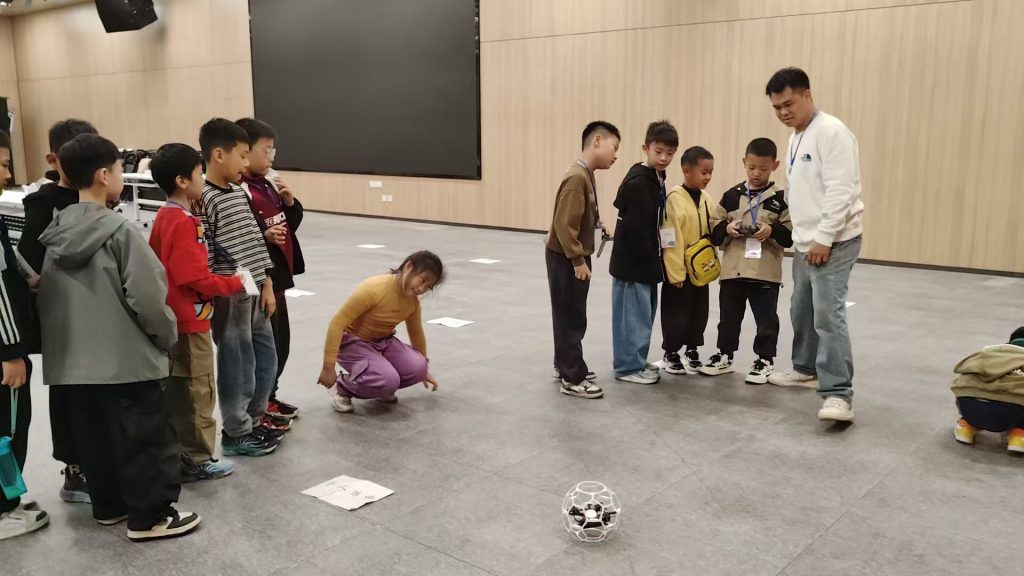
Merely having certified operators is not sufficient. Drone training for maritime SAR must be an ongoing, deep, and scenario-specific program. It must move beyond basic flight skills to encompass:
| Training Module | Key Components | Objective |
|---|---|---|
| Advanced Operational Proficiency | Launch/Recovery from moving decks in high winds; navigation in GNSS-denied environments; manual piloting under stress; failure mode procedures. | Ensure reliable operation in real-world, non-perfect SAR conditions. |
| Sensor and Mission Payload Expertise | Optimizing camera settings (optical/thermal) for different sea states, light conditions, and targets; effective use of search pattern software; payload release mechanisms. | Maximize the probability of detection and effective intervention. |
| Tactical Integration Training | Joint exercises with rescue boat coxswains and ship commanders; developing standard operating procedures (SOPs) for coordinated drone-vessel-helicopter ops. | Seamlessly embed the drone as a core element of the rescue team’s toolkit. |
| Maintenance and Troubleshooting | Deep-dive into UAV mechanics, electronics, and software; daily/periodic inspection routines; field-repairable fault diagnosis. | Maintain high readiness rates and recover from minor issues without mission abort. |
A monthly training quota, while a good start, must evolve into a competency-based regimen where proficiency in these advanced modules is regularly assessed and certified. Simulation-based drone training for complex scenarios like night searches in rain or operations near ship superstructures is also vital for building muscle memory without risk.
2. Prioritizing Application in Live Exercises and Real-World Operations
Training must be validated and refined through constant practical application. Every suitable exercise—be it a scheduled drill or a real, lower-risk incident—should be viewed as an opportunity to deploy the drone. This实战 application (live application) serves multiple purposes: it tests and hardens operator skills under pressure, reveals unforeseen technical or procedural shortcomings, and builds institutional confidence in the system. Data gathered from these deployments is invaluable for iterative improvement. For instance, repeated attempts at delivering a life raft in windy conditions will generate clear requirements for improved release mechanisms or flight controller stabilization algorithms.
3. Fostering Targeted Research, Development, and Procurement
The current generation of commercial drones often requires adaptation for the harsh, specialized maritime SAR environment. Close collaboration between rescue agencies and manufacturers is essential to drive innovation based on真实需求 (real needs). Key performance parameters that require focused R&D include:
| Performance Parameter | Current Limitation | Desired Target for Maritime SAR | Impact on Mission |
|---|---|---|---|
| Payload Capacity | ~5-20 kg | >50 kg, aiming for 120+ kg | Enables delivery of multiple life rafts, heavier survival pods, or technical equipment. |
| Endurance & Range | 30-60 minutes typical | >90 minutes, with extended-range options | Allows for longer searches, operations farther from the mother ship. |
| Wind & Weather Resistance | Often limited to Beaufort 5-6 | Operational capability in Beaufort 8+ conditions, resistance to salt spray and rain. | Ensures availability precisely when needed most—in恶劣 weather. |
| Deck Handling & Automation | Often manual, sensitive to ship motion | Automated launch/recovery systems (like robotic decks), enhanced stabilization. | Reduces operator workload, increases safety, allows operation from smaller vessels. |
A visionary concept that merits exploration is personnel transfer. In scenarios where a towline must be connected to a disabled ship but sea conditions prevent safe boat transfer of crew, a large, stable drone capable of ferrying a single rescue specialist to the vessel could revolutionize the response. The technical hurdles are significant, but the operational payoff would be immense.
The development pathway must be iterative. We can model the improvement of a drone system’s overall mission effectiveness $E$ as a function of technology ($T$), drone training proficiency ($P$), and operational experience ($O$). A simplified relationship could be:
$$E(t) = \alpha \cdot \ln(T(t)) + \beta \cdot P(t) + \gamma \cdot \sqrt{O(t)}$$
where $\alpha, \beta, \gamma$ are weighting coefficients specific to the mission type, and $t$ represents time or iteration cycles. This illustrates that while technology grows logarithmically and experience accumulates with a square-root trend, the linear term for proficiency $P(t)$—directly tied to the quality of drone training—is a crucial and immediately improvable driver of effectiveness.
4. Deepening Theoretical Knowledge and Maintenance Regimes
Operators must evolve into technician-operators. A profound understanding of the drone’s architecture—flight control systems, communication datalinks, payload interfaces, and power management—is necessary. This theoretical knowledge empowers crews to perform more than basic pre-flight checks; it enables them to diagnose issues, perform field repairs on modular components, and understand the system’s limitations intimately. A robust preventive maintenance schedule, informed by the manufacturer’s guidelines but adapted to the corrosive marine environment, must be religiously followed. Spare parts, especially for critical components like motors, propellers, and batteries, need to be stocked on board. This level of self-sufficiency is non-negotiable for a tool intended for use in remote, critical situations.
To encapsulate the comparative advantage, consider the following synthesis of traditional versus drone-augmented approaches for a PIW scenario at dusk with rising wind:
| Phase | Traditional SAR Approach | Drone-Augmented SAR Approach |
|---|---|---|
| Initial Search | Ship conducts slow, visual/radar search from deck level. Effectiveness drops with light and increasing wave height. High risk of missing target. | Drone deploys, executes pre-programmed search grid at 50-100m altitude using thermal camera. Covers area 5-10x faster. Thermal signature independent of light. |
| Target Acquisition | Relies on fleeting visual contact. Difficult to maintain lock on small target in waves. | Thermal lock established. GPS coordinates continuously streamed to ship. Live video provides constant visual confirmation. |
| Initial Intervention | None until rescue boat is deployed and arrives on scene, which may be delayed due to sea state. | Drone delivers auto-inflating life ring and strobe light to PIW immediately upon location, providing flotation and marking. |
| Final Recovery | Rescue boat navigates to last known position, conducts local search. | Rescue boat is guided precisely to the strobe-lit target by drone and/or coordinates. |
In conclusion, drone technology is not merely an additive tool but a potential catalyst for a paradigm shift in maritime search and rescue. Its ability to enhance situational awareness, accelerate search times, enable initial survival support, and do so while reducing risk to human rescuers is unparalleled. However, the path to seamless and reliable integration is demanding. It requires a sustained commitment to tailored technological development, rooted in the direct feedback from rescue practitioners. Most critically, it demands an institutional culture that prioritizes and invests in continuous, advanced, and rigorous drone training. This training is the bridge that transforms sophisticated hardware into a trusted, life-saving capability. By focusing on these pillars—technology refined by need, proficiency forged through training, and procedures validated in practice—we can harness the unique advantages of drones to create a more resilient, effective, and comprehensive maritime rescue system for the future.