
The integration of technology into agriculture marks a pivotal shift towards precision and efficiency. Among these advancements, the use of Unmanned Aerial Vehicles (UAVs), specifically agricultural UAVs, is transforming traditional farming practices. This article explores the application, efficacy, and future trajectory of agricultural UAV pollination technology within the context of Korla fragrant pear (Pyrus sinkiangensis) cultivation. Korla pear, a high-value fruit crop renowned for its unique aroma and texture, is a cornerstone of the local economy in its growing region. However, its production faces significant challenges, particularly during the critical flowering and pollination period.
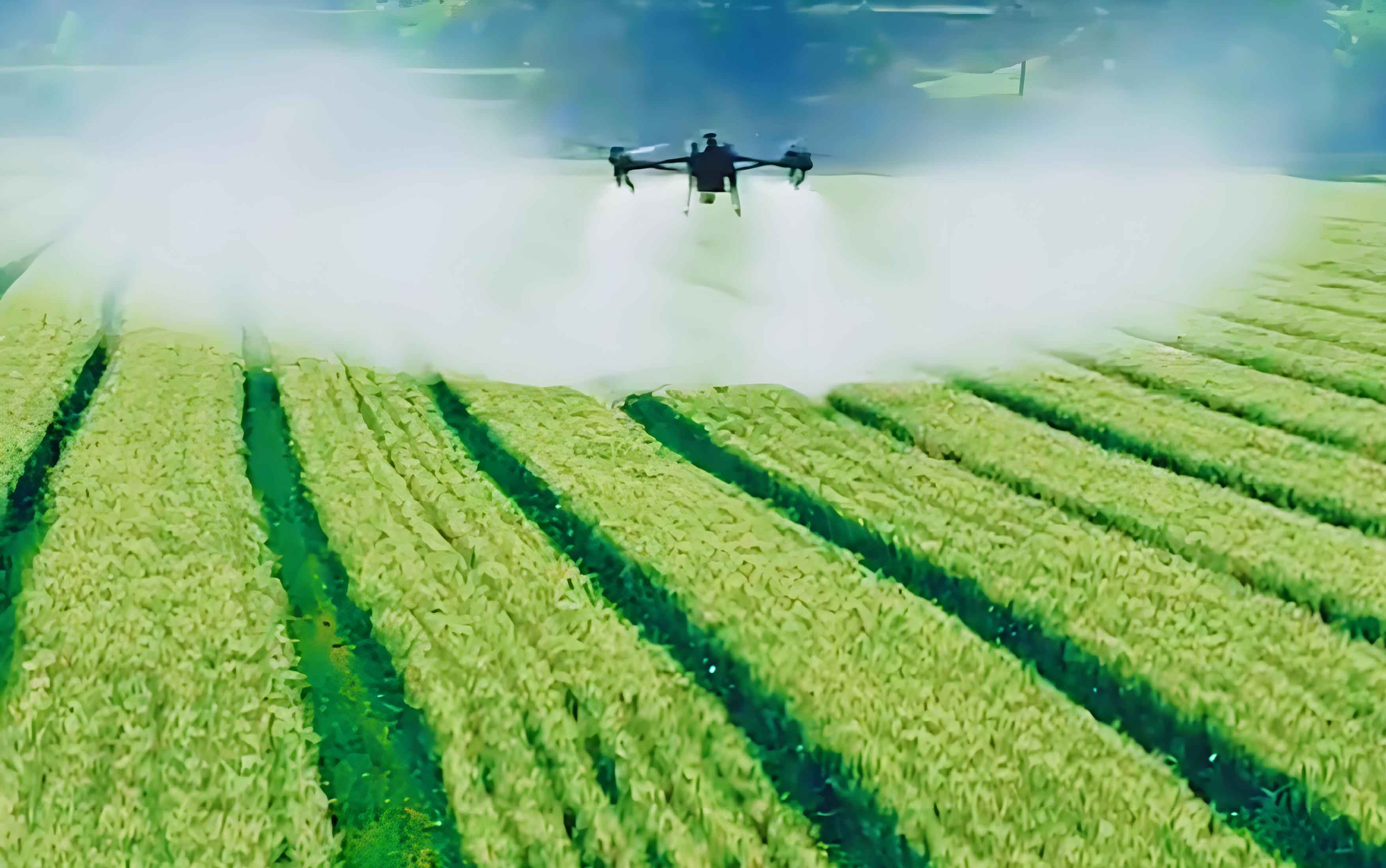
Traditional pollination methods, such as manual “sock-shaking” or liquid sprayers, are notoriously labor-intensive, time-consuming, and inefficient. They often lead to uneven fruit set, heightened risks of disease transmission through direct contact, and escalating production costs due to rising labor wages. The short, concentrated blooming window of pear trees exacerbates these issues, creating a bottleneck for large-scale, profitable orchard management. In this scenario, agricultural UAV technology emerges as a disruptive solution, promising to automate, optimize, and secure the pollination process.
Current Adoption Landscape of Agricultural UAV Pollination
The application of agricultural UAVs for pollination, as opposed to their more common use for pesticide application, is a relatively nascent but rapidly evolving field. Initial trials and demonstrations began around 2018, showcasing the potential of agricultural UAV systems to disperse pollen over extensive orchards. These early efforts were primarily driven by local agricultural research institutions, cooperatives, and forward-thinking farmers seeking alternatives to banned or inefficient methods like bee pollination and manual point-pollination.
Subsequent years saw an expansion of pilot programs and the establishment of dedicated demonstration orchards across major pear-growing areas. Key milestones included large-scale field operations covering hundreds of hectares, testing different pollen-carrier formulations (liquid suspensions vs. dry powder mixtures), and evaluating various commercial agricultural UAV models. These activities were often supported by regional agricultural extension services and research projects aimed at validating the technology’s practicality and economic viability. The operational protocol typically involves precise flight planning using GPS navigation, with spraying conducted during optimal environmental conditions—early morning or late evening—to maximize pollen viability and deposition.
A Multidimensional Analysis of Advantages
The shift from conventional methods to agricultural UAV-based pollination confers a multitude of strategic advantages, fundamentally altering the economics and reliability of pear production.
| Aspect | Traditional Manual/Jar Method | Agricultural UAV Pollination |
|---|---|---|
| Operational Efficiency | Extremely low (0.13-0.20 ha/worker/day) | Very high (13-15 ha/UAV/day) |
| Labor Dependency & Cost | High dependency; rising wage costs | Minimal dependency; primarily technical oversight |
| Precision & Uniformity | Low, highly variable depending on worker skill | High, controlled by flight algorithms and nozzle systems |
| Orchard Accessibility | Limited by terrain and tree height; requires ladders | Unrestricted; adaptable to various topographies and canopy heights |
| Disease Transmission Risk | High due to direct physical contact with trees | Negligible; non-contact aerial application |
| Operational Time Window | Limited to daylight hours | Extendable to dawn, dusk, and low-light conditions |
The core advantage lies in scale and speed. The operational efficiency of an agricultural UAV surpasses manual labor by orders of magnitude, ensuring the entire orchard can be pollinated within the brief, critical flowering period. This is mathematically significant. If we define the pollination capacity \( C \) as the area covered per unit time, the relationship is stark:
$$ C_{\text{UAV}} \approx 100 \times C_{\text{Manual}} $$
This efficiency directly translates to cost savings on labor and reduces the risk of yield loss due to missed pollination windows.
Furthermore, precision agriculture principles are inherent to agricultural UAV operations. Flight paths can be digitally mapped to ensure complete coverage, and spray parameters (droplet size, flow rate) can be adjusted for optimal pollen adhesion to stigmas. This controlled application minimizes pollen waste—a costly input—and promotes more uniform fruit set compared to the erratic distribution from manual shaking. The non-contact nature of aerial delivery also severs a potential pathway for the spread of bacterial and fungal diseases, such as fire blight, which can be devastating to orchards.
Core Challenges and Technical Limitations
Despite its promise, the widespread adoption of agricultural UAV pollination faces several interconnected barriers that span economic, technical, and regulatory domains.
1. High Initial Capital Investment: The upfront cost of a capable agricultural UAV system, including the airframe, spraying system, batteries, charging stations, and control software, represents a significant financial hurdle for individual smallholder farmers. This has fostered a service-based model, where specialized cooperatives or companies own the equipment and sell pollination as a contract service.
2. Endurance and Payload Constraints: Current battery technology limits flight times, typically to under 60 minutes per charge. Coupled with payload capacities often around 10-20 liters, this necessitates frequent landings for battery swaps and pollen slurry replenishment. This downtime reduces net operational efficiency over very large, contiguous areas. The effective work time \( T_{\text{eff}} \) can be modeled as:
$$ T_{\text{eff}} = T_{\text{flight}} – N \cdot (T_{\text{swap}} + T_{\text{refill}}) $$
where \( N \) is the number of required service interruptions, and \( T_{\text{swap}} \) and \( T_{\text{refill}} \) are the times for battery change and liquid refilling, respectively.
3. Lack of Standardized Protocols: There is no universally optimized formulation for UAV-dispersed pollen. Key variables include:
- Carrier medium: Liquid (with nutrients like boron, calcium) vs. dry powder (mixed with inert talc or starch).
- Pollen concentration and viability preservation in the mixture.
- Optimal droplet size and release height for maximum stigma capture.
The absence of standardized “best practices” leads to inconsistent results and hinders confidence in the technology.
4. Support Ecosystem Deficiencies: The industry lacks robust training, maintenance, and insurance frameworks. Operating an agricultural UAV effectively requires skilled pilots. A shortage of certified trainers and standardized curricula creates a skills gap. Furthermore, reliable after-sales service and repair networks are often underdeveloped in rural areas. The financial risk associated with UAV damage or failure during the crucial pollination period is high, and suitable insurance products are not always accessible to farmers or service providers.
Technical Framework and Operational Optimization
The effective deployment of an agricultural UAV for pollination is a systems engineering challenge. It integrates the UAV platform, the pollination payload, and the flight control strategy.
| Parameter | Consideration | Typical Target/Value |
|---|---|---|
| Flight Altitude (H) | Must ensure droplet penetration into canopy while minimizing drift. | 2-4 meters above canopy |
| Flight Speed (V) | Balances coverage rate with droplet deposition density. | 3-5 m/s |
| Swath Width (W) | Determined by nozzle type, pressure, and wind conditions. | 3-6 meters |
| Pollen Application Rate (R) | Critical for economic efficiency and fruit set; grams of viable pollen per hectare. | 50-150 g/ha (highly formulation-dependent) |
| Droplet Size (Dv50) | Larger droplets sediment faster; finer droplets offer better coverage but are prone to drift. | 150-300 microns (medium spray quality) |
The theoretical area coverage rate \( A’ \) is given by:
$$ A’ = V \times W $$
However, the actual effective rate \( A’_{\text{eff}} \) must account for overlap efficiency \( \eta_o \) (typically 1.1 to 1.3) and the system duty cycle \( \eta_d \) (factoring in battery/refill downtime):
$$ A’_{\text{eff}} = \frac{V \times W}{\eta_o \times \eta_d} $$
The total pollen requirement \( P_{\text{total}} \) for an orchard of area \( A \) is:
$$ P_{\text{total}} = A \times R $$
Optimizing these parameters through field research is essential to maximize the cost-benefit ratio for agricultural UAV pollination.
Innovation and Future Outlook
The future of agricultural UAV pollination is intrinsically linked to technological convergence and supportive policy frameworks. Several key trajectories will define its evolution:
1. Technological Advancements:
- Next-Generation UAV Platforms: Development of hybrid-electric or fuel-cell systems for longer endurance, and larger payload capacities to reduce service interruptions.
- Artificial Intelligence (AI) Integration: Implementing computer vision for real-time blossom detection and variable-rate application. The UAV could adjust spray output on-the-fly based on local flower density \( \rho_f(x,y) \), optimizing pollen use:
$$ R_{\text{actual}}(x,y) = f(\rho_f(x,y)) $$ - Smart Formulations: Research into encapsulated pollen or nano-carriers that enhance viability, UV protection, and adhesion properties for aerial application.
2. Economic and Policy Enablers:
- Subsidies and Financial Models: Government subsidies for purchasing agricultural UAVs or for per-hectare pollination services would significantly lower the adoption barrier. Leasing models and stronger support for service cooperatives are also vital.
- Standardization and Certification: Establishing industry-wide standards for pilot training, operational safety, and pollination efficacy (e.g., minimum fruit set percentage) will build trust and ensure quality.
- Strengthening the Support Chain: Encouraging the development of local sales, service, and repair networks for agricultural UAVs, alongside affordable insurance products tailored to agricultural operations.
3. Holistic System Integration: The ultimate vision is the integration of the agricultural UAV into a fully digital orchard management system. Data from UAV-based pollination flights—detailing coverage maps, application rates, and estimated flower density—can be fed into larger models predicting yield, scheduling subsequent pest management sprays, and informing irrigation and nutrient management. The agricultural UAV thus transitions from a single-task tool to a central data-acquisition and delivery node within a precision agriculture ecosystem.
Conclusion
The application of agricultural UAV technology for Korla pear pollination represents a paradigm shift with profound implications. It directly addresses the critical constraints of labor scarcity, timing pressure, and biosecurity concerns associated with traditional methods. While current challenges related to cost, technology maturity, and ecosystem support are non-trivial, the trajectory of innovation is clear. Continued interdisciplinary research in aerospace engineering, plant science, and data analytics, coupled with enabling policies and business models, will be crucial. As these elements converge, agricultural UAV pollination is poised to become not merely an alternative, but the standard, sustainable practice for ensuring the productivity, quality, and economic resilience of high-value horticultural crops like the Korla fragrant pear. Its successful implementation serves as a compelling model for the broader digital transformation of global agriculture.