
The global demand for staple crops like maize continues to rise, driven by population growth and diversified food consumption patterns. Ensuring stable and efficient maize production is, therefore, a cornerstone of national food security strategies. However, maize cultivation, particularly under the prevalent small-scale and fragmented land management models observed in many regions, presents significant challenges for centralized and efficient field operations. Traditional manual methods for crop protection are not only labor-intensive and inefficient but also often lead to inadequate pest control and uneven application of inputs, ultimately compromising yield and quality. In this context, the emergence and integration of agricultural UAV technology, commonly known as drone technology, offer a transformative solution. These sophisticated aerial systems are revolutionizing precision agriculture by providing a versatile, efficient, and environmentally conscious platform for various field management tasks. This article delves into the multifaceted applications, quantified benefits, persistent challenges, and strategic recommendations for the broader adoption of agricultural UAV in modern maize production systems.
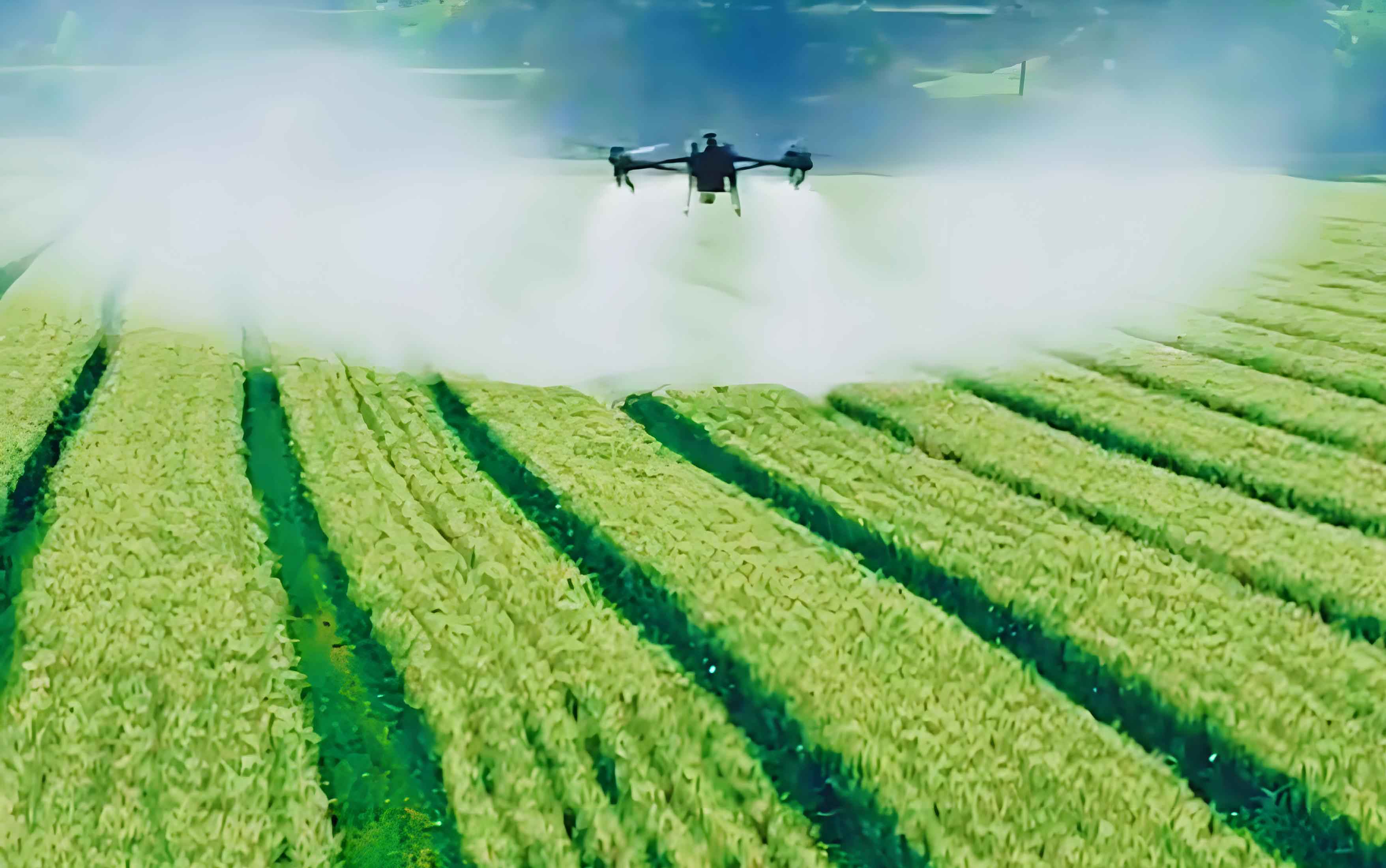
The core functionality of an agricultural UAV in maize production extends far beyond simple aerial observation. Its integrated systems allow for precise execution of several critical agronomic operations:
1. Precision Plant Protection Spraying: This is the most prominent application. Equipped with precision sprayers and controlled by sophisticated flight management software, agricultural UAV can apply pesticides, fungicides, or foliar fertilizers with unparalleled accuracy. The key advantage lies in its ability to generate a fine, uniform droplet spectrum and control deposition. Compared to traditional boom sprayers or backpack sprayers, drones minimize spray drift, reduce chemical usage by 20-30%, and ensure thorough canopy penetration. The application rate can be precisely calibrated and varied in real-time based on pre-programmed flight paths or sensor feedback.
2. Assisted Pollination: While maize is primarily wind-pollinated, environmental stresses like high temperatures, humidity, or calm winds can hinder natural pollen dispersal, leading to poor kernel set. Agricultural UAV can be deployed during the tasseling and silking stages to agitate the canopy, enhancing pollen release and distribution within the field. Furthermore, experimental systems are being developed where UAVs carry and disperse collected or supplemental pollen, offering a potential solution for hybrid seed production or stress mitigation.
3. Growth Vigor Identification and Monitoring: Fitted with multispectral or hyperspectral cameras, agricultural UAV become powerful remote sensing platforms. They capture high-resolution imagery across specific spectral bands (e.g., Red, Green, Blue, Near-Infrared, Red-Edge). From this data, vegetative indices like the Normalized Difference Vegetation Index (NDVI) can be calculated to assess plant health, biomass, and nitrogen status.
$$ NDVI = \frac{(NIR – Red)}{(NIR + Red)} $$
Where \(NIR\) is the reflectance in the near-infrared band and \(Red\) is the reflectance in the red band. Healthy, vigorous maize plants exhibit high NDVI values, while stressed plants show lower values. This allows for the creation of detailed zoning maps that identify areas of variability within a field.
4. Field Information and Irrigation Monitoring: Beyond spectral analysis, agricultural UAV equipped with thermal sensors can monitor canopy temperature, an indicator of plant water stress. By identifying “hot spots” in a field, farmers can make data-driven decisions on targeted irrigation, optimizing water use efficiency. UAVs also provide rapid topographic surveys, assess drainage issues, and monitor crop stand establishment after planting.
The integration of these applications empowers a shift from whole-field uniform management to site-specific management, where inputs are applied variably according to the needs of small zones within a field. This paradigm is often described by the following conceptual workflow enabled by the agricultural UAV:
$$ Data\ Acquisition_{(UAV)} \rightarrow Analysis \& Zoning \rightarrow Prescription\ Map \rightarrow Variable\ Rate\ Application_{(UAV)} $$
This closed-loop system maximizes input efficiency and crop response while minimizing environmental impact.
Quantitative Analysis of Impacts and Benefits
The advantages of employing agricultural UAV are not merely qualitative; they can be substantiated through measurable metrics across economic, operational, and environmental dimensions.
Operational Efficiency and Efficacy: The most immediate impact is on operational speed. A typical agricultural UAV with a 10-20 liter tank can cover 4-6 hectares per hour, depending on flight parameters and field conditions. In contrast, manual spraying might cover 0.5-1 hectare per day per person. This represents a 30-50 fold increase in operational efficiency. Furthermore, the fine droplet spray from a drone ensures better canopy coverage and adhesion, leading to improved pest and disease control efficacy. Studies have shown that properly executed UAV spraying can achieve control rates comparable to or exceeding ground equipment, often with reduced chemical volume.
| Parameter | Traditional Manual/Backpack Sprayer | Agricultural UAV Spraying |
|---|---|---|
| Work Efficiency (ha/hour) | 0.05 – 0.1 | 4 – 6 |
| Water Consumption (L/ha) | 300 – 600 | 15 – 30 |
| Spray Uniformity (Coefficient of Variation) | High (>30%) | Low (<15%) |
| Operator Chemical Exposure | High | Negligible |
| Terrain Adaptability | Poor (difficult in wet/muddy fields) | Excellent (independent of ground conditions) |
Economic and Cost-Benefit Analysis: While the initial capital outlay for an agricultural UAV system is significant, the total cost of operation (TCO) over time can be favorable. Key savings arise from reduced input costs (chemicals, water), drastically lower labor requirements, and minimized crop damage from trampling. The economic benefit can be modeled by comparing the net return per hectare. Let \(Y_u\) be the yield with UAV-managed precision agriculture and \(Y_t\) be the yield with traditional management. Let \(C_u\) and \(C_t\) represent the respective total costs per hectare, and \(P\) be the market price of maize. The incremental profit (\(\Delta \pi\)) from using an agricultural UAV is:
$$ \Delta \pi = [ (P \times Y_u) – C_u ] – [ (P \times Y_t) – C_t ] $$
Where \(C_u\) includes amortized drone cost, chemicals, labor for drone operation, and data analysis. \(C_t\) includes chemicals, labor for manual application, and potential yield loss from inefficient practices. For the investment to be viable, the Net Present Value (NPV) of the cash flows from \(\Delta \pi\) over the drone’s lifespan must be positive.
$$ NPV = \sum_{t=1}^{n} \frac{\Delta \pi_t}{(1 + r)^t} – Initial\ Investment_{UAV} > 0 $$
Here, \(r\) is the discount rate and \(n\) is the operational lifespan of the UAV. The following table illustrates a simplified cost structure comparison for a 100-hectare maize farm.
| Cost Component | Traditional Method (Annual, USD) | Agricultural UAV Service (Annual, USD) | Agricultural UAV Ownership (Annual, USD) |
|---|---|---|---|
| Labor (Spraying/Scouting) | 2,500 | 200 (for supervision) | 500 (operator salary) |
| Chemicals & Fertilizers | 12,000 | 9,600 (20% saving) | 9,600 |
| Equipment Depreciation/Maintenance | 1,000 | 0 (included in service fee) | 2,500 (for UAV & accessories) |
| Service Contract / Custom Hiring | 0 | 5,000 | 0 |
| Total Direct Cost | 15,500 | 14,800 | 12,600 |
| Potential Yield Increase (Value) | 0 (Baseline) | + 2,000 (5% increase) | + 2,000 (5% increase) |
| Net Economic Effect | -15,500 | -12,800 | -10,600 |
Note: This is a simplified illustrative model. Actual figures vary widely based on region, scale, crop prices, and specific technology used. Ownership model assumes a 3-year depreciation for a $10,000 UAV system.
Environmental and Safety Benefits: The precision of an agricultural UAV directly translates to environmental benefits. Reduced chemical usage decreases the leaching potential into groundwater and minimizes non-target exposure to beneficial insects and surrounding ecosystems. Lower water consumption is crucial in arid regions. From a human safety perspective, it eliminates operator exposure to potentially harmful chemicals and reduces the risk of heatstroke or accidents associated with carrying heavy equipment in the field.
Persistent Challenges in Widespread Adoption
Despite the compelling benefits, the integration of agricultural UAV technology into mainstream maize production faces several significant barriers.
1. Limited Acceptance and Awareness Among Smallholder Farmers: In regions dominated by small-scale, fragmented farms, the economic rationale for individual ownership is weak. Farmers may be skeptical of new technology, lack awareness of its full capabilities beyond spraying, or perceive the operational complexity as prohibitive. Traditional practices are deeply ingrained, and the perceived risk of adopting an unfamiliar, capital-intensive technology is high.
2. Inadequate Policy and Financial Support Frameworks: In many countries, regulatory frameworks for UAVs in agriculture are either underdeveloped or restrictive, focusing more on airspace security than on promoting agricultural use. Crucially, direct subsidy programs for farm machinery often exclude agricultural UAV or offer insufficient incentives. High import tariffs on drones and components can further inflate purchase prices, placing them out of reach for most farmers. The lack of clear, supportive policies creates market uncertainty for both manufacturers and end-users.
3. High Initial Investment and Total Cost of Ownership: A fully functional commercial-grade agricultural UAV system—including the aircraft, multispectral camera, spray system, batteries, charger, and data processing software—can cost anywhere from $15,000 to $40,000. For a small-scale maize farmer, this represents a prohibitive capital outlay. Even if purchased, ongoing costs for battery replacement (which degrade over time), insurance, software subscriptions, and repairs add to the TCO, impacting the return on investment calculation.
4. Technical Complexity and Underdeveloped Service Infrastructure: Effective use of an agricultural UAV requires a blend of skills: piloting, agronomy, data analysis, and basic maintenance. There is a pronounced shortage of training programs to build this capacity. Furthermore, in rural areas, access to reliable repair services, spare parts, and technical support is often limited. A malfunctioning drone can lead to significant downtime during critical crop growth stages, eroding farmer confidence in the technology.
Strategic Recommendations for Enhanced Integration
To overcome these challenges and unlock the full potential of agricultural UAV in maize production, a multi-stakeholder approach involving governments, industry, academia, and farmer cooperatives is essential.
1. Strengthen Policy Incentives and Financial Mechanisms: Governments should explicitly include agricultural UAV in agricultural machinery subsidy catalogs with substantial grant percentages (e.g., 40-60%). Tax exemptions or rebates for purchasing precision agriculture technology should be instituted. Additionally, developing national roadmaps for digital agriculture with clear adoption targets for UAV-based services can guide coordinated action. Creating favorable regulations for beyond-visual-line-of-sight (BVLOS) operations in rural areas would also enhance operational feasibility.
2. Promote Custom Hiring Services and Cooperative Ownership Models: For smallholder farmers, the most viable pathway is through “UAV-as-a-Service” (UaaS) provided by entrepreneurs or cooperatives. Governments and NGOs can facilitate this by providing startup grants or low-interest loans for service providers. Farmer cooperatives can pool resources to collectively purchase an agricultural UAV, sharing the costs and benefits. This model reduces individual risk and makes the technology accessible.
3. Establish Comprehensive Training and Extension Systems: National agricultural extension services must integrate UAV operation and data interpretation into their curricula. Certified training programs should be established to qualify UAV pilots and agri-tech specialists. Practical, hands-on demonstration plots showing side-by-side comparisons of UAV-managed versus traditionally managed maize can be powerful tools for convincing skeptical farmers. These programs should also cover basic maintenance and safety protocols.
4. Accelerate R&D for Context-Specific Solutions: Research should focus on developing more robust, user-friendly, and affordable agricultural UAV platforms. Key areas include: improving battery energy density for longer flight times, developing AI-powered real-time disease/pest identification from imagery, and creating simpler interfaces for prescription map generation. Formulations of pesticides and fertilizers specifically optimized for low-volume aerial application (UAV-compatible adjuvants) are also needed. International collaboration can accelerate this process, but technologies must be adapted to local agronomic conditions and farm scales.
$$ R\&D\ Priority: \max\ \{Affordability,\ Durability,\ Ease\ of\ Use,\ Data\ Accuracy\} $$
This optimization function underscores the need for balanced technological development that addresses the core constraints in the field.
5. Develop Localized Service and Support Networks: Encouraging the establishment of local UAV service centers is critical. These centers would offer sales, training, repair, and data analysis services, creating local jobs and ensuring quick turnaround for repairs. Telecom and internet providers must be engaged to improve rural broadband connectivity, which is essential for transferring large imagery files and accessing cloud-based processing platforms.
Conclusion
The integration of agricultural UAV technology into maize production systems represents a significant leap forward towards sustainable intensification. By enabling precision spraying, detailed crop monitoring, and data-driven management, these aerial systems address the dual challenges of increasing productivity and minimizing environmental footprint. The quantified benefits in efficiency, input savings, and potential yield gains present a compelling case for adoption. However, the path to widespread use is obstructed by socio-economic barriers, high costs, technical skill gaps, and insufficient policy support. Overcoming these hurdles requires a concerted effort to make the technology accessible through innovative service models, backed by supportive policies, targeted training, and continued research into more adaptive and affordable solutions. The future of resilient and efficient maize production is inextricably linked to the intelligent deployment of technologies like the agricultural UAV, paving the way for a more productive and sustainable agricultural paradigm.