
As a researcher focused on agricultural technology and pest management, I have observed the growing importance of mechanization in modern farming. In Sichuan Province, China, the agricultural landscape faces unique challenges due to its complex topography, diverse pest species, labor shortages, and intensive cropping systems. These factors often hinder effective pest control, impacting crop yield and quality. Traditional methods and equipment are increasingly inadequate, necessitating innovative approaches. In this context, agricultural UAVs (unmanned aerial vehicles) have emerged as a frontier technology in plant protection machinery, promising to revolutionize farming practices. Through this article, I aim to delve into the development, challenges, and future prospects of agricultural UAVs in Sichuan, using data, tables, and formulas to provide a comprehensive overview.
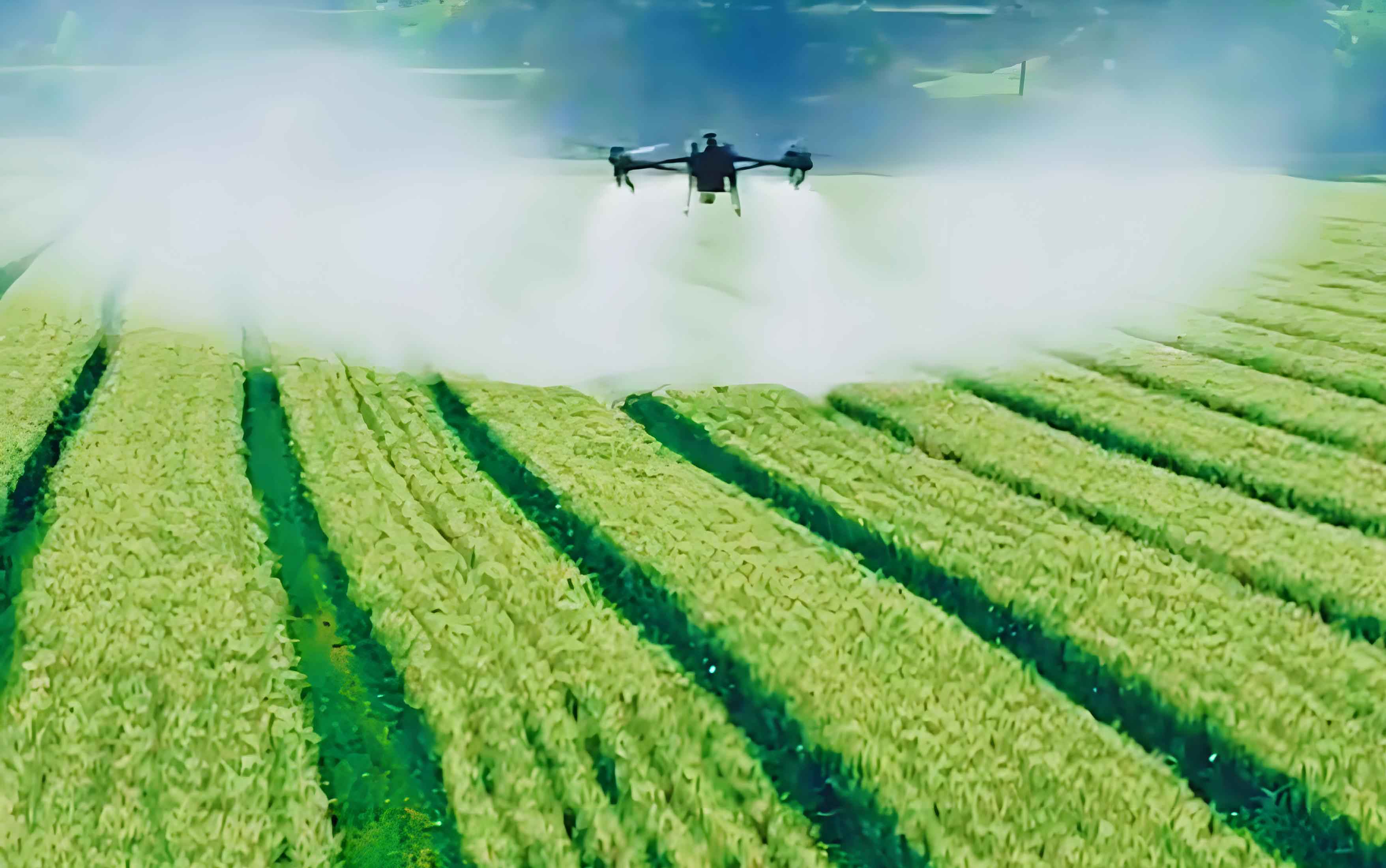
The adoption of agricultural UAVs is driven by their high efficiency, reduced chemical usage, minimal crop damage, low labor intensity, and enhanced safety. Compared to conventional sprayers, agricultural UAVs can improve pesticide utilization by 6% to 10%, save up to 90% in water consumption, and reduce pesticide application by 30% to 50%. These benefits are critical for sustainable agriculture. In Sichuan, where rice, wheat, corn, rapeseed, tea, citrus, and kiwifruit are major crops, the integration of agricultural UAVs could address longstanding issues in plant protection. However, the journey is fraught with obstacles. I will explore the current state of agricultural UAV adoption, identify key constraints, and propose actionable recommendations to foster growth.
To understand the global context, agricultural UAV technology originated in Japan with the Yamaha R-50 in 1987. Since then, Japan has become a leader, with over 50% of its farmland covered by aerial applications. Similarly, South Korea introduced agricultural UAVs in 2003 and now operates around 500 units, covering 20% of its arable land. In contrast, China started its industrial exploration in 2005, with the first commercial agricultural UAV launched in 2010. The sector has expanded rapidly; by 2016, China had 178 types of agricultural UAVs in use, and by 2018, the fleet exceeded 30,000 units, covering 178 million hectares annually. This makes China the world’s largest market for agricultural UAVs, with over 400 service organizations dedicated to aerial plant protection. The proliferation of agricultural UAVs underscores their potential, but regional disparities exist, especially in provinces like Sichuan.
In Sichuan, the adoption of agricultural UAVs has gained momentum since 2013, with pilot projects in cities like Chengdu, Mianyang, Guang’an, and Guangyuan. These initiatives primarily focus on pesticide spraying, though some extend to fertilization and pollination. By the end of 2018, Sichuan’s agricultural UAV fleet surpassed 300 units, with operations expanding to various crops and covering approximately 133,300 hectares. The establishment of the Sichuan Provincial Key Laboratory for Agricultural UAVs in 2016, through collaborations between research institutes and tech companies, has provided technical support. However, the growth rate remains modest compared to national averages, highlighting the need for deeper analysis.
To quantify the development, I have compiled data on agricultural UAV adoption in Sichuan versus national trends. The table below summarizes key metrics:
| Metric | Sichuan Province (2018) | National Average (2018) |
|---|---|---|
| Number of Agricultural UAVs | >300 | >30,000 |
| Area Covered (hectares) | ~133,300 | ~17,800,000 |
| Major Crops | Rice, Wheat, Corn, Rapeseed, Tea, Citrus, Kiwifruit | Rice, Wheat, Corn, Cotton, Fruits |
| Growth Rate (Annual) | ~20% | ~40% |
This table illustrates that while Sichuan is progressing, it lags behind in scale. The efficiency of agricultural UAVs can be modeled using formulas. For instance, the spray coverage efficiency (E) depends on factors like flight height (h), speed (v), and droplet size (d). A simplified formula is:
$$ E = \frac{A_s}{A_t} \times 100\% $$
where \( A_s \) is the sprayed area effectively covered, and \( A_t \) is the total target area. For agricultural UAVs, optimal parameters enhance E. Research shows that for low-altitude, low-volume spraying, the deposition rate (D) can be expressed as:
$$ D = k \cdot \frac{Q}{v \cdot h} $$
Here, \( Q \) is the flow rate, \( v \) is the flight speed, \( h \) is the flight height, and \( k \) is a constant related to environmental conditions. Adjusting these variables is crucial for maximizing the performance of agricultural UAVs.
Despite the advantages, several factors constrain the widespread use of agricultural UAVs in Sichuan. First, the high cost is a significant barrier. The initial investment for an agricultural UAV varies: oil-powered single-rotor models often exceed 100,000 CNY, while electric multi-rotor units range from 50,000 to 80,000 CNY. Additional expenses include batteries, generators, and maintenance. Batteries typically require replacement every two years, adding to operational costs. For smallholders and even large farms, this financial burden limits adoption. To analyze cost-effectiveness, I propose a cost-benefit formula:
$$ C_{total} = C_{purchase} + C_{operation} + C_{maintenance} $$
where \( C_{purchase} \) is the purchase cost, \( C_{operation} \) includes battery and fuel costs, and \( C_{maintenance} \) covers repairs. The benefit (B) from using an agricultural UAV can be calculated as:
$$ B = (Y_{increase} \times P_{crop}) + (C_{saved} \times A) $$
Here, \( Y_{increase} \) is the yield increase due to better pest control, \( P_{crop} \) is crop price, \( C_{saved} \) is savings on labor and chemicals per hectare, and \( A \) is the area covered. The net benefit is \( B – C_{total} \). For many in Sichuan, \( B \) does not yet justify \( C_{total} \), especially on fragmented lands.
Second, the lack of specialized formulations for aerial application hinders efficacy. Agricultural UAVs rely on ultra-low volume spraying, which works best with oil-based formulations. However, as of 2017, China had only 14 registered oil-based pesticides, while mainstream products are wettable powders, suspensions, or granules suited for manual sprayers. Using unsuitable formulations can clog nozzles, reduce uniformity, and increase failure rates. The efficacy of a pesticide in aerial spraying depends on its deposition coefficient (δ), given by:
$$ \delta = \frac{C_d}{C_a} $$
where \( C_d \) is the concentration on the crop surface, and \( C_a \) is the applied concentration. For oil-based formulations, δ tends to be higher due to better adhesion. Developing专用药剂 for agricultural UAVs is essential to optimize δ.
Third, regulatory gaps pose challenges. There is no comprehensive safety management framework tailored to agricultural UAVs. Current aviation regulations, while opening low-altitude airspace, are not specific to agricultural operations, focusing instead on preventing interference with manned aviation. This lack of targeted oversight complicates standardization. Moreover, product standards for agricultural UAVs are scarce. Only one local standard exists in Hunan Province (2014), covering basic requirements. The absence of national standards for design, testing, maintenance, and operation leads to variable quality, compromising safety and performance. I have summarized the regulatory issues in the table below:
| Regulatory Aspect | Current Status | Impact on Agricultural UAVs |
|---|---|---|
| Safety Management | Based on general aviation laws, not specific to agriculture | Difficulty in enforcing safe operations |
| Product Standards | Few national or industry standards; one local standard | Low entry barriers, inconsistent quality |
| Operation Guidelines | Lack of crop-specific protocols for flight parameters | Reduced efficacy and potential crop damage |
Fourth, there is a shortage of skilled personnel. Operating an agricultural UAV requires expertise in debugging, maintenance, piloting, and knowledge of pest management strategies. However, training opportunities are limited; nationwide, only three institutions are certified for UAV pilot training. Most users in Sichuan receive minimal instruction, leading to suboptimal application and safety risks. The skill gap can be quantified by the training efficiency ratio (TER):
$$ TER = \frac{N_{trained}}{N_{required}} $$
where \( N_{trained} \) is the number of certified operators, and \( N_{required} \) is the estimated need based on agricultural UAV density. In Sichuan, TER is likely below 0.5, indicating a critical shortage.
To address these constraints, I propose several recommendations. First, government support should be amplified. The recent expansion of subsidy policies for agricultural UAVs from six provinces to nationwide is a positive step. Sichuan should expedite its subsidy pilot programs, reducing purchase costs and incentivizing farmers and service organizations. Subsidies can be modeled as a function of area covered (S):
$$ Subsidy = \alpha \cdot S + \beta \cdot C_{purchase} $$
where \( \alpha \) and \( \beta \) are coefficients adjusted for local conditions. Additionally, awareness campaigns can promote the benefits of agricultural UAVs.
Second, research and development must be strengthened. Collaboration between research institutes, UAV manufacturers, and pesticide companies is vital to enhance agricultural UAV performance. Key areas include improving battery life, optimizing spray systems, and developing专用药剂. For instance, the endurance of electric agricultural UAVs depends on battery energy density (E_b) and power consumption (P):
$$ T_{flight} = \frac{E_b \cdot N_{batteries}}{P} $$
where \( T_{flight} \) is flight time. Advances in battery technology can extend \( T_{flight} \), making agricultural UAVs more practical. Similarly, spray uniformity (U) can be improved through nozzle design, as described by:
$$ U = 1 – \frac{\sigma}{\bar{x}} $$
where \( \sigma \) is the standard deviation of droplet distribution, and \( \bar{x} \) is the mean droplet size. Higher U values indicate better coverage.
Third, a robust management mechanism is needed. National regulations should be tailored to agricultural UAVs, specifying airspace management, safety protocols, and operational standards. Sichuan can lead by establishing provincial guidelines, defining parameters like flight height, speed, and spray volume for different crops. For example, optimal flight height (h_opt) for rice might be derived from empirical data:
$$ h_{opt} = a \cdot \ln(C_{density}) + b $$
where \( C_{density} \) is crop canopy density, and \( a \) and \( b \) are constants. Standardizing such parameters ensures efficacy and safety.
Fourth, building technical capacity is crucial. Partnerships between government, enterprises, and educational institutions can establish training programs for agricultural UAV operators. Curriculum should cover flight skills, maintenance, pest identification, and regulations. The training output can be measured by the certification rate (CR):
$$ CR = \frac{O_{certified}}{O_{total}} \times 100\% $$
where \( O_{certified} \) is the number of certified operators, and \( O_{total} \) is the total number of trainees. Aiming for CR > 90% would ensure quality.
Looking ahead, the future of agricultural UAVs in Sichuan is promising but requires concerted efforts. The integration of IoT and AI could enable smart agricultural UAVs that autonomously adjust spraying based on real-time data. For instance, variable rate application (VRA) can be optimized using algorithms that process sensor inputs. The decision function for VRA might be:
$$ VRA = f(S, P, E) $$
where \( S \) is soil moisture, \( P \) is pest pressure, and \( E \) is environmental factors. Such advancements could further boost the adoption of agricultural UAVs.
In conclusion, agricultural UAVs represent a transformative technology for Sichuan’s agriculture. While challenges related to cost, formulations, regulation, and skills persist, strategic interventions can unlock their potential. By leveraging subsidies, fostering innovation, enacting standards, and investing in training, Sichuan can enhance its plant protection systems, contributing to food security and sustainable development. As I reflect on this analysis, the role of agricultural UAVs will only grow, and continuous evaluation is essential to navigate the evolving landscape.
To further illustrate the technical aspects, I have included a table comparing key parameters for different types of agricultural UAVs used in Sichuan:
| Parameter | Electric Multi-rotor UAV | Oil-powered Single-rotor UAV | Hybrid UAV |
|---|---|---|---|
| Typical Cost (CNY) | 50,000 – 80,000 | 100,000+ | 90,000 – 120,000 |
| Flight Time (minutes) | 15 – 30 | 60 – 120 | 45 – 90 |
| Spray Width (meters) | 3 – 5 | 5 – 8 | 4 – 7 |
| Payload Capacity (kg) | 5 – 10 | 10 – 20 | 8 – 15 |
| Best Suited For | Small to medium fields | Large, open areas | Variable terrain |
Additionally, the economic impact of agricultural UAVs can be analyzed through return on investment (ROI). For a typical farm in Sichuan, ROI over n years is:
$$ ROI = \frac{\sum_{i=1}^{n} (B_i – C_i)}{C_{total}} \times 100\% $$
where \( B_i \) and \( C_i \) are annual benefits and costs. Studies suggest that with proper management, ROI for agricultural UAVs can exceed 50% within three years, making them a viable long-term investment.
In summary, the journey of agricultural UAVs in Sichuan is a microcosm of broader agricultural modernization trends. By addressing the outlined constraints and harnessing technological advances, these devices can become cornerstone tools in precision agriculture. As I emphasize throughout this discussion, the keyword agricultural UAV encapsulates a paradigm shift—one that Sichuan must embrace to overcome its unique challenges and thrive in the future of farming.