
The advancement of agricultural mechanization is a fundamental characteristic of modern farming, meeting the intrinsic demands for efficiency and precision. Among the innovative tools transforming crop protection, the agricultural Unmanned Aerial Vehicle (UAV), or drone, has emerged as a pivotal technology. Agricultural UAVs offer remarkable advantages, including high operational efficiency, significant labor savings, reduced consumption of water and pesticides, and the ability to operate effectively over varied terrain and crops regardless of their growth stage. While their application in broadacre crops like cotton and cereals is well-documented, their use in perennial tree crops, particularly those with large, dense canopies like walnut trees, presents unique challenges and opportunities that warrant detailed investigation.
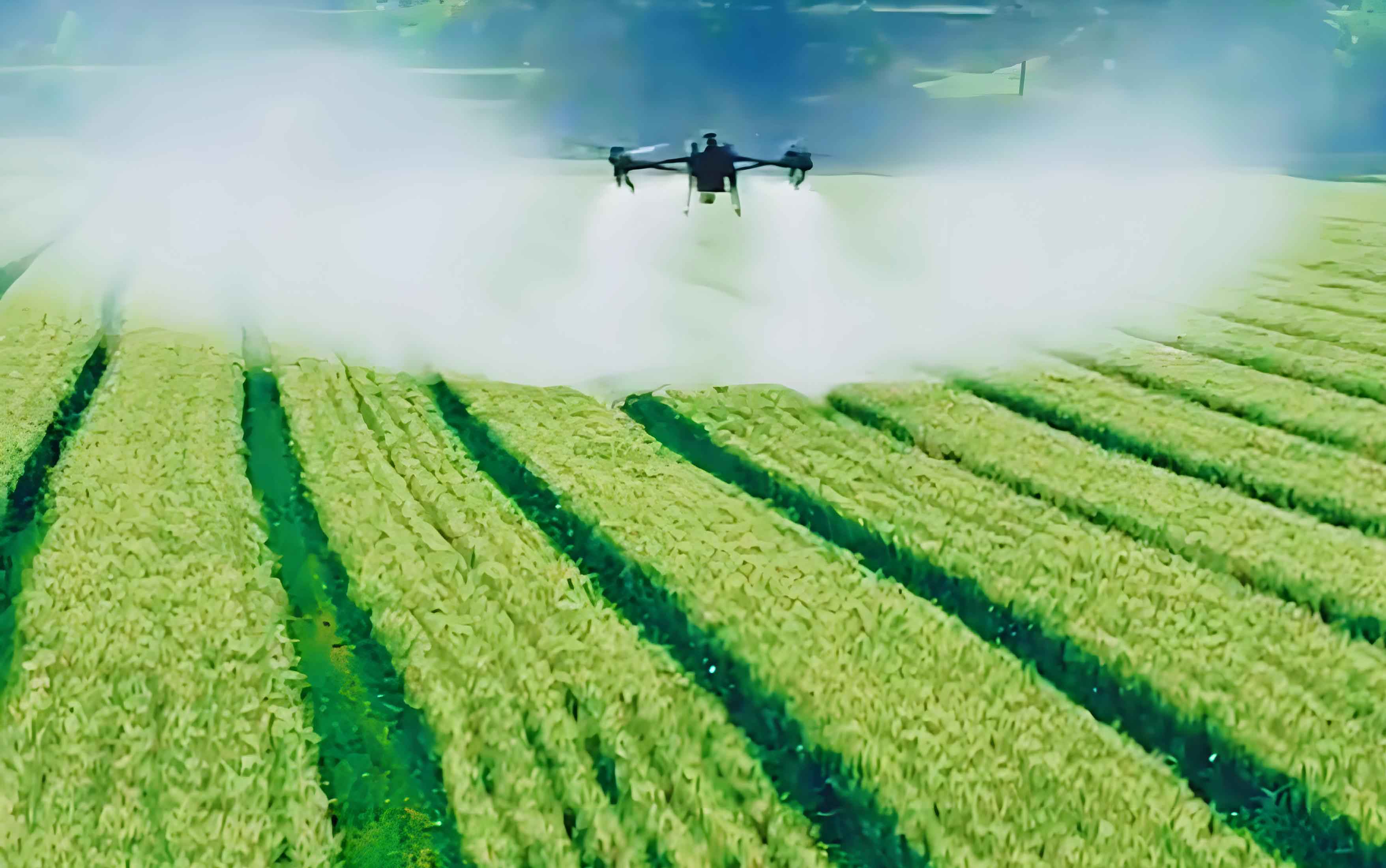
Walnut cultivation is of global economic importance. In many regions, traditional pest control in walnut orchards relies heavily on high-volume, high-pressure sprayers. These conventional methods are not only labor-intensive and inefficient but also lead to excessive water usage and severe pesticide run-off, posing risks of soil and environmental contamination. The large canopy structure of mature walnut trees, often reaching heights of 8-10 meters, makes uniform spray coverage particularly difficult to achieve from the ground. This study focuses on evaluating the efficacy of an agricultural UAV sprayer against two key walnut pests: the walnut aphid (Chromaphis juglandicola) and the yellow-tailed moth (Cnidocampa flavescens). Our objective is to systematically assess the field control performance, pesticide deposition, and operational efficiency of UAV-based application, thereby providing a theoretical foundation and practical technical support for integrated pest management in walnut orchards.
Methodology and Experimental Design
The core of this investigation involved field trials designed to compare the performance of different pesticides applied via a multi-rotor agricultural UAV. All trials incorporated a spray adjuvant to enhance droplet deposition and reduce drift. A key metric evaluated was the pesticide ground loss rate, calculated using a tracer dye methodology.
1. Field Trial Setup and Agricultural UAV Parameters
Two separate field trials were conducted in mature walnut orchards (15-year-old trees, 8-9 m in height, with a spacing of 3 m × 10 m).
Agricultural UAV System: A DJI T16 multi-rotor agricultural UAV was employed for all applications. The spray system was equipped with Teejet 11001 flat-fan nozzles. Key operational parameters for the agricultural UAV were set as follows:
| Trial Target | Flight Height (Above Canopy) | Swath Width | Spray Volume | Flight Speed | Adjuvant (Rate) |
|---|---|---|---|---|---|
| Walnut Aphid | 2.0 m | 4.5 m | 45 L/ha | 3.0 m/s | 0.5% (225 mL/ha) |
| Yellow-tailed Moth | 2.0 m | 4.5 m | 30 L/ha | 4.4 m/s | 0.5% (150 mL/ha) |
2. Pest Assessment and Efficacy Calculation
For each trial, plots of approximately 0.3 hectares were selected. Within each plot, three representative trees were tagged as sample trees. Pest populations were assessed pre-treatment and at multiple intervals post-treatment by counting insects on fixed branches.
- Walnut Aphid: Nine 20-cm branches in the middle-lower canopy (both peripheral and inner positions) per tree were examined.
- Yellow-tailed Moth: Twenty 40-cm branches across five orientations (east, south, west, north, center) in the middle-lower canopy per tree were examined.
The insect decline rate and corrected control efficacy were calculated using standard formulas:
Insect Decline Rate ($IR$):
$$ IR (\%) = \frac{N_{pre} – N_{post}}{N_{pre}} \times 100\% $$
Corrected Control Efficacy ($CE$):
$$ CE (\%) = \frac{IR_{treatment} – IR_{control}}{100 – IR_{control}} \times 100\% $$
where $N_{pre}$ and $N_{post}$ are the live insect counts before and after treatment, and $IR_{control}$ is the insect decline rate in the untreated control plot.
3. Measurement of Pesticide Ground Loss
To quantify the efficiency of the agricultural UAV spray deposition and potential environmental impact, the ground loss rate of the spray mixture was measured. Before UAV application, qualitative filter papers were placed on the ground beneath sample trees at specified locations: one directly under the trunk, four under the outer canopy edge, and four in the row middle (outside the canopy). A known concentration of tracer dye (85% Allura Red AC) was added to the spray tank. After the agricultural UAV completed its pass, the filter papers were collected.
The tracer was washed off each filter paper with a measured volume of distilled water ($v$). The concentration of the tracer in the wash solution ($c$) was determined spectrophotometrically against a standard curve. The ground deposition ($d$) and the ground loss rate ($D$) were calculated as follows:
Deposition per unit area:
$$ d (\mu g/cm^2) = \frac{c (\mu g/mL) \times v (mL)}{a (cm^2)} $$
Ground Loss Rate:
$$ D (\%) = \frac{\text{Total tracer mass on ground filters}}{\text{Total theoretical tracer mass sprayed over the sampled area}} \times 100\% $$
This method provides a direct measure of the spray that fails to be intercepted by the tree canopy, a critical metric for assessing the environmental footprint of the agricultural UAV application.
Results and Analysis
1. Control Efficacy Against Walnut Aphid
The results for walnut aphid control are summarized in Table 1. The agricultural UAV application with the adjuvant demonstrated varying levels of success. Imidacloprid 70% WG (150 g/ha) provided the highest and most consistent control, with an average efficacy of 80.37% at 14 days after treatment (DAT). Its performance was significantly superior to the other treatments from 6 DAT onward. Thiamethoxam·Lambda-cyhalothrin 22% (375 g/ha) showed moderate efficacy, peaking at 56.94% at 10 DAT. Cycloxaprid 25% WP (300 g/ha) proved ineffective under these application parameters, resulting in negative corrected efficacy values, indicating the pest population in the treated plot declined slower than in the control.
A critical observation was the difference in efficacy between the peripheral (outer) and inner canopy leaves (Table 2). For imidacloprid, control on peripheral leaves was significantly higher (96.05% at 14 DAT) compared to inner leaves (65.28% at 14 DAT). This highlights a challenge for the agricultural UAV in penetrating the dense, large canopy of mature walnut trees, leading to uneven deposition.
| Pesticide Treatment | Dose (g/ha) | Avg. Ground Loss Rate, D (%) ±SE | Corrected Control Efficacy, CE (%) ±SE (Days After Treatment) | |||||
|---|---|---|---|---|---|---|---|---|
| 2 DAT | 4 DAT | 6 DAT | 8 DAT | 10 DAT | 14 DAT | |||
| Imidacloprid 70% WG | 150 | 9.22 ± 3.06 a | 20.73 ± 5.12 a | 24.12 ± 13.90 a | 47.63 ± 4.56 a | 60.60 ± 5.50 a | 68.48 ± 0.97 a | 80.37 ± 3.79 a |
| Thiamethoxam·λ-cyhalothrin 22% | 375 | 4.44 ± 0.34 a | 7.51 ± 11.69 a | 22.95 ± 9.93 a | 47.38 ± 10.50 a | 48.56 ± 13.46 ab | 56.94 ± 4.58 a | 48.79 ± 3.75 b |
| Cycloxaprid 25% WP | 300 | 6.66 ± 1.37 a | 13.13 ± 6.57 a | -7.99 ± 23.01 a | -7.15 ± 17.04 b | -9.52 ± 20.04 b | -12.52 ± 15.37 b | -32.26 ± 9.63 c |
Means within a column followed by the same letter are not significantly different (Duncan’s test, P=0.05).
| Pesticide | Canopy Position | Corrected Control Efficacy, CE (%) ±SE (Days After Treatment) | |||||
|---|---|---|---|---|---|---|---|
| 2 DAT | 4 DAT | 6 DAT | 8 DAT | 10 DAT | 14 DAT | ||
| Imidacloprid 70% WG | Peripheral | 28.22 ± 11.29 a | 50.68 ± 13.76 a | 76.24 ± 4.81 a | 86.26 ± 4.08 a | 94.40 ± 1.40 a | 96.05 ± 0.83 a |
| Inner | 19.92 ± 5.06 a | 10.07 ± 19.22 a | 29.61 ± 7.37 b | 42.33 ± 12.87 b | 44.68 ± 2.87 b | 65.28 ± 6.19 b | |
| Thiamethoxam·λ-cyhalothrin 22% | Peripheral | 2.38 ± 21.46 a | 30.95 ± 12.78 a | 56.19 ± 17.84 a | 62.34 ± 15.02 a | 68.57 ± 8.75 a | 58.97 ± 12.19 a |
| Inner | 9.19 ± 14.87 a | 15.61 ± 19.01 a | 40.94 ± 10.52 a | 38.38 ± 14.99 a | 49.02 ± 3.29 a | 37.69 ± 9.99 a | |
2. Control Efficacy Against Yellow-tailed Moth
The agricultural UAV demonstrated excellent efficacy against the yellow-tailed moth, a chewing pest (Table 3). All three tested insecticides provided high levels of control, with no significant differences among them from 5 DAT onward. Thiamethoxam·Lambda-cyhalothrin 22% (525 g/ha) achieved the highest efficacy of 98.17% at 10 DAT. Matrine·Nicotine 1.2% EC (1050 g/ha) and Abamectin 3.2% EC (525 g/ha) also performed exceptionally well, with peak efficacies of 90.39% and 95.46%, respectively, at 10 DAT. The efficacy remained high at 14 DAT, showing good persistence.
| Pesticide Treatment | Dose (g/ha) | Avg. Ground Loss Rate, D (%) ±SE | Corrected Control Efficacy, CE (%) ±SE (Days After Treatment) | |||||
|---|---|---|---|---|---|---|---|---|
| 1 DAT | 3 DAT | 5 DAT | 7 DAT | 10 DAT | 14 DAT | |||
| Thiamethoxam·λ-cyhalothrin 22% | 525 | 8.57 ± 1.73 a | 48.44 ± 11.50 ab | 86.34 ± 3.73 a | 94.98 ± 3.05 a | 96.20 ± 1.92 a | 98.17 ± 1.83 a | 97.10 ± 2.90 a |
| Matrine·Nicotine 1.2% EC | 1050 | 5.30 ± 0.76 a | 58.22 ± 7.87 a | 74.28 ± 11.12 ab | 86.08 ± 7.85 a | 87.11 ± 6.46 a | 90.39 ± 9.61 a | 89.77 ± 6.24 a |
| Abamectin 3.2% EC | 525 | 9.59 ± 1.00 a | 17.36 ± 10.19 b | 49.85 ± 10.20 b | 71.26 ± 10.58 a | 85.09 ± 2.05 a | 95.46 ± 2.37 a | 92.43 ± 4.25 a |
Means within a column followed by the same letter are not significantly different (Duncan’s test, P=0.05).
3. Pesticide Ground Loss and Operational Efficiency
A standout result across all trials was the consistently low pesticide ground loss rate. For all treatments against both pests, the ground loss rate ($D$) measured via the tracer method was below 10% (ranging from 4.44% to 9.59%), with no significant differences between pesticide formulations within each trial (Tables 1 & 3). This is a drastic improvement over reported ground loss rates for traditional high-volume orchard sprayers, which can range from 23% to over 39%. This finding underscores a major environmental benefit of using an agricultural UAV: dramatically reduced soil contamination and potential off-target movement of pesticides.
The operational efficiency of the agricultural UAV is another significant advantage. Based on the parameters used (spray volume 30-45 L/ha, speed 3.0-4.4 m/s, swath 4.5 m), the field capacity can be calculated. The effective working width per pass is the swath width ($S_w$). The area covered per second (field capacity rate, $FCR$) is:
$$ FCR (m^2/s) = S_w (m) \times V (m/s) $$
For the walnut aphid trial: $FCR = 4.5 \times 3.0 = 13.5 m^2/s$ or $0.486 ha/h$.
For the yellow-tailed moth trial: $FCR = 4.5 \times 4.4 = 19.8 m^2/s$ or $0.713 ha/h$.
Assuming 4 hours of net spraying time per day, the daily coverage for the agricultural UAV is between 1.94 and 2.85 hectares. In contrast, a traditional ground-based high-pressure sprayer typically covers 1.0 to 2.0 hectares per day while using 2250-3000 L of water per hectare. Therefore, the agricultural UAV operates at approximately 14.6 to 19.4 times the efficiency of a traditional sprayer in terms of area covered per unit time, while simultaneously saving 2220-2955 L of water per hectare.
Discussion
1. Efficacy Differential Between Pest Types
The contrasting results between the control of walnut aphid and yellow-tailed moth highlight the influence of pest biology and pesticide mode of action on agricultural UAV efficacy. The walnut aphid is a sessile, phloem-feeding insect that primarily colonizes the undersides of leaves. The lower efficacy, particularly in the inner canopy, can be attributed to several factors related to the agricultural UAV application. First, the ultra-low volume (ULV) application (45 L/ha) results in fine droplets that predominantly deposit on the upper surfaces of leaves. This necessitates high systemic or translaminar activity from the insecticide to reach the pest. Second, the dense, multi-layered canopy of a mature walnut tree acts as a formidable barrier, filtering droplets and preventing uniform deposition in the inner and lower zones. This is quantitatively evidenced by the significant difference between peripheral and inner leaf efficacy (Table 2). Third, the pesticide dosage used via the agricultural UAV was lower than typical ground application rates. For instance, the imidacloprid rate of 150 g/ha via UAV is approximately 30% lower than rates calculated from common high-volume dilution recommendations. This combination of physical deposition challenges and reduced active ingredient input explains the moderate overall aphid control.
Conversely, the yellow-tailed moth, a mobile, leaf-chewing larval pest, is more directly exposed to spray droplets depositing on leaf surfaces. The insecticides tested, including contact and stomach poisons like pyrethroids and abamectin, are highly effective when they directly coat the pest or the leaf tissue it consumes. The excellent and rapid control achieved (over 90% for all products) demonstrates that for exposed chewing pests, the agricultural UAV is a highly effective delivery system, even with low water volumes and at the recorded flight speeds.
2. The Critical Role of Spray Adjuvants
This study was conducted with a constant addition of a non-ionic surfactant/spreader adjuvant at 0.5% of the spray volume. Adjuvants are known to modify droplet properties, reducing evaporation and drift, improving wetting and spreading on waxy leaf surfaces, and potentially enhancing rainfastness. The high efficacy against the yellow-tailed moth and the acceptable ground loss rates are likely co-influenced by the use of this adjuvant. Research in other crops has shown that adjuvants can enable pesticide dose reduction while maintaining efficacy when using agricultural UAVs. The optimal type and concentration of adjuvant for walnut canopy penetration and aphid control specifically warrant further investigation. The adjuvant likely contributed to the sub-10% ground loss by improving canopy interception and reducing fine, drift-prone droplets.
3. Environmental and Economic Implications
The sub-10% ground loss rate is perhaps the most environmentally significant finding. This metric translates directly to a major reduction in the environmental load of pesticides, minimizing soil residue, non-target exposure, and potential water contamination. From an economic and operational standpoint, the efficiency gains are transformative. The agricultural UAV’s ability to cover nearly 2-3 hectares per operational hour, compared to less than 0.5 hectares for a manual sprayer, drastically reduces labor requirements and allows for timely application, which is critical in pest management. The water savings of over 2000 L/ha also make this technology viable in regions with water scarcity or where water must be transported to the orchard.
Conclusion
This study provides a comprehensive field evaluation of agricultural UAV spray technology for pest management in high-canopy walnut orchards. The results demonstrate that the agricultural UAV is a highly effective and environmentally responsible tool for controlling exposed foliage-feeding pests like the yellow-tailed moth, achieving over 90% control efficacy with multiple insecticide options. For more challenging targets like the walnut aphid, which resides on the undersides of leaves in the inner canopy, efficacy is more variable and depends heavily on the systemic properties of the insecticide; however, satisfactory control (exceeding 80% with imidacloprid) can still be achieved. A key universal finding is the exceptionally low pesticide ground loss rate (below 10%), which underscores the superior environmental profile of agricultural UAV application compared to conventional high-volume sprayers.
Furthermore, the operational efficiency of the agricultural UAV, offering a more than 14-fold increase in daily coverage and massive water savings, presents a compelling economic case for its adoption. Future research should focus on optimizing agricultural UAV flight parameters (e.g., altitude, speed, droplet spectrum) and adjuvant use specifically for dense tree canopies to improve deposition uniformity and penetration for sucking pests. In conclusion, the agricultural UAV represents a viable, efficient, and sustainable technological solution for modern walnut orchard protection, aligning with the goals of precision agriculture and reduced environmental impact.