
In recent years, the rapid advancement of technology has led to the widespread application of civilian unmanned aerial vehicles (UAVs), commonly known as drones, in various sectors such as agriculture, logistics, entertainment, and surveillance. As a transformative technological achievement, civilian UAVs represent a significant outcome of scientific and technological progress, yet their integration into society has raised complex legal and regulatory challenges. From my perspective as a researcher in science and technology law, I find it crucial to examine these issues through the lens of science and technology administrative law, which governs the exercise of administrative power in managing technological activities. This article aims to explore the legal regulation of civilian UAVs in depth, addressing current problems, analyzing regulatory frameworks, and proposing enhancements to ensure orderly and efficient societal benefits. I will employ tables and formulas to summarize key points, emphasizing the keyword “civilian UAV” throughout to maintain focus.
The concept of science and technology administrative law is pivotal in this discussion. Traditionally viewed as a branch of administrative law, it regulates the relationships formed when state administrative bodies exercise power to oversee, supervise, and manage scientific and technological activities. In my view, this legal framework is essential for addressing the unique challenges posed by civilian UAVs, as these devices are products of technological innovation that require specialized governance to balance promotion and control. Civilian UAVs, defined as unmanned aircraft used for non-military purposes, fall under the category of scientific and technological achievements as per laws like the Promotion of Scientific and Technological Achievements Transformation Act. This law mandates administrative authorities to manage and coordinate the transformation process, making science and technology administrative law a suitable tool for regulating civilian UAVs. By focusing on this perspective, I aim to highlight how administrative measures can mitigate risks while fostering innovation in the civilian UAV sector.
The emergence of civilian UAVs has brought about numerous legal issues that necessitate immediate attention. Based on my analysis of recent incidents and reports, I categorize these problems into several areas. First, the unregulated sale of civilian UAVs poses a significant threat. For instance, online platforms allow easy purchase without verifying user identities, undermining regulatory efforts like real-name registration systems. Second, the lack of qualified operators exacerbates risks; most civilian UAV pilots lack formal training or licenses, leading to accidents and safety hazards. Third, disordered flight activities of civilian UAVs have caused societal harm, including intrusions into military zones, privacy violations, interference with aviation, and public safety incidents. To illustrate, I have compiled a table summarizing these legal issues and their impacts.
| Legal Issue Category | Specific Manifestations | Potential Impacts | Frequency in Cases |
|---|---|---|---|
| Unregulated Sale | Online sales without identity checks; lack of quality standards | Increased accessibility to malicious users; safety risks due to substandard products | High, based on e-commerce data |
| Operator Deficiencies | Lack of pilot licenses; inadequate training | Higher accident rates; inability to handle emergencies | Moderate to high, with few certified pilots |
| Disordered Flight Activities | Intrusion into restricted areas; privacy invasion; aviation interference; accidents | National security threats; privacy breaches; public safety hazards | Increasing annually |
In my assessment, these issues stem from the rapid deployment of civilian UAVs without corresponding legal safeguards. For example, the privacy concerns related to civilian UAVs are particularly alarming; these devices can easily capture sensitive information, leading to ethical dilemmas. I believe that without robust regulation, the civilian UAV industry may face backlash that stifles innovation. Therefore, it is imperative to delve into the current regulatory landscape.
The current legal regulation of civilian UAVs in many jurisdictions, including China, is fragmented and inadequate. From my review of existing laws, I observe that there is no dedicated national legislation specifically for civilian UAVs. Instead, regulations rely on general aviation laws, such as the Civil Aviation Act, which are not fully applicable due to the unique characteristics of civilian UAVs. Administrative rules and normative documents issued by bodies like the Civil Aviation Administration provide some guidance, but they lack enforceability and coherence. I have tabulated the key regulatory instruments to highlight this patchwork approach.
| Regulatory Level | Year Issued | Issuing Authority | Document Name | Applicability to Civilian UAVs |
|---|---|---|---|---|
| National Law | 1995 | National People’s Congress | Civil Aviation Act | Limited, with only general provisions |
| Administrative Regulation | 2003 | State Council | General Aviation Flight Control Regulations | Partial, treating UAVs as general aircraft |
| Normative Documents | 2013-2018 | Civil Aviation Administration | Various rules on UAV operation and registration | Specific but lacking legal force |
| Local Regulations | Varies | Local Governments | Regional UAV management measures | Fragmented, with inconsistencies |
From my perspective, this regulatory framework suffers from several defects. First, the absence of comprehensive laws creates legal vacuums, forcing authorities to analogize from unrelated statutes. Second, regulatory gaps exist in areas like production standards and privacy protection for civilian UAVs, leaving risks unaddressed. Third, multiple agencies claim jurisdiction over civilian UAVs—such as military, aviation, and public security departments—leading to confusion and inefficiency. Fourth, many rules are impractical; for instance, requirements for pre-flight approvals are often ignored due to poor enforceability. Fifth, the regulatory approach is piecemeal, focusing on flight activities while neglecting the entire lifecycle of civilian UAVs, from production to disposal. I argue that this lack of systematic regulation hampers the sustainable development of the civilian UAV industry.
To address these challenges, I propose several recommendations grounded in science and technology administrative law. Firstly, there is a need for enforceable science and technology administrative regulations tailored to civilian UAVs. Given the dynamic nature of UAV technology, I suggest enacting interim regulations that can adapt to technological changes. These regulations should enhance operability by incorporating technical measures like geofencing and remote identification systems. For example, a regulatory model could be expressed using a formula to balance safety and innovation: $$ R = \alpha \cdot S + \beta \cdot I $$ where \( R \) represents regulatory effectiveness, \( S \) denotes safety parameters (e.g., flight altitude limits for civilian UAVs), \( I \) signifies innovation incentives, and \( \alpha \) and \( \beta \) are weighting factors adjusted based on societal needs. This formula illustrates how regulations can be optimized to manage civilian UAV risks while promoting their benefits.
Secondly, I emphasize strengthening supervision during and after the transformation of scientific and technological achievements. Administrative authorities should clarify their roles through legal mandates, designating a lead agency for civilian UAV oversight to avoid jurisdictional conflicts. For instance, public security departments could handle general incidents involving civilian UAVs, while specialized bodies manage sector-specific applications like agriculture or logistics. Additionally, stricter penalties for unlicensed operation of civilian UAVs should be instituted to improve compliance. I believe that a coordinated supervisory mechanism, supported by real-time monitoring technologies, can mitigate issues like unauthorized flights of civilian UAVs.
Thirdly, I advocate for holistic legal regulation across the entire civilian UAV industry chain. This involves setting technical standards for production, regulating sales channels, and promoting operator training. A table summarizing these integrated measures can help visualize the approach.
| Industry Chain Stage | Regulatory Focus | Proposed Measures | Expected Outcomes for Civilian UAVs |
|---|---|---|---|
| Research and Development | Safety and ethics training for developers | Mandatory courses on legal implications | Reduced design flaws in civilian UAVs |
| Production | Quality and safety standards | Establish national certification systems | Enhanced reliability of civilian UAVs |
| Sales | Verification of buyer identities | Integration with real-name registration databases | Controlled distribution of civilian UAVs |
| Operation | Pilot licensing and flight permissions | Streamlined online application processes | Decreased incidents involving civilian UAVs |
| Post-Use | Disposal and data management | Guidelines for data deletion and recycling | Minimized privacy and environmental risks |
In my view, such comprehensive regulation will foster a safer ecosystem for civilian UAVs. Moreover, as civilian UAV technology evolves—integrating with AI, VR, and other smart technologies—regulations must be forward-looking to address emerging issues like data privacy. I recommend periodic reviews of legal frameworks to ensure they keep pace with innovations in civilian UAV applications.
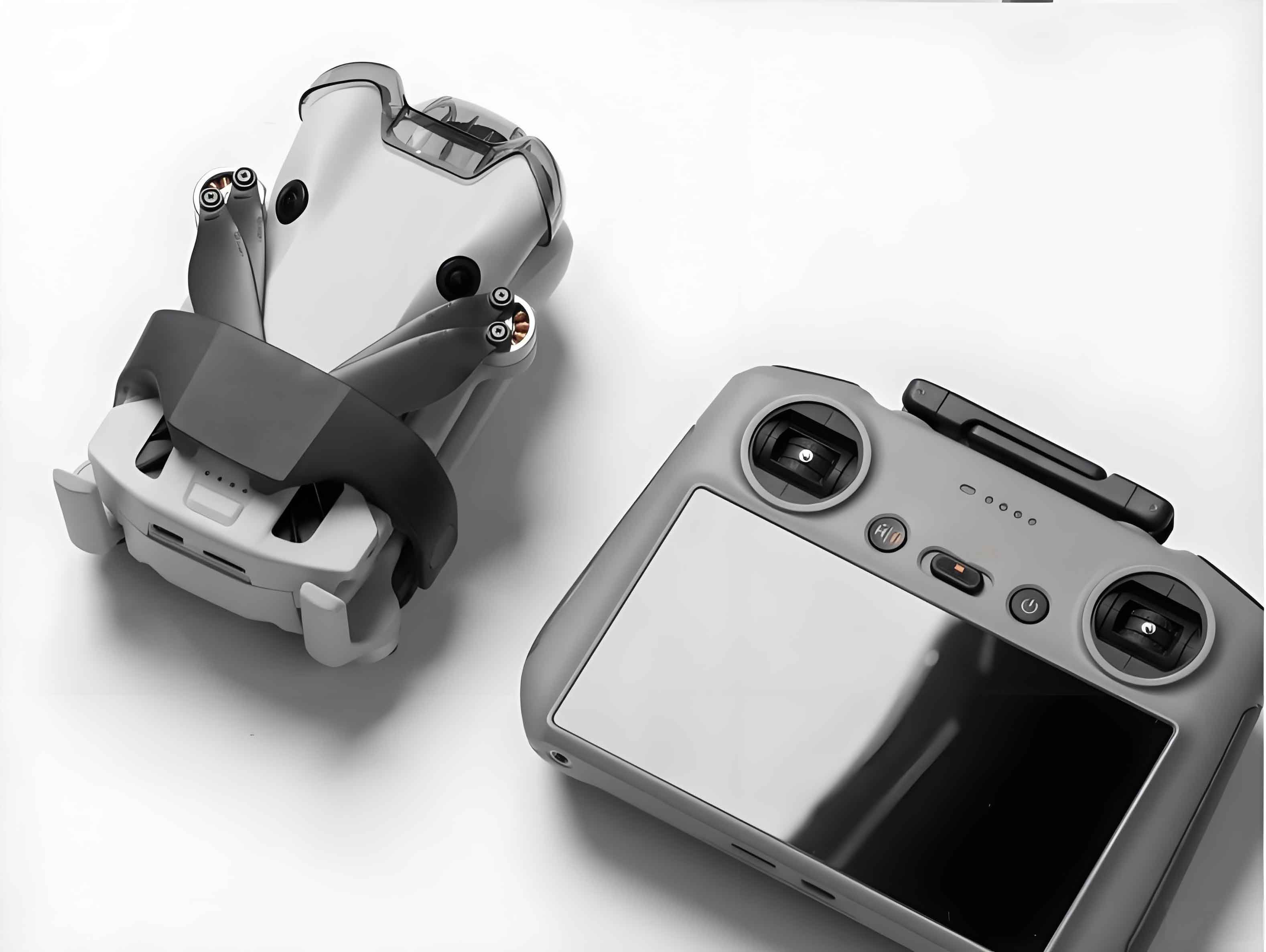
The image above illustrates a typical low-altitude civilian UAV in operation, highlighting the practical contexts where regulatory interventions are needed. From my perspective, visual aids like this underscore the importance of grounding legal discussions in real-world scenarios involving civilian UAVs.
Furthermore, I delve into the theoretical underpinnings of science and technology administrative law as applied to civilian UAVs. This legal branch emphasizes the exploratory and incentive-based aspects of governance, which are crucial for managing disruptive technologies like civilian UAVs. In my analysis, I use a formula to represent the regulatory balance: $$ \text{Public Interest} = \int_{0}^{T} (B(t) – C(t)) \, dt $$ where \( B(t) \) denotes the benefits from civilian UAV usage (e.g., economic gains), \( C(t) \) represents the costs (e.g., safety incidents), and \( T \) is the time horizon. Administrators aim to maximize this integral through regulations that enhance \( B(t) \) while minimizing \( C(t) \) for civilian UAVs. This mathematical approach helps quantify the impact of policies on civilian UAV integration.
Additionally, I examine comparative international perspectives on civilian UAV regulation. Countries like France and Japan have enacted specific laws for civilian UAVs, offering lessons for improvement. For instance, Japan’s UAV Control Law mandates strict no-fly zones, which could be adapted locally. I argue that learning from these models can inform better regulations for civilian UAVs in other jurisdictions, emphasizing the need for harmonized standards to facilitate global operations of civilian UAVs.
In conclusion, the legal regulation of civilian UAVs from the perspective of science and technology administrative law is a multifaceted endeavor requiring concerted efforts. Based on my research, I assert that current deficiencies—such as legislative gaps, regulatory fragmentation, and enforcement challenges—must be addressed through proactive measures. By enacting operable regulations, clarifying supervisory roles, and adopting a systemic approach, societies can harness the potential of civilian UAVs while mitigating associated risks. As civilian UAV technology continues to advance, ongoing legal adaptations will be essential to ensure that civilian UAVs contribute positively to societal progress. I hope this analysis provides a robust framework for policymakers and stakeholders involved in the civilian UAV ecosystem.
To further elaborate, I explore potential future scenarios for civilian UAV regulation. With the rise of autonomous civilian UAVs, regulatory models may need to incorporate algorithmic accountability. For example, a risk assessment formula for autonomous civilian UAVs could be: $$ P_{\text{risk}} = \frac{\sum_{i=1}^{n} w_i \cdot V_i}{D} $$ where \( P_{\text{risk}} \) is the probability of risk, \( w_i \) are weights for factors like weather conditions, \( V_i \) are vulnerability indices for civilian UAV systems, and \( D \) represents regulatory diligence. Such formulas can guide dynamic regulations for civilian UAVs. Moreover, public awareness campaigns about civilian UAV safety and ethics are vital; I recommend integrating these into educational programs to foster responsible usage of civilian UAVs.
In summary, my first-person analysis underscores the urgency of reforming legal frameworks for civilian UAVs. Through tables, formulas, and detailed discussions, I have highlighted key issues and solutions, consistently emphasizing the term “civilian UAV” to maintain focus. As we move forward, I believe that a balanced regulatory approach—rooted in science and technology administrative law—will enable civilian UAVs to thrive as a beneficial technological achievement, driving innovation while safeguarding public interests. The journey toward effective regulation of civilian UAVs is ongoing, and I encourage continued scholarly and practical engagement in this critical field.