
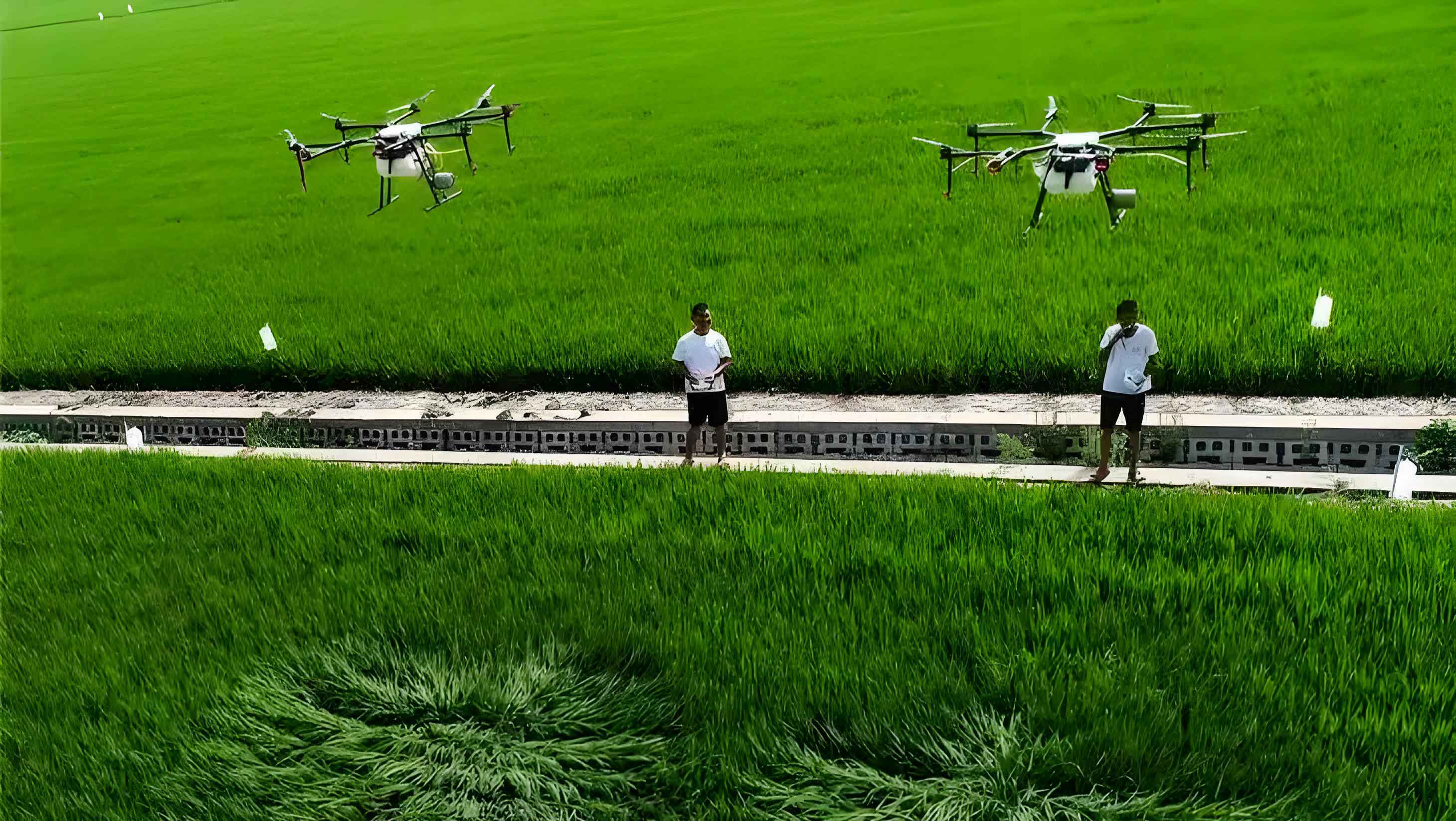
The modernization of agriculture stands as a critical imperative for national development and food security. Within this transformative journey, the promotion of agricultural UAVs (Unmanned Aerial Vehicles), or drones, for plant protection represents not merely a technological upgrade but a strategic necessity. It addresses pressing challenges such as labor shortages, enhances operational efficiency, and supports sustainable environmental practices. The integration of digital technologies—spanning information systems, artificial intelligence, the Internet of Things, and big data—into these agricultural UAVs has emerged as a powerful catalyst, propelling their capabilities and application potential. This digital empowerment is reshaping the landscape of precision agriculture. However, the path to widespread adoption is fraught with obstacles. A systemic development mindset is therefore essential to harness digital advantages fully, strengthen policy frameworks, advance high-quality R&D, and broaden promotional pathways, ultimately making intelligent, digitally-enabled agricultural UAVs a cornerstone of contemporary farming.
1. Current Landscape of Digitally-Enabled Agricultural UAVs
From their inception, agricultural UAVs have been intrinsically linked with digital information and remote control technologies. Today, China’s application at the agricultural frontline demonstrates significant exploratory achievements in digitally empowering these systems.
1.1 A Solid Foundation for Digital Application
The ecosystem for digitally-empowered agricultural UAVs is becoming increasingly robust, characterized by diverse platforms and advanced intelligent controls.
| Aspect | Current State & Developments |
|---|---|
| Platform & Model Diversity | The range of flight platforms is extensive, including traditional fixed-wing, single-rotor, and multi-rotor agricultural UAVs. Categorization by payload spans from micro and light to small, medium, and large models. This diversity provides a broad canvas for implementing high-quality digital solutions tailored to different farm sizes and task requirements. |
| Intelligent Control via Digital Tech | Positioning and navigation primarily rely on mature civilian systems (e.g., Beidou, GPS) or manual remote control. Leading companies have established extensive ground station networks, enabling autonomous flight along pre-set routes for spraying, which is highly effective in flat terrains under stable meteorological conditions. |
| Integrated Digital Systems | There is growing recognition of the importance of holistic system integration. This encompasses a stable and reliable flight platform, high-quality digital modeling of the operational scene (field mapping, obstacle detection), and the integration of the payload (liquid, granular, or seed). This synergy injects new momentum into making agricultural UAVs more convenient, efficient, and cost-effective. |
1.2 Digital Expansion of Market Demand
Digital technology is not only improving the agricultural UAV itself but also fueling the growth of its market.
| Factor | Description & Impact |
|---|---|
| Market Scale Growth | The market for agricultural UAVs in China has seen rapid expansion. Estimates indicate the market size grew from approximately RMB 4.66 billion in 2019 to around RMB 6.79 billion in 2020, with projections reaching RMB 25 billion by 2026. This expanding market provides strong commercial impetus for further digital innovation. |
| Growing User Acceptance | As the traditional farming population ages, a new generation of tech-savvy, educated professional farmers is entering the sector. This demographic is more receptive to innovation and recognizes the high efficiency and practicality of digitally-advanced agricultural UAVs, creating a vital user base for sustained promotion. |
1.3 Comprehensive Advancement in Digital Intelligence
The entire industry chain, from R&D to policy, is experiencing a升温 (heating up) driven by digital intelligence.
- R&D Acceleration: Digital technologies have become central to R&D. Industry leaders like XAG and DJI Agriculture, leveraging digital precision, reportedly hold nearly 90% of the market share. New models boast significantly enhanced intelligence and payloads, with top models reaching capacities close to 40 kg.
- Diversified Application Scenarios: Beyond the giants, nearly 400 enterprises are engaged across the R&D, production, and sales chain. Companies are using digital tech to develop specialized agricultural UAVs for varied scenarios (e.g., orchards, hilly terrain) and different crop types, enhancing both applicability and effectiveness.
- Enhanced Government Support: Recognizing the strategic value in mitigating rural labor shortages, governments at all levels are increasingly issuing supportive policies. This support extends beyond subsidies for purchasing agricultural UAVs to include R&D in specialized digital chips and intelligent systems.
2. Persistent Challenges in the Development of Agricultural UAVs
As a type of agricultural machinery heavily dependent on digital technology, the agricultural UAV faces specific hurdles that constrain its widespread adoption despite its advanced capabilities.
2.1 Inadequate Systemic Safeguard Mechanisms
While various technical standards exist, a coherent, legally robust regulatory and standard system lags behind the industry’s rapid digital evolution.
- Regulatory Lag: Mandatory national standards are often outdated compared to technological advancements. Industry association or group standards, like the 2017 “Technical Requirements and Test Methods for Agricultural Plant Protection UAVs,” while useful for design and testing, are not legally binding, leading to inconsistent implementation.
- Gaps in Comprehensive Frameworks: There is a need for an integrated system covering not just product quality and testing, but also operational safety, data management, insurance, and end-of-life recycling for these digital assets.
2.2 Unfavorable Cost-Benefit Profile for Mass Market
The high cost of digital sophistication remains a significant barrier to the popularization of agricultural UAVs.
| Cost Component | Challenge |
|---|---|
| Initial Purchase Price | New, fully-featured agricultural UAV systems can cost between RMB 50,000 to 60,000, a substantial investment for most individual farmers or small cooperatives. |
| Maintenance & Repair Costs | Repairing sophisticated digital and mechanical components (e.g., motors, flight controllers, sensors) is expensive. A single motor replacement can cost thousands of RMB. |
| Resale Value & Obsolescence | The rapid pace of digital innovation leads to quick model turnover, depressing the resale value of older agricultural UAVs and increasing the total cost of ownership. |
2.3 Operational Reliability and Technical Barriers
As complex cyber-physical systems, agricultural UAVs can suffer from technical glitches that undermine user confidence.
- Technical Failures: Users report issues such as flight instability, GPS signal loss, inaccurate route following, insufficient battery life for large fields, and limited real-time obstacle avoidance. These problems are often most acute during peak spraying seasons, causing significant operational disruption.
- Steep Learning Curve: Many users lack proficiency with the advanced digital controls. Frequent need for technical support or repairs creates a perception of unreliability and complexity, forming a psychological barrier to adoption.
3. A Systemic Framework for Digitally-Empowered Promotion
To achieve large-scale adoption, the promotion of agricultural UAVs must be deeply integrated with digital empowerment and anchored within a systematic agricultural innovation ecosystem, as underscored by policy directives. This requires a multi-dimensional approach.
3.1 Cultivating a Digitally-Enabled Developmental Philosophy
The mindset guiding promotion must be holistic, adaptable, and problem-oriented.
- Holistic System Thinking: The value of a digitally-empowered agricultural UAV must be viewed strategically—contributing to labor solutions, cost reduction, food security, and ecological protection. Promotion should focus on building an integrated digital product ecosystem. This includes external IoT for field and crop sensing, integration of meteorological data for wind compensation, and internal development of user-friendly, universal control systems. The technical goal is seamless interoperability and ease of use.
- Contextual Adaptation: Promotion strategies and product development must be tailored. This involves deep research into regional variations: climatic differences (Northeast vs. Southwest), topography (plains vs. hills/mountains), and crop systems (cereals vs. orchards vs. row crops). The aim is to develop both universal models and specialized agricultural UAVs for niche applications (e.g., under-canopy flight for root zone treatment, reverse spraying for underside leaf pests).
- Problem-Oriented Design: R&D should be driven by specific agricultural pain points. Digital modeling and simulation can guide the design of specialized agricultural UAVs for tasks like precise under-leaf spraying, targeted herbicide application, or even assisted pruning, moving beyond generic spraying to solve discrete problems.
3.2 Strengthening Institutional and Policy Infrastructure
Robust “soft” infrastructure is as crucial as the “hard” technology for the agricultural UAV ecosystem.
- Advancing Legal & Regulatory Frameworks: The enactment of regulations like the “Interim Regulations on the Management of Unmanned Aircraft Flights” (2023) is a foundational step. This must be complemented by continuous, localized policy updates that provide clear legal boundaries and responsibilities for agricultural UAV operations, data privacy, and liability.
- Enhancing Policy Support Systems:
- Coordination: Establish dedicated inter-departmental bodies to coordinate agricultural UAV promotion, clarifying regulatory duties and encouraging industry to improve full-cycle services.
- Incentives: Refine subsidy policies to support not just purchase but also the digital “intelligence modules” and network connectivity critical for operation in remote or hilly areas. Policies should incentivize R&D shift from pure payload capacity to smart, adaptable systems.
- Commercialization: Provide targeted support for the transformation of digital R&D achievements into market-ready products.
- Building Comprehensive Standard Systems: A unified standard system is the bedrock of market confidence and interoperability. Efforts must accelerate to establish:
- Technical standards for design, production, and digital components.
- Quality management and testing protocols.
- Operational standards for different environments and crops.
- Foundational standards for components, maintenance, and decommissioning.
3.3 Accelerating Core Digital Technology R&D
The technological heart of the modern agricultural UAV lies in its digital systems. Advancement here is non-negotiable.
3.3.1 Foundational Research and Key Breakthroughs: Promotion must align with Digital Village initiatives. This involves leveraging existing agricultural big data, establishing regional digital agriculture labs and UAV innovation centers, and integrating data from various agricultural observation points and research institutions. Investment in fundamental digital infrastructure, like the expansion of navigation base station networks and dedicated R&D funding, is critical.
3.3.2 Application-Oriented Digital Technology Development: The agricultural UAV is fundamentally an electronic农机 product. R&D must focus on:
$$ \text{System Efficiency} = f(\text{Propulsion}, \text{Payload Delivery}, \text{Control}, \text{Data Link}) $$
Where each component is optimized through digital means:
- Hardware: Improving powertrain efficiency, precision spraying mechanisms, and robust airframes.
- Software & Connectivity: Developing advanced flight control algorithms, AI-based scene recognition, and seamless integration with 5G/6G networks for real-time, high-bandwidth data transmission and low-latency control, preventing operational lag.
- Core Digital Components: The pace of upgrade is dictated by advancements in chips, sensors, and control system firmware—the true value centers where high-tech electronics firms must concentrate efforts.
3.3.3 Prioritizing User-Friendly Design & Accessibility: Simplifying operation through digital intelligence is key to lowering the adoption barrier.
$$ \text{Adoption Likelihood} \propto \frac{\text{Perceived Usefulness} \times \text{Perceived Ease of Use}}{\text{Perceived Cost}} $$
Strategies to maximize this include:
- Implementing full-autonomy features (auto-taking, route planning, smart return-home).
- Creating intuitive mobile APP interfaces for mission planning and monitoring.
- Providing comprehensive, easily accessible digital learning materials (QR codes linking to video guides).
- Ensuring responsive, reliable after-sales technical support to build user trust and a sense of security.
3.4 Strategic Training and Awareness Campaigns
Bridging the knowledge gap between technology and the end-user is essential for successful agricultural UAV integration.
| Initiative | Implementation Strategy |
|---|---|
| Professional Capacity Building |
|
| Enterprise-Community Collaboration |
|
| Demonstration & Awareness Creation |
|
4. A Quantifiable Perspective: Modeling the Impact
To further underscore the argument for systemic digital promotion, we can model the theoretical advantages. Consider a simplified model for the operational efficiency of an agricultural UAV:
Let the effective area covered per unit time \( A_{eff}(t) \) be a function of several digitally-influenced variables:
$$ A_{eff}(t) = v(t) \cdot w \cdot \eta_{spray} \cdot \eta_{nav}(t) $$
Where:
- \( v(t) \) = Ground speed (optimized by flight control and path planning algorithms).
- \( w \) = Effective swath width (determined by nozzle technology and digital wind compensation).
- \( \eta_{spray} \) = Spraying efficiency (dependent on droplet control and target recognition software).
- \( \eta_{nav}(t) \) = Navigation efficiency (≤1, representing the fraction of time spent in productive spraying vs. turning/repositioning, enhanced by AI route optimization).
Digital empowerment directly improves \( v(t) \), \( \eta_{spray} \), and \( \eta_{nav}(t) \), leading to a non-linear increase in \( A_{eff}(t) \).
Furthermore, the economic viability for a service provider or farm can be framed. The net benefit \( NB \) over a season is:
$$ NB = \sum_{i=1}^{n} (P_i \cdot A_i) – (C_{cap} + C_{op} + C_{main}) $$
Where:
- \( P_i \) = Price charged per unit area for operation \( i \).
- \( A_i \) = Total area serviced in operation \( i \) (directly boosted by higher \( A_{eff} \)).
- \( C_{cap} \) = Annualized capital cost of the agricultural UAV.
- \( C_{op} \) = Operational costs (batteries, chemicals, labor).
- \( C_{main} \) = Maintenance costs.
Systemic promotion strategies aim to: 1) Increase \( A_i \) (via better tech and training), 2) Reduce \( C_{cap} \) (via subsidies, scale manufacturing), 3) Reduce \( C_{op} \) (via efficient operation), and 4) Reduce \( C_{main} \) (via improved reliability and support networks). The synergistic effect of these measures makes \( NB \) positive and attractive for a wider user base.
5. Conclusion: Toward an Integrated Future
The promotion of agricultural UAVs in the digital age is not a singular task of selling a product but a complex系统工程 (systems engineering) endeavor. It requires the seamless convergence of advanced digital technology, responsive policy frameworks, robust industry standards, user-centric design, and comprehensive human capital development. The core objective is to transition the digitally-empowered agricultural UAV from a niche, high-end tool to a ubiquitous, reliable, and accessible component of the modern agricultural toolkit. By adopting the systemic framework outlined—one that intertwines technological innovation with institutional support and grassroots engagement—the full potential of digital empowerment can be unlocked. This will catalyze a more efficient, sustainable, and resilient agricultural sector, firmly establishing the intelligent agricultural UAV as an indispensable agent in global food security and rural revitalization.