
The rapid proliferation and tactical deployment of unmanned aerial vehicles (UAVs) have fundamentally altered the modern battlespace. These systems, ranging from small commercial quadcopters to sophisticated military-grade platforms, present a unique and pervasive threat due to their low cost, ease of operation, and ability to conduct surveillance, electronic warfare, and kinetic strikes. The emergence of drone swarms, where dozens or hundreds of UAVs operate in a coordinated manner, amplifies this threat exponentially, overwhelming traditional point-defense systems like missiles and guns through sheer numbers and distributed attack profiles. This paradigm shift necessitates the development of novel, cost-effective countermeasures capable of engaging multiple targets over a wide area simultaneously. Among the most promising solutions is High-Power Microwave (HPM) technology, a directed-energy approach offering the distinct advantages of speed-of-light engagement, area-effect coverage, and a low cost-per-shot limited primarily by electrical power consumption.
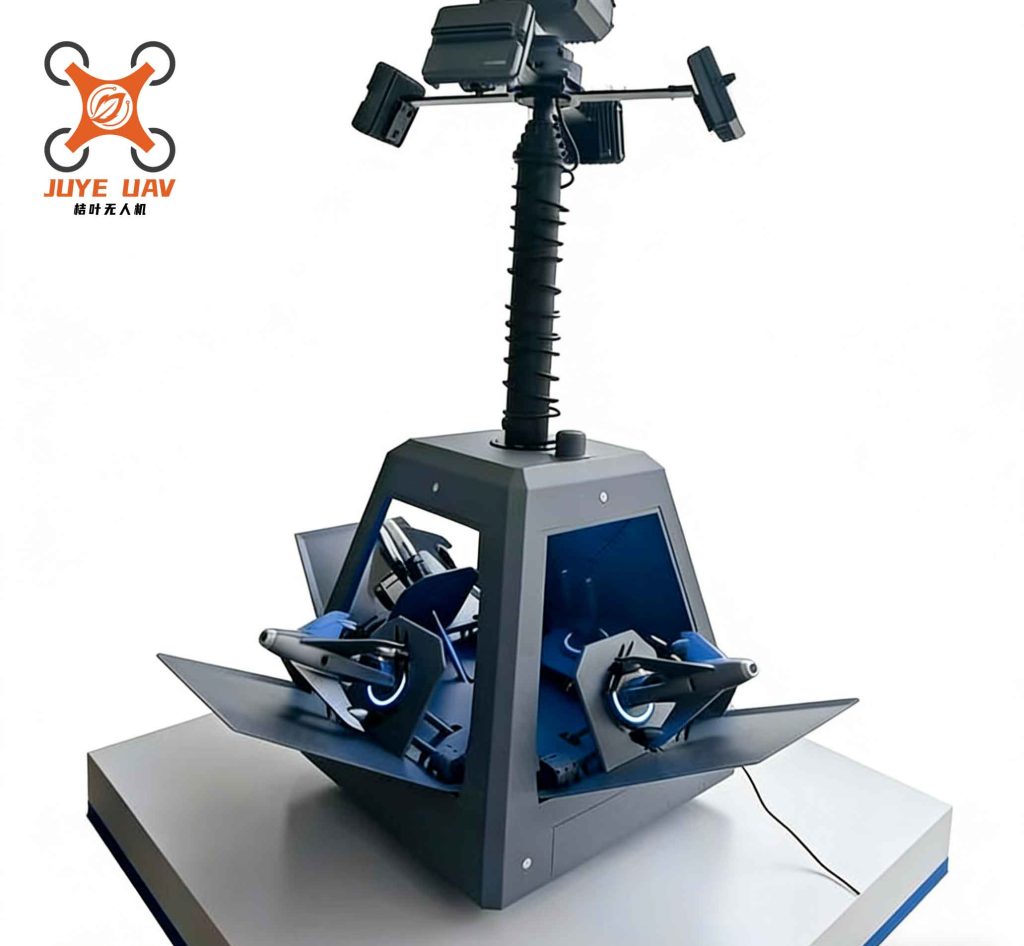
The core principle of an HPM anti-drone system involves generating and directing a powerful burst of microwave energy toward a target drone or swarm. Unlike kinetic methods that seek physical destruction, HPM weapons aim to disrupt or damage the critical electronic subsystems within the UAV. This is achieved through two primary coupling mechanisms: “front-door” coupling, where energy enters through intentional receptors like communication, GPS, or datalink antennas; and “back-door” coupling, where energy infiltrates through seams, apertures, or cable connections on the drone’s chassis. The intense electromagnetic field induces high voltages and currents in onboard circuitry, leading to temporary upset (e.g., resetting the flight controller), permanent latch-up, or catastrophic burnout of sensitive semiconductors. The effectiveness of this anti-drone technique hinges on several key factors, including the peak power, frequency, pulse width, repetition rate of the microwave pulse, and the susceptibility of the target’s electronics.
The fundamental damage mechanism can be modeled by considering the power density at the target and the specific vulnerability of its components. The incident power density \( S_{inc} \) at a distance \( R \) from the radiating antenna is given by:
$$ S_{inc} = \frac{P_{rad} G}{4 \pi R^2} $$
where \( P_{rad} \) is the radiated power and \( G \) is the antenna gain. The actual power coupled into a target’s electronics, \( P_{coup} \), is a complex function of this incident field, the polarization, the frequency, and the effective aperture or coupling cross-section \( \sigma_c \) of the target’s entry points:
$$ P_{coup} \propto S_{inc} \cdot \sigma_c(f, \text{polarization}, \text{geometry}) $$
The ultimate goal is for \( P_{coup} \) to exceed the damage threshold of the weakest critical component, which can be experimentally determined for various electronic parts. This forms the scientific basis for designing effective HPM anti-drone systems.
High-Power Microwave Coupling Mechanisms and Target Effects
The efficacy of any HPM anti-drone system is deeply rooted in the physics of how microwave energy interacts with and infiltrates the target. This interaction is not monolithic but occurs through distinct pathways, each with its own characteristics and implications for system design and effectiveness.
Front-Door Coupling: This is the most direct and often most efficient coupling path. It exploits the UAV’s own designed receptors—its antennas for command and control (C2), GPS/GNSS navigation, video downlink, or radar altimetry. These antennas are optimized to receive weak, structured signals in specific frequency bands. An HPM pulse, especially one tuned to a band the antenna is designed for, can deliver enormous energy directly into the front-end low-noise amplifier (LNA) and subsequent receiver chain. This typically results in almost instantaneous burnout of these sensitive semiconductor devices. The vulnerability threshold for front-door coupling is generally lower than for back-door, making it a prime target for disruption. The coupling efficiency \( \eta_{front} \) can be relatively high, as the antenna’s effective area is designed to be significant at its operational frequency.
Back-Door Coupling: For drones with hardened or non-standard communication links, or when the HPM system operates outside the drone’s receive bands, back-door coupling becomes the primary mechanism. This involves energy penetrating through shielding imperfections: cooling vents, seams between structural panels, gaps around camera lenses, or wiring harness penetrations. Once inside, the electromagnetic field can induce currents on internal cables (e.g., power buses, sensor cables) and directly radiate onto circuit boards. Back-door coupling is more complex to predict and model, as it depends heavily on the specific geometry and construction of the drone. It is often a broadband phenomenon. The coupled power \( P_{back} \) can be estimated by treating apertures as slot antennas or by analyzing the transfer impedance of cable shields. While less efficient per unit area than front-door coupling, the total energy coupled through multiple apertures can still be sufficient to cause upset or damage to flight controllers, power regulators, or servo motors.
The effects on the target drone manifest in a graded manner, often described as a hierarchy of susceptibility:
- Functional Interference (Jamming): At lower field strengths, the HPM pulse may temporarily swamp legitimate signals, causing loss of GPS lock or C2 link. This might lead to erratic behavior or a forced landing/return-to-home function.
- Upset or Latch-up: As field strength increases, digital logic circuits like microprocessors and memory can experience bit-flips, resets, or latch-up conditions—a high-current state that can persist until power is cycled. This immediately disables the drone.
- Burnout or Permanent Damage: At high field strengths, semiconductor junctions are destroyed due to thermal overload or dielectric breakdown. This damage is irreversible, rendering the drone inoperable even if power is reset.
The table below summarizes key parameters in HPM effect studies for anti-drone applications:
| Parameter | Description | Typical Range/Consideration for Anti-Drone |
|---|---|---|
| Peak Power (Ppeak) | Maximum instantaneous power of the microwave pulse. | 10s MW to several GW. Determines initial field strength at target. |
| Frequency (f) | Central frequency of the microwave emission. | L-band to Ku-band (1-18 GHz). Choice balances antenna size, atmospheric propagation, and target antenna susceptibility. |
| Pulse Width (τ) | Duration of a single microwave pulse. | 10s ns to several μs. Affects total energy deposited (E = Pavg * τ). |
| Repetition Rate (PRF) | Frequency at which pulses are emitted. | Single shot to 100s Hz. High PRF allows “painting” a swarm or engaging a maneuvering target. |
| Radiated Energy per Pulse (Erad) | Total energy in a single pulse: \( E_{rad} = P_{peak} \cdot \tau \). | 10s J to kJ. Key metric for assessing potential to cause permanent damage. |
| Effective Radiated Power (ERP) | \( ERP = P_{rad} \cdot G \). A measure of system’s power projection capability. | Often in the 10s-100s of GW range for tactical systems. |
Current State of U.S. Anti-Drone HPM Systems: From Fixed Sites to Mobile Platforms
The United States has been at the forefront of developing and demonstrating HPM technology for counter-UAS missions. The evolution of these systems clearly charts a path from large, fixed experimental testbeds towards compact, mobile, and tactically deployable units. This progression is driven by the need to protect forward operating bases, convoys, and naval assets from ubiquitous drone threats.
Ground-Based, Transportable Systems: The initial wave of operational prototypes focused on area defense of fixed sites.
- Phaser (Raytheon): An early demonstrator, the Phaser system was a trailer-mounted HPM weapon utilizing a high-power magnetron. It employed an electronically-steerable phased array antenna to direct its beam. While successful in tests against drone swarms, its size and power requirements highlighted the need for greater mobility. Its development underscored the practical challenges of fielding an HPM anti-drone system, leading to follow-on efforts focused on reduction in size, weight, and power (SWaP).
- THOR & Mjolnir (AFRL): The Tactical High-power Operational Responder (THOR) represented a significant step towards practicality. Designed explicitly to defend air bases from swarm attacks, THOR uses a wide-aperture, mechanically steered antenna to emit a short, high-power microwave pulse capable of disabling multiple drones in a single shot. Its key advantages are rapid setup (reportedly under a few hours) and operation from a standard generator. The system’s design philosophy prioritizes a simple user interface and robust logistics. Its planned successor, Mjolnir, aims for even higher power output and enhanced performance, continuing the trend of refining base defense capabilities.
Ground-Based, Mobile & Integrated Systems: The latest generation of systems emphasizes integration onto existing mobile platforms for maneuver force protection.
- Leonidas (Epirus): This system marks a paradigm shift by employing solid-state, Gallium Nitride (GaN)-based amplifiers instead of traditional vacuum tube sources like magnetrons or klystrons. This affords greater reliability, finer waveform control, and inherent potential for smaller SWaP. Leonidas is designed from the ground up for mobility and integration. It features a software-defined architecture capable of agile beam-forming and frequency tuning, allowing operators to tailor effects and optimize engagement zones. Its integration with the U.S. Army’s IBCS and FAAD C2 systems demonstrates its move towards being a program-of-record anti-drone component. Most notably, its evolution from a standalone unit to a system integrated onto a Stryker armored vehicle showcases the critical trend toward highly mobile, shoot-and-scoot HPM platforms that can keep pace with mechanized units.
Air-Deployed and Drone-Mounted Systems: Perhaps the most disruptive trend is the miniaturization of HPM payloads to be carried by other unmanned platforms, enabling stand-off and layered defense.
- MORFIUS (Lockheed Martin): This concept involves mounting a compact, likely ultra-wideband (UWB) HPM source and a conformal antenna onto a small drone, such as the Altius-600. The interceptor drone is launched, autonomously flies towards a hostile swarm using its own sensors, and then unleashes a very short, high-power microwave burst at close range before returning to base. This approach fundamentally changes the engagement dynamic, allowing HPM effects to be projected deep into enemy airspace or from unexpected vectors, and the interceptor is reusable. It is a premier example of an attritable, offensive anti-drone swarm system.
- Coyote Block 3 Non-Kinetic Effector (Raytheon): Similar in concept, this system equips the proven Coyote tube-launched UAV with a non-kinetic (understood to be HPM) payload. It works in concert with radar systems to identify and engage threat drones. The use of a versatile, multi-role UAV platform underscores the move towards flexible, multi-mission payloads for counter-swarm operations.
- Leonidas Pod (Epirus): Epirus has also announced the development of an airborne pod version of Leonidas. This would enable deployment on crewed or large unmanned aircraft, creating an airborne layer of HPM defense or attack, further expanding the battlespace in which HPM anti-drone effects can be applied.
The following table contrasts the characteristics of these key U.S. HPM anti-drone systems:
| System | Platform | Key Technology | Operational Concept | Status/Indicative Trait |
|---|---|---|---|---|
| Phaser | Trailer (Fixed/Transportable) | Magnetron, Phased Array | Fixed-site area defense | Early demonstrator, highlighted SWaP challenges |
| THOR | Containerized (Rapidly Transportable) | High-Power Pulse Source, Mechanical Steering | Rapid setup base defense against swarms | Tactical prototype, emphasis on user operation and logistics |
| Leonidas (Ground) | Stryker Vehicle (Mobile) | GaN Solid-State Amplifiers, Software-Defined | Mobile, integrated force protection; layered defense | Moving to program of record; high mobility and waveform agility |
| MORFIUS | Altius-600 UAV (Airborne) | Compact UWB Source, Conformal Antenna | Stand-off, attritable swarm-on-swarm engagement | Offensive counter-swarm; extends HPM engagement range |
| Coyote Block 3 NK | Coyote UAV (Airborne) | Compact HPM Payload | Tube-launched, radar-cued interceptor | Multi-role UAV platform with non-kinetic effector |
Future Trajectories and Technical Imperatives
The observed development path and inherent requirements of the drone threat landscape point toward several convergent trends that will shape the next generation of HPM anti-drone systems.
1. Unrelenting Pursuit of SWaP-C Reduction: The transition from trailer-mounted Phaser to Stryker-integrated Leonidas and drone-carried MORFIUS is unambiguous. Future advances will continue to drive down the Size, Weight, Power, and Cost (SWaP-C) of HPM systems. This involves breakthroughs in several areas:
- Pulsed Power: Developing compact, efficient, and high-repetition-rate prime power sources and pulse-forming networks. This may involve advanced capacitors, magnetic compression circuits, and alternative energy storage methods.
- Microwave Sources: Further maturation of wide-bandgap semiconductor (GaN, Ga2O3) amplifiers for higher peak and average power. Continued refinement of conventional vacuum sources (magnetrons, vircators) for specific high-peak-power applications. Research into novel, efficient source concepts remains vital.
- Thermal Management: As power densities increase, innovative cooling solutions (e.g., advanced liquid cooling, spray cooling) are critical to maintain system reliability and continuous operation.
The governing equation for system practicality often revolves around power density, \( \rho_{sys} \), which needs to be maximized:
$$ \rho_{sys} = \frac{P_{rad}}{Volume \cdot Weight} $$
Higher \( \rho_{sys} \) enables deployment on smaller, more agile platforms.
2. Intelligence, Integration, and Automation: Future HPM systems will not operate in isolation. They will be deeply integrated into a broader anti-drone “kill web.”
- Sensor Fusion & AI: HPM systems will rely on fused data from radars, electro-optical/infrared (EO/IR) sensors, and electronic support measures (ESM) to detect, classify, track, and prioritize targets within a swarm. Artificial Intelligence and Machine Learning (AI/ML) will be crucial for rapid threat assessment, aim-point selection (e.g., which drone in a swarm is the leader), and engagement sequencing.
- Waveform Agility & Cognitive EW: As demonstrated by programs like DARPA’s WARDEN, future systems will move beyond fixed-frequency, fixed-waveform operation. They will employ real-time analysis of target signatures to generate optimized, agile waveforms. This could mean rapidly tuning frequency to match a target’s communication band for maximum front-door coupling, or employing complex modulations to enhance back-door penetration. The system becomes “cognitive,” learning and adapting its output for maximum effect against a specific target type. The effectiveness \( \epsilon \) can be modeled as a function of this adaptation:
$$ \epsilon = \int \Phi\big(f(t), \tau(t), mod(t) \big) \cdot \Psi\big(Target_{sig}(t)\big) dt $$
where \( \Phi \) represents the agile waveform parameters and \( \Psi \) represents the match to the dynamically assessed target signature. - Networked & Cooperative Engagement: Multiple HPM systems, potentially of different types (ground-mobile, airborne), could be networked to conduct coordinated engagements. One system might emit a lower-power signal to trigger and assess a drone’s electronic response, while another delivers the high-power kill pulse. This cooperative approach maximizes the probability of defeat while conserving total energy.
3. Multi-Domain Platform Integration: The logical conclusion of SWaP reduction is the ability to mount effective HPM systems on a vast array of platforms.
- Land: Integration onto a wider variety of armored vehicles, logistics trucks, and even dismounted soldier systems.
- Sea: Deployment on naval vessels, from large destroyers to smaller patrol craft, to defend against drone boat swarms and aerial threats.
- Air: As seen, podded systems on fighter aircraft, bombers, helicopters, and large UAVs for offensive counter-air and self-protection missions.
- Space: While more distant, the potential for space-based HPM systems for global reach cannot be ignored in long-term strategic planning.
This ubiquitous integration will make HPM a scalable, layered effect available across all domains of warfare.
4. Enhanced Effect Tailoring and Prediction: Future development will be heavily supported by advanced modeling and simulation (M&S) and continued effects testing.
- High-Fidelity Digital Twins: Creating detailed electromagnetic and circuit-level models of threat drones will allow for virtual testing of HPM engagements, predicting coupling paths and damage thresholds with high accuracy before live-fire tests.
- Controllable Effects: Research will focus on achieving more predictable and scalable effects—from guaranteed, low-energy reversible upset (for targets over populated areas) to assured catastrophic kill. This moves HPM from a broad-area “shotgun” approach to a more surgical tool.
Conclusion
The challenge posed by proliferating unmanned systems, particularly in swarm configurations, has catalyzed the rapid advancement of High-Power Microwave technology from a laboratory curiosity to a pivotal element of modern air and missile defense. The United States’ development pathway, from large fixed systems like THOR to mobile, integrated solutions like Leonidas and airborne interceptors like MORFIUS, clearly demonstrates the critical trends of miniaturization, mobility, and intelligent integration. The ultimate strength of the HPM approach for anti-drone warfare lies in its unique combination of speed, area coverage, and low incremental cost, making it one of the few plausible defenses against massed, low-cost drone assaults.
The future of this technology hinges on continued progress in core physics and engineering—achieving higher power densities from more compact sources—coupled with a revolution in system “intelligence” through AI-driven waveform agility and sensor fusion. As these systems become smaller, smarter, and more widely deployed across air, land, and sea platforms, HPM is poised to transition from a specialized counter-swarm tool to a ubiquitous, layered effector within a comprehensive, networked anti-drone architecture. This evolution will not only redefine point and area defense but may also enable new offensive doctrines for neutralizing adversarial drone forces before they can be deployed, securing a critical advantage in the electromagnetic spectrum and the battlespaces of tomorrow.