
The pursuit of precision in agricultural aviation hinges on the consistent delivery of agrochemicals with minimal loss and optimal biological efficacy. High-quality operation of plant protection Unmanned Aerial Vehicles (UAVs) is the fundamental prerequisite for achieving this goal. A critical challenge undermining this precision is spray drift, where a significant portion of applied droplets fails to deposit on the target area, leading to economic waste, environmental contamination, and potential harm to non-target organisms. Empirical studies in various regions have indicated that droplet drift loss rates during conventional spraying can be alarmingly high, often ranging from 50% to 70%. Therefore, a detailed investigation into the factors governing the spray characteristics of agricultural UAVs is not merely academic but a pressing practical necessity to enhance application efficiency and sustainability.
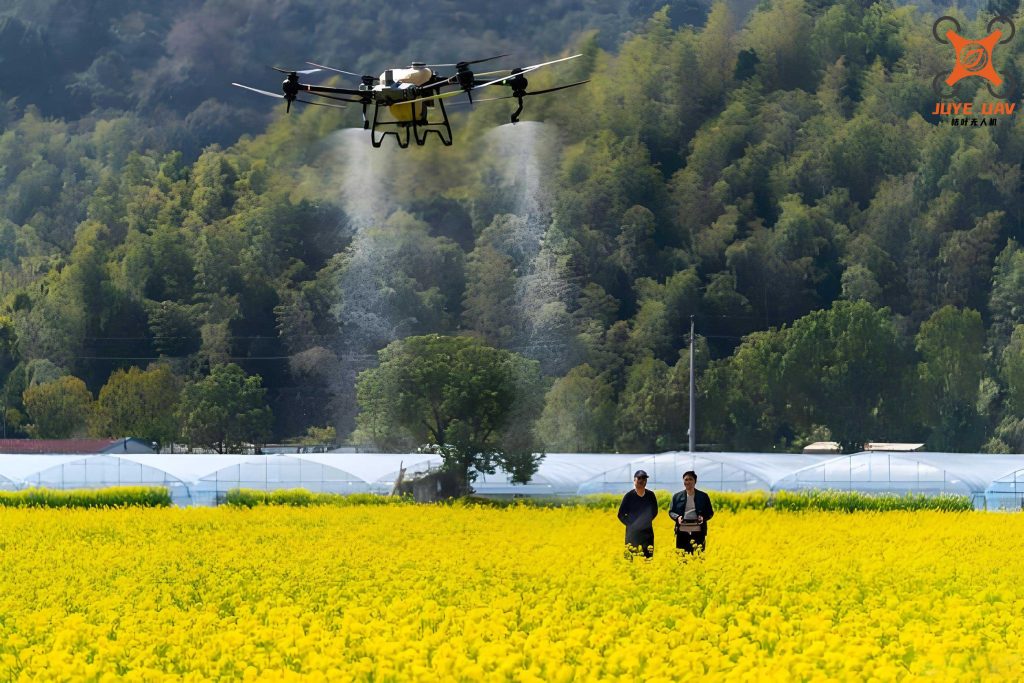
Spray drift is influenced by a complex interplay of internal and external factors. External conditions primarily encompass meteorological variables such as wind speed, temperature, and humidity. Internal factors, which are directly controllable by the operator or machine design, include the droplet spectrum (size distribution), the type and configuration of the spraying system, and the operational parameters of the agricultural UAV itself. Among these, the aerodynamic interaction between the rotor-induced downwash and the sprayed droplets is a unique and dominant feature of multi-rotor UAVs, distinguishing them from ground-based or manned aerial sprayers. This downwash can aid in droplet penetration into the crop canopy but can also exacerbate droplet dispersion and evaporation under certain conditions.
This study focuses on elucidating the effects of key internal technical parameters on the spray performance of a rotary-wing agricultural UAV. While field trials provide real-world validation, they are often confounded by unpredictable environmental variables. Computational Fluid Dynamics (CFD) simulations, though powerful, require extensive validation. Therefore, controlled testing using a specialized spray collection platform offers a reliable and repeatable methodology to isolate and quantify the impact of specific operational parameters. In this work, we employ a comprehensive droplet collection and analysis testbed to systematically evaluate how rotor speed, spray release height, and centrifugal nozzle disc speed influence two critical spray quality metrics: the spatial deposition pattern and the droplet size distribution (DSD). The findings aim to provide a theoretical foundation and empirical data to guide the optimization of spraying protocols for rotary-wing agricultural UAVs, thereby improving target deposition and mitigating drift.
1. Materials and Experimental Methodology
1.1. The Comprehensive Spray Performance Test Platform
The core of the experimental setup is an integrated spray performance test platform designed specifically for evaluating agricultural UAV spray systems under controlled, indoor conditions. The platform’s mechanical structure facilitates precise measurement of droplet deposition distribution and enables the stable operation of auxiliary measurement devices like laser diffraction instruments.
The main structure consists of a rigid host frame measuring 5.0 m in length, 2.4 m in width, and 1.2 m in height. A centrally mounted U-shaped collection trough, spanning the length of the frame, features 100 uniformly spaced collection channels with a 50 mm opening. Each channel is inclined at a 7° angle, ensuring that collected liquid drains by gravity into a corresponding test tube mounted on a rack at the front end of the platform. This design allows for the simultaneous capture of deposition across a wide swath. A motorized gantry system is installed on the host frame, serving as the mounting point for the agricultural UAV. This gantry can be precisely raised or lowered via a chain drive, accurately simulating different operational flight/spray heights above the collection surface.
Post-spray, an ultrasonic liquid-level measurement cart travels along a dedicated rail parallel to the test tube rack. Equipped with photoelectric positioning sensors, the cart stops at each tube to measure the fluid level height non-invasively. After all measurements are recorded, an automated tube rack flipping mechanism empties the tubes, preparing the system for the next experimental run. The entire process—positioning the UAV, activating the spray, measuring deposition, and clearing the tubes—is coordinated by a Programmable Logic Controller (PLC). The PLC communicates with a host computer running a custom control and data acquisition interface developed in LabVIEW, ensuring automated, consistent, and repeatable test procedures. This controlled environment eliminates variables like crosswind and temperature fluctuations, allowing for a focused study on the machine parameters.
1.2. Spraying System and Measurement Apparatus
The spraying unit under test is a commercially available electric hexacopter agricultural UAV (model NJY-1206) with a diagonal motor-to-motor distance of 1.2 m. It is equipped with a 10-liter liquid tank, a diaphragm pump providing a constant pressure of 0.2 MPa, and a PWM-controlled centrifugal spray system. Two PGP-ADG2 type centrifugal nozzles were mounted symmetrically on the UAV airframe, directly below the rotors, with a fixed spacing of 120 cm between them. Centrifugal nozzles were chosen for their ability to produce a relatively uniform droplet spectrum that is primarily governed by the rotational speed of their disc, making them a common choice for UAV-based application.
Droplet Size Distribution (DSD) was measured using a DP-02 laser diffraction particle size analyzer. The instrument was positioned directly beneath the spray plume during dedicated test runs (separate from deposition tests) to ensure optimal optical alignment. Key statistical parameters extracted from the DSD for analysis were:
$$ D_{V10}, D_{V50} (VMD), D_{V90} $$
where $D_{VX}$ represents the droplet diameter below which X% of the total spray volume is contained. The Volume Median Diameter (VMD or $D_{V50}$) is the most commonly cited metric for characterizing spray fineness. The relative span (R.S.), a dimensionless measure of the distribution width, was calculated as:
$$ R.S. = \frac{D_{V90} – D_{V10}}{D_{V50}} $$
A lower R.S. indicates a more monodisperse (uniform) droplet spectrum.
1.3. Experimental Design and Data Analysis
A full-factorial experimental design was implemented to investigate the individual and combined effects of three key operational parameters of the agricultural UAV system:
- Spray Height (H): The vertical distance between the centrifugal nozzles and the top of the collection trough. Two levels were tested: 1 m and 2 m.
- Rotor Speed (N_r): The rotational speed of the UAV’s propellers, which governs the strength of the downwash airflow. Two levels were tested: 3850 rpm (simulating a light load) and 5050 rpm (simulating a full load).
- Centrifugal Nozzle Disc Speed (N_n): The rotational speed of the nozzle disc, which is the primary determinant of droplet size for this nozzle type. Three levels were tested: 9150 rpm, 11100 rpm, and 12000 rpm.
This resulted in a total of $2 \times 2 \times 3 = 12$ unique parameter combinations. Each combination was treated as an experimental group and replicated three times to ensure statistical reliability. All tests were conducted indoors under stable ambient conditions (temperature: 13-21°C, humidity: 18.2-26.5%, wind speed: 0 m/s) using water as the spray medium.
For deposition analysis, the spray was activated for a duration (t) of 5 minutes. The flow rate (q) for each centrifugal nozzle at the operating pressure was calibrated to be 0.31 L/min. Therefore, the total theoretical spray volume (D_theoretical) for the dual-nozzle system was:
$$ D_{theoretical} = 2 \times q \times t = 2 \times 0.31 \, \text{L/min} \times 5 \, \text{min} = 3.1 \, \text{L} $$
The effective deposition volume ($D_e$) was the sum of liquid collected in all 100 tubes. The Effective Deposition Rate (E) and the Coefficient of Variation (CV) across the collection trough were calculated as:
$$ E(\%) = \frac{D_e}{D_{theoretical}} \times 100\% $$
$$ CV(\%) = \frac{SD}{\bar{X}} \times 100\% $$
where $SD$ is the standard deviation and $\bar{X}$ is the mean deposition volume across the sampled positions. A lower CV indicates better uniformity of deposition across the swath.
The collected data for deposition characteristics and droplet size parameters were subjected to multiple regression analysis using statistical software to determine the significance (p-value < 0.05) of the influence of each operational parameter (spray height, rotor speed, nozzle speed) on the measured response variables.
2. Results and Analysis
2.1. Influence of Parameters on Droplet Deposition
The deposition results for all 12 experimental groups are summarized in the table below. The three repetitions for each parameter set showed good consistency, with relatively low standard deviations for effective deposition rate, confirming the reliability of the test platform.
| Group ID* | Theoretical Dep. (ml) | Effective Dep. (ml) Mean ±SD | Effective Rate E (%) Mean ±SD | Coeff. of Variation CV (%) Mean ±SD |
|---|---|---|---|---|
| A11 | 3100 | 1085.2 ± 490.7 | 35.0 ± 15.8 | 41.5 ± 8.0 |
| A12 | 3100 | 1198.3 ± 133.9 | 38.7 ± 4.3 | 38.0 ± 3.3 |
| A13 | 3100 | 1116.2 ± 160.1 | 36.0 ± 5.2 | 41.8 ± 4.3 |
| A21 | 3100 | 983.8 ± 137.6 | 31.7 ± 4.4 | 42.2 ± 4.9 |
| A22 | 3100 | 1435.5 ± 52.5 | 46.3 ± 1.9 | 41.3 ± 1.6 |
| A23 | 3100 | 1237.4 ± 207.1 | 39.9 ± 5.5 | 41.9 ± 1.0 |
| B11 | 3100 | 1253.3 ± 348.4 | 40.4 ± 9.4 | 43.7 ± 6.6 |
| B12 | 3100 | 1043.3 ± 195.9 | 33.7 ± 6.7 | 46.9 ± 2.4 |
| B13 | 3100 | 1271.0 ± 184.2 | 41.0 ± 4.8 | 45.8 ± 3.6 |
| B21 | 3100 | 1172.6 ± 255.9 | 37.8 ± 0.9 | 48.0 ± 1.9 |
| B22 | 3100 | 1207.0 ± 275.5 | 38.9 ± 8.8 | 46.2 ± 3.3 |
| B23 | 3100 | 1201.1 ± 196.6 | 38.75 ± 6.3 | 45.3 ± 3.3 |
*Group ID Key: A/B = Spray Height (1m/2m); First digit 1/2 = Rotor Speed (3850/5050 rpm); Last digit 1/2/3 = Nozzle Speed (9150/11100/12000 rpm).
A critical observation is that the effective deposition rate (E) never exceeded 50%, ranging from a minimum of 31.74% to a maximum of 46.31%. This starkly highlights the significant challenge of spray drift and loss even under controlled, windless conditions when using a typical agricultural UAV setup. The loss is attributed to droplet evaporation, fine-droplet dispersion within the turbulent rotor downwash, and deposition outside the physical bounds of the collection trough.
The spatial deposition pattern for all groups consistently showed a bimodal distribution, with peak deposition volumes occurring directly beneath the two nozzles and a trough at the midpoint between them. The deposition curves generally resembled a second-order polynomial shape. The regression analysis correlating the three parameters to the effective deposition rate yielded the following insights:
| Parameter | Correlation Coefficient with Deposition Rate | P-value (α=0.05) | Significance |
|---|---|---|---|
| Spray Height (H) | 0.455 | 0.014 | Significant |
| Nozzle Speed (N_n) | 0.114 | 0.198 | Not Significant |
| Rotor Speed (N_r) | 0.131 | 0.294 | Not Significant |
The analysis confirms that spray height is the most statistically significant parameter affecting the total amount of spray that deposits within the target area. Increasing the height from 1 m to 2 m generally led to a decrease in effective deposition, as droplets had a longer residence time in the air and were subjected to greater dispersion by the downwash before reaching the collection surface. In contrast, within the tested ranges, variations in nozzle disc speed and rotor speed did not show a statistically significant direct correlation with the total collected volume, although they affected the distribution pattern and droplet spectrum profoundly.
2.2. Influence of Parameters on Droplet Size Spectrum
The droplet size measurements, represented by $D_{V10}$, $D_{V50}$ (VMD), and $D_{V90}$, along with the calculated Relative Span (R.S.), are presented in the following table. The VMD for all tests fell within the range of 125.18 to 155.55 μm, which is generally considered suitable for many agricultural spraying tasks, balancing coverage and drift potential.
| Group ID | $D_{V10}$ (μm) | $D_{V50}$ (VMD, μm) | $D_{V90}$ (μm) | Rel. Span (R.S.) |
|---|---|---|---|---|
| A11 | 89.45 | 132.91 | 205.50 | 0.67 |
| A12 | 78.08 | 132.37 | 189.38 | 0.64 |
| A13 | 79.89 | 133.04 | 193.76 | 0.66 |
| A21 | 80.79 | 137.02 | 197.16 | 0.66 |
| A22 | 81.96 | 136.93 | 200.99 | 0.69 |
| A23 | 74.43 | 125.55 | 183.59 | 0.78 |
| B11 | 81.34 | 135.49 | 191.91 | 0.91 |
| B12 | 78.28 | 133.23 | 189.10 | 0.86 |
| B13 | 76.15 | 131.96 | 187.54 | 0.84 |
| B21 | 73.67 | 129.85 | 187.51 | 0.88 |
| B22 | 73.35 | 125.18 | 176.13 | 0.82 |
| B23 | 72.82 | 126.23 | 180.78 | 0.86 |
The data reveals clear trends. For a constant spray height and rotor speed, increasing the centrifugal nozzle disc speed ($N_n$) consistently reduced the droplet size across all percentiles ($D_{V10}$, $D_{V50}$, $D_{V90}$). This is a fundamental characteristic of rotary atomizers: higher rotational speeds generate greater centrifugal force, shearing the liquid film into finer droplets. Similarly, for a constant spray height and nozzle speed, increasing the rotor speed ($N_r$) also led to a reduction in measured droplet size. This is a critical finding specific to agricultural UAV operations. The intensified downwash associated with higher rotor speeds increases the aerodynamic shear forces acting on the droplets after they are formed, potentially causing secondary atomization or accelerating the evaporation of the smallest droplets, both of which shift the DSD towards smaller diameters.
The regression analysis for droplet size parameters, specifically for $D_{V50}$ (VMD), produced the following results:
| Parameter | Correlation Coefficient with $D_{V50}$ | P-value (α=0.05) | Significance |
|---|---|---|---|
| Spray Height (H) | 0.001 | 0.925 | Not Significant |
| Nozzle Speed (N_n) | 0.391 | 0.008 | Significant |
| Rotor Speed (N_r) | 0.106 | 0.041 | Significant |
This analysis formally confirms the observations: spray height had no statistically significant effect on the final droplet diameter measured at the target plane. Once formed, the droplet’s size is not altered by the distance it falls in still air (neglecting evaporation). However, both the nozzle disc speed (the primary atomization control) and the UAV’s rotor speed (a source of secondary aerodynamic modification) are statistically significant factors determining the final droplet spectrum delivered by the agricultural UAV.
3. Discussion: Implications for Operational Optimization of Agricultural UAVs
The findings of this parametric study have direct implications for the operational protocols and technology development of rotary-wing agricultural UAVs. The stark evidence of high drift loss (over 50% in all tests) underscores the non-trivial challenge of achieving efficient chemical application with these platforms. It moves the discussion beyond simply adopting UAV technology to critically examining how to optimize its use.
The dominant influence of spray height on deposition loss is a key takeaway. While a lower height (1 m) generally improved collection efficiency in this study, it may not always be practical or safe in field conditions with complex canopies or obstacles. Therefore, the selection of flight altitude must be a careful compromise between maximizing deposition, ensuring crop penetration, and maintaining safe aircraft clearance. This parameter should be precisely controlled and potentially adjusted in real-time based on terrain-following technology.
The significant effect of rotor speed (and thus downwash velocity) on droplet size is a unique aspect of agricultural UAV spraying that is often overlooked when selecting nozzles based on ground rig data. An operator choosing a nozzle setting to produce a “Medium” droplet spectrum (e.g., 150-250 μm VMD) for drift reduction might find the effective spectrum at the crop level to be “Fine” (<150 μm) due to the UAV’s own downwash, thereby increasing drift risk. This interaction necessitates the development of integrated nozzle-UAV performance charts. Furthermore, the downwash can aid deposition by pushing droplets into the canopy, but as seen, it also disperses them laterally. Optimizing rotor speed or utilizing variable pitch rotors to manage downwash energy for different canopy types could be a fruitful area for advanced agricultural UAV design.
The strong, direct control exerted by centrifugal nozzle disc speed over droplet size is affirmed. This makes PWM-controlled centrifugal nozzles a powerful tool for an agricultural UAV operator. They allow on-the-fly adjustment of droplet spectrum to match changing environmental conditions (e.g., switching to a larger droplet size when wind speed increases) or different pesticide formulations, all without changing physical components. The ability to dynamically co-optimize nozzle speed and flight parameters (like height and speed) presents a pathway towards truly intelligent, context-aware spraying systems.
A notable observation from the deposition pattern is the consistent trough between the two nozzles. This indicates that for this specific UAV and nozzle spacing (120 cm), the spray swath is not fully coalesced. This has implications for ensuring overlapping swaths during field operation to achieve uniform coverage. The required overlap percentage will be higher than for a system producing a flat deposition profile.
Finally, the high consistency of triplicate tests validates the used spray performance test platform as a reliable tool for benchmarking and comparing different agricultural UAV spray systems. It provides a critical intermediate step between benchtop nozzle testing and expensive, variable field trials.
4. Conclusion and Future Perspectives
This study systematically investigated the effects of key technical operation parameters—spray height, rotor speed, and centrifugal nozzle disc speed—on the spray characteristics of a rotary-wing agricultural UAV. Using a controlled indoor test platform, the following key conclusions were drawn:
- Spray height was identified as the most statistically significant parameter affecting the total effective deposition rate, with higher heights leading to increased droplet dispersion and lower collection efficiency within the target area.
- Both centrifugal nozzle disc speed and UAV rotor speed had a statistically significant influence on the resulting droplet size spectrum ($D_{V50}$). Higher speeds for either parameter produced finer droplets. Notably, the rotor-induced downwash was shown to be a secondary atomization or modification force, an effect unique to agricultural UAV applications.
- Under the tested, windless conditions, the effective deposition rate was alarmingly low (below 50% in all cases), highlighting the inherent challenge of drift and loss for UAV spraying and emphasizing the need for optimized parameters and perhaps adjuvant use.
- The deposition pattern exhibited a consistent bimodal distribution, indicating that nozzle spacing and swath overlap require careful consideration for field operations.
The results provide a concrete data-driven foundation for optimizing the operation of agricultural UAVs. To reduce drift, operators should use the lowest practical flight height, select a nozzle disc speed that produces the coarsest acceptable droplet spectrum for the target pest and product, and be aware that higher rotor speeds (e.g., during laden flight or ascent) will further reduce droplet size.
Future research should build upon this work by integrating environmental variables. The logical next step is to conduct similar parametric studies within a wind tunnel to quantify the interactive effects of operational parameters with crosswinds. Furthermore, developing a movable flight platform or test rig that allows for forward speed simulation would bridge the gap between static tests and dynamic field operations, enabling the study of parameters like forward speed and turning maneuvers on spray quality. Finally, translating these findings into AI-driven recommendation systems or real-time control algorithms for agricultural UAVs could pave the way for a new generation of adaptive, precision spray applications that maximize efficacy while safeguarding the environment.