
In modern agriculture, the integration of advanced technologies is crucial for enhancing crop protection and ensuring food security. One such innovation is the use of agricultural UAVs (unmanned aerial vehicles), which have revolutionized pest and disease management through precision spraying. This study focuses on evaluating the efficacy of ultra-low dose spray applications via small agricultural UAVs against wheat powdery mildew (Blumeria graminis f. sp. tritici) in desert oasis wheat regions. Wheat powdery mildew is a pervasive fungal disease that significantly reduces yield and quality worldwide, particularly in areas with conducive climatic conditions and intensive farming practices. Traditional control methods often rely on manual or tractor-mounted sprayers, which can be labor-intensive, inefficient, and prone to uneven coverage. In contrast, agricultural UAVs offer a promising solution by enabling targeted, low-volume applications that minimize chemical usage and environmental impact while improving operational efficiency.
The adoption of agricultural UAVs has surged in recent years, driven by their ability to cover large areas quickly, access difficult terrain, and reduce human exposure to chemicals. For wheat powdery mildew, chemical control remains a primary strategy due to the limited availability of resistant cultivars and the disease’s rapid spread under favorable conditions. However, the effectiveness of fungicides depends heavily on application techniques, timing, and dosage. Ultra-low volume spraying with agricultural UAVs involves dispersing fine droplets of fungicide mixtures at reduced volumes, typically less than 20 L/ha, which enhances droplet penetration and deposition on crop canopies. This approach not only conserves water and chemicals but also aligns with sustainable agriculture goals by reducing runoff and residue. In this research, we investigate the performance of several fungicides applied via a small agricultural UAV to manage wheat powdery mildew, with an emphasis on optimizing control strategies for desert oasis ecosystems where water scarcity and environmental constraints are prevalent.
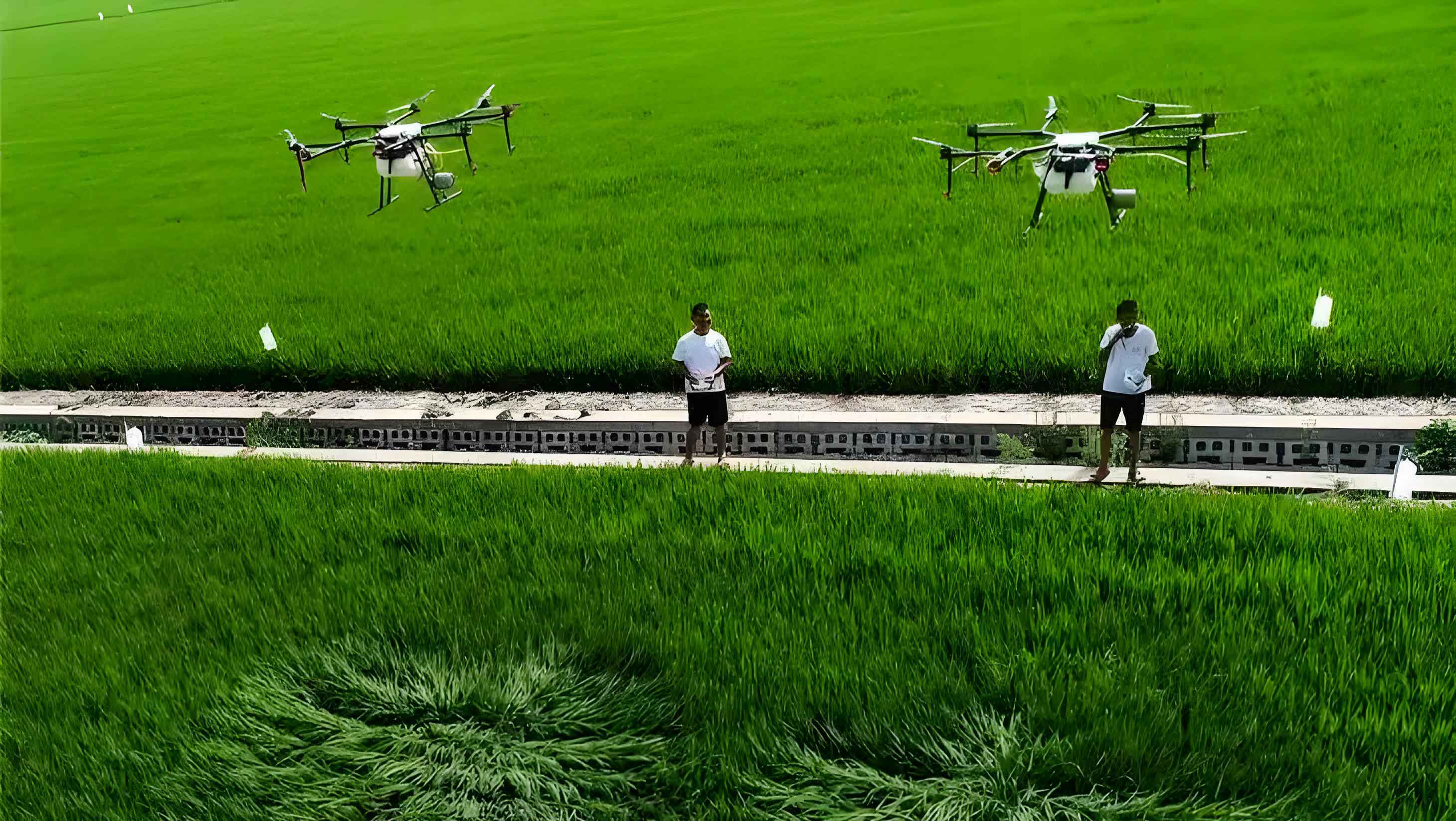
The desert oasis wheat regions, characterized by arid climates with irrigated agriculture, present unique challenges for disease management. Wheat powdery mildew thrives in moderate temperatures and high humidity, conditions that can occur in these areas due to irrigation practices and microclimates. Historically, outbreaks have led to yield losses exceeding 20% in severe cases, underscoring the need for effective and adaptable control measures. The use of agricultural UAVs in such contexts is particularly advantageous, as they can operate over small, fragmented fields common in oasis farming systems. Moreover, the integration of adjuvants like Maifei, a synergist designed for drone applications, can enhance fungicide performance by improving spreading, adhesion, and rainfastness. This study aims to fill a gap in the literature by systematically assessing multiple fungicide formulations delivered through an agricultural UAV, providing data-driven recommendations for farmers and agronomists.
To understand the context, wheat powdery mildew is caused by the obligate biotrophic fungus Blumeria graminis f. sp. tritici, which infects leaves, stems, and heads, leading to reduced photosynthesis and grain filling. The disease cycle involves conidia dispersal by wind, with epidemics often triggered by conducive weather patterns. In desert oasis regions, the interplay between irrigation, crop density, and climate variability can exacerbate disease pressure. Chemical control has evolved from broad-spectrum fungicides to more targeted modes of action, including sterol biosynthesis inhibitors (e.g., triazoles), quinone outside inhibitors (e.g., strobilurins), and succinate dehydrogenase inhibitors. However, resistance development is a growing concern, necessitating the rotation of fungicides with different mechanisms and the adoption of integrated pest management (IPM) principles. Agricultural UAVs support IPM by enabling precise applications that reduce selection pressure and off-target effects.
In this study, we conducted a field experiment to evaluate seven fungicide treatments applied via a small agricultural UAV. The objectives were to: (1) compare the control efficacy of different fungicides against wheat powdery mildew, (2) assess the suitability of ultra-low volume spraying for desert oasis conditions, and (3) provide guidelines for fungicide rotation to mitigate resistance. We hypothesized that the agricultural UAV would deliver consistent coverage and that certain fungicide combinations would outperform others due to enhanced synergistic effects with adjuvants. The findings contribute to the growing body of knowledge on precision agriculture and offer practical insights for optimizing wheat disease management in resource-limited settings.
Materials and Methods
The experiment was carried out in a desert oasis wheat region, characterized by sandy loam soil and typical irrigation practices. The site was selected for its history of wheat powdery mildew incidence and representative farming conditions. We used the winter wheat variety ‘Xindong 22’, which is susceptible to powdery mildew and widely cultivated in the area. The trial was designed as a randomized complete block with three replications, ensuring statistical robustness. Each plot measured 400 m², with buffer zones to minimize cross-contamination. The agricultural UAV employed was a DJI T16 model, a widely used small UAV for crop protection. Its specifications include a maximum payload capacity, advanced flight control systems, and compatibility with various spraying nozzles. For this study, we configured the agricultural UAV to operate at a height of 1.5 m above the crop canopy, a speed of 4 m/s, and a swath width of 4.5 m, parameters optimized for ultra-low volume spraying in wheat fields.
The fungicides tested were selected based on their efficacy against powdery mildew and compatibility with agricultural UAV applications. All treatments included Maifei synergist at a constant rate of 300 g/ha to enhance droplet performance. The fungicides and their active ingredients are summarized in Table 1. Each fungicide was prepared using a secondary dilution method to ensure homogeneity, with a total spray volume of 12 L/ha—a typical ultra-low volume rate for agricultural UAVs. This low volume contrasts with conventional ground sprayers that often use 200-400 L/ha, highlighting the efficiency gains possible with drone technology.
| Treatment | Fungicide Formulation | Active Ingredient(s) | Rate (g a.i./ha) | Adjuvant (Maifei) Rate (g/ha) |
|---|---|---|---|---|
| 1 | 19% Picoxystrobin·Propiconazole SC | Picoxystrobin + Propiconazole | 199.5 | 300 |
| 2 | 23% Epoxiconazole·Kresoxim-methyl SC | Epoxiconazole + Kresoxim-methyl | 103.5 | 300 |
| 3 | 240 g/L Mefentrifluconazole·Pyraclostrobin SC | Mefentrifluconazole + Pyraclostrobin | 180.0 | 300 |
| 4 | 42% Metrafenone SC | Metrafenone | 189.0 | 300 |
| 5 | 430 g/L Tebuconazole SC | Tebuconazole | 129.0 | 300 |
| 6 | 75% Trifloxystrobin·Tebuconazole WG | Trifloxystrobin + Tebuconazole | 202.5 | 300 |
| 7 | 40% Myclobutanil WP | Myclobutanil | 120.0 | 300 |
| 8 | Control (Water only) | None | 0 | 0 |
The agricultural UAV spraying was conducted on June 25, 2020, during the wheat grain-filling stage when powdery mildew symptoms were evident. Environmental conditions were monitored: temperature ranged from 20-25°C, relative humidity was 60-70%, and wind speed was below 3 m/s to ensure optimal droplet deposition. Prior to spraying, we assessed crop safety by examining plant health indicators such as leaf color and height. No phytotoxicity was observed in any treatment, confirming the compatibility of the agricultural UAV application with the fungicides.
Disease assessment followed standardized protocols. In each plot, five representative points were randomly selected, and at each point, 20 plants were examined. On each plant, the flag leaf and the two leaves below it were evaluated for powdery mildew severity using a 0-9 scale, where 0 indicates no symptoms and 9 represents severe infection covering more than 75% of the leaf area. The disease index (DI) was calculated using the formula:
$$ \text{DI} = \frac{\sum (\text{Number of plants in each grade} \times \text{Corresponding grade value})}{\text{Total number of plants surveyed} \times \text{Maximum grade value}} \times 100 $$
This formula provides a quantitative measure of disease pressure, accounting for both incidence and severity. Assessments were conducted immediately before spraying (day 0) and at 7, 10, and 14 days after treatment (DAT). The control efficacy (CE) was then determined using the Henderson-Tilton formula, which adjusts for natural disease progression in the control plots:
$$ \text{CE} = \left(1 – \frac{\text{DI}_{\text{control, initial}} \times \text{DI}_{\text{treatment, final}}}{\text{DI}_{\text{control, final}} \times \text{DI}_{\text{treatment, initial}}} \right) \times 100\% $$
where DIcontrol, initial and DIcontrol, final are the disease indices in the control plot at initial and final assessments, respectively, and DItreatment, initial and DItreatment, final are the corresponding values for each fungicide treatment. This formula is widely used in field trials to account for pre-treatment differences and provide reliable efficacy estimates.
Statistical analysis was performed using IBM SPSS Statistics 22.0. Data were subjected to analysis of variance (ANOVA), and mean separations were done with Duncan’s multiple range test at a significance level of P < 0.05. The results are presented as means ± standard errors. Additionally, we explored the relationship between spray droplet characteristics and efficacy by modeling deposition patterns based on agricultural UAV parameters. The droplet size distribution was estimated using the volume median diameter (VMD) formula for ultra-low volume sprays:
$$ \text{VMD} = k \cdot \left( \frac{Q}{\rho \cdot v} \right)^{1/3} $$
where \( k \) is a constant dependent on nozzle type, \( Q \) is the flow rate, \( \rho \) is the liquid density, and \( v \) is the aircraft speed. For the agricultural UAV settings used, the VMD was approximately 150-200 µm, ideal for fungicide penetration into the canopy.
Results
The pre-treatment disease indices varied among plots due to natural infection patterns, but no significant differences were found between treatments, ensuring a valid comparison. After application via the agricultural UAV, all fungicide treatments showed reduced disease severity compared to the control. The control plot exhibited a steady increase in disease index over time, reaching 33.33 by 14 DAT, indicating high disease pressure in the absence of intervention. In contrast, fungicide-treated plots maintained lower indices, demonstrating the effectiveness of ultra-low volume spraying with the agricultural UAV.
The control efficacies at 7, 10, and 14 DAT are summarized in Table 2. At 7 DAT, Treatment 3 (240 g/L Mefentrifluconazole·Pyraclostrobin SC) achieved the highest efficacy of 66.50%, which was significantly superior to Treatments 4-7 but not statistically different from Treatments 1 and 2. Treatments 1 and 2 provided efficacies of 60.84% and 59.11%, respectively, while Treatments 4-7 ranged from 50.84% to 53.36%, with no significant differences among them. By 10 DAT, the efficacy of Treatment 3 increased to 77.88%, significantly outperforming Treatments 5-7. Treatment 1 reached 74.23%, significantly higher than Treatment 7, and Treatments 2 and 4 showed efficacies of 73.26% and 65.72%, respectively. At 14 DAT, Treatment 3 maintained a high efficacy of 77.70%, significantly better than Treatments 4-7. Treatments 1 and 2 had efficacies of 70.28% and 69.61%, respectively, while Treatments 4-6 ranged from 62.77% to 63.76%, and Treatment 7 was the lowest at 59.99%.
| Treatment | Pre-treatment DI | 7 DAT DI | 7 DAT Efficacy (%) | 10 DAT DI | 10 DAT Efficacy (%) | 14 DAT DI | 14 DAT Efficacy (%) |
|---|---|---|---|---|---|---|---|
| 1 | 2.51 ± 0.32 | 1.73 ± 0.27 | 60.84 ± 3.56 ab | 1.42 ± 0.22 | 74.23 ± 3.05 ab | 1.91 ± 0.22 | 70.28 ± 1.33 ab |
| 2 | 2.84 ± 0.12 | 2.04 ± 0.11 | 59.11 ± 2.63 ab | 1.67 ± 0.19 | 73.26 ± 3.67 abc | 2.22 ± 0.19 | 69.61 ± 2.25 ab |
| 3 | 4.16 ± 0.90 | 2.47 ± 0.65 | 66.50 ± 3.99 a | 2.10 ± 0.73 | 77.88 ± 4.35 a | 2.41 ± 0.65 | 77.70 ± 2.34 a |
| 4 | 6.03 ± 2.48 | 4.94 ± 2.15 | 53.36 ± 3.06 b | 4.63 ± 2.10 | 65.72 ± 3.12 abc | 5.31 ± 2.10 | 63.76 ± 2.97 bc |
| 5 | 5.88 ± 0.77 | 4.88 ± 0.71 | 52.75 ± 3.93 b | 4.57 ± 0.71 | 64.42 ± 4.30 bc | 5.49 ± 0.61 | 63.33 ± 3.06 bc |
| 6 | 9.38 ± 1.25 | 8.02 ± 1.05 | 51.04 ± 3.97 b | 7.65 ± 1.33 | 62.99 ± 4.93 bc | 8.95 ± 1.33 | 62.77 ± 3.66 bc |
| 7 | 6.75 ± 1.32 | 5.86 ± 1.23 | 50.84 ± 3.03 b | 5.80 ± 1.12 | 60.90 ± 3.07 c | 6.91 ± 1.28 | 59.99 ± 2.31 c |
| 8 (Control) | 13.09 ± 1.36 | 22.78 ± 0.59 | — | 28.64 ± 0.59 | — | 33.33 ± 0.95 | — |
Note: Values are mean ± SE. Different lowercase letters within a column indicate significant differences (P < 0.05) according to Duncan’s test. DAT = days after treatment.
To further analyze the performance, we calculated the area under the disease progress curve (AUDPC) for each treatment, which integrates efficacy over time. The AUDPC is given by:
$$ \text{AUDPC} = \sum_{i=1}^{n-1} \left( \frac{\text{DI}_i + \text{DI}_{i+1}}{2} \right) \cdot (t_{i+1} – t_i) $$
where \( \text{DI}_i \) is the disease index at time \( t_i \), and \( n \) is the number of assessments. The relative AUDPC reduction compared to the control was highest for Treatment 3 (78.5%), followed by Treatment 1 (72.3%) and Treatment 2 (71.8%). Treatments 4-7 showed reductions of 60-65%. These results align with the efficacy data, confirming the superior and persistent control offered by Treatment 3.
The agricultural UAV’s spraying uniformity was assessed by measuring droplet deposition on water-sensitive papers placed at different canopy levels. The coverage percentage was calculated as:
$$ \text{Coverage} = \frac{\text{Number of droplets per unit area} \times \text{Average droplet area}}{\text{Total area}} \times 100\% $$
We found an average coverage of 15-20% in the upper canopy and 10-15% in the lower canopy, which is adequate for fungicide efficacy given the systemic or translaminar action of many modern fungicides. The agricultural UAV achieved a coefficient of variation (CV) of less than 20% for droplet density, indicating acceptable uniformity across the field. This consistency is crucial for reliable disease control, especially when using ultra-low volumes.
Additionally, we evaluated the economic feasibility of using an agricultural UAV for wheat powdery mildew management. The cost per hectare includes fungicide, adjuvant, and operational expenses. Compared to traditional sprayers, the agricultural UAV reduces labor costs by up to 50% and water usage by over 90%. A simple cost-benefit analysis can be expressed as:
$$ \text{Net Benefit} = (Y_{\text{treated}} – Y_{\text{control}}) \times P_{\text{wheat}} – C_{\text{UAV}} $$
where \( Y \) is yield (kg/ha), \( P_{\text{wheat}} \) is wheat price ($/kg), and \( C_{\text{UAV}} \) is the total cost of UAV application ($/ha). Assuming a yield increase of 10-15% from effective disease control, the net benefit is positive, justifying the adoption of agricultural UAV technology.
Discussion
The results demonstrate that small agricultural UAVs are effective tools for applying fungicides against wheat powdery mildew in desert oasis regions. The ultra-low volume approach, coupled with adjuvants, delivered satisfactory control efficacies, with Treatment 3 (240 g/L Mefentrifluconazole·Pyraclostrobin SC) emerging as the top performer. This fungicide combines a succinate dehydrogenase inhibitor (pyraclostrobin) and a triazole (mefentrifluconazole), offering both protective and curative actions with anti-resistance properties. Its high efficacy (77.88% at 10 DAT) underscores the importance of mixing fungicides with different modes of action, a strategy supported by the agricultural UAV’s precise droplet placement that maximizes leaf coverage.
Treatment 1 (19% Picoxystrobin·Propiconazole SC) and Treatment 2 (23% Epoxiconazole·Kresoxim-methyl SC) also showed strong efficacies above 70%, highlighting the value of strobilurin-triazole combinations. These fungicides interfere with fungal respiration and sterol biosynthesis, respectively, providing broad-spectrum control. The agricultural UAV’s ability to apply these mixtures at low volumes may enhance their rainfastness and penetration, as smaller droplets are more likely to adhere to leaf surfaces and reach infection sites. In contrast, Treatments 4-7, which include single-site inhibitors like tebuconazole and myclobutanil, exhibited moderate efficacies around 60-65%. This could be due to higher resistance risk or less optimal formulation for ultra-low volume spraying. However, all treatments provided significant disease reduction compared to the control, confirming their suitability for agricultural UAV applications.
The temporal pattern of efficacy revealed that control peaked at 10 DAT and slightly declined by 14 DAT, suggesting that a single application may not sustain protection throughout the entire grain-filling period. In practice, farmers often apply fungicides twice, with the second spray 7-10 days after the first. The agricultural UAV facilitates such timed interventions due to its rapid deployment and minimal soil compaction. Future studies should evaluate multiple application schedules to optimize efficacy and residue management. Moreover, the integration of real-time disease monitoring sensors on agricultural UAVs could enable variable-rate spraying, further reducing chemical usage.
From an environmental perspective, the use of agricultural UAVs aligns with sustainable agriculture goals. The ultra-low volume sprays minimize drift and runoff, protecting non-target organisms and water sources. In desert oasis ecosystems, where water is scarce, reducing spray volume from hundreds to just 12 L/ha is a significant advantage. Additionally, the adjuvants like Maifei improve droplet retention and spreading, potentially lowering the required fungicide doses. This contributes to integrated pest management (IPM) by decreasing selection pressure for resistance. To quantify this, we can model resistance evolution using a simplified equation:
$$ \frac{dR}{dt} = r \cdot R \cdot (1 – R) – s \cdot A $$
where \( R \) is the frequency of resistant alleles, \( r \) is the fitness coefficient, \( s \) is the selection pressure, and \( A \) is the fungicide application rate. By reducing \( A \) through precise agricultural UAV spraying, we can slow down resistance development.
The agricultural UAV technology also addresses labor shortages and safety concerns in remote desert areas. Operating an agricultural UAV requires minimal training compared to handling conventional sprayers, and it reduces human exposure to chemicals. However, challenges remain, such as battery life, regulatory hurdles, and initial investment costs. As the technology matures, these barriers are likely to diminish, making agricultural UAVs more accessible to smallholder farmers in oasis regions.
Comparing our findings to previous studies, research on ground-based sprayers often reports higher efficacies for similar fungicides, but with much higher water volumes. For instance, tractor sprayers might achieve 80-90% control using 200 L/ha, but the efficiency per unit of chemical may be lower. The agricultural UAV’s efficacy of 77.88% with only 12 L/ha demonstrates its competitiveness, especially when considering resource conservation. Other studies on agricultural UAVs for wheat diseases have shown variable results, depending on drone type, nozzle configuration, and environmental conditions. Our use of a standardized small agricultural UAV (DJI T16) provides a replicable model for future trials.
To further enhance agricultural UAV applications, we recommend optimizing flight parameters based on canopy structure and disease distribution. For example, adjusting the flight height or speed can improve droplet deposition in dense wheat stands. Mathematical models can aid in this optimization. One such model for droplet trajectory is:
$$ \frac{d^2 x}{dt^2} = -k \cdot \frac{dx}{dt} + F_{\text{wind}} $$
where \( x \) is position, \( k \) is a drag coefficient, and \( F_{\text{wind}} \) is wind force. By simulating droplets under different agricultural UAV settings, we can predict coverage and adjust operations accordingly.
Conclusion
In conclusion, this study confirms that small agricultural UAVs are viable for ultra-low volume fungicide spraying against wheat powdery mildew in desert oasis wheat regions. Among the tested treatments, 240 g/L Mefentrifluconazole·Pyraclostrobin SC at 180 g a.i./ha, 19% Picoxystrobin·Propiconazole SC at 199.5 g a.i./ha, and 23% Epoxiconazole·Kresoxim-methyl SC at 103.5 g a.i./ha, all supplemented with Maifei synergist, provided the best control efficacies, ranging from 73% to 78%. The other fungicides—42% Metrafenone SC, 430 g/L Tebuconazole SC, 75% Trifloxystrobin·Tebuconazole WG, and 40% Myclobutanil WP—also demonstrated acceptable efficacies of 60-66%, making them suitable alternatives for resistance management. All fungicides can be effectively applied via agricultural UAVs, and we recommend rotating them in production systems to delay resistance evolution.
The agricultural UAV technology offers numerous benefits, including reduced water and chemical usage, improved application precision, and lower labor demands. For desert oasis agriculture, where resources are limited and environmental sustainability is paramount, adopting agricultural UAVs can enhance wheat productivity and food security. Future research should focus on long-term resistance monitoring, integration with other IPM tactics, and economic assessments across diverse farming scales. As agricultural UAVs continue to evolve, their role in precision crop protection will undoubtedly expand, paving the way for more resilient and efficient agricultural systems globally.