
In recent years, the rapid advancement of precision agriculture has led to the widespread adoption of agricultural drones for tasks such as crop monitoring, spraying, and mapping. These agricultural drones enhance efficiency and reduce labor costs, but their operation relies heavily on remote control devices. As an integral part of agricultural drone systems, the remote controller’s design directly impacts operator comfort, safety, and overall productivity. However, many existing agricultural drone remote controllers prioritize functional implementation over ergonomic considerations, leading to issues like carpal tunnel syndrome, neck strain, and cumulative trauma disorders among operators during prolonged use. This not only affects health but also compromises the efficiency of agricultural operations. Therefore, improving the human-machine ergonomics of agricultural drone remote controllers is crucial for sustainable farming practices. In this study, we propose an integrated approach using the Analytic Hierarchy Process (AHP), Fuzzy Comprehensive Appraisal (FCA), and TRIZ theory to evaluate and optimize the ergonomic design of an agricultural drone remote controller. Our goal is to develop a systematic methodology that balances functionality, comfort, and aesthetics, ultimately enhancing operator experience and performance in agricultural drone applications.
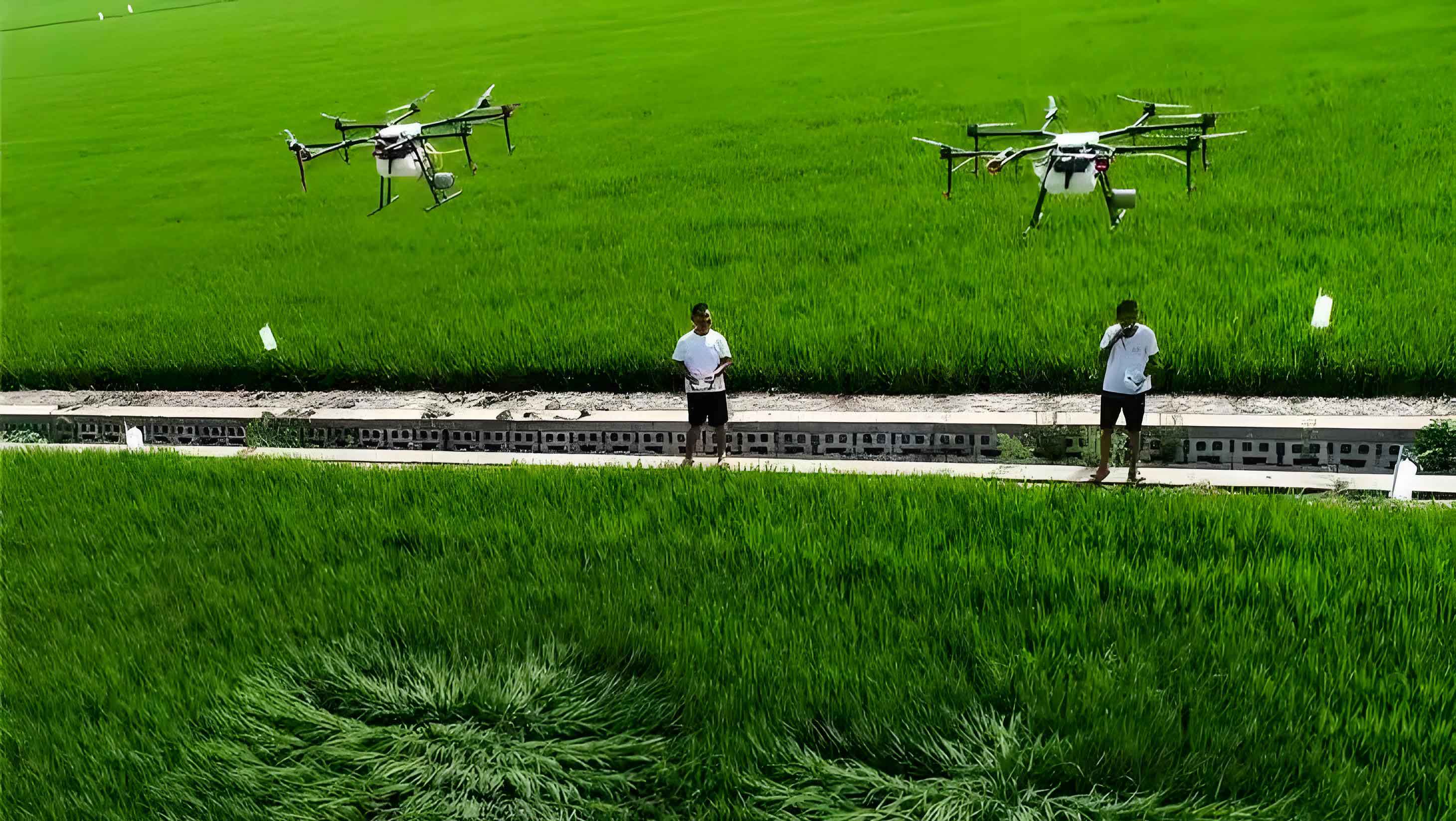
The importance of agricultural drones in modern agriculture cannot be overstated. These devices enable precise application of pesticides, fertilizers, and water, reducing environmental impact and increasing crop yields. However, the human factor in operating agricultural drones is often overlooked. Operators may spend hours controlling agricultural drones via remote devices, and poor ergonomic design can lead to fatigue, errors, and long-term health issues. This highlights the need for a human-centered design approach for agricultural drone remote controllers. Previous studies have applied various evaluation methods to product design, but few have focused specifically on agricultural drone remote controllers. For instance, AHP has been used in subjective evaluations of car seats and green packaging, while FCA has been employed for ergonomic assessments in aircraft cabins. TRIZ theory, on the other hand, has proven effective in solving engineering contradictions in product optimization. By combining these methods, we aim to create a robust framework for evaluating and improving the human-machine ergonomics of agricultural drone remote controllers.
To address this gap, we first establish an evaluation index system based on the characteristics of agricultural drone remote controllers. The system includes three criteria layers: functionality realization, comfort, and appearance, which are further divided into nine indicator layers such as joystick, buttons, screen, grip, operation, materials,造型, color, and texture. We then use AHP to determine the weights of these indicators, ensuring a objective prioritization of ergonomic factors. Following this, FCA is applied to assess the human-machine ergonomics of an under-design agricultural drone remote controller, involving expert and operator surveys to assign scores. Based on the evaluation results, we identify areas for improvement and employ TRIZ theory to resolve design contradictions, leading to optimized solutions. Finally, we re-evaluate the optimized agricultural drone remote controller to validate the effectiveness of our approach. This integrated method not only enhances the ergonomics of agricultural drone remote controllers but also provides a reference for other human-centered product designs.
In the following sections, we delve into the theoretical foundations of AHP, FCA, and TRIZ, detailing their application in our study. We then present a comprehensive case study involving an agricultural drone remote controller, including the evaluation process, optimization steps, and results. Throughout the discussion, we emphasize the relevance of agricultural drones in agriculture and the critical role of ergonomic design in their operation. By the end of this article, we aim to demonstrate how our AHP/FCA/TRIZ-based framework can significantly improve the human-machine interaction of agricultural drone remote controllers, contributing to safer and more efficient agricultural practices.
Literature Review on Ergonomic Evaluation and Optimization Methods
The evaluation and optimization of product ergonomics have been extensively studied in various fields, including automotive, aerospace, and consumer electronics. For agricultural drones, however, research has primarily focused on technological aspects like flight stability, battery life, and spray efficiency, with limited attention to the ergonomics of control devices. Agricultural drones are becoming ubiquitous in farming, but their remote controllers often lack human-centered design, leading to operator discomfort and reduced productivity. This section reviews relevant methods that can be adapted for agricultural drone remote controllers, specifically AHP, FCA, and TRIZ theory.
The Analytic Hierarchy Process (AHP) is a multi-criteria decision-making tool that breaks down complex problems into a hierarchy of criteria and alternatives. It has been widely used in ergonomic evaluations due to its ability to handle subjective judgments systematically. For example, in car seat comfort assessments, AHP helps prioritize factors like support, adjustability, and materials. Similarly, for agricultural drone remote controllers, AHP can quantify the importance of various ergonomic indicators, such as joystick sensitivity and grip comfort. The process involves pairwise comparisons of criteria to derive权重 weights, which are then used to calculate overall scores. This method reduces bias by incorporating consistency checks, making it suitable for evaluating agricultural drone remote controllers where multiple factors interact.
Fuzzy Comprehensive Appraisal (FCA) complements AHP by addressing the inherent vagueness in human judgments. Ergonomic assessments often involve qualitative terms like “comfortable” or “easy to use,” which can be ambiguous. FCA uses fuzzy set theory to convert these linguistic variables into numerical scores, allowing for a more accurate evaluation. In studies on aircraft cabin seats, FCA has been applied to rate ergonomic factors based on expert opinions, with results validated through user testing. For agricultural drone remote controllers, FCA can model the uncertainty in operator feedback, especially when assessing comfort and appearance. By defining membership functions for evaluation grades (e.g., good, fair, poor), FCA generates a comprehensive score that reflects the overall human-machine ergonomics of agricultural drone remote controllers.
TRIZ theory, short for Theory of Inventive Problem Solving, offers a systematic approach to innovation by resolving technical contradictions. It provides a set of principles derived from patterns in patent databases, enabling designers to overcome conflicts without compromise. In product optimization, TRIZ has been used to improve safety features in fire rescue equipment and public handrails. For agricultural drone remote controllers, TRIZ can address contradictions such as balancing joystick accuracy with finger comfort. By mapping specific problems to generic parameters and using contradiction matrices, TRIZ suggests inventive principles that lead to optimized designs. This is particularly relevant for agricultural drones, where ergonomic improvements must not compromise functionality or reliability.
Integrating AHP, FCA, and TRIZ provides a holistic framework for ergonomic evaluation and optimization. Previous research has combined these methods in other domains, such as rose bud harvesting machine design, where AHP and Quality Function Deployment (QFD) were used with TRIZ to enhance efficiency. For agricultural drone remote controllers, this integration allows us to first evaluate ergonomics quantitatively, then identify and resolve design flaws creatively. Our study builds on this by tailoring the framework to the unique requirements of agricultural drone operation, emphasizing factors like prolonged use and environmental conditions. By doing so, we contribute to the growing body of knowledge on human-centered design for agricultural technologies.
Methodology: Integrated AHP/FCA/TRIZ Framework
Our methodology for evaluating and optimizing the human-machine ergonomics of agricultural drone remote controllers involves three main steps: (1) constructing an evaluation index system and determining weights using AHP, (2) assessing ergonomics through FCA, and (3) applying TRIZ for optimization. This integrated approach ensures a systematic and data-driven process, tailored to the specific needs of agricultural drone operations. Below, we detail each component with formulas and examples relevant to agricultural drone remote controllers.
Step 1: AHP for Weight Determination
We first define the evaluation index system for agricultural drone remote controllers, as shown in Table 1. The target layer is human-machine ergonomics, which is decomposed into three criteria layers: functionality realization (X1), comfort (X2), and appearance (X3). Each criterion is further divided into indicator layers: for X1, these include joystick (X11), buttons (X12), and screen (X13); for X2, grip (X21), operation (X22), and materials (X23); for X3,造型 (X31), color (X32), and texture (X33). This hierarchy captures the multifaceted nature of ergonomics in agricultural drone remote controllers.
| Target Layer | Criteria Layer | Indicator Layer |
|---|---|---|
| Human-Machine Ergonomics of Agricultural Drone Remote Control | Functionality Realization (X1) | Joystick (X11) |
| Buttons (X12) | ||
| Screen (X13) | ||
| Comfort (X2) | Grip (X21) | |
| Operation (X22) | ||
| Materials (X23) | ||
| Appearance (X3) | 造型 (X31) | |
| Color (X32) | ||
| Texture (X33) |
Next, we use AHP to calculate the weights of each layer. For the criteria layer, we construct a pairwise comparison matrix X based on expert judgments. The elements xij represent the relative importance of criterion i over criterion j, using a nine-point scale (e.g., 1 for equal importance, 9 for extreme importance). The matrix is given by:
$$
X = \begin{bmatrix}
1 & x_{12} & x_{13} \\
x_{21} & 1 & x_{23} \\
x_{31} & x_{32} & 1
\end{bmatrix}
$$
For agricultural drone remote controllers, we assume X1 (functionality) is moderately more important than X2 (comfort) and strongly more important than X3 (appearance), based on operator feedback. After populating the matrix, we normalize it by dividing each element by the column sum:
$$
\overline{x}_{ij} = \frac{x_{ij}}{\sum_{i=1}^{n} x_{ij}}
$$
Then, we compute the weight vector w by averaging the rows of the normalized matrix:
$$
w_i = \frac{\sum_{j=1}^{n} \overline{x}_{ij}}{n}
$$
where n is the number of criteria (n=3). The weight vector w = [w1, w2, w3]T represents the relative importance of functionality, comfort, and appearance for agricultural drone remote controllers. To ensure consistency, we calculate the maximum eigenvalue λmax and the consistency ratio CR:
$$
\lambda_{\text{max}} = \frac{1}{n} \sum_{i=1}^{n} \frac{(Xw)_i}{w_i}
$$
$$
CI = \frac{\lambda_{\text{max}} – n}{n – 1}, \quad CR = \frac{CI}{RI}
$$
where RI is the random index from standard tables. If CR < 0.1, the matrix is consistent. We repeat this process for the indicator layers under each criterion, resulting in comprehensive weights for all nine indicators. These weights reflect the priority areas for ergonomic improvement in agricultural drone remote controllers.
Step 2: FCA for Ergonomic Evaluation
With the weights established, we proceed to evaluate the human-machine ergonomics of an agricultural drone remote controller using FCA. We define four evaluation grades: good, fair, average, and poor, assigned scores of 8, 6, 4, and 2, respectively. Experts and operators (e.g., 10 ergonomics experts and 30 agricultural drone pilots) rate each indicator based on these grades. The membership function Rij for an indicator i to grade j is calculated as:
$$
R_{ij} = \frac{\text{Number of ratings for grade j}}{\text{Total number of raters}}
$$
This yields a fuzzy evaluation matrix for each criterion. For example, for functionality realization (X1), the matrix R1 is:
$$
R_1 = \begin{bmatrix}
R_{11} & R_{12} & R_{13} & R_{14} \\
R_{21} & R_{22} & R_{23} & R_{24} \\
R_{31} & R_{32} & R_{33} & R_{34}
\end{bmatrix}
$$
where rows correspond to joystick, buttons, and screen, and columns to the four grades. We then synthesize the weights and evaluation matrices using the fuzzy operator:
$$
B_k = w_k \circ R_k
$$
for each criterion k, where ○ denotes the bounded sum-product operation. The overall evaluation vector B is obtained by aggregating the criteria results:
$$
B = w \circ [B_1, B_2, B_3]^T
$$
After normalization, B = (b1, b2, b3, b4) represents the proportion of ratings in each grade. The final ergonomic score Z for the agricultural drone remote controller is:
$$
Z = b_1 \times 8 + b_2 \times 6 + b_3 \times 4 + b_4 \times 2
$$
This score quantifies the human-machine ergonomics, with higher values indicating better design. For agricultural drone remote controllers, a score above 6 might be considered good, but this threshold can be adjusted based on industry standards.
Step 3: TRIZ for Optimization
Based on the FCA results, we identify indicators with low scores and high weights as optimization priorities. TRIZ theory is then applied to resolve contradictions in these areas. The process involves: (1) defining the specific problem (e.g., joystick accuracy vs. finger comfort), (2) mapping it to TRIZ’s 39 generic parameters, (3) using the contradiction matrix to find recommended inventive principles, and (4) applying these principles to generate solutions. For agricultural drone remote controllers, we focus on improving the joystick, as it often has the highest weight in functionality. The contradiction between accuracy (parameter 27: reliability) and comfort (parameter 31: harmful factors) leads to principles like composite materials (principle 40). By implementing a silicone-coated metal joystick, we enhance comfort without compromising accuracy, thus optimizing the agricultural drone remote controller’s ergonomics.
This integrated AHP/FCA/TRIZ framework provides a structured path from evaluation to optimization, ensuring that agricultural drone remote controllers meet both functional and human-centric needs. In the next section, we apply this framework to a concrete case study.
Case Study: Evaluation and Optimization of an Agricultural Drone Remote Controller
To demonstrate our methodology, we consider an under-design agricultural drone remote controller, as shown in the initial plan. This device is intended for controlling agricultural drones during spraying missions, requiring precise operation over extended periods. We assemble a panel of 10 human factors experts and 30 experienced agricultural drone pilots to participate in the evaluation. Their insights are crucial, as they represent the end-users of agricultural drone remote controllers. The goal is to assess the current design’s ergonomics and optimize it using our AHP/FCA/TRIZ approach.
AHP Weight Calculation for Agricultural Drone Remote Controller
We first construct the pairwise comparison matrices for the criteria and indicators. Based on expert input, functionality realization (X1) is deemed more important than comfort (X2) and appearance (X3) for agricultural drone remote controllers, as functionality directly impacts operational efficiency. The criteria layer matrix X is:
$$
X = \begin{bmatrix}
1 & 3 & 5 \\
1/3 & 1 & 3 \\
1/5 & 1/3 & 1
\end{bmatrix}
$$
Using the normalization process, we compute the weight vector w = [0.6370, 0.2583, 0.1047]T. The consistency check yields λmax = 3.0385 and CR = 0.0370 < 0.1, indicating acceptable consistency. For the indicator layers, we similarly derive weights, as summarized in Table 2. The joystick (X11) has the highest comprehensive weight of 0.4264, highlighting its critical role in agricultural drone remote controller ergonomics.
| Criteria Layer | Weight | Indicator Layer | Indicator Weight | Comprehensive Weight |
|---|---|---|---|---|
| Functionality Realization (X1) | 0.6370 | Joystick (X11) | 0.6694 | 0.4264 |
| Buttons (X12) | 0.2426 | 0.1545 | ||
| Screen (X13) | 0.0879 | 0.0560 | ||
| Comfort (X2) | 0.2583 | Grip (X21) | 0.2654 | 0.0686 |
| Operation (X22) | 0.6716 | 0.1735 | ||
| Materials (X23) | 0.0629 | 0.0162 | ||
| Appearance (X3) | 0.1047 | 造型 (X31) | 0.6370 | 0.0667 |
| Color (X32) | 0.1047 | 0.0110 | ||
| Texture (X33) | 0.2583 | 0.0270 |
FCA Evaluation of Initial Design
The experts and pilots rate each indicator on the four-grade scale. The aggregated membership matrices are:
$$
R_1 = \begin{bmatrix}
0.22 & 0.18 & 0.36 & 0.24 \\
0.16 & 0.14 & 0.28 & 0.42 \\
0.34 & 0.28 & 0.16 & 0.22
\end{bmatrix}, \quad
R_2 = \begin{bmatrix}
0.52 & 0.18 & 0.16 & 0.14 \\
0.28 & 0.34 & 0.18 & 0.20 \\
0.42 & 0.14 & 0.22 & 0.22
\end{bmatrix}, \quad
R_3 = \begin{bmatrix}
0.18 & 0.14 & 0.36 & 0.32 \\
0.08 & 0.22 & 0.28 & 0.42 \\
0.46 & 0.24 & 0.18 & 0.12
\end{bmatrix}
$$
Using the weights, we compute the fuzzy evaluation vectors:
$$
B_1 = w_1 \circ R_1 = (0.2160, 0.1791, 0.3229, 0.2829)
$$
$$
B_2 = (0.3525, 0.2849, 0.1772, 0.1853), \quad B_3 = (0.2419, 0.1742, 0.3051, 0.2788)
$$
The overall vector B is:
$$
B = w \circ [B_1, B_2, B_3]^T = (0.2543, 0.2059, 0.2835, 0.2566)
$$
Thus, the ergonomic score Z for the initial agricultural drone remote controller is:
$$
Z = 0.2543 \times 8 + 0.2059 \times 6 + 0.2835 \times 4 + 0.2566 \times 2 = 4.92
$$
This score falls in the “average” range (close to 4), indicating that the design has moderate ergonomic issues. The low score is primarily due to the joystick, which has a high weight but received poor ratings for comfort. This underscores the need for optimization in agricultural drone remote controllers to enhance operator experience.
TRIZ-Based Optimization for Agricultural Drone Remote Controller
Given the joystick’s high impact, we focus on optimizing it using TRIZ. The contradiction is between joystick accuracy (reliability) and finger comfort (harmful factors). According to the TRIZ contradiction matrix, this pair suggests inventive principles 35 (parameter changes), 2 (extraction), 40 (composite materials), and 26 (copying). We select principle 40 (composite materials) as it allows for combining different materials to achieve both goals. For the agricultural drone remote controller, we propose a joystick with a metal core for stability and accuracy, coated with silicone at the top and sides for enhanced grip and comfort. The silicone surface includes textured patterns to prevent slipping, which is crucial during prolonged agricultural drone operations. This design maintains the precision required for controlling agricultural drones while reducing finger strain.
We implement this optimization and reassess the agricultural drone remote controller using the same FCA process. The joystick’s rating improves from 4.76 to 6.56, and the overall ergonomic score rises to Z = 5.68, nearing the “fair” grade. This significant improvement demonstrates the effectiveness of our AHP/FCA/TRIZ framework for agricultural drone remote controllers. The optimized design better supports operators in managing agricultural drones, potentially increasing productivity and reducing health risks.
Discussion of Results and Implications
The results from our case study highlight the value of integrating AHP, FCA, and TRIZ for ergonomic evaluation and optimization of agricultural drone remote controllers. The initial score of 4.92 revealed deficiencies in the design, particularly in the joystick, which aligns with common complaints from agricultural drone operators. By applying TRIZ, we addressed the core contradiction without compromising functionality, leading to a score increase to 5.68. This improvement not only enhances comfort but also may boost the efficiency and safety of agricultural drone operations. For instance, a more comfortable joystick can reduce operator fatigue, allowing for longer and more accurate spraying sessions with agricultural drones.
Our methodology offers several advantages for agricultural drone remote controller design. First, AHP provides a structured way to prioritize ergonomic factors, ensuring that resources are focused on high-impact areas. In agricultural drone contexts, functionality often takes precedence, but our weights show that comfort is also significant (25.83% weight). Second, FCA handles the subjectivity inherent in ergonomic assessments, converting qualitative feedback into quantifiable scores. This is especially useful for agricultural drone remote controllers, where operator opinions vary based on experience and conditions. Third, TRIZ enables creative problem-solving, moving beyond incremental improvements to innovative solutions. The composite material joystick is a testament to this, offering a balance crucial for agricultural drone control.
However, there are limitations to consider. The evaluation relies on expert and operator judgments, which can be subjective and influenced by individual biases. For agricultural drone remote controllers, factors like environmental conditions (e.g., heat, humidity) might affect comfort ratings, but our study did not account for these variables. Future research could incorporate real-world testing in agricultural settings to validate the results. Additionally, our sample size of 40 raters, while reasonable, may not represent all agricultural drone user demographics. Expanding the participant pool could improve the generalizability of findings for agricultural drone remote controllers.
Despite these limitations, our framework has broad applications. It can be adapted to other agricultural drone components, such as ground control stations or wearable controllers, or even to other agricultural machinery. The key is to tailor the evaluation indices to the specific product. For example, for agricultural drone spray systems, ergonomic factors might include nozzle adjustability and tank handling. By repeatedly applying AHP/FCA/TRIZ, designers can iteratively enhance products, contributing to the advancement of agricultural technology.
Conclusion and Future Directions
In this study, we developed an integrated AHP/FCA/TRIZ framework to evaluate and optimize the human-machine ergonomics of agricultural drone remote controllers. Through a detailed case study, we demonstrated how this approach identifies ergonomic weaknesses, prioritizes improvements, and generates innovative solutions. The optimization of the joystick using composite materials raised the ergonomic score from 4.92 to 5.68, proving the framework’s effectiveness for agricultural drone remote controllers. This not only benefits operators by reducing discomfort but also supports the broader adoption of agricultural drones in precision agriculture.
Looking ahead, several directions warrant exploration. First, we plan to conduct longitudinal studies with agricultural drone operators to assess the long-term impacts of optimized remote controllers on health and performance. Second, integrating digital tools like virtual reality could simulate agricultural drone operations for more efficient ergonomic testing. Third, expanding the evaluation system to include更多 criteria, such as durability and cost-effectiveness, would provide a more holistic view of agricultural drone remote controller design. Finally, we aim to collaborate with agricultural drone manufacturers to implement our framework in real-world product development cycles, ensuring that ergonomic considerations become standard in the industry.
In conclusion, our research underscores the importance of human-centered design in agricultural technologies. By leveraging AHP, FCA, and TRIZ, we can create agricultural drone remote controllers that are not only functional but also comfortable and safe, ultimately enhancing the sustainability and productivity of modern farming. As agricultural drones continue to evolve, ergonomic innovations will play a pivotal role in shaping their success.