
As a law enforcement professional, I have always been fascinated by the dream of flight—the ability to see the world from above, which offers a perspective that transforms how we approach complex tasks. This dream, dating back to early aerial photography in hot air balloons, has evolved dramatically with technology. Today, the advent of unmanned aerial vehicles, or drones, has revolutionized numerous fields, and in policing, the integration of police UAVs is proving to be a game-changer. From my firsthand experience, these police UAVs are not just tools; they are vital partners in ensuring public safety, tackling crime, and enhancing operational efficiency. In this article, I will delve into the rise of police UAVs, their practical applications, and the future they herald for law enforcement, all from my perspective as someone deeply involved in this transformative shift.
The history of drones spans over a century, initially rooted in military applications. However, as technology advanced and costs decreased, their potential for civilian and police use became apparent. In policing, the adoption of police UAVs began roughly a decade ago, driven by the inherent dangers and complexities of our work. Policing is often characterized by risk, unpredictability, and labor-intensive tasks—from criminal investigations and anti-terror operations to traffic management and disaster response. The need for tools that can mitigate these challenges led to the exploration of police UAVs. For instance, early deployments in events like the Olympics showcased their value in surveillance and security, setting the stage for widespread adoption. Today, police UAVs have grown from a handful of units to thousands globally, each designed to meet specific law enforcement needs.
From my viewpoint, the core demand for police UAVs stems from their ability to perform tasks that are tedious, hazardous, or otherwise impractical for human officers. Consider scenarios like drug interdiction in remote areas: traditional methods involve extensive manpower and time, often with limited success. With police UAVs equipped with high-resolution cameras and infrared sensors, we can now conduct aerial sweeps over vast terrains, identifying suspicious activities with precision. This was evident in operations targeting illicit drug production, where police UAVs provided critical geolocation data, leading to successful raids and arrests. Similarly, in counter-terrorism efforts, police UAVs have been deployed for reconnaissance in open, complex landscapes, offering real-time intelligence that safeguards both officers and civilians. The essence is that police UAVs address real-world policing needs by enhancing situational awareness and reducing operational risks.
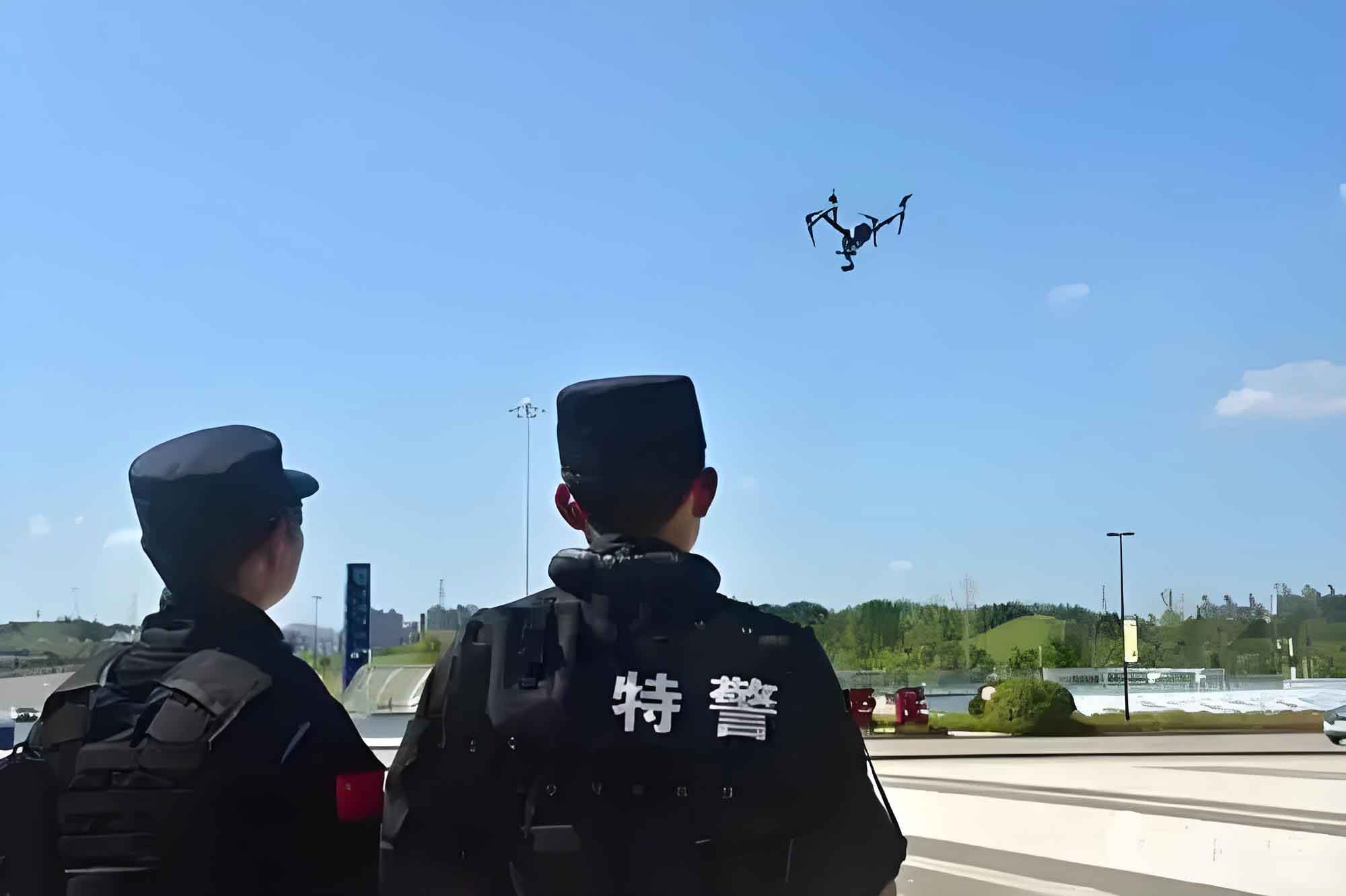
To illustrate the multifaceted applications of police UAVs, I have compiled a summary table based on my observations and case studies. This table highlights key areas where police UAVs have made significant contributions, emphasizing their versatility and impact.
| Application Area | Key Functions of Police UAVs | Notable Outcomes | Frequency of Use |
|---|---|---|---|
| Large-Scale Event Security | Aerial surveillance, communication relay, crowd monitoring, and low-altitude threat detection. | Enhanced safety during major gatherings; real-time image transmission to command centers. | High, especially during festivals and public events. |
| Traffic Management | Violation capture, accident scene reconstruction, congestion monitoring, and emergency lane enforcement. | Faster response times; reduced traffic jams; improved evidence collection for incidents. | Increasing, with widespread use on highways. |
| Criminal Investigation | Scene documentation, suspect tracking, evidence gathering, and aerial patrolling in inaccessible areas. | Quick resolution of cases; precise suspect location; enhanced forensic support. | |
| Narcotics Detection | Infrared imaging for crop identification, aerial sweeps over mountainous regions, and hotspot mapping. | Significant reduction in illegal cultivation; efficient resource allocation for raids. | |
| Search and Rescue Operations | Thermal imaging for missing persons, disaster assessment, and emergency communication support. | Higher success rates in locating individuals; minimized risk to rescue teams. |
The effectiveness of police UAVs can be quantified through various metrics. For example, the coverage area of a police UAV during a search operation can be modeled using the formula for circular area scanning: $$ A = \pi r^2 $$ where \( A \) is the area covered and \( r \) is the effective radius of the UAV’s sensors. In practice, with advanced cameras, a police UAV can capture high-definition images over several square kilometers in a single flight. Another critical aspect is endurance, which determines how long a police UAV can remain airborne. This is often expressed as: $$ T = \frac{C}{P} $$ where \( T \) is the flight time, \( C \) is the battery capacity, and \( P \) is the power consumption. Modern police UAVs, designed for extended missions, can achieve flight times of 6 to 8 hours, enabling prolonged surveillance without frequent landings. Such capabilities make police UAVs indispensable for tasks like monitoring suspicious activities in remote locations or providing continuous support during lengthy operations.
In large-scale event security, police UAVs have become a cornerstone of modern policing strategies. From my experience, events such as national celebrations or international conferences pose significant challenges due to crowd density and potential threats. Police UAVs, equipped with real-time video feeds, allow command centers to maintain a bird’s-eye view of the entire area. For instance, during annual tidal bore observations, police UAVs were deployed to monitor crowds and transmit live footage, enabling quick intervention in case of emergencies. Additionally, the management of “low, slow, and small” aerial threats—a growing concern with the proliferation of private drones—is efficiently handled by police UAVs. They can identify unauthorized drones and facilitate their neutralization, ensuring airspace security. The integration of police UAVs in such contexts not only saves manpower but also provides a proactive layer of defense that traditional methods lack.
Traffic management is another domain where police UAVs excel. On highways, congestion and accidents often require swift action to prevent escalation. Police UAVs, with their agility and aerial perspective, can quickly assess situations from above. I recall instances where police UAVs were used to capture traffic violations, such as illegal lane changes or speeding, providing clear evidence for enforcement. Moreover, in accident reconstruction, police UAVs can generate detailed 3D models of crash sites using photogrammetry, which aids in determining fault and streamlining insurance claims. The formula for calculating the optimal altitude for traffic monitoring with a police UAV is: $$ H = \frac{D}{2 \tan(\theta/2)} $$ where \( H \) is the altitude, \( D \) is the desired ground coverage width, and \( \theta \) is the camera’s field of view. This allows officers to position police UAVs effectively for maximum visibility. The use of police UAVs in traffic duties has spread across numerous regions, demonstrating their adaptability and cost-effectiveness.
When it comes to criminal investigations, police UAVs offer unparalleled advantages. Traditional ground-based methods are often limited by terrain and accessibility, but police UAVs can overcome these barriers with ease. In a notable case involving a railway cable theft, the complex network of tracks and surrounding difficult terrain made ground investigation arduous. Police UAVs were deployed to conduct aerial surveys, capturing high-resolution images that revealed critical evidence, such as hidden cameras and suspect pathways. This not only accelerated the investigation but also minimized risks to officers navigating hazardous areas. The ability of police UAVs to perform detailed scans over large areas is encapsulated in the efficiency ratio: $$ E = \frac{S}{t} $$ where \( E \) is the search efficiency, \( S \) is the area scanned, and \( t \) is the time taken. With police UAVs, this ratio is significantly higher compared to manual searches, leading to faster case resolutions. In my work, I have seen how police UAVs transform investigative workflows, providing a tactical edge that was previously unattainable.
Narcotics detection represents a critical application of police UAVs, particularly in combating illicit drug cultivation. In mountainous or rural areas, where manual patrols are inefficient, police UAVs equipped with multispectral sensors can identify specific plant signatures from the air. From my involvement in anti-drug operations, I have observed how police UAVs conduct systematic sweeps, mapping out potential cultivation sites with precision. The detection probability can be modeled using: $$ P_d = 1 – e^{-\lambda A} $$ where \( P_d \) is the probability of detection, \( \lambda \) is the sensor sensitivity, and \( A \) is the area covered. With high-resolution imaging, police UAVs can spot even small plots of illegal crops, enabling targeted raids that conserve resources and maximize impact. This approach has led to significant reductions in drug production in various regions, showcasing the strategic value of police UAVs in long-term law enforcement campaigns.
Search and rescue operations benefit immensely from the deployment of police UAVs. In situations like missing person cases or natural disasters, time is of the essence, and traditional search methods can be slow and risky. Police UAVs, with thermal imaging capabilities, can detect human body heat signatures in dense forests or collapsed structures, guiding rescue teams to precise locations. I have participated in missions where police UAVs were used to scan large islands or rugged terrains, completing tasks in minutes that would otherwise take hours. The operational effectiveness here is enhanced by the integration of real-time data transmission, allowing command centers to coordinate efforts seamlessly. Furthermore, police UAVs can serve as temporary communication hubs in areas with disrupted networks, ensuring continuous contact between teams. The versatility of police UAVs in such life-saving roles underscores their importance as force multipliers in policing.
Looking ahead, the future of police UAVs lies in their specialization for law enforcement needs. As an advocate for technological integration in policing, I believe that police UAVs must be designed with input from officers on the ground—focusing on safety, speed, and efficacy. For instance, safety protocols must ensure that police UAVs operate without endangering the public, even in crowded environments. Speed refers to rapid deployment and ease of use, crucial for time-sensitive scenarios. Efficacy involves reliable performance, including sufficient battery life and robust data collection. The evolution of police UAVs will likely see advancements in autonomy, with AI-driven features for automated patrols and threat detection. Additionally, standardization of regulations and training programs will be key to maximizing their potential. From my perspective, the ongoing development of police UAVs promises a new era of smarter, more responsive policing, where these tools become as commonplace as patrol cars.
In conclusion, the journey of police UAVs from niche gadgets to essential law enforcement assets reflects a broader shift toward technology-driven policing. Through my experiences and observations, I have witnessed how police UAVs enhance operational capabilities across diverse fields—from securing public events to solving complex crimes. Their ability to provide aerial intelligence, reduce officer exposure to danger, and improve efficiency makes them invaluable in modern law enforcement. As we continue to innovate and adapt, the role of police UAVs will only expand, offering new solutions to age-old policing challenges. The key is to embrace this technology with a focus on practical applications, ensuring that police UAVs remain aligned with the core mission of protecting and serving communities. The era of police UAVs is here, and it is transforming the landscape of public safety in profound ways.