
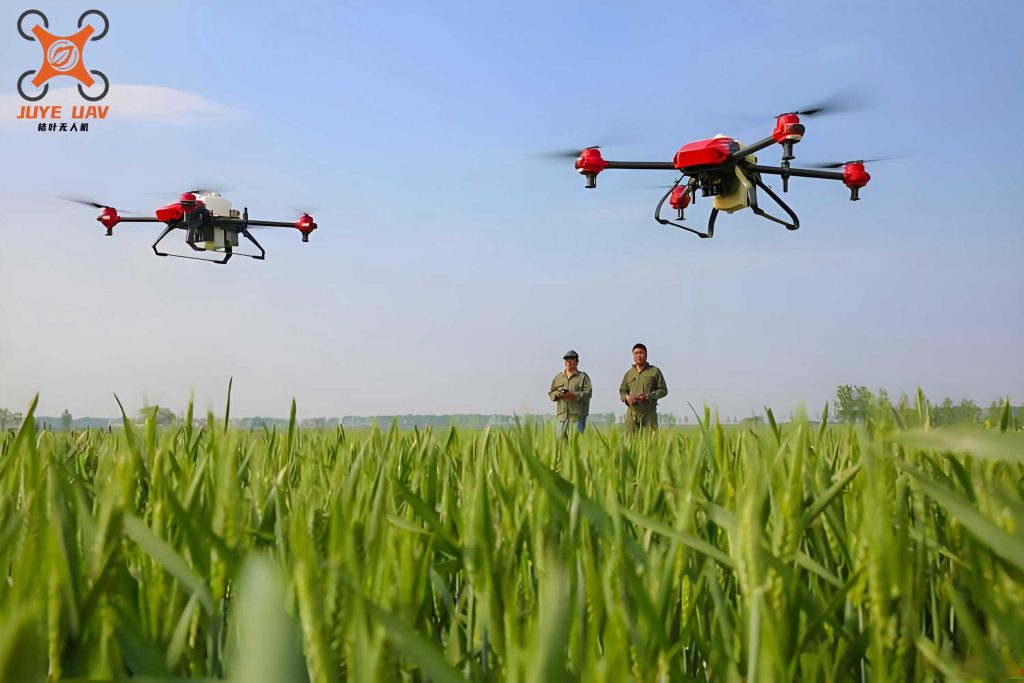
The rapid evolution of Unmanned Aerial Vehicle (UAV) technology has ushered in a transformative era for crop protection. The adoption of agricultural drone spraying systems presents a viable solution to critical challenges in modern agriculture, including labor shortages, rising operational costs, and the need for efficient, large-scale implementation of unified pest and disease control protocols. This technological shift is particularly pertinent for managing crops with challenging architecture, such as the Yongyou series of hybrid rice. These cultivars, characterized by tall stature, sturdy stems, and dense canopy closure—especially super rice varieties like Yongyou 6 and Yongyou 12—pose significant difficulties for conventional ground-based sprayers during later growth stages. Penetrating the dense lower canopy to effectively target diseases like sheath blight becomes increasingly problematic. This study aims to systematically evaluate and optimize the operational parameters for agricultural drone applications to control major pests and diseases in Yongyou hybrid rice, providing a technical foundation for their widespread adoption.
1. Materials and Methodological Framework
The investigation was structured into two primary components: a controlled parameter test focusing on sheath blight control and a large-scale demonstration of full-season pest management using an agricultural drone.
1.1 Reagents and Equipment
The pesticides and adjuvant used are listed in Table 1. The primary agricultural drone platform was the DJI MG-1P (Da-Jiang Innovations), operating in fully autonomous mode with a maximum liquid payload of 10 kg. For comparative analysis, conventional equipment included a backpack electric sprayer (MH-D16-3) and a stretcher-mounted sprayer (HD-22H/30H).
| Type | Product Name | Active Ingredient(s) & Formulation | Supplier |
|---|---|---|---|
| Fungicide | Tebuconazole 430 SC | 430 g·L⁻¹ Tebuconazole Suspension Concentrate | Ningbo Sanjiang Yinong Chemical Co., Ltd. |
| Insecticide | Spinetoram + Methoxyfenozide 34 SC | 34% Spinetoram + Methoxyfenozide Suspension Concentrate | Dow AgroSciences |
| Fungicide | Picoxystrobin + Cyproconazole 19 SC | 19% Picoxystrobin + Cyproconazole Suspension Concentrate | Dow AgroSciences |
| Insecticide | Pymetrozine + Dinotefuran 40 WG | 40% Pymetrozine + Dinotefuran Water-Dispersible Granule | Zhejiang Welldone Chemical Co., Ltd. |
| Insecticide | Abamectin 5 EC | 5% Abamectin Emulsifiable Concentrate | Guangxi Tianyuan Biochemistry Co., Ltd. |
| Adjuvant | Huainongte (Oil-based) | High-Efficiency Vegetable Oil Adjuvant | Oro Agri International Ltd. |
1.2 Experimental Site and Crop Details
Parameter Test Site: Conducted in a single-crop rice field planted with the Yongyou 12 variety. The rice was machine-transplanted on June 12, 2018, with moderate growth vigor. Applications were made at the late booting stage (just before panicle exertion) when initial, light sheath blight infection was present.
Demonstration Site: Established in a continuous late-season rice field with the Yongyou 1540 variety, machine-transplanted on July 18, 2018.
1.3 Experimental Design and Treatment Structure
1.3.1 Parameter Optimization Trial for Sheath Blight Control
This trial evaluated the impact of key agricultural drone flight parameters on the efficacy of tebuconazole against sheath blight. Seven treatments were arranged in a randomized complete block design with three replications, each plot measuring 333.5 m². Treatments are detailed in Table 2. The agricultural drone flight speed was constant at 4 m·s⁻¹ for all UAV treatments. The conventional electric sprayer application used 40 L of water per 667 m². Spraying occurred on August 29, 2018.
| Treatment | Spray Technology | Chemical Dose (per 667 m²) | Flight Height | Spray Volume (per 667 m²) | Adjuvant |
|---|---|---|---|---|---|
| 1 | Agricultural Drone | Tebuconazole 430 SC, 20 mL | 2.0 m | 1.0 L | No |
| 2 | Agricultural Drone | Tebuconazole 430 SC, 20 mL | 2.0 m | 1.0 L | Huainongte, 1 mL |
| 3 | Agricultural Drone | Tebuconazole 430 SC, 20 mL | 1.5 m | 1.0 L | No |
| 4 | Agricultural Drone | Tebuconazole 430 SC, 20 mL | 2.0 m | 1.5 L | No |
| 5 | Agricultural Drone | Tebuconazole 430 SC, 20 mL | 2.0 m | 2.0 L | No |
| 6 | Electric Sprayer (Conv.) | Tebuconazole 430 SC, 20 mL | N/A | 40 L | No |
| 7 | Control | Water only | N/A | N/A | No |
1.3.2 Full-Season Pest Management Demonstration
Four large demonstration plots (each 800 m²) were established to compare full-season agricultural drone strategies with conventional sprayer application. The flight parameters for the agricultural drone were set at 1.5 m height and 4 m·s⁻¹ speed, with spray volumes of 1.0 L/667 m² for the first application and 1.5 L/667 m² for subsequent ones. The adjuvant Huainongte was added at 100x dilution in all drone treatments. The conventional plot used a stretcher sprayer at 50 L/667 m². Three spray applications were made throughout the season targeting stem borer (*Chilo suppressalis*), leaf roller, sheath blight, and rice false smut. The timing and chemical cocktails are summarized in Table 3.
| Application Timing | Target Pests/Diseases | Chemical Formulation (per 667 m²) |
|---|---|---|
| 1: Aug 6 | Stem Borer | Spinetoram+Methoxyfenozide 34 SC, 30 mL + Abamectin 5 EC, 100 mL |
| 2: Aug 28 | Stem Borer, Leaf Roller, Sheath Blight | Spinetoram+Methoxyfenozide 34 SC, 30 mL + Abamectin 5 EC, 100 mL + Picoxystrobin+Cyproconazole 19 SC, 70 mL |
| 3: Sep 26 | Planthopper, Stem Borer, Sheath Blight | Spinetoram+Methoxyfenozide 34 SC, 30 mL + Abamectin 5 EC, 100 mL + Picoxystrobin+Cyproconazole 19 SC, 70 mL + Pymetrozine+Dinotefuran 40 WG, 15 g |
1.4 Data Collection and Analytical Methods
Sheath Blight Assessment: Disease severity was investigated at 12 and 20 days after treatment (DAT). Fifty hills per plot were assessed using a five-point sampling method. A 0-9 scale was used: 0=no disease; 1=infection on the 4th leaf and below; 3=infection on the 3rd leaf and below; 5=infection on the 2nd leaf and below; 7=infection on flag leaf sheath or blade; 9=whole plant dead. The disease index (DI) and control efficacy (CE) were calculated.
$$ DI = \frac{\sum (Number\ of\ diseased\ plants\ in\ each\ rating \times Rating\ value)}{(Total\ number\ of\ plants\ investigated \times Highest\ rating)} \times 100 $$
$$ Control\ Efficacy (\%) = \left(1 – \frac{DI_{Treated}}{DI_{Control}}\right) \times 100 $$
Data were subjected to analysis of variance (ANOVA) using SPSS 19.0, and means were separated using Duncan’s new multiple range test at P<0.05.
Full-Season Demonstration Assessment: Pest and disease incidence (deadheart caused by stem borer, sheath blight plant infection rate, false smut panicle infection rate) were surveyed at 9-15 days after each application. Final grain yield was measured by harvesting the entire plot at maturity.
2. Results and In-Depth Analysis
2.1 Optimization of Agricultural Drone Parameters for Sheath Blight Control
The results from the parameter optimization trial (Table 4) reveal critical insights for operating an agricultural drone in tall hybrid rice. At 12 DAT, the conventional high-volume (40 L) electric sprayer achieved the highest control efficacy (89.8%). Among the agricultural drone treatments with a constant flight height of 2.0 m, increasing the spray volume from 1.0 L (Treatment 1, 52.7% CE) to 1.5 L (Treatment 4, 71.5% CE) and 2.0 L (Treatment 5, 72.8% CE) resulted in numerically higher efficacy, though the differences were not statistically significant at P<0.05. This trend underscores the importance of spray volume for canopy penetration in dense crops.
Reducing the flight height from 2.0 m to 1.5 m while keeping the spray volume at 1.0 L (Treatment 3 vs. Treatment 1) did not significantly improve control, suggesting that for this canopy type, spray volume is a more limiting factor than minor adjustments in flight altitude within this range. The addition of the oil-based adjuvant Huainongte (Treatment 2) provided a moderate numerical increase in efficacy (58.8%) compared to the non-adjuvant counterpart (Treatment 1, 52.7%), highlighting its potential role in enhancing droplet retention and spreading, although the increase was not statistically significant in this trial.
The results at 20 DAT followed a similar pattern, confirming the observed trends. The conventional sprayer maintained superior control (90.4%). The agricultural drone treatments with higher spray volumes (Treatments 4 & 5) consistently showed better performance (~73%) than the low-volume treatment (Treatment 1, 56.3%). The adjuvant again showed a positive, non-significant effect. These findings can be modeled to predict efficacy based on spray volume ($V$, in L/667 m²) for a given chemical dose:
$$ CE(V) \approx CE_{base} + k \cdot \ln(V) $$
where $CE_{base}$ is the baseline efficacy at a reference volume and $k$ is a canopy-specific coefficient related to deposition efficiency.
| Treatment | 12 Days After Treatment (DAT) | 20 Days After Treatment (DAT) | ||
|---|---|---|---|---|
| Disease Index | Control Efficacy (%) | Disease Index | Control Efficacy (%) | |
| 1: Drone, 2m, 1L | 0.85 | 52.7 b | 1.04 | 56.3 b |
| 2: Drone, 2m, 1L + Adjuvant | 0.74 | 58.8 ab | 0.75 | 68.5 ab |
| 3: Drone, 1.5m, 1L | 1.01 | 43.7 b | 1.02 | 57.0 b |
| 4: Drone, 2m, 1.5L | 0.51 | 71.5 ab | 0.62 | 73.9 ab |
| 5: Drone, 2m, 2L | 0.49 | 72.8 ab | 0.65 | 72.7 ab |
| 6: Electric Sprayer (40L) | 0.18 | 89.8 a | 0.23 | 90.4 a |
| 7: Control | 1.80 | 0 c | 2.37 | 0 c |
Note: Values within a column followed by different letters are significantly different (P<0.05) according to Duncan’s test.
2.2 Performance of Full-Season Agricultural Drone Pest Management
The large-scale demonstration (Table 5) validated the practical feasibility of using an agricultural drone for season-long protection. All agricultural drone strategies (Demonstrations 1-3) performed comparably or superiorly to the conventional stretcher sprayer (Demonstration 4) across key metrics. Stem borer damage (deadheart rate) was consistently lower in the drone-treated plots after all applications. Sheath blight plant infection rates were also lower in drone plots at the final assessment. Notably, the control of rice false smut, a critical panicle disease, was better in the drone plots (19.0-26.0% diseased panicles) than in the conventional plot (26.5%).
Importantly, the drone application with a 10% chemical reduction (Demonstration 2) achieved control levels and final yield (718 kg/667 m²) equivalent to the full-rate drone application (Demonstration 1, 715 kg/667 m²). The 15% reduction treatment (Demonstration 3) showed a slight, non-critical increase in false smut incidence but maintained a similar yield (711 kg/667 m²). All yields were statistically comparable to the conventional plot (705 kg/667 m²). This suggests significant potential for optimizing input costs with precision agricultural drone applications without compromising efficacy or yield. The operational efficiency of the agricultural drone, measured as area covered per unit time, can be expressed as:
$$ Efficiency\ (ha/hr) = \frac{Swath\ Width\ (m) \times Flight\ Speed\ (m/s) \times 3600\ (s/hr)}{10,000\ (m²/ha)} \times Duty\ Cycle $$
| Demonstration Plot | Treatment Description | Stem Borer Deadheart Rate (%) (After 3rd App.) |
Sheath Blight Plant Rate (%) (Final) |
False Smut Panicle Rate (%) (Final) |
Final Yield (kg/667 m²) |
|---|---|---|---|---|---|
| 1 | Agricultural Drone, Full Rate + Adjuvant | 0.32 | 14.6 | 20.0 | 715 |
| 2 | Agricultural Drone, 90% Rate + Adjuvant | 0.28 | 10.3 | 19.0 | 718 |
| 3 | Agricultural Drone, 85% Rate + Adjuvant | 0.69 | 7.3 | 26.0 | 711 |
| 4 | Conventional Stretcher Sprayer, Full Rate | 1.10 | 17.4 | 26.5 | 705 |
3. Synthesis and Strategic Implications
This comprehensive study demonstrates that agricultural drone technology is not only a viable but also an advantageous tool for integrated pest management in challenging crops like tall hybrid rice. The superior atomization of an agricultural drone ensures uniform droplet distribution on the upper canopy, but effective disease control in the lower strata requires careful parameterization. The key findings are:
- Spray Volume is Paramount: For late-season applications on dense Yongyou rice, increasing the spray volume of the agricultural drone to 1.5-2.0 L per 667 m² is crucial to improve droplet penetration and deposition in the lower canopy, directly enhancing control of diseases like sheath blight. The relationship can be guided by the logarithmic model $CE(V)$ presented earlier.
- Role of Adjuvants: The use of high-quality oil-based adjuvants, such as Huainongte, enhances the performance of agricultural drone applications. They improve droplet spread, reduce evaporation, and potentially increase rainfastness, leading to more consistent biological efficacy, especially under sub-optimal weather conditions or with reduced spray volumes.
- Precision Enables Input Optimization: The full-season demonstration conclusively shows that an agricultural drone can achieve pest and disease control equivalent to or better than conventional methods. Most significantly, it indicates the potential for reducing chemical input by approximately 10% without any loss in yield or control efficacy. This aligns with the principles of precision agriculture and sustainable pest management. The economic advantage ($E$) can be conceptualized as:
$$ E = (A_{chem} \times P_{chem}) + (L_{labor} \times C_{labor}) – (C_{drone} + C_{adjuvant}) $$
where $A_{chem}$ is the area-saved chemical amount, $P_{chem}$ its price, $L_{labor}$ the saved labor, $C_{labor}$ labor cost, and $C_{drone}$ and $C_{adjuvant}$ the additional costs for drone service and adjuvant.
- Operational Efficiency and Feasibility: The agricultural drone successfully addresses the core limitations of conventional spraying in tall, dense crops—labor intensity, operational difficulty, and timely coverage of large areas. It is a practical solution for implementing unified control programs.
Recommendations for Practice: For effective agricultural drone deployment in Yongyou hybrid rice systems, operators should prioritize increased spray volumes (≥1.5 L/667 m²) during middle to late growth stages and incorporate appropriate tank-mix adjuvants. Flight height adjustments between 1.5-2.0 m showed less impact than spray volume. Furthermore, exploring specialized ultra-low-volume (ULV) formulations designed for agricultural drone applications is recommended to further enhance efficiency and efficacy.
In conclusion, the agricultural drone has matured from a novel technology to a reliable, efficient, and precision tool for crop protection. With optimized parameters as outlined in this study, it can fully replace conventional ground sprayers for managing pests and diseases in hybrid rice, offering a sustainable path forward by saving labor, time, water, and potentially reducing chemical usage.