
The proliferation of smart agriculture is fundamentally reshaping production paradigms, with emerging technologies like the agricultural drone for plant protection (UAV) standing at the forefront. These machines offer a compelling value proposition: significant improvements in operational efficiency, precision, and safety compared to traditional manual or semi-mechanized methods. While statistics indicate a growing deployment, the adoption rate and geographical penetration of agricultural drone technology remain below its potential. A critical bottleneck lies not in the technology’s capability but in its end-user acceptance. Therefore, understanding the factors that influence farmers’ willingness to continue using this technology is paramount for designing effective promotion strategies and ensuring its sustainable integration into agricultural practices.
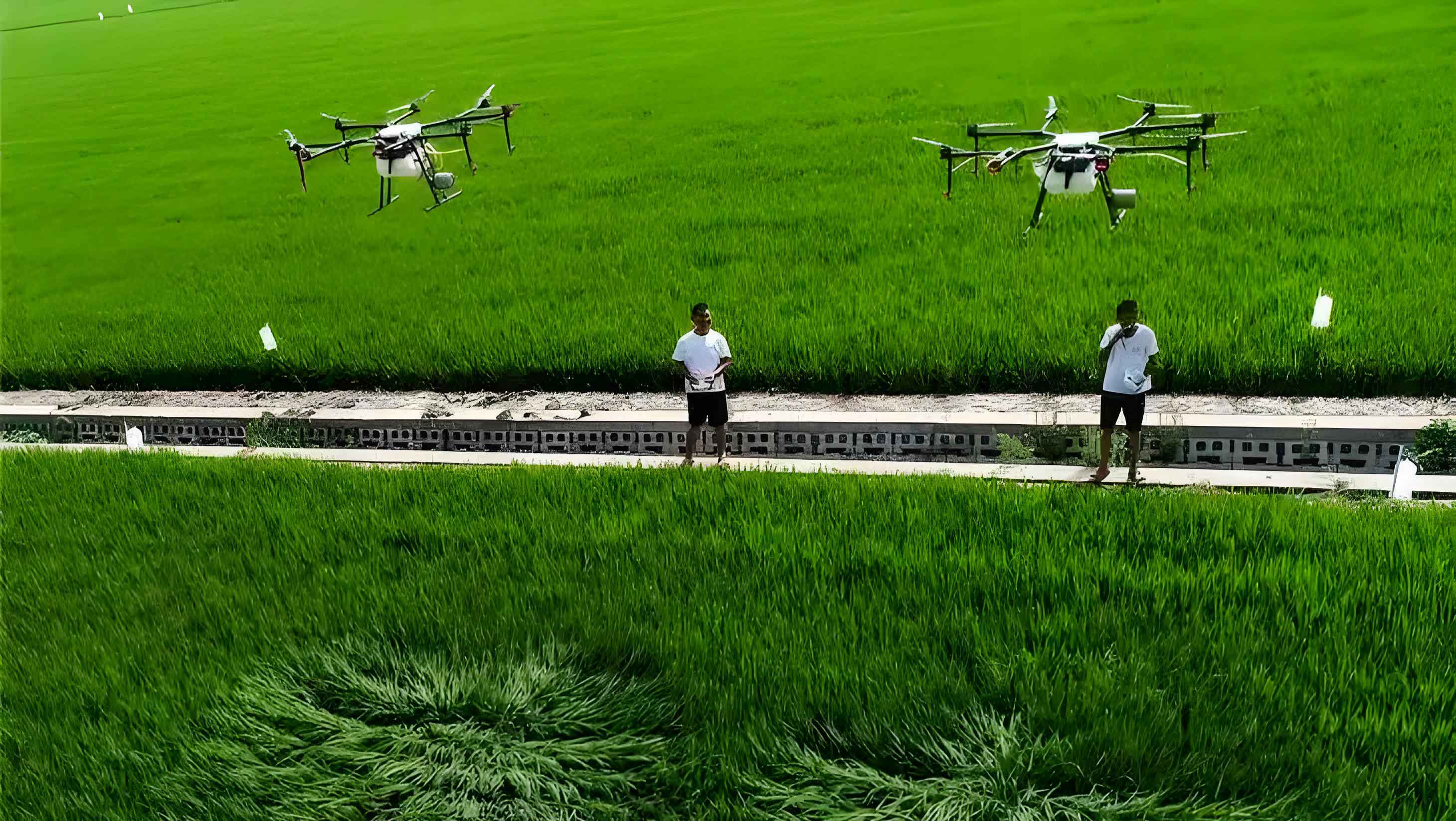
This study investigates the determinants of farmers’ continuance intention regarding agricultural drone services. We posit that a farmer’s decision to persistently use this technology is a complex behavioral outcome, influenced by their perceptions, the surrounding environment, and individual characteristics. To unravel this complexity, we ground our investigation in the well-established Technology Acceptance Model (TAM). The core TAM framework suggests that an individual’s behavioral intention (BI) to use a system is primarily driven by two key beliefs: Perceived Usefulness (PU) and Perceived Ease of Use (PEOU). Formally, this relationship can be expressed as:
$$ BI = f(PU, PEOU) $$
where Perceived Usefulness is defined as the degree to which a person believes that using a particular system would enhance their job performance, and Perceived Ease of Use is the degree to which a person believes that using the system would be free of effort. However, the context of agricultural technology adoption, particularly for agricultural drones, involves unique external pressures and user demographics. A pure TAM model may be insufficient. Therefore, we extend the model by integrating two critical constructs: External Environment (EE) and Farmer Individual Characteristics (IC). This leads to our proposed comprehensive research model:
$$ CI = f(PU, PEOU, EE, IC) $$
Here, Continuance Intention (CI) is our dependent variable, representing the farmer’s stated likelihood to keep using the agricultural drone service in the future.
Model Development and Hypotheses
Our extended model posits several relationships between the constructs. The foundational hypotheses from TAM are retained and contextualized. First, we hypothesize that the easier a farmer finds the agricultural drone service to operate and manage (high PEOU), the more useful they will perceive it to be (high PU). Furthermore, PEOU is expected to directly foster a positive continuance intention.
H1: Perceived Ease of Use has a positive influence on Perceived Usefulness.
H2: Perceived Ease of Use has a positive influence on Continuance Intention.
The central tenet of TAM is that usefulness drives usage. In our context, if a farmer believes the agricultural drone effectively saves time, reduces cost, improves crop yield, or enhances safety (high PU), they are more likely to intend to continue its use.
H3: Perceived Usefulness has a positive influence on Continuance Intention.
The external environment is crucial in agriculture. Factors such as government subsidies, promotional efforts by extension services, the quality of after-sales support, and social influence from peers (other adopting farmers) can significantly shape perceptions and intentions. We propose that a supportive external environment enhances both the perceived usefulness and the perceived ease of use of the agricultural drone technology, and also exerts a direct influence on continuance intention.
H4: External Environment has a positive influence on Perceived Usefulness.
H5: External Environment has a positive influence on Perceived Ease of Use.
H6: External Environment has a positive influence on Continuance Intention.
Beyond these direct effects, we anticipate more complex mediated relationships. Specifically, we propose that the influence of External Environment and Perceived Ease of Use on Continuance Intention is not only direct but also channeled through Perceived Usefulness. Similarly, External Environment’s impact may be mediated by Perceived Ease of Use.
H7: Perceived Usefulness mediates the relationship between Perceived Ease of Use and Continuance Intention.
H8: Perceived Usefulness mediates the relationship between External Environment and Continuance Intention.
H9: Perceived Ease of Use mediates the relationship between External Environment and Continuance Intention.
Finally, we consider the moderating role of farmer demographics. Individual characteristics like educational level, age, and income may strengthen or weaken the relationship between Perceived Usefulness and Continuance Intention. For instance, a higher educational level might allow a farmer to better appreciate and act upon the perceived benefits of the agricultural drone.
H10: Educational Level moderates the relationship between Perceived Usefulness and Continuance Intention.
H11: Age moderates the relationship between Perceived Usefulness and Continuance Intention.
H12: Income Level moderates the relationship between Perceived Usefulness and Continuance Intention.
Research Methodology and Measurement
To test our hypotheses, we developed a structured survey questionnaire. The measurement items for the latent constructs—Perceived Usefulness (PU), Perceived Ease of Use (PEOU), External Environment (EE), and Continuance Intention (CI)—were adapted from established TAM literature and contextualized for agricultural drone services. All items were measured using a five-point Likert scale ranging from 1 (Strongly Disagree) to 5 (Strongly Agree). A pilot test ensured clarity and validity. The survey was administered to farmers in a major agricultural region who had prior experience using agricultural drone services for plant protection. We collected 226 valid responses for analysis.
The profile of the respondents is summarized in Table 1. The sample predominantly consisted of male farmers (63%) aged between 35 and 60 years (60%). A large majority had an education level of high school or below (86%).
| Characteristic | Category | Frequency | Percentage (%) |
|---|---|---|---|
| Gender | Male | 142 | 63 |
| Female | 84 | 37 | |
| Age | 18-35 years | 57 | 25 |
| 35-60 years | 136 | 60 | |
| 60+ years | 33 | 15 | |
| Education Level | High School or Below | 193 | 86 |
| Vocational/Associate | 19 | 8 | |
| Bachelor’s or Above | 14 | 6 | |
| Continuance Intention (General) | Willing to Continue | 149 | 66 |
| Hesitant or Unwilling | 77 | 34 |
We assessed the reliability and validity of our measurement model before testing the structural hypotheses. Reliability was evaluated using Cronbach’s Alpha, with all constructs exceeding the recommended threshold of 0.9, indicating excellent internal consistency. Validity was confirmed through factor analysis, with all items loading significantly on their respective constructs.
| Construct | Number of Items | Cronbach’s Alpha | Average Variance Extracted (AVE) |
|---|---|---|---|
| Perceived Usefulness (PU) | 6 | 0.958 | 0.812 |
| Perceived Ease of Use (PEOU) | 5 | 0.958 | 0.835 |
| External Environment (EE) | 5 | 0.923 | 0.754 |
| Continuance Intention (CI) | 3 | 0.908 | 0.830 |
Data Analysis and Results
We employed a combination of correlation analysis, regression analysis, and mediation/moderation analysis using specialized statistical packages to test our hypotheses. The correlation matrix (Table 3) provided initial support for most of our direct relationship hypotheses (H1, H2, H3, H4, H5, H6), showing significant positive correlations among the key constructs.
| Construct | 1 | 2 | 3 | 4 |
|---|---|---|---|---|
| 1. Perceived Usefulness (PU) | 1.000 | |||
| 2. Perceived Ease of Use (PEOU) | 0.609*** | 1.000 | ||
| 3. External Environment (EE) | 0.570*** | 0.538*** | 1.000 | |
| 4. Continuance Intention (CI) | 0.648*** | 0.552*** | 0.562*** | 1.000 |
*** p < 0.001
To test the structural model and mediation effects (H7, H8, H9), we used path analysis. The results strongly supported the mediating roles. The indirect effects were tested using bootstrapping procedures (5000 samples). All confidence intervals for the indirect effects excluded zero, confirming significant mediation.
For H7, the path PEOU → PU → CI was significant. The mediation analysis showed that Perceived Usefulness explained a substantial portion (68.3%) of the effect of Perceived Ease of Use on Continuance Intention. The bootstrap 95% CI for the indirect effect (ab) was [0.512, 0.810]. This can be represented as part of a path model:
$$ CI = c’ \cdot PEOU + b \cdot PU $$
$$ PU = a \cdot PEOU $$
$$ \text{Indirect Effect} = a \times b $$
For H8, the path EE → PU → CI was also significant, with Perceived Usefulness mediating 73.4% of External Environment’s effect on Continuance Intention (95% CI: [0.492, 0.830]).
For H9, the path EE → PEOU → CI was confirmed, with Perceived Ease of Use mediating 56.9% of the relationship (95% CI: [0.342, 0.700]).
Finally, we tested the moderating effects of individual characteristics (H10-H12) using hierarchical regression analysis with interaction terms. The results indicated that only educational level had a marginally significant moderating effect (p ≈ 0.074) on the PU-CI relationship, providing partial support for H10. The interaction term for Age, Income, and Gender were non-significant, leading to the rejection of H11, H12, and H13. The moderation effect can be modeled as:
$$ CI = \beta_0 + \beta_1 PU + \beta_2 Edu + \beta_3 (PU \times Edu) + \epsilon $$
Where a significant $\beta_3$ indicates moderation. The positive $\beta_3$ observed suggests that higher education strengthens the positive impact of Perceived Usefulness on Continuance Intention for agricultural drone services.
A summary of all hypothesis testing results is presented in Table 4.
| Hypothesis | Path/Relationship | Supported? |
|---|---|---|
| H1 | PEOU → PU | Yes |
| H2 | PEOU → CI | Yes |
| H3 | PU → CI | Yes |
| H4 | EE → PU | Yes |
| H5 | EE → PEOU | Yes |
| H6 | EE → CI | Yes |
| H7 | PEOU → PU → CI (Mediation) | Yes |
| H8 | EE → PU → CI (Mediation) | Yes |
| H9 | EE → PEOU → CI (Mediation) | Yes |
| H10 | Education moderates PU → CI | Partially (p<0.1) |
| H11 | Age moderates PU → CI | No |
| H12 | Income moderates PU → CI | No |
Discussion and Strategic Implications
The empirical findings robustly confirm that the extended TAM framework is highly effective in explaining farmers’ continuance intention toward agricultural drone technology. The three primary direct drivers are Perceived Usefulness, Perceived Ease of Use, and the External Environment. Notably, the strong mediation effects reveal the nuanced psychological process: External support and a user-friendly design boost the farmer’s belief in the technology’s utility, which in turn is the most potent proximal driver of their intention to continue using the agricultural drone. Furthermore, the moderating role of education highlights that farmers’ capacity to translate perceived benefits into sustained adoption behavior depends on their cognitive resources and technical fluency.
These insights lead to concrete, actionable strategies for policymakers, technology developers, and extension services to promote the sustained adoption of agricultural drones:
1. Amplify Core Value (Enhance Perceived Usefulness): Technology developers must relentlessly focus on delivering tangible, measurable benefits. This involves not only hardware advancements but also data-driven agronomic services. Demonstrating clear metrics—such as percentage reduction in pesticide use, water savings, yield increase, or labor cost savings—is crucial. The value proposition of the agricultural drone must be communicated in terms of net profitability and risk mitigation for the farm.
2. Simplify the User Journey (Maximize Perceived Ease of Use): The entire user experience must be streamlined. This includes intuitive drone controls, simplified mission planning software (e.g., via easy-to-use smartphone apps), minimal setup requirements, and robust automated features. Comprehensive, accessible training and clear troubleshooting guides are essential. Reliability and minimal maintenance demands directly feed into the perception of ease, making the agricultural drone a dependable tool rather than a complex burden.
3. Cultivate a Supportive Ecosystem (Optimize External Environment): Government and industry must co-create a fertile ground for adoption. Key actions include:
- Providing and publicizing transparent subsidy or loan programs.
- Establishing standards and certification for service providers to ensure quality and trust.
- Facilitating demonstration plots and success story campaigns featuring peer farmers.
- Ensuring accessible technical support and service networks for prompt maintenance.
This ecosystem reduces perceived risk and builds social proof, directly and indirectly encouraging continuance intention.
4. Bridge the Digital Literacy Gap (Leverage Education’s Moderating Role): Since education amplifies the effect of usefulness on continuance, investing in farmer capacity building is a strategic multiplier. Extension programs should integrate digital skill training with agronomic education. Simplified training modules, hands-on workshops, and ongoing support can elevate the technical proficiency of farmers with lower formal education, enabling them to fully harness the usefulness of the agricultural drone and thus strengthening their long-term commitment.
In conclusion, the sustainable integration of agricultural drone technology into mainstream farming hinges on a deep understanding of the farmer’s decision-making calculus. Our model demonstrates that continuance intention is driven by a chain of perceptions, heavily influenced by external support and moderated by individual capability. A successful promotion strategy must therefore be multi-faceted, simultaneously enhancing the technology’s inherent value and usability, fostering a supportive environment, and empowering the farmer through knowledge. Future research could expand this model to different geographical and cultural contexts to further refine these universal principles for advancing smart agriculture through technologies like the agricultural drone.