
As an advanced form of intelligent agricultural machinery, the agricultural drone has fundamentally transformed traditional plant protection practices. My analysis, synthesized from extensive field research, data aggregation, and review of industry trends, focuses on the operational ecosystem within a premier agricultural zone. This region’s vast, contiguous farmland provides an ideal proving ground, with the local fleet of agricultural drones accounting for a significant portion of the national total. This report details the current market landscape, service infrastructure, technical applications, and economic models, while projecting future pathways for integration into precision agriculture.
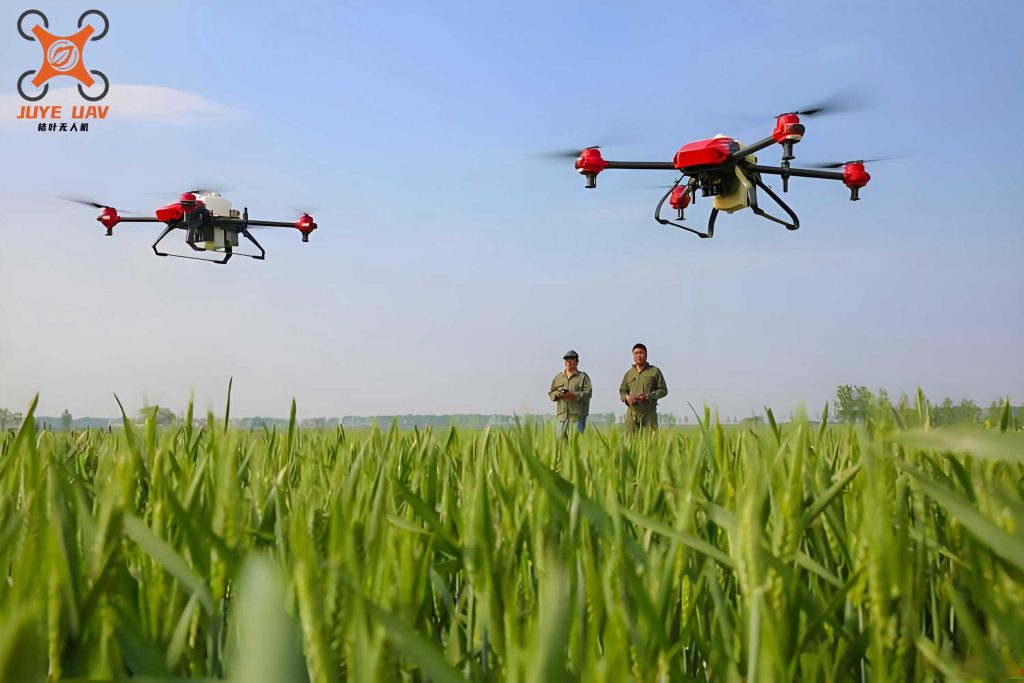
The rapid adoption is driven by the urgent need for efficient, labor-saving solutions in large-scale farming. The operational advantages of agricultural drones—speed, precision, and accessibility to difficult terrain—translate directly into enhanced productivity. This analysis aims to provide a structured overview of the sector’s status, identifying strengths, challenges, and strategic opportunities for sustainable growth and policy formulation.
1. Market Composition and Product Landscape
The market is characterized by a clear stratification of brands, with two major players dominating in terms of installed base, supported by several niche manufacturers. Product evolution is rapid, with annual updates focusing on increased payload capacity, enhanced flight management systems, and modularity for multifunctionality.
| Brand Category | Exemplary Models (Evolution) | Typical Tank Capacity (L) | Core Application Modules | Primary Spray System |
|---|---|---|---|---|
| Market Leader A | MG-1 Series → T-16 → T-20 | 10 → 16 → 20 | Spraying, Spreading, Seeding | Pressure Nozzle |
| Market Leader B | P10 → P30 → XP2020 Series | 10 → 16 → 20 | Spraying, Spreading, Seeding | Centrifugal Atomizer |
| Other Manufacturers | Various Models | 8 – 20 | Primarily Spraying | Pressure Nozzle |
The capital investment for an operational unit varies significantly. A complete system includes the drone, batteries, charging equipment, and often a portable generator. The total cost for a mainstream 20L model typically ranges from \$40,000 to \$52,000. The power system, primarily high-capacity lithium batteries costing around \$4,000 per set, represents a recurring operational cost and a logistical factor due to charging requirements in the field.
2. Technical Performance and Operational Metrics
The efficiency of an agricultural drone is quantified by its effective swath width, flight speed, and operational logistics. The theoretical area coverage per hour can be modeled as:
$$ A_{hourly} = \frac{V_{tank} \times E_{field} \times 60}{R_{application} \times T_{refill}} $$
where \( V_{tank} \) is the tank volume in liters, \( E_{field} \) is the field efficiency factor (accounting for turns and positioning), \( R_{application} \) is the application rate in L/hectare, and \( T_{refill} \) is the total refill and repositioning time in minutes. For a modern 20L agricultural drone applying at 15 L/ha with 75% field efficiency and a 3-minute refill cycle, the hourly coverage approximates 5-6 hectares.
Performance differs markedly between crops. In paddy fields, the homogeneous canopy and stable microenvironment allow for highly consistent application. In taller, denser row crops like corn, penetration and drift management become more challenging, affecting the uniformity coefficient (\( C_u \)), a key metric for application quality:
$$ C_u = 100 \times \left(1 – \frac{\sum |D_i – \bar{D}|}{n \times \bar{D}} \right) $$
where \( D_i \) is the deposition at sample point \( i \), \( \bar{D} \) is the mean deposition, and \( n \) is the number of samples. High-performing systems in ideal conditions can achieve \( C_u > 85\% \).
3. Service Network and Human Capital Development
A robust after-sales and maintenance network is critical for sustaining operations during short, critical application windows. The leading brands have established hierarchical service structures. Market Leader A operates through a hub-and-spoke model with central warehouses and mobile service vans. Market Leader B utilizes regional service centers with guaranteed response times. Third-party brands often struggle with inconsistent service availability.
The workforce supporting this industry comprises several distinct roles. The development pipeline for these roles is becoming increasingly formalized.
| Role | Primary Responsibilities | Training & Certification Pathways | Estimated Local Workforce |
|---|---|---|---|
| Service & Repair Technician | Diagnostics, hardware repair, battery management, parts logistics. | Manufacturer-certified training programs (e.g., “Repair Master Camp”), apprenticeships. | ~2,000 |
| Agricultural Drone Pilot (“Flyer”) | Mission planning, safe flight operations, application calibration, basic troubleshooting. | UTC or AOPA certification courses, manufacturer-specific academies, local vocational training. | ~25,000 |
| Agronomy Support Specialist | Formulation mixing, phytotoxicity assessment, efficacy scouting, integrating drone data with crop management. | Agronomy degrees complemented by precision agriculture modules, on-the-job training. | ~3,000 |
The gap between the growing fleet and the supply of skilled personnel remains a bottleneck, highlighting the need for expanded, standardized training programs at technical colleges.
4. Application Scope and Economic Model
The agricultural drone has evolved from a spray-only tool to a multi-application platform. Its effectiveness varies by task and crop system.
| Application | Primary Crop Suitability | Key Technical Requirement | Relative Efficacy & Adoption |
|---|---|---|---|
| Herbicide/Pesticide/Fungicide Spraying | Rice (Excellent), Corn/Soy (Good) | Fine droplet spectrum, anti-drift technology, canopy penetration. | High (Core application) |
| Foliar Fertilizer & Biostimulant Application | All Crops (Excellent) | Good leaf adhesion, compatibility with high-salinity solutions. | High and Growing |
| Aerial Seeding (e.g., Cover Crops, Rice) | Rice (Good), Post-harvest fields | Uniform spread pattern, seed metering accuracy. | Moderate (Situational) |
| Granular Fertilizer Top-Dressing | Rice (Good) | Precise granular release mechanism, flow rate control. | Moderate |
| Biological Control Agent Release (e.g., Trichogramma) | Corn, Rice (Good) | Gentle release mechanism to preserve agent viability. | Emerging |
The service pricing is market-driven and correlates with operational density, landform complexity, and service range. The economic model for a service provider can be expressed as a simplified profit function:
$$ P = (S_{price} \times A) – (C_{op} \times t) – C_{fixed} – D_{equip} $$
where \( P \) is net profit, \( S_{price} \) is service fee per hectare, \( A \) is area serviced, \( C_{op} \) is operational cost per hour (labor, fuel, consumables), \( t \) is total operational hours, \( C_{fixed} \) is fixed costs, and \( D_{equip} \) is equipment depreciation. Typical service fees range from \$30-\$45 per hectare for local jobs, increasing to \$45-\$65 for remote assignments, reflecting travel and logistics. A professional operator with two drones can service 300-500 hectares per day during peak season, illustrating the high-throughput potential.
5. Inputs, Reliability, and Supporting Infrastructure
The shift to aerial application necessitates specialized agrochemical formulations. “Aviation-formulated” products are characterized by high active ingredient concentration, superior solubility or suspension properties, and reduced foaming. The inclusion of tank-mix adjuvants is essential to modify droplet physics: reducing drift, enhancing deposition, and improving rainfastness. While a comprehensive portfolio exists for rice, the development of specialized, broad-spectrum herbicides for drone application in soy and corn remains an area for agrochemical innovation.
Machine reliability directly impacts service profitability. The leading brands report an annual failure rate requiring professional intervention of 15-25%, with the rate for other brands being significantly higher. Common failure modes and their mitigation are analyzed below.
| Failure Mode Category | Typical Causes | Impact on Downtime | Preventive & Design Mitigations |
|---|---|---|---|
| Pilot-Induced Impact (“Crash”) | Obstacle collision, operational error, signal loss. | High (Extensive repair/replacement) | Enhanced obstacle sensing (4D radar), improved pilot training, geo-fencing. |
| Corrosion & Wear | Exposure to fertilizers, pesticides, humidity. | Medium (Component-specific repair) | Corrosion-resistant alloys/coatings, improved sealing (IP67), modular quick-disconnect fluid paths. |
| Power System Degradation | Battery cycle aging, connector wear, generator issues. | Low-Medium (Quick swap possible) | Intelligent battery management systems (BMS), standardized connectors, reliable generator sets. |
The operational availability \( A_o \) of a fleet is crucial:
$$ A_o = \frac{MTBF}{MTBF + MTTR} $$
where \( MTBF \) is Mean Time Between Failures and \( MTTR \) is Mean Time To Repair. A strong service network directly reduces \( MTTR \), increasing \( A_o \).
6. Digital Ecosystem and Regulatory Framework
The true potential of the agricultural drone is unlocked through digital management platforms. These cloud-based systems serve as the operational nexus, offering:
- Mission Planning & Fleet Management: Synchronization of field boundaries and flight paths from planning software to remote controllers, enabling efficient task allocation across teams.
- Data Analytics and Record-Keeping: Automatic generation of application maps, dosage reports, and operational logs essential for traceability, compliance, and performance analysis.
- Service Marketplace: Digital platforms connecting landholders with service providers, improving market transparency and liquidity for agricultural drone services.
The regulatory environment is maturing. National industry standards, such as NY/T3213-2018 “Technical Specification for Quality Evaluation of Plant Protection Unmanned Aircraft,” provide baseline requirements for safety, performance, and labeling. Provincial-level standards are emerging, focusing on safe operational procedures. However, a comprehensive, nationally unified regulatory framework encompassing pilot licensing, airspace management for low-altitude agricultural operations, and environmental guidelines for ultra-low-volume application is still under development and is critical for long-term industry stability.
7. Future Trajectory: Towards Autonomous Systems and Cognitive Agriculture
The future of the agricultural drone lies in its evolution from a remotely piloted applicator to an autonomous node within a broader Internet of Things (IoT) ecosystem for agriculture. Key frontiers include:
- Advanced Perception and Decision-Making: Integration of multispectral and hyperspectral sensors will enable real-time, in-flight detection of biotic (pests, diseases) and abiotic (nutrient, water) stresses. The drone will transition from a uniform applicator to a variable-rate, prescription-based system, applying inputs only where needed. This decision-making could be guided by AI models trained on agronomic data.
- Swarm Intelligence and Autonomy: The coordination of multiple agricultural drones as a synchronized swarm, managed by a central AI “hive mind,” will dramatically scale operational capacity. Fully autonomous systems, capable of self-charging from field-based stations, automated refilling, and continuous 24/7 operation during critical windows, represent the pinnacle of this development.
- Integration with Farm Management Information Systems (FMIS): The data collected by drones will flow seamlessly into FMIS, contributing to a dynamic “digital twin” of the farm. This will allow for closed-loop management, where scouting data directly informs application prescriptions, and application results are fed back to validate and refine agronomic models.
The fundamental equation for the future value (\( V \)) of an agricultural drone system thus expands beyond mere application speed:
$$ V = \underbrace{A_{hourly} \times S_{price}}_{\text{Service Revenue}} + \underbrace{\beta \cdot I_{savings}}_{\text{Input Savings}} + \underbrace{\gamma \cdot D_{value}}_{\text{Data Value}} $$
where \( \beta \) is the coefficient for reduced input costs from targeted application, \( I_{savings} \) is the potential saving on chemicals/fertilizers, \( \gamma \) is the monetization coefficient for data, and \( D_{value} \) is the agronomic and operational intelligence derived.
In conclusion, the agricultural drone sector in this key region has moved beyond the pilot stage into a phase of rapid commercialization and scaling. The foundation is solid, built on clear operational advantages, a developing service infrastructure, and growing user acceptance. The challenges—workforce development, regulatory clarity, chemical optimization, and reliability—are significant but addressable. The trajectory points unmistakably towards deeper technological integration. The agricultural drone is not merely a new tool, but the vanguard of a systemic shift towards a data-driven, precise, and ultimately sustainable agricultural paradigm, where intelligent machines work in concert with agronomic science to steward land and enhance productivity.