
As a team driven by a passion for aerospace innovation, we are thrilled to share our journey in developing the world’s first large self-rotating rotor civilian UAV. This project represents a significant milestone in the civilian UAV industry, filling a critical gap in large-scale unmanned aerial systems designed for both civilian and specialized applications. Our entry into the national competition underscores our commitment to advancing technology that enhances efficiency and safety across various sectors. The civilian UAV market has long been dominated by small consumer drones, but we recognized an unmet need for robust, high-capacity platforms capable of handling demanding tasks. This realization fueled our efforts to create a UAV that combines long endurance, heavy payload capacity, and exceptional reliability, all tailored for civilian UAV applications.
Our flagship model, the AU300 self-rotating rotor civilian UAV, distinguishes itself from traditional fixed-wing drones through its unique safety features. Unlike fixed-wing UAVs that may stall and crash during power loss, our design allows for autorotation, enabling a slow, controlled descent even without engine power. This innovation is crucial for civilian UAV operations in sensitive environments like forested areas or urban settings, where safety is paramount. The technical specifications of our AU300 model highlight its capabilities: a maximum takeoff weight of 330 kg, an effective payload of 50 kg, and an endurance exceeding 3.5 hours. Moreover, its short takeoff and landing requirements—just 50 meters for takeoff and 30 meters for landing—make it highly versatile for use in confined spaces such as roads or open fields. This adaptability is a game-changer for civilian UAV deployments in logistics, emergency response, and environmental monitoring.
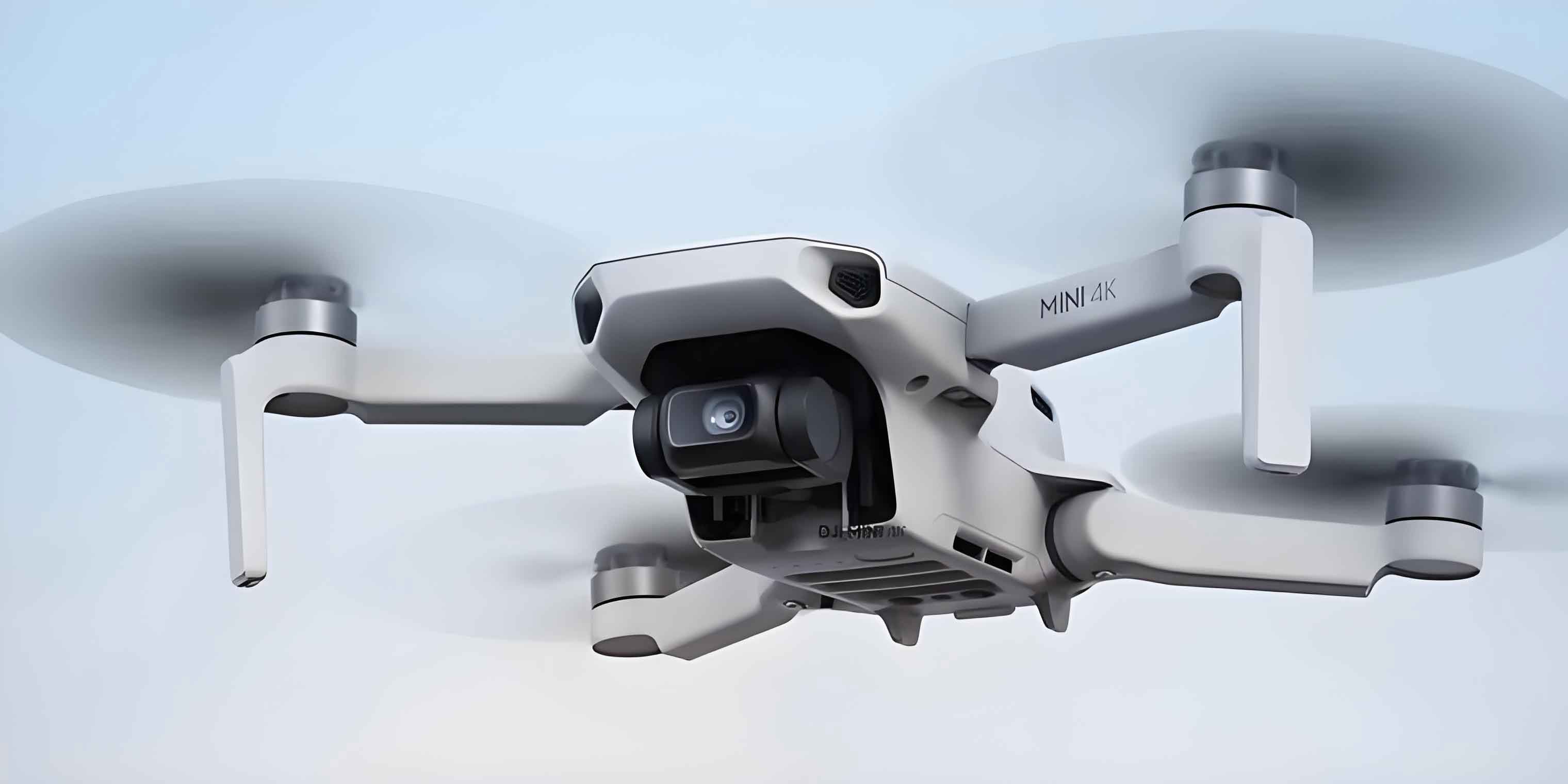
To better illustrate the advancements in civilian UAV technology, we have developed a comprehensive table comparing key models in our product lineup. This includes both self-rotating rotor and coaxial rotor helicopter civilian UAVs, showcasing their specifications for various applications. The data underscores our focus on delivering scalable solutions for the growing civilian UAV market.
| Model | Type | Max Takeoff Weight (kg) | Payload (kg) | Endurance (hours) | Takeoff Distance (m) | Landing Distance (m) |
|---|---|---|---|---|---|---|
| AU300 | Self-rotating Rotor Civilian UAV | 330 | 50 | 3.5+ | 50 | 30 |
| AU600 | Self-rotating Rotor Civilian UAV | 560 | 150 | 6+ (extendable to 10) | 60 (estimated) | 40 (estimated) |
| H300 | Coaxial Rotor Helicopter Civilian UAV | 280 | 50 | 4 | Vertical | Vertical |
| H500 | Coaxial Rotor Helicopter Civilian UAV | 500 | 120 | 6 | Vertical | Vertical |
The development of these civilian UAVs involved rigorous engineering principles. For instance, the endurance of a civilian UAV can be modeled using a simplified formula that accounts for energy consumption relative to payload and aerodynamic efficiency. We express this as: $$ E = \frac{C \cdot W_f}{P + k \cdot L} $$ where \( E \) is the endurance in hours, \( C \) is a constant based on fuel energy density, \( W_f \) is the fuel weight, \( P \) is the power required for baseline flight, \( k \) is a factor for payload impact, and \( L \) is the payload weight. This equation helps optimize our civilian UAV designs for maximum operational time, a critical factor in missions like maritime surveillance or disaster relief. Additionally, the autorotation capability relies on the conservation of rotational kinetic energy, described by: $$ \frac{1}{2} I \omega^2 = m g h $$ where \( I \) is the rotor’s moment of inertia, \( \omega \) is the angular velocity, \( m \) is the mass, \( g \) is gravity, and \( h \) is the descent height. This ensures a safe landing profile for our civilian UAVs even in emergency scenarios.
Beyond technical specs, the market potential for large civilian UAVs is immense. We have analyzed global trends and compiled projections that highlight the rapid growth in this sector. The following table summarizes key market data, emphasizing opportunities for civilian UAV adoption across industries.
| Region | Projected Civilian UAV Market Size (2025) | Annual Growth Rate | Key Applications |
|---|---|---|---|
| Global | $91 billion (estimated) | 40%+ | Logistics, Agriculture, Monitoring |
| China | ¥180 billion (approx. $25 billion) | 50%+ | Emergency Response, Infrastructure Inspection |
| North America | $30 billion | 35%+ | Firefighting, Border Patrol |
| Europe | $20 billion | 30%+ | Environmental Sensing, Delivery Services |
As pioneers in this space, we believe that civilian UAVs will revolutionize sectors such as forest fire prevention, maritime rescue, and cargo transport. The demand for long-endurance, high-payload civilian UAVs is particularly strong in industries that require reliable aerial platforms for extended missions. For example, in logistics, a civilian UAV can reduce delivery times in remote areas, with efficiency gains modeled by: $$ T_s = \frac{D}{v} + \frac{L}{r} $$ where \( T_s \) is the total service time, \( D \) is distance, \( v \) is average speed, \( L \) is load, and \( r \) is handling rate. Our civilian UAVs are designed to minimize \( T_s \) through optimized flight paths and quick turnaround, enhancing operational productivity.
Our team’s journey began with a shared vision of “aviation for national service,” but we quickly realized that the real impact lies in democratizing access to advanced aerial technology for civilian purposes. We assembled a group of experts with decades of experience in drone development, aerospace engineering, and market strategy. Each member brought unique insights into civilian UAV design, from aerodynamic modeling to systems integration. This collective expertise enabled us to develop the AU300 in just 18 months, a fraction of the time typically required for large civilian UAV projects. Our approach blends rigorous aerospace engineering with agile development methodologies, ensuring that our civilian UAVs meet high safety standards while adapting quickly to user feedback.
Looking ahead, our roadmap for civilian UAV innovation extends to 2025 and beyond. We are currently working on next-generation models, including the AU600 self-rotating rotor civilian UAV and the H-series coaxial rotor helicopters. These designs address specific challenges in vertical takeoff and hover capabilities, expanding the applicability of civilian UAVs in urban environments and complex terrains. The AU600, for instance, targets a maximum takeoff weight of 560 kg with a payload of 150 kg, offering endurance over 6 hours—a testament to our commitment to pushing the boundaries of civilian UAV performance. We are also exploring advancements in propulsion systems, such as hybrid-electric and hydrogen fuel cells, which could further enhance the sustainability and range of civilian UAVs. The energy efficiency of such systems can be expressed as: $$ \eta = \frac{E_{out}}{E_{in}} \times 100\% $$ where \( \eta \) is efficiency, \( E_{out} \) is useful energy for flight, and \( E_{in} \) is input energy from fuel or batteries. Improving \( \eta \) is key to making civilian UAVs more cost-effective and environmentally friendly.
In parallel, we are deepening our engagement with end-users to tailor civilian UAV solutions for diverse scenarios. Whether it’s coastal surveillance, anti-poaching patrols, or medical supply delivery, we conduct in-depth studies to understand operational constraints and requirements. This user-centric approach ensures that our civilian UAVs are not just technologically advanced but also practical and reliable in real-world conditions. For example, in disaster response, a civilian UAV must operate in adverse weather, which we model using stability equations: $$ \delta = \frac{F_{drag}}{F_{lift}} $$ where \( \delta \) is a stability factor, \( F_{drag} \) is drag force, and \( F_{lift} \) is lift force. By minimizing \( \delta \), we enhance the resilience of our civilian UAVs in high-wind scenarios.
Moreover, the integration of advanced materials is crucial for civilian UAV development. We are investigating composite alloys that reduce weight without compromising strength, allowing for greater payload capacity and longer endurance. The relationship between material properties and performance can be summarized as: $$ \sigma = \frac{F}{A} $$ where \( \sigma \) is stress, \( F \) is force, and \( A \) is cross-sectional area. Optimizing this for lightweight structures enables our civilian UAVs to achieve superior flight dynamics. Additionally, our focus on flight control systems involves sophisticated algorithms for autonomous navigation, which we refine through continuous testing. The reliability of a civilian UAV’s avionics is quantified by: $$ R(t) = e^{-\lambda t} $$ where \( R(t) \) is reliability over time \( t \), and \( \lambda \) is the failure rate. By driving \( \lambda \) toward zero, we ensure that our civilian UAVs operate safely over extended periods.
To support the scalability of civilian UAV adoption, we are also developing modular platforms that allow for easy customization of payloads and sensors. This flexibility is vital for applications like precision agriculture, where a civilian UAV might carry multispectral cameras for crop health monitoring, or in security, where thermal imaging units are essential. The economic benefit of such modularity can be analyzed using a cost function: $$ C_{total} = C_{base} + \sum_{i=1}^{n} C_{module_i} $$ where \( C_{total} \) is the total cost, \( C_{base} \) is the base UAV cost, and \( C_{module_i} \) is the cost of each module. By keeping \( C_{base} \) low and offering affordable modules, we make advanced civilian UAV technology accessible to a broader range of users.
In conclusion, our work in the civilian UAV sector is driven by a belief that aerial technology can solve pressing global challenges. From enhancing disaster response times to enabling efficient cargo transport in remote regions, civilian UAVs hold the promise of a more connected and resilient world. We are committed to refining our products through continuous innovation, always with an eye on safety, reliability, and user needs. As the civilian UAV market evolves, we aim to remain at the forefront, delivering solutions that not only meet current demands but also anticipate future trends. Our journey is just beginning, and we invite collaborators and stakeholders to join us in shaping the skyward future of civilian UAVs.