
The civilian UAV (Unmanned Aerial Vehicle) sector stands as a pivotal pillar of the burgeoning low-altitude economy. In recent years, its trajectory has been nothing short of explosive, fueled by rapid technological innovation and expanding application frontiers. The strategic importance of this industry is underscored by national policies, such as the “Made in China 2025” initiative and subsequent guidelines aiming for significant market growth. The enactment of the “Interim Regulations on the Flight Management of Unmanned Aircraft” in 2024 marked a new phase of regulated development. Internationally, while certain regions command a substantial market share, the competitive landscape is intensifying with tech giants entering the arena. Maintaining a leading edge in core technologies is, therefore, paramount for sustained competitiveness and high-quality development. High-value patents, serving as core carriers of technological innovation and strategic assets in market competition, offer a precise lens through which to gauge innovation intensity and predict industry trends. This analysis, drawing on high-value patent data from the past two decades, aims to dissect the innovation landscape and strategic layout in key technological domains of the civilian UAV industry, providing actionable insights for future technological strategy.
Our methodological approach is twofold. First, we employ a high-value patent metric analysis. Recognizing that not all patents are equal, we focus on those with significant technological and commercial merit. The screening criteria for identifying these high-value patents in the civilian UAV domain are synthesized from common evaluation models, emphasizing factors like family size, citation impact, longevity, and legal/commercial activity. The screening rules are summarized in the table below:
| Criterion Category | Operational Definition | Rationale |
|---|---|---|
| Family & Citation | Patents with >5 simple family members AND >10 citations. | Indicates broad geographical protection and high technical influence. |
| Longevity | Invention patents maintained for >10 years. | Signals sustained commercial value and technical relevance. |
| Commercial Activity | Patents involved in assignment, licensing, or pledge. | Direct evidence of market valuation and technology transfer. |
| Legal Robustness | Patents upheld after litigation or invalidation proceedings. | Demonstrates strong legal stability and defensibility. |
| Composite Score | Patents achieving a top composite value score (e.g., 10/10). | Integrates multiple dimensions into a single high-value indicator. |
This multi-faceted filter allows us to distill a dataset of high-value patents from a broader universe of applications, ensuring our analysis targets truly impactful innovations. A simplified model for assessing a patent’s value potential (V) could be conceptualized as a weighted function:
$$ V = \alpha F + \beta C + \gamma L + \delta A + \epsilon S $$
Where:
– $F$ represents family size,
– $C$ represents citation count,
– $L$ represents maintenance years,
– $A$ represents commercial activity (binary or scaled),
– $S$ represents legal robustness score,
– and $\alpha, \beta, \gamma, \delta, \epsilon$ are respective weighting coefficients.
Second, we utilize Technology Innovation Roadmapping. This strategic tool helps visualize the development pathways of core technologies. By mapping high-value patents onto a temporal axis for key civilian UAV subsystems, we can identify critical technology nodes, trace evolutionary logic, and contrast the布局 strategies of leading entities. This analysis is complemented by thematic clustering and technology-function matrices to extract core innovation themes and their intended performance improvements.
Global Innovation Landscape of High-Value Civilian UAV Patents
The analysis of the global high-value patent dataset reveals distinct phases in the technological evolution of civilian UAV systems. Prior to 2015, the volume of high-value patents remained modest, indicating a period of foundational and incremental development. The period from approximately 2012 to 2020 witnessed a near tenfold surge in the publication of high-value patents, marking an era of rapid technological proliferation and intense innovation. This aligns with the commercialization of multi-rotor platforms and the exploration of diverse applications. A relative dip in high-value patent counts in 2021-2022 may be attributed to a combination of factors: the inherent lag in citation metrics for recently granted patents, global economic headwinds, and potential interim technological bottlenecks awaiting breakthrough solutions.
Geographically, the innovation landscape is dominated by key players from the United States and China, with both nations demonstrating aggressive filing strategies not only domestically but also in each other’s markets and other major jurisdictions like Europe, Japan, and Korea. The leader in sheer volume of high-value patents is a prominent Chinese manufacturer, followed closely by established American aerospace corporations and technology giants who have vertically integrated into the drone delivery and services space. The presence of defense contractors adapted for commercial and dual-use technologies is also notable. The inventor landscape highlights key individuals driving innovation within these corporations, with clusters of collaboration evident, particularly in areas like novel airframe designs, propulsion control, and intelligent flight systems.
An examination of the International Patent Classification (IPC) codes associated with these high-value patents provides a macroscopic view of the technological focus areas. The distribution confirms that innovation is heavily concentrated around the core physical and control systems of the civilian UAV.
| Primary IPC Section | Approximate Share of High-Value Patents | Core Technological Focus |
|---|---|---|
| B64C (Aeroplanes; Helicopters) | ~48% | Airframe, aerodynamic configuration, structural design (historically used for UAVs before B64U). |
| B64D (Equipment for Aircraft) | ~17% | On-board equipment: propulsion units, camera gimbals, payload systems, etc. |
| B64F (Ground Installations for Aircraft) | ~7% | Launch/recovery systems, transport, charging stations, ground control. |
| G05D (Control/Regulation Systems) | ~5% | Flight control, stability, navigation, and autopilot systems. |
| G08G (Traffic Control), B64G (Cosmonautics) | ~3.5% | Air traffic management for drones, path planning, collision avoidance, satellite-based navigation. |
| G06Q, H04N, G06T, H04W (ICT) | ~4.5% | Image/data processing, wireless communication networks, data link transmission. |
This IPC breakdown sets the stage for a deeper dive into the specific technological subsystems that constitute the core of civilian UAV innovation.
Innovation Pathways and Strategic Layout in Core Subsystems
The competitive advantage in the civilian UAV market is increasingly determined by mastery over specific technological subsystems. By analyzing high-value patent roadmaps, we can discern the distinct strategies employed by leading firms in five critical areas.
1. Aerodynamic Configuration and Airframe Design
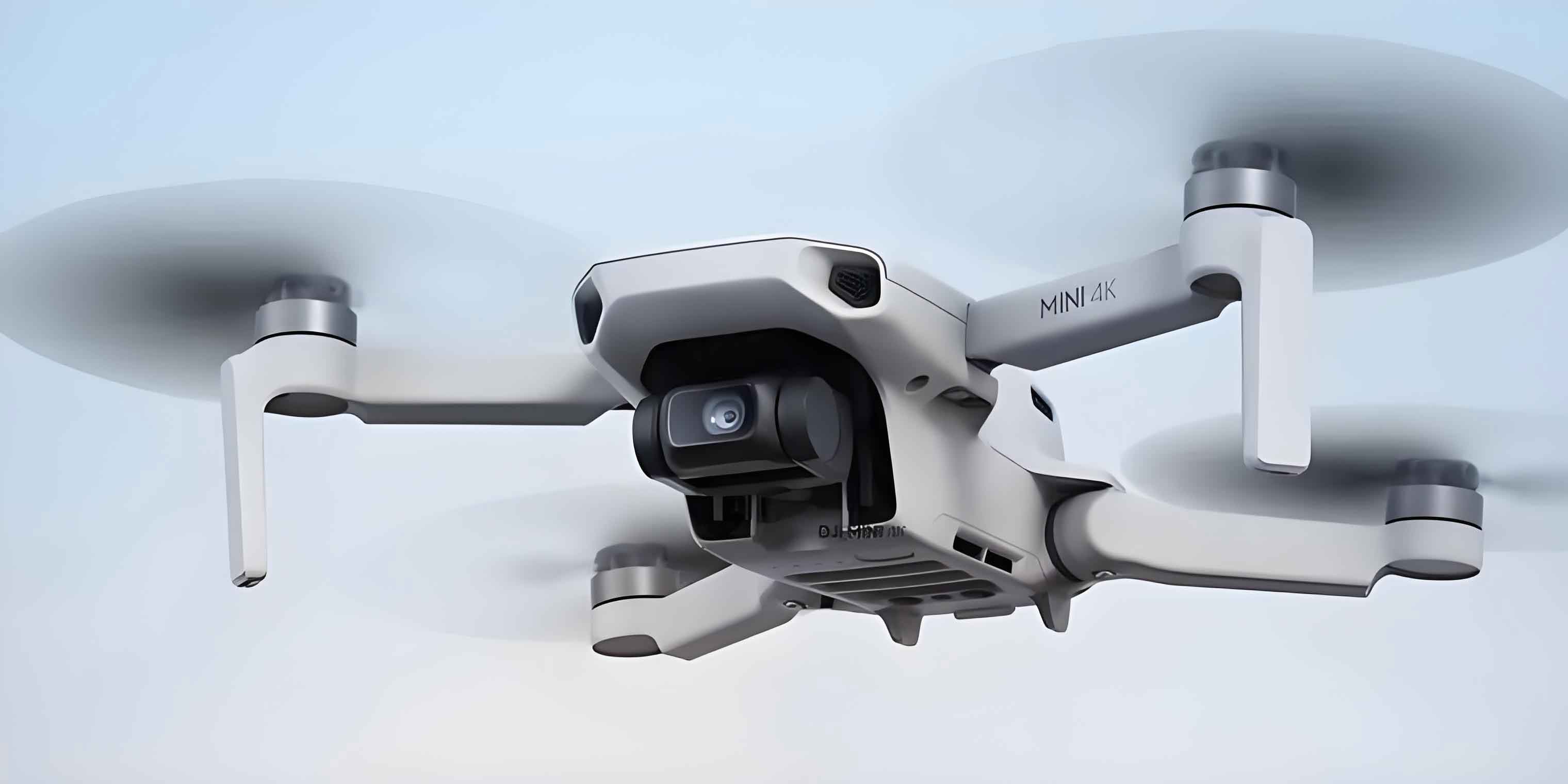
The choice of aerodynamic layout for a civilian UAV is fundamentally driven by its intended mission profile—balancing requirements for payload, range, endurance, and maneuverability. The patent landscape reveals a diversification of strategies. One dominant Chinese player focused early and decisively on perfecting the multi-rotor architecture, filing numerous high-value patents on deformable airframes, foldable arms, and impact-protection mechanisms, creating a dense patent thicket. In contrast, a major US aerospace firm initially concentrated on fixed-wing optimizations before pivoting to hybrid fixed-wing/VTOL (Vertical Take-Off and Landing) concepts, with patents covering folding rotor assemblies and specialized cargo airframes, signaling a long-term bet on urban air mobility and logistics. Other players have carved out niches: some specialize in tail-sitter or dedicated delivery-oriented hybrid designs (e.g., “ring-wing” configurations), while traditional helicopter manufacturers have extended their expertise into tilt-rotor VTOL designs for heavier cargo and potential passenger transport. The strategic layout comparison is evident:
| Company Profile | Primary Configuration Focus | Strategic Patent Layout Themes |
|---|---|---|
| Leading Chinese Multirotor Maker | Multi-rotor / Deformable Structures | Folding mechanisms, crash protection, compact transport, modular arm designs. |
| US Aerospace Giant | Hybrid Fixed-wing/VTOL | Convertible propulsion systems, specialized cargo holds, structural efficiency for range. |
| US Logistics/Technology Firm | Delivery-optimized Hybrid (e.g., Ring-wing) | Efficient cruise combined with VTOL, stability in transition flight, package security. |
| US Helicopter Manufacturer | Tilt-rotor / Tilt-wing VTOL | Heavy-lift capability, efficient forward flight conversion, distributed propulsion. |
2. Flight Control Systems (FCS)
The FCS is the “brain” of the civilian UAV, encompassing sensors, onboard processors, and actuation systems. High-value patent analysis shows intense activity in making these systems more intelligent, reliable, and user-friendly. The leading Chinese firm’s portfolio is comprehensive, covering low-level control methods for motors and propellers, sensor fusion algorithms, fail-safe protocols, and, crucially, emerging intelligent control interfaces. Key patents point towards future systems using machine-readable codes or augmented reality glasses for control. Their Western aerospace counterpart displays a similarly robust portfolio but with a different emphasis, reflecting the complexity of controlling larger, hybrid aircraft. Their high-value patents detail sophisticated actuator systems, aerodynamic flow control, and—significantly—early-stage foundational patents for AI-driven adaptive scheduling and dialog systems for autonomous vehicles, indicating a forward-looking bet on AI-as-a-core capability. The evolution can be seen as moving from basic stability control ($\dot{\phi}, \dot{\theta}, \dot{\psi}$ stabilization) to higher-order autonomy:
$$ \text{FCS Evolution: Stability Control} \rightarrow \text{Trajectory Following} \rightarrow \text{Sensor-Based Navigation} \rightarrow \text{AI-Driven Decision Making} $$
3. Navigation and Situational Awareness Systems
Safe and reliable operation, especially in complex or congested environments, is paramount for civilian UAV integration. The navigation patent landscape is fragmented among specialists. While all major players utilize GPS, the strategic differentiation lies in sensor fusion and vision-based navigation. A key US competitor to the Chinese market leader has heavily invested in vision-based obstacle avoidance and path planning, amassing a significant portfolio. The Chinese leader, while having fewer overall navigation patents, shows a broader approach to multi-sensor fusion, combining visual data with inertial, satellite, and even geomagnetic sensing. Logistics-focused companies prioritize precise delivery navigation, featuring tight integration of GPS, vision, and proprietary obstacle maps for last-meter accuracy. The established aerospace firm shows strength in traditional satellite-based navigation and integrity monitoring. This suggests future battlegrounds will involve more sophisticated real-time sensor fusion algorithms ($S_{fused} = f(S_{vision}, S_{IMU}, S_{GPS}, S_{other})$), 3D mapping, and navigation in GPS-denied environments.
4. Propulsion and Power Systems
The propulsion system defines the endurance, payload, and environmental footprint of a civilian UAV. The high-value patent strategies here diverge dramatically based on the company’s product lineage and vision. The dominant multi-rotor manufacturer’s portfolio is overwhelmingly focused on electric propulsion, with dense patenting around battery management systems (BMS), motor controllers, electronic speed controllers (ESCs), and power distribution networks. Their strategy involves protecting every component and control method, creating a formidable barrier in the electric civilian UAV segment. They have also filed patents on hybrid power systems, indicating exploration beyond pure battery power. Conversely, the established aerospace firm’s portfolio reflects a history of fuel-based engines (jets, turboprops) for long-endurance UAVs, with patents on aerial refueling and fuel management. Crucially, they also hold key patents in areas like high-efficiency solar structures, hydrogen fuel systems, and regenerative power platforms for high-altitude long-endurance (HALE) UAVs, showcasing a balanced portfolio across traditional and clean-energy propulsion. The power density challenge for electric systems remains a key driver for innovation, often framed as maximizing the ratio of available energy to total mass:
$$ \text{Effective Flight Time} \propto \frac{E_{battery} \cdot \eta_{system}}{(m_{battery} + m_{airframe} + m_{payload}) \cdot P_{required}} $$
where $\eta_{system}$ is total powertrain efficiency and $P_{required}$ is the power required for hover or cruise.
5. Data Link and Communication Systems
This subsystem, responsible for command, control, and communication (C3), is the lifeline between the civilian UAV and its operator or network. Analysis of high-value patents reveals that this area, while critical, may have significant “white space” for future innovation compared to more mature subsystems like airframes and propulsion. The leading Chinese firm’s patents focus on efficient image/data transmission, compression algorithms, and low-latency remote control protocols, including interfaces for smart wearable devices. Interestingly, a notable concentration of advanced communication patents is held by specialized telecom firms, not traditional drone manufacturers. Their high-value portfolios cover advanced techniques like collaborative MIMO (Multiple Input Multiple Output) for drone swarms, orthogonal frequency-division multiplexing (OFDM) optimizations for airborne links, and cognitive radio techniques for dynamic spectrum access. This suggests the future of civilian UAV data links lies in adopting and adapting advanced telecommunication technologies to meet demands for security, bandwidth, latency, and network-centric operations (e.g., swarm coordination). The capacity of a data link in a networked environment can be modeled by extensions of classic formulas, considering multiple access and interference:
$$ C_{network} = \sum_{i=1}^{N} B \log_2\left(1 + \frac{S_i}{N_0 + I_i}\right) $$
where for the i-th UAV, $B$ is bandwidth, $S_i$ is signal power, $N_0$ is noise, and $I_i$ is interference from other nodes in the network.
Conclusions and Strategic Recommendations for Future Layout
Based on the high-value patent analysis across these five core technological pillars, several conclusions and strategic directions for future intellectual property布局 emerge for stakeholders in the civilian UAV ecosystem.
Conclusions:
1. The industry experienced hyper-growth in innovation from ~2012-2020, with China achieving notable scale and market success. However, a technological gap persists in certain foundational and next-generation areas compared to established Western aerospace and tech firms.
2. Aerodynamic configurations and propulsion systems show relative maturity with dense patenting, while navigation, data links, and especially AI-integration present dynamic, evolving frontiers.
3. Strategic divergence is clear: one path dominates electric multi-rotor consumer/professional markets with integrated vertical control, while another explores hybrid/electric VTOL for logistics/mobility and clean-energy solutions for HALE applications.
4. The future battleground extends beyond hardware into algorithms and system integration—particularly in AI-driven autonomy, robust sensor fusion, and secure, high-bandwidth networked communication.
Strategic Layout Recommendations:
To secure a sustainable competitive advantage and drive high-quality development towards modular, integrated, networked, and intelligent systems, the following focused patent布局 directions are proposed:
| Technology Subsystem | Recommended Future Patent Layout Directions |
|---|---|
| Aerodynamic Configuration | Bio-inspired or biomimetic structures hybridized with existing layouts; adaptive/morphing wings for multi-role missions; novel propulsion-airframe integration (e.g., distributed electric propulsion, ducted fan systems) for noise reduction and efficiency. |
| Flight Control Systems (FCS) | AI/ML-based adaptive and predictive control algorithms; heterogeneous data fusion frameworks; embedded health monitoring and self-repair (self-healing) protocols; human-drone collaborative control interfaces using natural language or gesture; swarm intelligence and collective behaviors. |
| Navigation Systems | Advanced sensor fusion algorithms (e.g., deep learning for SLAM); navigation in GNSS-denied/degraded environments using 5G signals, celestial navigation, or terrain referencing; ultra-precise relative navigation for close-proximity swarm flight and docking; lightweight, high-performance solid-state or MEMS inertial sensors. |
| Propulsion & Power | Next-generation energy-dense batteries (solid-state, lithium-air); efficient hybrid-electric architectures tailored for specific mission profiles; in-flight wireless charging or energy harvesting techniques; thermal management systems for high-power density motors and batteries; small, efficient hydrogen fuel cell systems and their safe integration. |
| Data Link & Communication | Quantum-resistant encryption for command links; dynamic mesh network protocols for resilient swarm communication; integrated sensing and communication (ISAC) techniques; ultra-reliable low-latency communication (URLLC) for safety-critical BVLOS operations; spectrum sharing and cognitive radio techniques for congested airspace. |
In conclusion, the civilian UAV sector’s technological trajectory, illuminated by the lens of high-value patents, is one of convergence and specialization. Success will depend not only on excelling in traditional aerospace disciplines but also on strategically integrating advancements from artificial intelligence, telecommunications, and material science. A proactive, informed patent布局 strategy targeting the white spaces and convergence points identified in this analysis will be instrumental in shaping the next generation of intelligent, connected, and versatile unmanned aerial systems.