
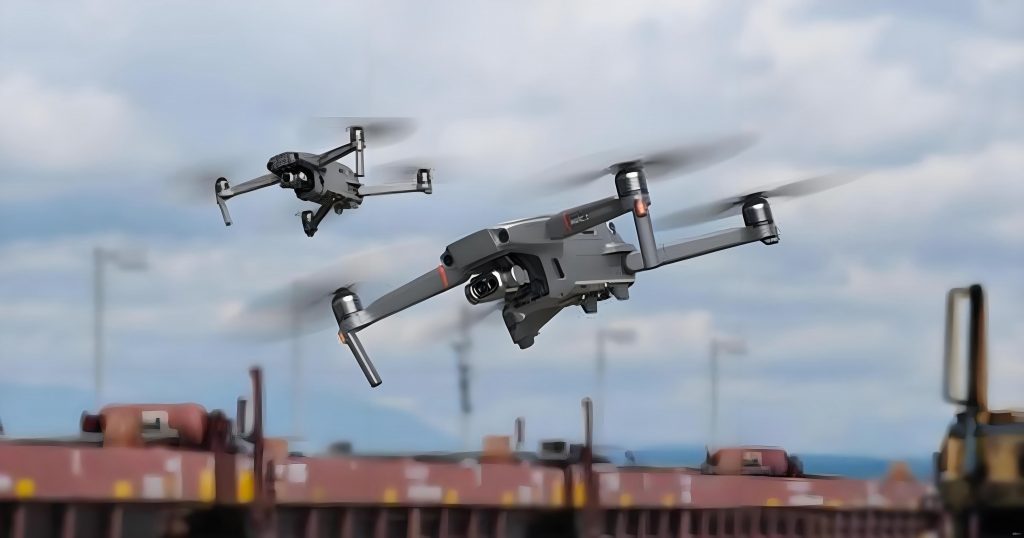
The proliferation of civilian UAV technology has been nothing short of revolutionary, transforming industries from agriculture and cinematography to infrastructure inspection and disaster management. At the core of every effective civilian UAV operation lies its Ground Control Station (GCS), the critical human-machine interface that bridges the gap between operator intent and aerial execution. This article, from my perspective as an observer and analyst of this rapid technological evolution, delves into the historical progression, current architectural paradigms, and future trajectories of civilian UAV ground control systems. I aim to provide a comprehensive examination, utilizing formal analysis, comparative tables, and mathematical models to elucidate the complexities and innovations defining this field.
A Historical Retrospective: From Military Origins to Civilian Pervasiveness
The conceptual and technological lineage of UAV ground control stations is inextricably linked to military development. The earliest unmanned aircraft in the early 20th century, such as the British “Aerial Target” of 1917 or the American “Curtiss” autopilot-guided plane, lacked what we now recognize as a GCS. Control was rudimentary, based on pre-set gyroscopic or barometric guidance, with no capacity for real-time monitoring or in-flight command alteration. The true genesis of the GCS occurred between the 1950s and 1970s within U.S. military programs. Systems evolved to incorporate pre-programmed mission control, enabling drones to perform reconnaissance and electronic warfare roles in conflicts like the Vietnam War. The ground segment began to involve dedicated hardware consoles for telemetry reception and limited command uplink.
The 1990s marked a significant maturation phase. Military systems like those controlling the MQ-1 Predator introduced multi-function, software-intensive GCS designs. These stations featured enhanced situational awareness displays, longer-range digital data links, and the ability to control sophisticated payloads like synthetic aperture radars and laser designators. This era solidified the GCS as a centralized command hub rather than a simple remote controller.
The 21st century witnessed the catalytic democratization of UAV technology, driven by advancements in micro-electromechanical systems (MEMS), affordable global positioning, and consumer electronics. This shift birthed the modern civilian UAV industry and, with it, a new generation of ground stations. The release of open-source software like Mission Planner (2010) and QGroundControl (2011) provided universal platforms for hobbyists and researchers, standardizing around protocols like MAVLink. Concurrently, commercial giants like DJI and Parrot developed proprietary, user-friendly GCS applications tailored for their products, initially on personal computers and rapidly migrating to smartphones and tablets. This transition made powerful drone operation accessible, with intuitive interfaces for flight planning, automated photography, and 3D mapping, fundamentally expanding the application scope of civilian UAV platforms.
Contemporary Landscape: A Dichotomy of Design Philosophies
The current civilian UAV GCS ecosystem can be broadly categorized into two distinct strands: the highly specialized professional suite and the accessible consumer application. Each serves different operational needs and exemplifies unique design priorities.
1. Professional & Open-Source Ground Stations: These systems are characterized by their depth of functionality, configurability, and often, hardware robustness. They are designed for complex missions in surveying, precision agriculture, search-and-rescue, and scientific research.
- Mission Planner / QGroundControl: As flagship open-source projects, they support a wide array of autopilots (PX4, ArduPilot). Their strength lies in comprehensive parameter tuning, detailed telemetry logging, and support for advanced behaviors. They often interface with external radio modems for extended range. Their interface prioritizes data density and control granularity over sleek aesthetics.
- Integrated Hardware Suites: Companies like Chengdu JOUAV (as referenced in the source material) produce all-in-one, ruggedized portable GCS units. These combine a high-brightness display, dedicated control hardware (joysticks, knobs), and integrated computing in a single package, designed for field reliability in demanding environments.
2. Consumer-Centric Mobile/Desktop Applications: These GCSs prioritize user experience, simplicity, and seamless integration with specific drone models. Examples include DJI GS Pro, DJI Pilot, and Parrot’s FreeFlight. Their hallmarks are intuitive touch-based interfaces, automated flight modes (e.g., “Point of Interest,” “Waypoint,” “3D Mapping”), and streamlined data management workflows directly to the cloud. They abstract away low-level flight parameters, focusing on the task (e.g., capturing a panorama, mapping a field) rather than the aircraft’s internal state.
The table below summarizes the key comparative aspects:
| Feature | Professional/Open-Source GCS | Consumer-Centric GCS |
|---|---|---|
| Primary Users | Researchers, Industrial Operators, Developers | Hobbyists, Content Creators, Enterprise Users (simplified workflows) |
| Customization | Very High (full parameter access, scriptable) | Low to Moderate (preset modes, limited tuning) |
| Platform Target | Multiple Autopilots, Universal | Brand-Specific Drones |
| Hardware Form | Dedicated Laptop/Desktop, Ruggedized Field Box | Smartphone, Tablet, Lightweight Controller |
| Core Design Goal | Mission Flexibility & Technical Control | Operational Simplicity & User Experience |
| Data Link | Often user-provided (e.g., 900MHz, 2.4GHz Radios) | Integrated proprietary RF (Lightbridge, OcuSync) or Wi-Fi |
Architectural Framework and Core Functional Modules
Despite their outward differences, most modern civilian UAV GCS software architectures are built upon a similar modular foundation. From an engineering standpoint, I deconstruct the GCS into the following interdependent modules, each governed by specific algorithms and protocols.
1. Communication Link Module
This module is the fundamental data conduit. It handles the bi-directional communication between the GCS and the civilian UAV using a specific protocol (e.g., MAVLink, DJI SDK). Its functions include packet serialization/deserialization, error checking (e.g., CRC), and link health monitoring. The data rate $R$ achievable is a critical metric, dependent on bandwidth $B$ and signal-to-noise ratio (SNR):
$$ R = B \log_2(1 + \text{SNR}) $$
For a civilian UAV, maintaining a stable, low-latency link is essential for real-time control. The module must manage reconnection logic and fail-safes upon signal degradation.
2. Telemetry Processing & State Visualization Module
This module parses the incoming telemetry stream (vehicle attitude, position, velocity, battery status, sensor health) and presents it through a Human-Machine Interface (HMI). This involves coordinate transformations (e.g., from NED to local tangent plane), sensor fusion display, and alert generation. A critical visualization is the attitude indicator, often modeled using a quaternion or Euler angle representation. The conversion from quaternion $q = [q_w, q_x, q_y, q_z]$ to roll ($\phi$), pitch ($\theta$), and yaw ($\psi$) Euler angles for display is:
$$
\begin{aligned}
\phi &= \arctan2\left(2(q_w q_x + q_y q_z), 1 – 2(q_x^2 + q_y^2)\right) \\
\theta &= \arcsin\left(2(q_w q_y – q_z q_x)\right) \\
\psi &= \arctan2\left(2(q_w q_z + q_x q_y), 1 – 2(q_y^2 + q_z^2)\right)
\end{aligned}
$$
3. Geospatial Mapping and Navigation Module
This module integrates digital cartography, typically using libraries like Google Maps, OpenStreetMap, or CesiumJS. Its primary functions are:
- Real-time Positioning: Plotting the UAV’s latitude, longitude, and altitude on the map.
- Path Visualization: Drawing the historical flight path and the upcoming mission plan.
- Geofencing: Defining and enforcing virtual boundaries (polygonal or cylindrical) using computational geometry. A simple point-in-polygon check is fundamental.
- Elevation Data Integration: Overlaying terrain data to assess ground clearance and plan safe altitudes.
4. Mission Planning and Re-planning Module
This is the strategic core of the GCS. It allows operators to define a sequence of actions (waypoints, loiter patterns, camera triggers). A basic waypoint mission is a sequence of $n$ commanded states $W_i = (lat_i, lon_i, alt_i, \psi_i, \text{action}_i)$. The module must generate smooth trajectories between waypoints. A common method is using linear paths with tolerance corridors, but more advanced planners use algorithms like Dubins paths for fixed-wing aircraft or polynomial splines for multirotors, minimizing a cost function $J$ (e.g., time, energy):
$$ J = \int_{t_0}^{t_f} \mathcal{L}(x(t), u(t)) \, dt $$
where $x(t)$ is the state vector and $u(t)$ is the control input. The modern trend, as highlighted in source discussions, is dynamic re-planning. This allows the GCS to modify an active mission in real-time based on new objectives or obstacles, requiring fast, online pathfinding algorithms (e.g., rapidly-exploring random trees – RRT*, or A* on a dynamic cost map).
Forward-Looking Perspectives and Developmental Paradigms
Based on the trajectory of technology and emerging user needs, I postulate several key directions for the next generation of civilian UAV ground control systems.
1. Network-Centric and Beyond-Visual-Line-of-Sight (BVLOS) Operations
The future of professional civilian UAV applications lies in BVLOS operations, which are currently hampered by the limited range of direct radio links. The integration of cellular networks (4G/LTE, 5G) and satellite communication into the GCS data link stack is imperative. This transforms the GCS from a locally tethered station to a networked node. The control architecture could shift from a direct peer-to-peer model to a client-server-cloud model, enabling:
- True global-range monitoring and control (subject to regulation).
- Persistent aerial data streaming and real-time cloud processing.
- Fleet management from a single, distributed GCS interface.
The communication module must then handle network handovers, variable latency, and robust encryption seamlessly.
2. Artificial Intelligence and Automated Decision Support
Future GCS will evolve from manual control centers to AI-co-piloted mission managers. I envision modules for:
- Predictive Analytics: Using machine learning models on historical telemetry to predict component failures (e.g., motor wear from vibration spectra).
- Intelligent Mission Planning: AI that suggests optimal survey patterns based on terrain, weather, and sensor constraints, or automatically replans around dynamically detected obstacles using real-time computer vision fed from the UAV.
- Automated Airspace Deconfliction: GCS integrating with UTM (Unmanned Traffic Management) systems, receiving live traffic alerts and automatically adjusting flight paths.
3. Enhanced Human-System Interaction and Modularity
The push for more intuitive control will continue. This includes wider adoption of augmented reality (AR) interfaces, where the UAV’s flight path and data are overlaid on a live video feed from the operator’s glasses or tablet. Voice-command for common actions could reduce cognitive load. Furthermore, adhering to software engineering best practices, a modular, plugin-based architecture is essential. This allows third-party developers to create specialized modules (e.g., for thermal analysis, multispectral indexing, or legal logging) that can be “snapped into” a core GCS framework. This promotes innovation and customization for niche civilian UAV applications without requiring monolithic software rewrites. A generic interface for a processing plugin could be defined as:
$$ \text{Output} = \mathcal{P}_{\text{plugin}}(\text{Telemetry Stream}, \text{Sensor Data}, \text{User Parameters}) $$
4. Security and Robustness as Foundational Principles
As civilian UAV systems carry out more critical functions and connect to wider networks, the GCS becomes a prime target for cyber threats. Future development must embed security-by-design: end-to-end encryption for all links, secure boot processes for GCS hardware, rigorous authentication protocols, and resilience against spoofing (e.g., GPS, control signals). The GCS must also feature advanced contingency management, with probabilistic models for failure modes and automated, safe response sequences.
Conclusion
The ground control station for civilian UAV has undergone a profound evolution, mirroring the journey of the aircraft themselves: from specialized, complex tools to accessible, intelligent systems that empower diverse sectors. Today’s landscape is healthily bifurcated between deep, configurable professional platforms and sleek, task-oriented consumer applications, both serving vital roles in the expanding UAV ecosystem. The core architectural pillars—communication, visualization, mapping, and planning—remain constant, but their implementation grows increasingly sophisticated, leveraging advancements in networking, artificial intelligence, and human-computer interaction. Looking forward, the trajectory points towards interconnected, intelligent, and inherently secure systems that will further dissolve the barriers between human intent and aerial capability, solidifying the role of the civilian UAV as an indispensable tool of the modern era. The continued innovation in GCS technology will not merely follow but actively enable the next wave of autonomous aerial applications.