
The explosive growth of the civilian drone industry in China represents a significant technological and economic phenomenon of the 21st century. From precision agriculture and geographic surveying to disaster response, logistics, and aerial cinematography, civilian drones have rapidly transitioned from niche gadgets to indispensable tools across numerous sectors. This transformative potential, however, is intrinsically linked to the policy and regulatory framework that governs it. A supportive policy environment can catalyze innovation and market expansion, while a robust regulatory regime is essential to ensure safety, security, and orderly integration into national airspace. This article provides an in-depth, first-person analysis of China’s evolving policy ecosystem for civilian drones, drawing from a systematic review of national and local regulations from 2006 to 2021. We will explore the dual-track approach of encouragement and regulation, examine implementation at the local level, identify persistent challenges, and propose a forward-looking policy roadmap, utilizing tables and formulas to synthesize key concepts and relationships.
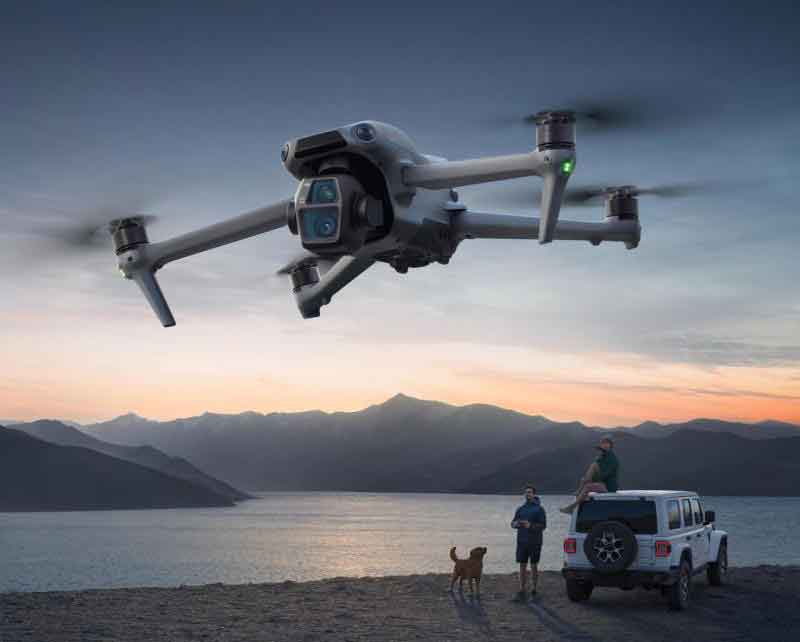
The development trajectory of China’s civilian drone policy can be segmented into distinct phases, reflecting the industry’s maturation and the government’s responsive learning curve. Initially, policies were sparse and reactive. The foundational shift began around 2013-2016, as the state recognized the strategic value of the sector. The period from 2017 onward has been characterized by a concerted effort to build a comprehensive governance structure, balancing promotion with control.
| Phase | Timeframe | Policy Focus & Key Documents | Core Objective |
|---|---|---|---|
| Nascent & Reactive | Pre-2013 | Limited, issue-specific notices; early flight safety concerns. | Incident management, initial safety awareness. |
| Strategic Recognition & Initial Framework | 2013-2016 | “13th FYP for National Strategic Emerging Industries” (2016), “Provisional Regulations on Pilots” (2016). | Elevate industry to national strategy, begin standardizing human components (pilots). |
| Comprehensive Governance & Deepening Regulation | 2017-Present | Real-name Registration (2017), “Guidelines for Manufacturing” (2017), “Interim Measures for Commercial Flights” (2018), “Regulations on Flight Management (Draft)” (2018), dynamic data reporting (2019). | Establish full-chain oversight (manufacturing, ownership, operation), promote quality development, integrate into airspace. |
This phased evolution underscores a critical policy dynamic: the need to simultaneously foster growth and mitigate risk. The encouragement policies aim to stimulate the supply side (manufacturing, R&D) and the demand side (application expansion), often framed within broader national initiatives like “Made in China 2025” and the development of the digital economy. The regulatory policies, conversely, target the operational lifecycle of the civilian drone, from production to end-of-flight, to internalize negative externalities such as airspace conflicts, privacy violations, and safety incidents.
A fundamental aspect of regulation is classification. China has adopted a risk-based taxonomy for civilian drones, which dictates the regulatory burden. The 2018 draft “Unmanned Aircraft Flight Management Interim Regulations” proposed a detailed categorization that influences all subsequent rules.
| Category | Maximum Take-Off Weight (MTOW) | Typical Operational Ceiling | Key Regulatory Implications |
|---|---|---|---|
| Micro | ≤ 250 grams | 50 meters | Minimal regulation; often exempt from pilot licensing in controlled conditions. |
| Light | 250 g < MTOW ≤ 4 kg | 120 meters | Real-name registration required; pilot certification may be simplified or online-based. |
| Small | 4 kg < MTOW ≤ 15 kg | 120 meters (can apply for higher) | Mandatory real-name registration, pilot license, and operational approval for most scenarios. |
| Medium | 15 kg < MTOW ≤ 116 kg | Program dependent | Strict oversight; requires airworthiness certification, detailed flight plans, and licensed pilot. |
| Large | > 116 kg | Program dependent | Treated akin to manned aircraft; full airworthiness certification, dedicated flight zones, stringent operator requirements. |
This classification is pivotal. It allows regulators to apply a proportional level of control, focusing resources on higher-risk operations while enabling innovation and ease of use for low-risk consumer civilian drones. The policy challenge lies in dynamically adjusting these thresholds and associated rules as technology evolves—for instance, with the advent of improved sense-and-avoid systems that might mitigate risks for slightly larger drones.
The true value of civilian drones is realized through their application. Chinese policy has actively sought to broaden and deepen these use cases. Early policies generically encouraged “development,” but later documents became more prescriptive, identifying priority sectors for adoption.
| Application Sector | Policy Encouragement Examples | Key Drivers & Subsidy Models |
|---|---|---|
| Agriculture & Forestry (Plant Protection, Monitoring) | Provincial subsidy schemes (e.g., Hubei 2018-2020 plan); mentioned in national “Digital Village” strategies. | Government purchase subsidies, demonstration projects. High penetration but model reliant on public funds. |
| Logistics & Delivery | Inclusion in “Development Plan for the Air Logistics Industry” (2018); support in Beijing, Shenzhen local plans. | Pilot programs by e-commerce/logistics giants; policy support for urban air mobility infrastructure. |
| Emergency Response & Public Safety | Recognition in disaster relief planning; procurement by police and fire departments. | Government agency procurement, specialized equipment standards. |
| Surveying & Mapping | Integrated into national geographic information resource development plans. | Professional service market demand; high accuracy requirements drive hardware innovation. |
| Infrastructure Inspection (Power Lines, Pipelines) | Encouraged under “smart infrastructure” and “predictive maintenance” policy umbrellas. | Cost-saving and safety benefits drive enterprise adoption. |
| Environmental Monitoring | Tool for implementing ecological civilization policies, air/water quality monitoring. | Government-led monitoring projects and scientific research funding. |
The expansion of these applications is not merely a list of sectors; it represents a strategic calculation of economic and social value. We can model the potential aggregate value (V) of the civilian drone industry as a function of its penetration across these diverse sectors:
$$ V = \sum_{i=1}^{n} (A_i \times P_i \times E_i) $$
Where:
- $A_i$ = Addressable market size for sector $i$ (e.g., total farmland area, length of power grids).
- $P_i$ = Policy-driven penetration rate in sector $i$ (influenced by subsidies, standards, approval ease).
- $E_i$ = Economic efficiency multiplier for using drones in sector $i$ (cost savings, yield increase, new revenue).
Policy directly targets $P_i$ and indirectly influences $E_i$ by fostering technological advancements. The goal is to maximize $V$ while managing systemic risks.
A significant gap identified in the current landscape is the lack of unified, mandatory technical and quality standards for manufacturing. While leading companies have de facto standards, the absence of a national framework leads to market fragmentation, quality inconsistencies, and safety concerns. A robust policy must mandate standards across key dimensions:
- Communication and Control Links: Ensuring resilience against interference and spoofing. Required protocols could be defined, such as mandatory use of specific secure frequency bands or data encryption standards for certain categories.
- Remote Identification (Remote ID): A digital license plate broadcast by the drone during flight. Policy must specify technical parameters (broadcast range, data elements like serial number, location, pilot ID) to enable real-time monitoring by authorities.
- Geo-fencing and Flight Performance: Minimum performance requirements for geo-fencing systems that prevent entry into restricted airspace. This includes the accuracy of the onboard GPS/navigation system and the responsiveness of the flight controller to geo-fencing signals.
- Noise and Environmental Impact: As drone traffic increases, especially for delivery, policies may set maximum noise emission levels and promote or mandate electric propulsion to reduce local pollution.
We can represent the compliance level of a drone model $j$ with a composite standard adherence score $S_j$:
$$ S_j = w_1 \cdot C_{com,j} + w_2 \cdot C_{rid,j} + w_3 \cdot C_{geo,j} + w_4 \cdot C_{env,j} $$
Where $C_{com,j}, C_{rid,j}, C_{geo,j}, C_{env,j}$ are scores (0-1) for compliance in communication, Remote ID, geo-fencing, and environmental standards, respectively, and $w_1…w_4$ are policy-determined weighting factors reflecting regulatory priorities. Market access could be tiered based on a minimum threshold for $S_j$.
Perhaps the most complex policy challenge is airspace integration. The traditional manned aviation paradigm, based on pre-filed flight plans and centralized air traffic control, is ill-suited for the scale, density, and dynamic nature of future civilian drone operations, especially for logistics and urban air mobility. China’s current system requires application and approval for most non-recreational flights, creating a bottleneck.
The future policy direction must leverage concepts like Unmanned Aircraft System Traffic Management (UTM). A UTM is a distributed, automated system that coordinates drone flights primarily with each other, interfacing with traditional Air Traffic Management (ATM) only at necessary points. Key policy-enabled components include:
- Dynamic Airspace Reservation: Policy defines rules for temporarily reserving corridors or volumes of airspace for specific drone operations (e.g., a logistics route), which are then deconflicted by the UTM system.
- Strategic Deconfliction: Rules requiring operators to file intent (not a rigid plan) with the UTM, which uses algorithms to identify and resolve conflicts before takeoff.
- Contingency Management: Policy mandates for automated protocols when a drone loses link, breaches geo-fence, or experiences failure, such as executing a pre-programmed emergency landing.
The efficiency gain from a UTM-enabled system over the current manual approval model can be conceptually modeled. Let $T_{manual}$ be the average time from application to approval under the current system, and $T_{UTM}$ be the near-instantaneous processing time under an automated UTM for compliant, low-risk operations. The throughput capacity $Q$ (flights per unit time) in a given airspace volume increases dramatically:
$$ Q_{UTM} \approx \frac{T_{operational}}{T_{separation} + T_{UTM}} \gg Q_{manual} \approx \frac{T_{operational}}{T_{separation} + T_{manual}} $$
Where $T_{operational}$ is the average flight duration and $T_{separation}$ is the minimum safe time/distance between flights. Policy must drive the investment, technical standardization, and regulatory recognition of such UTM systems.
Effective regulation requires a clear, multi-layered legal and institutional framework. The current system in China involves multiple actors: the Civil Aviation Administration of China (CAAC) leads on aviation safety and regulation; the Ministry of Industry and Information Technology (MIIT) focuses on manufacturing and technology standards; the Ministry of Public Security handles law enforcement related to security and public order; and local governments enact specific management rules. A cohesive policy framework must delineate responsibilities and establish accountability.
| Regulatory Layer | Primary Actor(s) | Core Functions | Needed Policy Tools |
|---|---|---|---|
| National Law | National People’s Congress, State Council | Establish fundamental legal principles, define illegal acts (e.g., “black flight”), set penalties, authorize agency rule-making. | Comprehensive “Civilian Unmanned Aircraft Management Law.” |
| Administrative Regulations | CAAC, MIIT, etc., under State Council authority | Detailed rules on registration, licensing, manufacturing standards, airworthiness, operational limitations, UTM framework. | Formalization of the draft “Flight Management Regulations”; updates to “Manufacturing Guidelines.” |
| Technical Standards | MIIT, Standardization Administration, with industry input | Develop and mandate technical specifications for hardware, software, communication, and data exchange. | Mandatory national standards (GB) for key systems like Remote ID and datalink security. |
| Local Implementation & Enforcement | Provincial/Municipal Governments, Local Police | Designate no-fly zones (e.g., around airports, government buildings), manage local events, conduct on-the-ground enforcement, run public awareness campaigns. | Clear local ordinances, enforcement protocols, and information sharing systems with national UTM/registry. |
A critical policy innovation would be the establishment of a clear liability framework. Beyond penalizing the operator, policies could introduce requirements for third-party liability insurance for commercial and larger civilian drones. Furthermore, the concept of “accountable entities” could be expanded. For instance, if a drone manufacturer knowingly sells a product with disabled or non-compliant geo-fencing software, policy could establish grounds for holding the manufacturer jointly liable for incidents, creating a powerful incentive for supply-chain compliance.
The ultimate goal of a sound policy framework is to maximize the positive socioeconomic impact of civilian drones while minimizing negative externalities. The benefits are multi-faceted:
- Economic Growth and Innovation: Fostering a leading global industry, creating high-tech jobs in R&D, manufacturing, and data services.
- Sectoral Productivity Gains: As shown in the value formula, drones enhance efficiency in agriculture, inspection, and logistics.
- Social and Environmental Benefits: Improving disaster response times, reducing human exposure to dangerous inspection tasks, enabling precision agriculture that reduces chemical and water use.
Conversely, the costs and risks must be managed:
- Safety and Security Costs: Investment in regulatory agencies, UTM systems, enforcement, and technology to mitigate mid-air collision risks, ground impact risks, and malicious use.
- Privacy Externalities: Widespread aerial surveillance capability poses privacy challenges. Policy must define acceptable use, data handling rules, and potentially technical measures like “privacy zones” where drone cameras are automatically disabled.
- Noise and Visual Pollution: High-density urban operations could create new forms of community disturbance, requiring local zoning and operational restrictions.
A holistic policy assessment might employ a simplified net benefit framework:
$$ NB = (G + P + S) – (R_s + R_p + C_r + C_i) $$
Where:
- $NB$ = Net Social Benefit.
- $G$ = Gross Economic Value Added (from the earlier $V$ formula).
- $P$ = Productivity gains in non-market sectors (e.g., faster disaster assessment).
- $S$ = Social value of enhanced safety (e.g., fewer lineman fatalities).
- $R_s$ = Social cost of safety/security incidents.
- $R_p$ = Social cost of privacy erosion.
- $C_r$ = Direct cost of the regulatory and enforcement apparatus.
- $C_i$ = Indirect cost of innovation/compliance burden on industry.
Effective policy aims to maximize $NB$ by amplifying $G$, $P$, $S$ through encouragement while minimizing $R_s$, $R_p$, $C_r$, $C_i$ through smart, risk-proportionate regulation.
Looking ahead, the policy agenda for civilian drones in China will be shaped by several key trends and necessary actions:
1. From Regulation to Integration: The next phase must move beyond basic control towards seamless integration of drones into the transportation and logistics ecosystem. This requires finalizing and implementing the UTM regulatory framework and incentivizing the development of vertiports and other physical infrastructure.
2. Data Sovereignty and Cross-Border Operations: As drones become more connected and generate vast amounts of data (imagery, flight paths), policies on data localization, security, and cross-border transfer will become crucial, especially for international logistics operations.
3. Advanced Air Mobility (AAM) and Autonomous Flight: The future includes larger drones for passenger transport (eVTOLs). Policy must proactively establish the certification basis for autonomous flight systems, pilot training requirements for these new vehicles, and the public acceptance campaigns needed for their deployment.
4. Harmonization with International Standards: To maintain the global competitiveness of China’s civilian drone industry, domestic technical and operational standards should align, where feasible, with international norms being developed by bodies like the International Civil Aviation Organization (ICAO) and ASTM International, facilitating global market access.
5. Fostering Ecosystem Collaboration: Policy should incentivize collaboration between drone manufacturers, communication providers (for 5G/6G C2 links), software developers (for UTM and fleet management), and end-user industries to create integrated solutions rather than isolated products.
In conclusion, China’s policy journey for civilian drones reflects a pragmatic and evolving approach to governing a disruptive technology. The initial focus on strategic encouragement has been progressively balanced with a sophisticated, risk-based regulatory architecture covering classification, registration, piloting, and operation. However, challenges remain in standardizing technology, reforming airspace access, and building a seamless management system for high-density operations. The future policy trajectory must be anticipatory, focusing on integration, automation, and international alignment. By continuing to refine this dual-track approach—nurturing the immense economic and social potential of civilian drones while diligently constructing a safety and security envelope—China can solidify its leadership in this transformative industry and harness its benefits for sustainable development. The success of this endeavor will depend on the agility, foresight, and collaborative spirit embedded in the next generation of drone policies.