
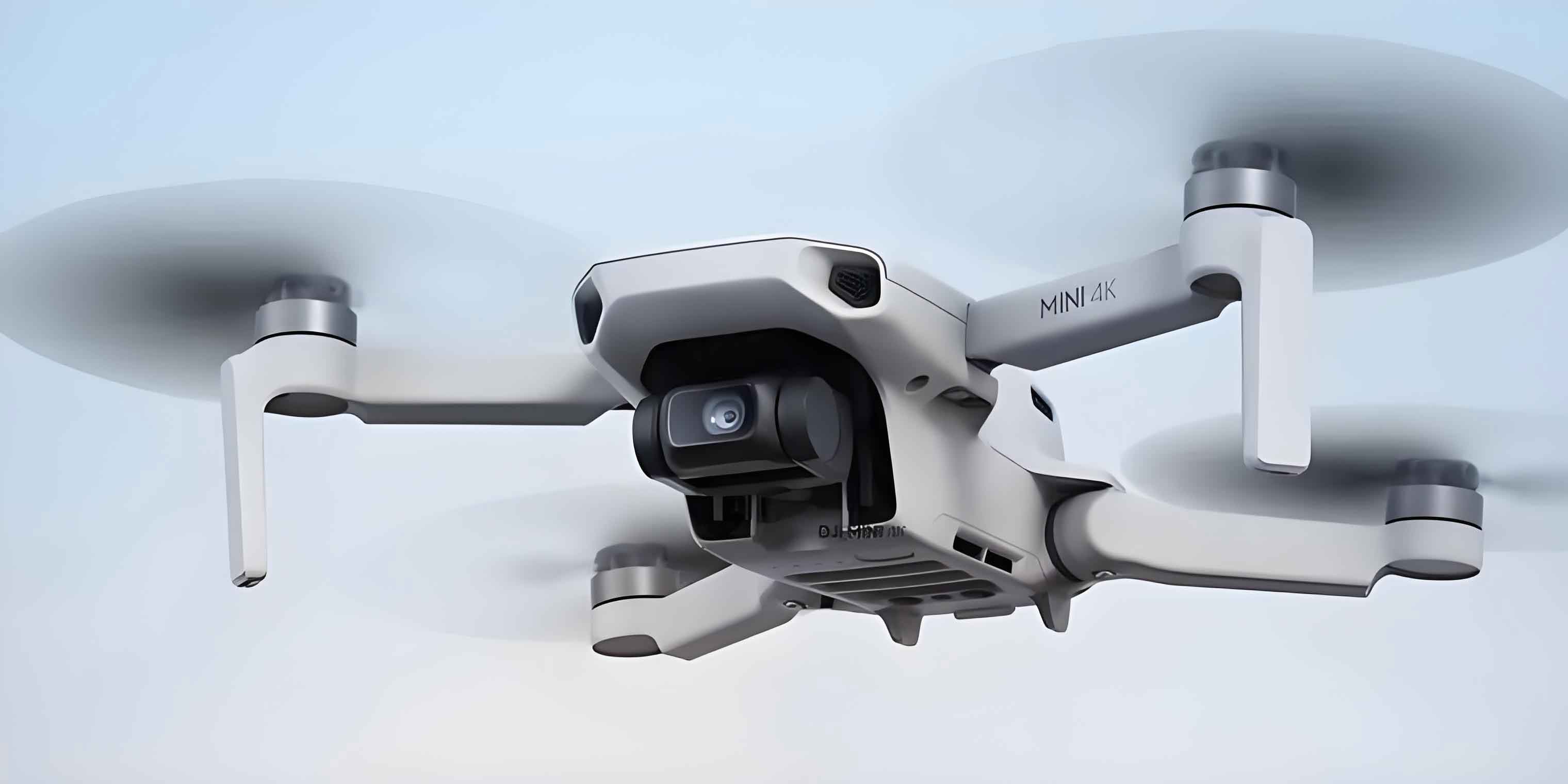
The proliferation of civilian Unmanned Aerial Vehicles (UAVs) represents a paradigm shift in technology accessibility, offering transformative applications across entertainment, aerial photography, precision agriculture, logistics, and infrastructure inspection. However, this rapid democratization of airspace has been paralleled by a significant rise in unauthorized or “illegal flight” activities, herein referred to as “black flights.” These operations pose profound and evolving challenges to national security, public safety, and individual privacy. As the primary entity tasked with maintaining social order and public security, public security organs are at the forefront of addressing this modern threat. This article provides a first-person analysis of the phenomenon of civilian UAV “black flights,” examining its definitions, manifestations, associated public security risks, the current governance difficulties faced by law enforcement, and proposing a multi-faceted strategic framework for effective治安治理 (public security governance).
1. Conceptualizing Civilian UAV “Black Flights”: Definition and Typology
A civilian UAV “black flight” is comprehensively defined as any operation that violates established regulatory frameworks. This encompasses flights conducted without mandatory registration, without requisite pilot certification where required, without prior authorization for flights in controlled airspace, or within designated no-fly zones. Based on prevailing regulations, we can categorize “black flight” manifestations into three primary types.
Type 1: Unregistered Operations. Regulatory mandates, such as those outlined in China’s Interim Regulations on the Flight Management of Unmanned Aircraft, require mandatory real-name registration of civilian UAVs. An unregistered civilian UAV operating in any capacity constitutes a fundamental “black flight.” The failure to register severs the critical link between the aircraft and its owner/operator, impeding accountability and oversight.
Type 2: Unlicensed Operation (Where Required). Regulations typically classify civilian UAVs based on parameters like maximum take-off weight (MTOW) and operational capability, which in turn dictate licensing requirements. A common classification framework is summarized below:
| Category | Typical Max Take-Off Weight (MTOW) | Common Licensing Requirement |
|---|---|---|
| Micro UAV | < 250g | Generally exempt, but subject to airspace rules. |
| Light UAV | 250g – 7kg | Exempt in open/approved areas; may require certification for controlled airspace. |
| Small UAV | 7kg – 25kg | Pilot certification typically required. |
| Medium/Large UAV | > 25kg | Strict pilot certification and operational approval required. |
Operating a civilian UAV in a context where pilot certification is mandatory, without possessing such a valid license, is a definitive “black flight.” For micro and light categories, the “black flight” determination often hinges on unauthorized entry into controlled or restricted airspace rather than the license per se.
Type 3: Unauthorized Flight in Controlled Airspace. Most jurisdictions delineate controlled airspace around sensitive locations such as airports, government facilities, military installations, and critical infrastructure. Operating a civilian UAV within these zones without explicit prior authorization from the relevant air traffic management or security authorities is a critical form of “black flight.” The simplified process for some categories in open areas does not negate the strict control over these sensitive volumes of airspace.
The core illegality can be modeled as a function of regulatory compliance:
$$ \text{Illegal Flight Status } (I) = f(R, L, A) $$
where $I$ is a binary outcome (Legal=0, Illegal=1), and the inputs are:
$R$ = Registration Compliance (1=Yes, 0=No),
$L$ = Licensing Compliance given operational context (1=Yes, 0=No),
$A$ = Airspace Authorization Compliance (1=Yes, 0=No).
A flight is legal only if $R \land (L \lor \text{License\_Exempt}) \land A$ is true; otherwise, it is classified as a “black flight.”
2. Public Security Risks Posed by Civilian UAV “Black Flights”
The risks associated with unregulated civilian UAV operations are multidimensional and severe, escalating from privacy nuisance to threats against national sovereignty.
2.1 Threat to National Security. The small size, low observability, and high payload flexibility of modern civilian UAVs make them potent tools for espionage and asymmetric attacks. They can be used to conduct unauthorized surveillance of sensitive political and military installations, gather intelligence, or even be weaponized. Incidents of drones breaching the airspace of high-security government compounds in various countries underscore this tangible threat. The risk potential $R_{ns}$ can be conceptualized as:
$$ R_{ns} = P_{d} \times (V_{i} + V_{p} + V_{w}) $$
where $P_{d}$ is the probability of a hostile actor deploying a civilian UAV, $V_{i}$ is the value of intelligence that could be gathered, $V_{p}$ is the propaganda value of a breach, and $V_{w}$ is the potential for physical weaponized harm.
2.2 Disruption of Aviation Safety. “Black flights” near airports pose a catastrophic collision risk to manned aircraft. The threat is particularly acute during take-off and landing phases. The probability of a dangerous encounter $P_{enc}$ can be related to drone and aircraft densities:
$$ P_{enc} \propto \rho_{uav} \times \rho_{ac} \times v_{rel} \times t $$
where $\rho_{uav}$ is the spatial density of unauthorized civilian UAVs near flight paths, $\rho_{ac}$ is the density of aircraft, $v_{rel}$ is the relative velocity, and $t$ is the exposure time. Even a small, lightweight civilian UAV can cause critical damage to an aircraft engine or windshield.
2.3 Infringement of Personal Rights: Privacy and Safety. The ubiquitous presence of high-resolution cameras on civilian UAVs has led to a surge in privacy violations, from voyeurism to the unauthorized recording of private property and individuals. Furthermore, technical failures, operator error, or loss of control link can lead to the uncontrolled descent of a civilian UAV (“crash” or “fly-away”), posing direct physical danger to persons and property on the ground.
2.4 Threat to Public Safety and Order. The potential for malicious use of civilian UAVs in crowded places (e.g., sports stadiums, public squares) for terrorism—such as deploying explosives, chemical agents, or causing mass panic through disruptive maneuvers—is a paramount security concern. The use of civilian UAVs for smuggling contraband into prisons or across borders also falls under this category of risk.
The aggregate public security risk $R_{total}$ from civilian UAV “black flights” is therefore a sum of interconnected threats:
$$ R_{total} = \alpha R_{ns} + \beta R_{av} + \gamma R_{pr} + \delta R_{ps} $$
where the coefficients $\alpha, \beta, \gamma, \delta$ represent the relative weight or probability of each risk type materializing in a given context.
3. Governance Challenges for Public Security Organs
Despite the clear regulatory intent, public security organs face significant practical and systemic hurdles in effectively governing civilian UAV “black flights.”
| Challenge Category | Specific Difficulties | Consequences |
|---|---|---|
| 1. Reactive Response Lag | Information source is primarily public reports or post-incident warnings from other agencies. Lack of real-time, integrated data feed on UAV ownership and active flights. | Intervention is often after the incident. Evidence collection and perpetrator identification are delayed and difficult. |
| 2. Ambiguous Jurisdiction & Responsibility | Overlapping mandates between Public Security, Civil Aviation, Air Traffic Management, and others. The public naturally reports to police first, creating a default first-responder burden. | Inefficient resource use, potential for inaction or overreach, and confusion in enforcement actions. |
| 3. Inadequate Expertise & Training | “Black flights” are a novel violation type. Frontline officers lack legal and technical knowledge for identification, evidence handling, and proportional sanctioning. Limited reference cases for guidance. | Inconsistent enforcement, over-reliance on warnings, failure to properly investigate or sanction serious offenses. |
| 4. Technological Deficit in Detection & Countermeasures | Small civilian UAVs are low-altitude, slow, small (LSS) targets difficult to detect with traditional radar. Countermeasure equipment (jammers, spoofers, nets) is expensive, complex, and not standard issue for most units. | Inability to locate operators, forced reliance on destructive neutralization (e.g., shooting down), loss of forensic evidence, low deterrence due to low probability of interception. |
| 5. Low Operator Risk Awareness & Compliance | Perception of UAVs as “toys.” Licensing seen as costly/unnecessary. Ignorance of complex airspace rules. Low perceived risk of getting caught/punished. | High base rate of unintentional violations, willful non-compliance, and normalization of “black flight” behavior. |
The effectiveness $E$ of current governance can be modeled as being hampered by these factors:
$$ E = \frac{C_{reg}}{(T_{lag} \times J_{amb}) + (S_{def} \times T_{def})} $$
Where:
$C_{reg}$ = Clarity and comprehensiveness of regulations,
$T_{lag}$ = Time lag in response,
$J_{amb}$ = Jurisdictional ambiguity factor (>1),
$S_{def}$ = Skill/knowledge deficit of personnel,
$T_{def}$ = Technology deficit in detection/interdiction.
This illustrates that even with good regulations ($C_{reg}$), governance effectiveness is severely reduced by the product of challenges in the denominator.
4. Strategic Countermeasures for Enhanced Governance
To overcome these challenges and secure the low-altitude airspace, public security organs must adopt a holistic, technology-enabled, and collaborative strategy. The following framework outlines key actionable pathways.
4.1 Clarify Mandates and Standardize Enforcement Protocols. Public security organs should internally establish specialized UAV enforcement units. These units would consolidate technical experts (for detection/interdiction) and legally-trained investigators. A critical deliverable is the development of detailed, standardized Enforcement Guidelines and Field Manuals. These documents must:
* Provide clear flowcharts for responding to reports of civilian UAV activity.
* Define step-by-step procedures for identification, verification (checking registration, licenses, authorizations), evidence collection, and suspect interview.
* Establish a graduated response matrix linking specific violations (e.g., unregistered flight near critical infrastructure) to appropriate sanctions (warning, fine, equipment seizure, administrative detention).
* Include pre-defined emergency protocols for high-threat scenarios (e.g., UAV over a large public event).
4.2 Construct an Integrated “UAV Traffic Management” (UTM) Collaboration Platform. A siloed approach is ineffective. Public security organs must champion and actively participate in building a national or regional UTM-style information sharing platform. This cloud-based platform would integrate data from:
* Civil Aviation Authorities: Real-name registration database.
* Air Traffic Management: Controlled airspace maps, approved flight plans.
* UAV Manufacturers/Service Providers (via API): Real-time geofencing compliance data, live telemetry from connected drones (where privacy laws allow).
* Public Security & Other Law Enforcement: Reports, interdiction records, threat alerts.
The platform’s utility for police can be expressed as an increase in situational awareness $SA$:
$$ SA_{new} = SA_{old} + \sum_{i=1}^{n} D_{i} \cdot w_{i} $$
where $D_{i}$ represents a new data stream (registration, flight plan, real-time track) and $w_{i}$ its weighting factor for relevance. This platform allows police to query an unknown UAV’s potential registration, receive alerts on unauthorized flights in their jurisdiction in near real-time, and seamlessly hand off cases that fall under another agency’s primary jurisdiction.
4.3 Invest in Capacity Building: Specialized Units and Training. Beyond creating specialized units, a sustained investment in human capital is required.
* Advanced Technical Training: Operators must be proficient in using spectrum analyzers, radar feeds, direction finders, and non-kinetic countermeasure systems.
* Legal and Investigative Training: All frontline officers, not just specialists, need basic training to recognize “black flight” scenarios, secure initial evidence, and understand jurisdictional boundaries. Investigators need training on digital forensics for UAV systems.
* Academic-Practitioner Partnership: Collaborate with universities and police academies to develop specialized curricula on airspace security, UAV technology, and related law. This builds a long-term pipeline of expertise.
4.4 Deploy and Develop Layered Detection and Mitigation Technologies. A one-size-fits-all technological solution does not exist. A layered defense is necessary, tailored to the protected asset’s risk profile.
$$ \text{Layer Defense Capability } = \sum (\text{Detection Modality}_i \times \text{Countermeasure Option}_j) $$
A potential deployment strategy is outlined below:
| Protected Asset / Area | Recommended Detection Layer | Recommended Mitigation/Interdiction Layer | Rationale |
|---|---|---|---|
| Major International Airports | Primary Radar + RF Scanning + Electro-Optical/Infrared (EO/IR) | Coordinated GPS/GLONASS/GNSS & Command Link Jamming; Automated Alert to ATC and Police | Highest security priority. Requires early warning, high confidence identification, and rapid, safe neutralization. |
| Government/Military Compounds | RF Scanning + Acoustic Sensors + Perimeter EO/IR | Direction Finding to Locate Pilot; Localized Jamming; Net Guns for Capture | Focus on preventing surveillance/breach. Capturing the drone and pilot is often more important than just downing the UAV. |
| Large Public Events (Stadiums, Parades) | Mobile RF Scanning Units on Patrol Vehicles; Tethered Aerostat with EO/IR | Deployable Jamming “Bubbles”; Rapid Response Teams with Net Guns | Mobile, flexible coverage needed. Mitigation must be safe for dense crowds below (minimize falling debris). |
| General Urban Jurisdiction (Police Dept.) | Centralized RF Monitoring Network; Crowdsourced Public Reports via App | Dedicated Rapid Response Unit equipped with portable countermeasures deployed to hotspot locations. | Broad area coverage with limited budget. Focus on deterrence and response to known “black flight” hotspots identified via data analysis. |
4.5 Foster a Culture of Compliance through Public Engagement and “Geofenced” Solutions. Enforcement alone is unsustainable. The ultimate goal is voluntary compliance.
* Targeted Public Awareness Campaigns: Use social media, collaborations with retailers, and community events to educate on regulations, risks, and consequences. Messages should be tailored: basic rules for casual users, advanced airspace knowledge for enthusiasts.
* Promote Legal Flight Opportunities: Work with local authorities to designate and publicize safe, legal flying fields or zones for recreational civilian UAV users. This channels interest into compliant behavior.
* Leverage Manufacturer Collaboration: Advocate for and support the implementation of advanced, tamper-resistant geofencing in civilian UAV firmware. This “technological regulation” creates a default layer of safety, preventing flights into pre-programmed no-fly zones (e.g., airports) at the hardware/software level. The compliance rate $C$ can be enhanced by this multi-pronged approach:
$$ C = C_{base} + \Delta_{edu} + \Delta_{tech} + \Delta_{access} $$
where $C_{base}$ is baseline compliance, $\Delta_{edu}$ is the gain from education, $\Delta_{tech}$ is the gain from enforced geofencing, and $\Delta_{access}$ is the gain from providing legal flying areas.
5. Conclusion
The challenge of governing civilian UAV “black flights” is a quintessential example of a 21st-century public security dilemma, born from rapid technological adoption outpacing the evolution of governance frameworks. The risks posed by unregulated civilian UAV operations are non-trivial, spanning the spectrum from privacy erosion to national security crises. Public security organs, while critically positioned as first responders, face systemic obstacles including reactive lag, jurisdictional friction, skill gaps, and technological shortcomings.
The path forward requires a fundamental shift from a purely reactive, enforcement-centric model to a proactive, intelligence-led, and collaborative governance ecosystem. This entails the clear internal structuring of police responsibilities, the active co-creation of a unified information platform with aviation and industry partners, significant investment in both human expertise and layered defense technologies, and a sustained commitment to public education and partnership. By implementing such an integrated strategy, public security organs can transform the low-altitude airspace from a lawless frontier into a safely integrated domain, thereby safeguarding national interests, public order, and the legitimate, beneficial development of the civilian UAV industry. The governance of the civilian UAV phenomenon is not merely a technical regulatory task but a core component of modern national security and public safety infrastructure.