
As I delve into the rapidly evolving landscape of civilian unmanned aerial vehicles (UAVs), it becomes increasingly clear that their exponential growth necessitates robust legal frameworks. The development of civilian UAVs is not just a technological marvel but a societal shift, reshaping industries from agriculture to logistics. However, this progress is accompanied by legal vacuums and regulatory challenges that demand immediate attention. In this article, I will explore the fundamental issues surrounding the legal regulation of civilian UAVs, focusing on regulatory subjects, principles, content, and systems. My aim is to provide a comprehensive analysis that balances innovation with safety, drawing from global perspectives while emphasizing the unique context of civilian UAV integration.
The proliferation of civilian UAVs has been driven by advancements in artificial intelligence and policy support, such as China’s initiatives to promote aviation manufacturing and general aviation. Yet, the lack of cohesive legislation threatens to hinder their widespread adoption. From my perspective, the core issues revolve around who should regulate civilian UAVs, how to establish guiding principles, what specific aspects require regulation, and how to build a coherent legal system. By addressing these questions, we can foster an environment where civilian UAVs thrive while mitigating risks to security and public welfare.
Regulatory Subjects for Civilian UAVs
In examining the regulatory landscape for civilian UAVs, I find that multiple entities are involved, leading to complexities in coordination and enforcement. The regulatory subjects span military, civil, and industrial domains, each with distinct responsibilities. For instance, in China, the State Council and Central Military Commission’s Air Traffic Control Committee serve as the highest authority, while departments like the Ministry of Industry and Information Technology, Civil Aviation Administration, and Ministry of Public Security handle specific aspects such as production, registration, and public safety. This multi-agency approach aims for full lifecycle management, but it often results in overlaps and gaps.
From my analysis, the key challenge lies in clarifying the roles and enhancing collaboration among these bodies. A unified agency could streamline processes, but current frameworks rely on inter-departmental mechanisms. Below, I summarize the primary regulatory subjects and their functions in a table to illustrate the distribution of responsibilities.
| Regulatory Subject | Primary Responsibilities | Challenges and Coordination Needs |
|---|---|---|
| State Council/Central Military Commission Air Traffic Control Committee | Overall leadership and coordination of civilian UAV flight management. | Ensuring top-down coherence and resolving inter-agency conflicts. |
| Ministry of Industry and Information Technology | Oversight of production and manufacturing of civilian UAVs. | Aligning industrial standards with safety requirements for civilian UAVs. |
| Civil Aviation Administration | Registration, operational permits, and pilot training for civilian UAVs. | Integrating civilian UAVs into existing air traffic management systems. |
| Ministry of Public Security | Public safety monitoring and sales备案 for civilian UAVs. | Balancing security concerns with privacy rights in civilian UAV usage. |
| Local Governments and Industry Associations | Implementation of regional rules and industry-specific guidelines for civilian UAVs. | Adapting national policies to local contexts without creating fragmentation. |
As I reflect on this, the coordination among these subjects is crucial for effective regulation of civilian UAVs. Without clear boundaries and collaborative mechanisms, regulatory inefficiencies could stifle innovation. Moreover, emerging issues like data security and environmental impact require attention from additional bodies, such as cybersecurity agencies and environmental protection departments. In my view, a dynamic and adaptive regulatory framework is essential, where subjects evolve alongside technological advancements in civilian UAVs.
Regulatory Principles for Civilian UAVs
When considering how to regulate civilian UAVs, I believe that foundational principles must guide the legal approach. These principles serve as a compass, ensuring that regulations are both effective and equitable. Based on my research, I identify four key principles: balancing safety and flight freedom, harmonizing regulation with industry promotion, emphasizing coordination, and prioritizing social interests. Each principle involves trade-offs that can be modeled mathematically to inform policy decisions.
First, the principle of balancing safety and flight freedom is paramount. Historically, in jurisdictions like the United States, flight freedom is considered an inherent right, but it must be tempered with safety measures. For civilian UAVs, this balance can be expressed through a formula that weighs these factors. Let me propose a simple model: $$ B = \alpha S + \beta F $$ where \( B \) represents the overall regulatory balance, \( S \) denotes safety level, \( F \) signifies flight freedom, and \( \alpha \) and \( \beta \) are weighting coefficients that reflect societal priorities. For civilian UAVs, optimizing \( B \) requires adjusting \( \alpha \) and \( \beta \) based on risk assessments and public demand.
Second, the principle of harmonizing regulation with industry promotion acknowledges that excessive control can hinder the growth of civilian UAVs. From my perspective, regulations should act as enablers rather than barriers. This can be visualized through a trade-off curve: $$ G = \frac{R}{I} $$ where \( G \) is the growth index for civilian UAVs, \( R \) represents regulatory stringency, and \( I \) denotes industry innovation capacity. A high \( G \) indicates that regulations support innovation, whereas a low \( G \) suggests stifling effects. Policymakers must aim for an optimal point where \( G \) is maximized for civilian UAV development.
Third, coordination is vital due to the multi-stakeholder nature of civilian UAV regulation. I see this as a network problem, where efficiency depends on seamless interactions. A coordination metric can be defined as: $$ C = \sum_{i=1}^{n} w_i \cdot c_i $$ where \( C \) is the overall coordination score, \( n \) is the number of regulatory subjects, \( w_i \) are weights for each subject’s importance, and \( c_i \) are their individual coordination levels. For civilian UAVs, enhancing \( C \) involves improving communication channels and standardizing protocols across agencies.
Fourth, the principle of social interests underscores that civilian UAVs should benefit society broadly, such as in disaster response or environmental monitoring. This aligns with legal theories that view law as a tool for social good. In the context of civilian UAVs, social utility can be quantified as: $$ U_s = \int_{0}^{T} (B_e – C_e) \, dt $$ where \( U_s \) is the social utility over time \( T \), \( B_e \) represents benefits like improved public services, and \( C_e \) denotes costs such as noise pollution. Regulations for civilian UAVs should aim to maximize \( U_s \) by incentivizing positive applications while mitigating negatives.
To summarize these principles, I present a comparative table that highlights their applications and challenges for civilian UAVs.
| Principle | Core Idea | Application to Civilian UAVs | Potential Challenges |
|---|---|---|---|
| Safety vs. Flight Freedom | Ensure security without unduly restricting aerial mobility for civilian UAVs. | Implement graduated regulations based on risk levels of civilian UAV operations. | Defining acceptable risk thresholds and public acceptance of civilian UAV flights. |
| Regulation vs. Industry Promotion | Foster innovation through supportive policies for civilian UAVs. | Streamline licensing processes and offer incentives for civilian UAV R&D. | Avoiding regulatory capture or under-regulation that compromises safety of civilian UAVs. |
| Coordination | Enhance inter-agency collaboration for civilian UAV management. | Establish joint task forces and data-sharing platforms for civilian UAV oversight. | Bureaucratic silos and conflicting mandates among regulators of civilian UAVs. |
| Social Interests | Prioritize societal benefits like environmental protection for civilian UAVs. | Mandate eco-friendly designs and prioritize civilian UAV use in public services. | Balancing private sector interests with public goods in civilian UAV deployment. |
In my view, these principles are not static; they must evolve as civilian UAV technology advances. By embedding them into legal frameworks, we can create a resilient ecosystem for civilian UAVs that adapts to future challenges.
Regulatory Content for Civilian UAVs
Delving into the specifics, I categorize the regulatory content for civilian UAVs into dynamic and static dimensions. Dynamic regulation pertains to real-time oversight during flight operations, while static regulation involves pre-flight requirements and standards. Both are essential for comprehensive management of civilian UAVs, and I will explore each in detail, using tables and formulas to elucidate key points.
Starting with dynamic regulation, this encompasses activities like flight monitoring, safety surveillance, emergency response, and violation handling for civilian UAVs. From my perspective, effective dynamic regulation relies on technological infrastructure, such as surveillance networks and automated systems. For instance, flight dynamic monitoring can be modeled as a control problem: $$ M(t) = \int_{0}^{t} (S_r + A_d) \, d\tau $$ where \( M(t) \) is the monitoring efficacy at time \( t \), \( S_r \) represents sensor inputs from civilian UAVs, and \( A_d \) denotes algorithmic detection capabilities. Enhancing \( M(t) \) requires investments in IoT and AI for civilian UAV tracking.
Similarly, flight safety monitoring involves maintaining safe distances and collision avoidance for civilian UAVs. A formula for safety spacing can be expressed as: $$ D_{safe} = v \cdot t_{react} + \epsilon $$ where \( D_{safe} \) is the minimum safe distance between civilian UAVs, \( v \) is relative velocity, \( t_{react} \) is reaction time, and \( \epsilon \) is a safety margin. Regulations must standardize \( D_{safe} \) based on civilian UAV categories to prevent accidents.
For emergency response, I propose a framework that integrates civilian UAVs into existing disaster management systems. The response efficiency \( E_r \) can be calculated as: $$ E_r = \frac{R_{uav}}{T_{delay}} $$ where \( R_{uav} \) is the number of civilian UAVs deployed and \( T_{delay} \) is the time delay in activation. Regulations should mandate emergency protocols for civilian UAV operators to maximize \( E_r \).
Regarding static regulation, this includes flight permits, airworthiness management, airspace designation, and pilot qualifications for civilian UAVs. These are foundational elements that ensure baseline safety. For example, airworthiness certification for civilian UAVs can be viewed as a compliance function: $$ C_{aw} = f(P, T, R) $$ where \( C_{aw} \) is the certification outcome, \( P \) represents design parameters, \( T \) denotes testing rigor, and \( R \) signifies regulatory requirements. Streamlining \( C_{aw} \) processes can accelerate the deployment of civilian UAVs.
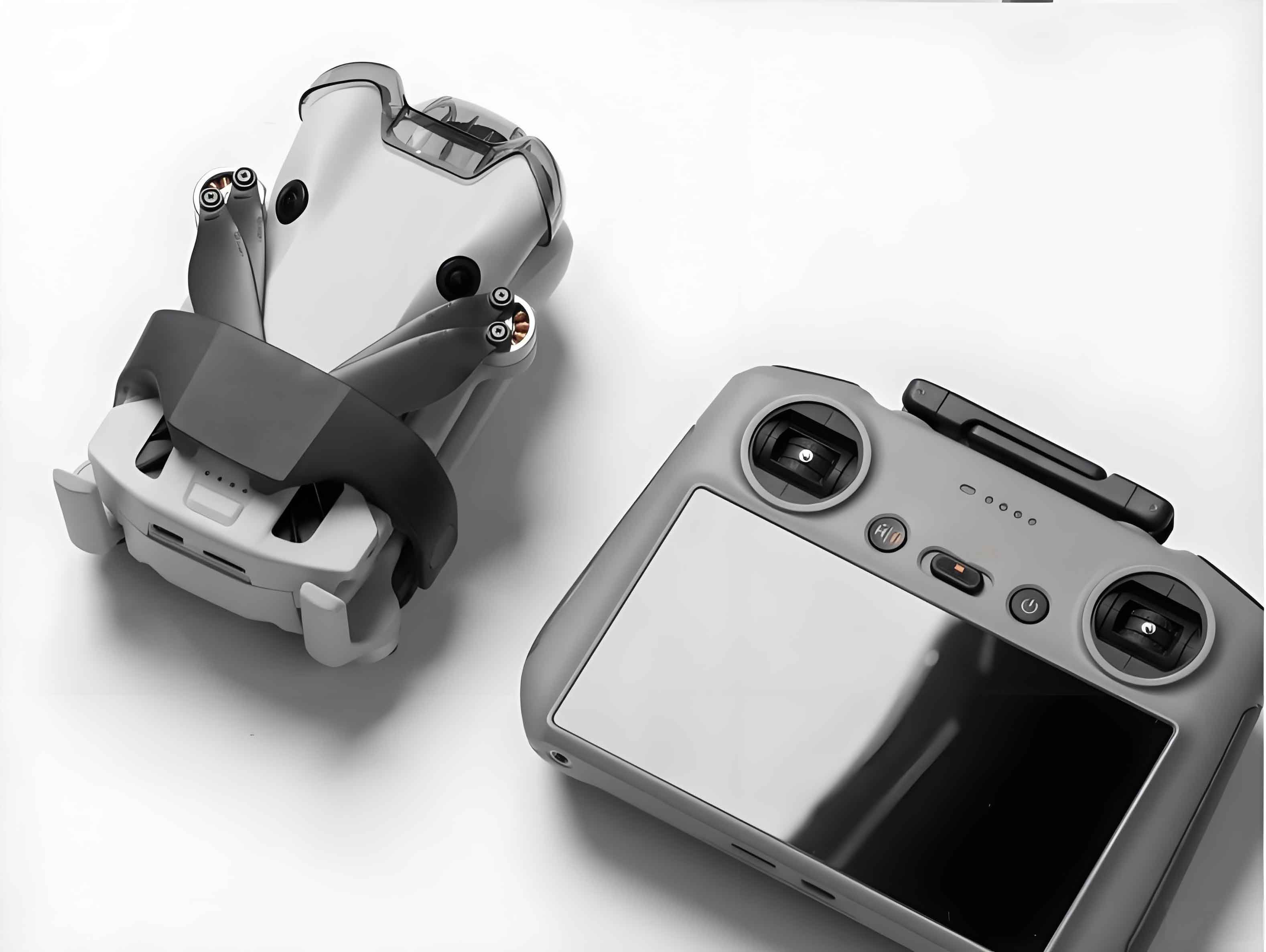
As I consider airspace design, it is a critical aspect for civilian UAVs, involving the allocation of low-altitude zones. The airspace utility \( U_a \) can be modeled as: $$ U_a = \sum_{i=1}^{k} (A_i \cdot U_i) $$ where \( k \) is the number of airspace segments, \( A_i \) is the area allocated, and \( U_i \) is the usage intensity for civilian UAVs. Regulations must optimize \( U_a \) by balancing access and restrictions.
To consolidate, I present tables that outline the components of dynamic and static regulation for civilian UAVs.
| Component | Description | Regulatory Requirements for Civilian UAVs |
|---|---|---|
| Flight Dynamic Monitoring | Real-time tracking of civilian UAV positions and trajectories. | Mandate ADS-B or similar tracking systems for civilian UAVs above a certain weight. |
| Flight Safety Monitoring | Ensuring safe separations and collision avoidance for civilian UAVs. | Implement geofencing and automated alert systems for civilian UAV operations. |
| Emergency Response | Procedures for handling incidents involving civilian UAVs. | Require emergency plans and insurance for civilian UAV operators. |
| Violation Handling | Penalties for non-compliance with flight rules for civilian UAVs. | Establish fines and license suspensions based on severity of civilian UAV infractions. |
| Component | Description | Regulatory Requirements for Civilian UAVs |
|---|---|---|
| Flight Permits | Pre-approval for civilian UAV operations in specific airspaces. | Simplify permit applications for low-risk civilian UAV flights via online portals. |
| Airworthiness Management | Certification of civilian UAV design and manufacturing standards. | Adopt risk-based classification for airworthiness checks on civilian UAVs. |
| Airspace Designation | Zoning of areas where civilian UAVs can fly. | Create flexible zones (e.g., free, restricted) for civilian UAV activities. |
| Pilot Qualifications | Training and licensing requirements for civilian UAV operators. | Standardize competency tests and recurrent training for civilian UAV pilots. |
From my analysis, the regulatory content for civilian UAVs must be adaptable, as technologies like autonomous flight and swarm operations emerge. By integrating dynamic and static elements, we can build a holistic framework that addresses both immediate and long-term needs of civilian UAVs.
Regulatory System for Civilian UAVs
Finally, I turn to the regulatory system, which encompasses the legal hierarchy and institutional arrangements governing civilian UAVs. In my view, a robust system should be centered on core laws, supported by administrative regulations, industry rules, implementation details, and local policies. This multi-layered approach ensures consistency while allowing flexibility for civilian UAV applications across diverse contexts.
The foundation of this system is a comprehensive law, such as a “Civilian UAV Management Act,” that outlines overarching principles and mandates. From there, administrative regulations can specify technical standards, like those for noise emissions from civilian UAVs, which can be quantified as: $$ L_{eq} = 10 \log_{10} \left( \frac{1}{T} \int_{0}^{T} \frac{p(t)^2}{p_0^2} \, dt \right) $$ where \( L_{eq} \) is the equivalent sound level, \( p(t) \) is sound pressure from civilian UAVs, \( p_0 \) is the reference pressure, and \( T \) is the measurement period. Regulations should set limits on \( L_{eq} \) to mitigate noise pollution from civilian UAVs.
Industry rules, developed by associations, can address operational best practices for civilian UAVs. For instance, data protection guidelines can be modeled using an encryption strength metric: $$ E_s = \frac{K_{len}}{T_{crack}} $$ where \( E_s \) is encryption strength, \( K_{len} \) is key length, and \( T_{crack} \) is estimated time to crack. Standards for civilian UAVs should require high \( E_s \) to safeguard privacy.
Implementation details involve procedural aspects, such as registration processes for civilian UAVs. A efficiency index for registration can be defined as: $$ I_{reg} = \frac{N_{processed}}{T_{total}} $$ where \( I_{reg} \) is the registration efficiency, \( N_{processed} \) is the number of civilian UAVs registered, and \( T_{total} \) is the total time taken. Streamlining this through digital platforms can boost \( I_{reg} \) for civilian UAV owners.
Local policies must align with national frameworks but cater to regional needs for civilian UAVs. For example, urban areas might impose stricter rules on civilian UAV flights than rural zones. This can be expressed as a policy gradient: $$ \nabla P = \frac{\partial R}{\partial L} $$ where \( \nabla P \) is the policy gradient, \( R \) represents regulatory strictness, and \( L \) denotes local factors like population density. Adjusting \( \nabla P \) allows tailored regulation for civilian UAVs.
To illustrate the regulatory system, I provide a table that maps the components and their interrelationships for civilian UAVs.
| Component | Function | Examples for Civilian UAVs | Coordination Mechanisms |
|---|---|---|---|
| Core Laws | Establish legal basis and principles for civilian UAV regulation. | National aviation law amendments to include civilian UAV provisions. | Legislative reviews and public consultations on civilian UAV bills. |
| Administrative Regulations | Detailed rules on safety, environment, and operations of civilian UAVs. | Noise limits and airworthiness standards for civilian UAVs. | Inter-agency committees to draft regulations for civilian UAVs. |
| Industry Rules | Self-regulatory standards for civilian UAV manufacturers and operators. | Code of conduct for data ethics in civilian UAV usage. | Industry forums and certification bodies for civilian UAVs. |
| Implementation Details | Procedural guidelines for enforcing civilian UAV regulations. | Online registration portals and inspection protocols for civilian UAVs. | Training programs for regulators handling civilian UAV cases. |
| Local Policies | Adapt national rules to local contexts for civilian UAVs. | Zoning laws that designate civilian UAV corridors in cities. | Regional task forces to monitor civilian UAV compliance. |
In my perspective, the regulatory system for civilian UAVs must be iterative, with regular updates to incorporate technological advancements. By fostering collaboration across layers, we can ensure that civilian UAVs contribute positively to society while minimizing risks.
Conclusion
In conclusion, the legal regulation of civilian UAVs is a multifaceted endeavor that requires careful consideration of subjects, principles, content, and systems. From my exploration, I emphasize that civilian UAVs represent a transformative force, but their integration into airspace and society hinges on balanced and coherent frameworks. By prioritizing principles like safety-freedom balance and social interests, we can guide the development of civilian UAVs responsibly. The regulatory content, spanning dynamic and static aspects, must evolve with innovations in civilian UAV technology, supported by a robust system of laws and policies.
As I look ahead, I believe that ongoing dialogue among stakeholders—governments, industry, and the public—is essential for refining regulations for civilian UAVs. With proactive measures, civilian UAVs can unlock immense benefits, from enhancing logistics to saving lives in emergencies. Ultimately, the goal is to create an ecosystem where civilian UAVs soar safely and freely, driven by laws that foster innovation while protecting the common good.