
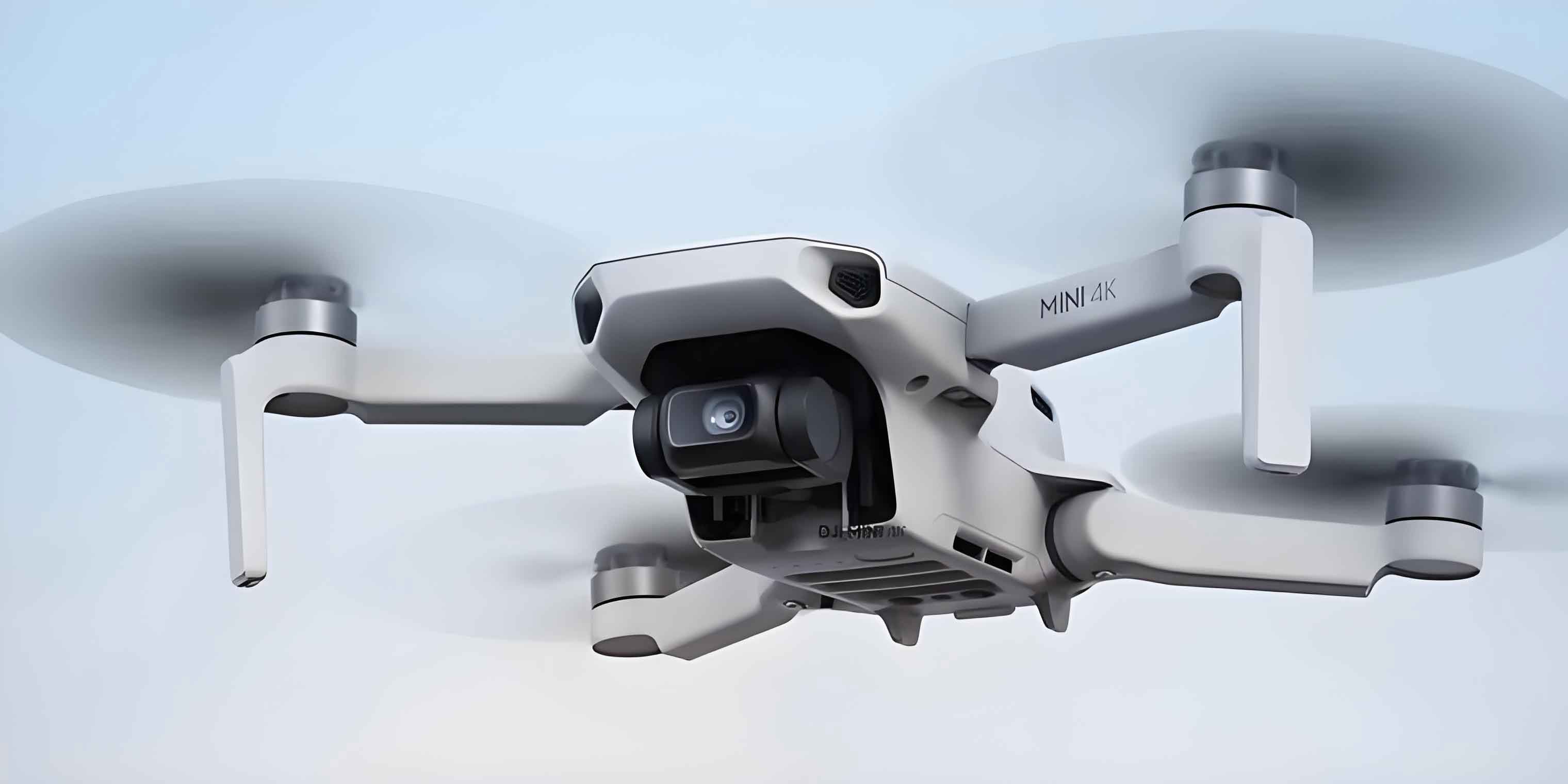
The Unmanned Aerial Vehicle (UAV), particularly in its civilian applications, has transcended its initial role as a niche technology to become an indispensable element of modern industry and logistics. The rapid proliferation of civilian UAVs brings unprecedented convenience and efficiency across sectors such as agriculture, infrastructure inspection, emergency response, and logistics. However, this explosive growth concurrently exposes critical challenges in airspace safety, regulatory compliance, and operational management. Effective path planning stands as a cornerstone technology, essential for ensuring the safe, economical, and efficient execution of missions by civilian UAVs. This article aims to provide a comprehensive review of the global development and management landscape of civilian UAVs, followed by a detailed analysis of the state-of-the-art in UAV path planning research, concluding with insights into future trends.
1. Fundamentals and System Architecture of Civilian UAVs
A civilian UAV system is an integrated platform comprising the aerial vehicle itself, a ground control station (GCS), and the communication data link connecting them. Based on aerodynamic configuration, civilian UAVs are primarily categorized into fixed-wing, multi-rotor, helicopter, and vertical take-off and landing (VTOL) fixed-wing hybrids. The VTOL configuration is particularly advantageous for civilian UAV applications, combining the endurance and speed of fixed-wing aircraft with the hover capability and minimal take-off/landing space requirements of multi-rotors.
The UAV’s airframe integrates several key subsystems: the propulsion system (motors, propellers, batteries/fuel), the flight controller (the “brain” for stabilization and navigation), sensors (e.g., GPS, IMU, cameras), payloads, and the communication module. The Ground Control Station, often a handheld remote or a software application on a smart device, allows the operator to send commands and receive telemetry and sensor data. The functional architecture of a typical civilian UAV system can be summarized as follows:
$$ \text{UAV System} = f(\text{Airframe}, \text{Avionics}, \text{GCS}, \text{Data Link}, \text{Payload}) $$
2. Global Development Status of Civilian UAVs
2.1 Development in Key Regions
The global market for civilian UAVs has experienced exponential growth over the past decade. While initially driven by consumer-grade models, the industrial and commercial sectors now represent the fastest-growing segment.
United States: The Federal Aviation Administration (FAA) reported over 1.7 million registered small UAVs by the end of 2019. Forecasts predict sustained growth, with commercial small UAVs expected to reach approximately 828,000 units by 2024. Notably, annual flight hours for all small UAVs are already comparable to total U.S. general aviation hours, underscoring their significant and growing presence in the national airspace.
Europe: The European Union Aviation Safety Agency (EASA) forecasts a fleet of over 7 million civilian UAVs by 2025, the vast majority being consumer models. More importantly, the commercial and government professional drone sector is projected to grow steadily, potentially supporting hundreds of thousands of jobs by 2050. A key focus is the integration of larger unmanned aircraft into high-altitude airspace for transport purposes.
China: The civilian UAV industry in China has seen remarkable development. Statistics indicate that by the end of 2020, the number of registered drones in China exceeded 520,000, with commercial flight hours in 2020 growing by 36.4% year-on-year. The industry is characterized by a robust and concentrated supply chain, particularly for lightweight models, with Chinese manufacturers holding a leading position in the global consumer drone market. The application spectrum for civilian UAVs in China is vast and expanding rapidly.
| Application Domain | Key Functions of Civilian UAVs |
|---|---|
| Precision Agriculture | Crop spraying, health monitoring, yield estimation. |
| Surveying & Mapping | Aerial photogrammetry, 3D modeling, topographic surveys. |
| Public Safety & Emergency | Disaster assessment, fire monitoring, search and rescue, police operations. |
| Infrastructure Inspection | Power line, pipeline, and bridge inspection. |
| Logistics & Delivery | Last-mile package delivery, medical supply transport. |
2.2 Convergence with Enabling Technologies
The capabilities of civilian UAVs are being dramatically enhanced through convergence with other cutting-edge technologies. The integration of high-precision BeiDou/GNSS modules improves navigation accuracy. Advancements in battery technology and solar cells are extending flight endurance. The rollout of 5G networks promises ultra-reliable, low-latency communication (URLLC), which is critical for real-time control and high-bandwidth data transmission for civilian UAVs operating in dense urban environments or beyond visual line of sight (BVLOS).
3. Management Frameworks for Civilian UAV Operations
As the density of civilian UAV operations increases, establishing safe and efficient traffic management systems becomes paramount. Different regions have developed distinct conceptual frameworks.
3.1 Management Philosophy and Regulatory Evolution
The regulatory approach has evolved from simple registration and line-of-sight rules towards more comprehensive, risk-based, and automated traffic management systems. A common trend is the classification of civilian UAVs based on parameters like weight, speed, and operational intent to apply proportionate rules.
| Region/System | Core Philosophy | Key Features |
|---|---|---|
| U.S. – UTM (Unmanned Traffic Management) | Ecosystem of Federated Services | Decentralized, service-oriented architecture. Leverages USS (UAS Service Suppliers) for conflict management in low-altitude airspace. Focuses on information exchange and dynamic airspace configuration. |
| Europe – U-Space | Set of Automated Services | A structured set of digital and automated services to support safe and efficient drone operations. Emphasizes high levels of automation and digitalization from e-registration to conflict detection and resolution. |
| China – UTMISS & Regulatory System | Centralized Monitoring with Service Provision | National UTM Information Service System (UTMISS) for real-time flight data reporting and monitoring. A comprehensive regulatory framework mandating registration, pilot certification, and operational approvals, especially for BVLOS flights. |
3.2 The Critical Role of Path Planning in Management
Effective regulatory frameworks ultimately depend on the technological capability of civilian UAVs to follow planned, predictable, and safe paths. Advanced path planning is the enabling technology that allows for:
- Structured Airspace Utilization: Pre-planned routes or networks can be designed to efficiently organize the flow of civilian UAVs, akin to roads for vehicles.
- Dynamic Compliance: Real-time path replanning allows UAVs to adhere to temporary flight restrictions (TFRs) or avoid newly designated no-fly zones.
- Deconfliction: Cooperative path planning algorithms can ensure safe separation between multiple civilian UAVs operating in proximity.
Thus, advancements in path planning research directly feed into the feasibility and safety of next-generation civilian UAV management systems like U-Space and UTM.
4. Path Planning for Civilian UAVs: Requirements and Algorithmic Approaches
Path planning for a civilian UAV is the process of computing an optimal or feasible trajectory from an initial state (point, velocity) to a goal state, subject to various constraints and objectives. The fundamental problem can be formulated as finding a path $P$ that minimizes a total cost function $J$:
$$ \min_{P} J(P) = w_1 \cdot L(P) + w_2 \cdot T(P) + w_3 \cdot R_{threat}(P) + w_4 \cdot E(P) $$
Subject to:
$$ g_i(P) \leq 0, \quad h_j(P) = 0 $$
where $L$ is path length, $T$ is time, $R_{threat}$ is risk from obstacles/terrain, $E$ is energy consumption, $w_i$ are weighting coefficients, and $g_i$, $h_j$ represent inequality and equality constraints (e.g., maximum curvature, minimum obstacle clearance, kinematic constraints of the civilian UAV).
4.1 Taxonomy of Path Planning Problems
- Global (Static) vs. Local (Dynamic) Planning: Global planning uses a priori known environmental maps (terrain, static obstacles, no-fly zones) to compute an offline path. Local planning, or real-time obstacle avoidance, reacts to unforeseen, dynamic obstacles detected during flight.
- Single-Objective vs. Multi-Objective Optimization: Early methods often minimized a single metric like path length. Modern approaches for civilian UAVs must balance multiple, often conflicting, objectives such as safety, energy efficiency, and mission time.
- Single UAV vs. Multi-UAV Cooperative Planning: Coordinating the paths of a fleet of civilian UAVs introduces additional constraints like maintaining communication links, avoiding inter-collision, and optimizing collective task allocation.
4.2 Review of Path Planning Algorithms
A wide array of algorithms has been applied to the civilian UAV path planning problem, each with distinct strengths and weaknesses.
4.2.1 Classic and Sampling-Based Algorithms
These form the foundational methods in robotics and computational geometry.
- Graph-Search Methods (A*, Dijkstra): These algorithms search a discretized representation of the environment (graph). A* uses a heuristic to guide the search efficiently and is guaranteed to find the shortest path. However, they suffer from the “curse of dimensionality” in 3D space and yield piecewise linear paths that require smoothing for civilian UAV dynamics.
$$ f(n) = g(n) + h(n) $$
where $f(n)$ is the total estimated cost, $g(n)$ is the cost from start to node $n$, and $h(n)$ is the heuristic estimated cost from $n$ to the goal. - Voronoi Diagram: Generates paths that maximize clearance from known threat points, which is excellent for safety but often results in sub-optimal, overly long paths.
- Rapidly-exploring Random Tree (RRT): A sampling-based algorithm that efficiently explores high-dimensional spaces by randomly growing a tree. It is probabilistically complete but does not guarantee optimality. Variants like RRT* are asymptotically optimal.
- Artificial Potential Field (APF): The UAV is attracted to the goal and repelled from obstacles via virtual forces. It is simple and allows for real-time reactions but is prone to getting trapped in local minima (e.g., between closely spaced obstacles).
4.2.2 Intelligent Optimization Algorithms (Metaheuristics)
These population-based algorithms are highly effective for complex, non-convex, multi-objective optimization problems typical in civilian UAV path planning.
| Algorithm | Inspiration | Advantages for Civilian UAVs | Common Challenges |
|---|---|---|---|
| Genetic Algorithm (GA) | Biological Evolution | Good for multi-objective optimization, can handle complex, non-differentiable cost functions. | High computational cost, sensitive to parameter tuning (crossover/mutation rates), may converge prematurely. |
| Particle Swarm Optimization (PSO) | Social Behavior of Bird Flocking | Conceptually simple, few parameters, fast convergence in early stages. | Easily falls into local optima in complex environments, performance degrades for discrete problems. |
| Ant Colony Optimization (ACO) | Foraging Behavior of Ants | Positive feedback leads to good solutions, robust, suitable for graph-based path planning. | Slow convergence speed, requires significant memory for pheromone matrices. |
| Artificial Bee Colony (ABC) | Foraging Behavior of Honey Bees | Balances exploration and exploitation, relatively robust. | Convergence speed can be slow for complex cost landscapes. |
Recent research trends focus heavily on hybrid algorithms that combine the strengths of different methods to overcome their individual weaknesses. For instance, a common approach is to use a fast global planner (e.g., A*) to generate an initial coarse path, which is then optimized for smoothness and dynamic feasibility using a metaheuristic like PSO or GA. Another trend is the integration of local APF methods with global metaheuristics to enable both optimal offline planning and robust online obstacle avoidance for civilian UAVs.
4.2.3 Learning-Based Approaches
Inspired by breakthroughs in artificial intelligence, machine learning is emerging as a powerful tool for path planning, especially in unstructured environments.
- Reinforcement Learning (RL): The civilian UAV (agent) learns an optimal policy (path planning strategy) through trial-and-error interactions with the environment to maximize a cumulative reward. This is particularly promising for complex, dynamic obstacle avoidance where formulating an explicit cost function is difficult.
- Deep Learning (DL): Deep Neural Networks (DNNs), particularly Convolutional Neural Networks (CNNs) and Recurrent Neural Networks (RNNs), can be used to learn mapping functions from sensor input (e.g., images, LiDAR point clouds) directly to steering commands or waypoints, enabling end-to-end navigation.
While learning-based methods show great promise for adaptive and intelligent behavior in civilian UAVs, they currently face challenges such as the need for vast amounts of training data, safety verification difficulties, and high computational requirements for onboard processing.
5. Future Trends and Conclusion
The trajectory of civilian UAV development points towards increasingly dense, automated, and complex operations, most notably in the realm of Urban Air Mobility (UAM) and Advanced Air Mobility (AAM). These concepts envision a network of electric vertical take-off and landing (eVTOL) aircraft, including large passenger and cargo drones, operating within cities and between regions.
5.1 Implications for Path Planning
This future imposes new, stringent requirements on path planning technology for civilian UAVs:
- 4D Trajectory Management: Paths must be precisely defined in three spatial dimensions and time to enable high-density, predictable traffic flows in controlled airspace.
- Resilient and Real-Time Replanning: Systems must handle numerous dynamic constraints (weather, other traffic, temporary obstacles) with minimal disruption, requiring highly efficient and robust online algorithms.
- Swarm Intelligence: For large-scale logistics or disaster response, decentralized cooperative planning algorithms that enable self-organizing, resilient behavior in swarms of civilian UAVs will be essential.
- Integration with Air Traffic Management (ATM): The paths of civilian UAVs, especially in UAM corridors, must be seamlessly integrated and deconflicted with traditional manned aviation traffic, necessitating standardized communication protocols and interoperable planning systems.
5.2 Conclusion
The ascent of the civilian UAV from a recreational gadget to a pillar of the digital economy is undeniable. Its successful integration into the global airspace ecosystem hinges on a dual foundation: progressive, risk-based regulatory frameworks like U-Space and UTM, and sophisticated, reliable path planning algorithms. While significant progress has been made in both domains, the journey ahead requires focused research. Algorithm development must shift from purely theoretical simulation to addressing the noisy, uncertain, and highly dynamic real-world environments where civilian UAVs operate. Furthermore, the path planning community must engage closely with regulators and air navigation service providers to ensure that algorithmic capabilities align with operational and safety requirements. By advancing the science of path planning, we unlock the full potential of civilian UAVs to revolutionize transportation, logistics, and services, ushering in a new era of aerial mobility.