
With the rapid advancement of technology, plummeting production costs, user-friendly pricing, and simplified operation, unmanned aerial vehicles (UAVs) have transitioned from military applications to industrial production and daily life. Today, civilian drones are predominantly categorized into consumer-grade units for personal entertainment and industrial-grade units deployed across meteorology, aerial photography, agricultural monitoring, power inspections, forest fire detection, traffic surveillance, cargo transport, and emergency response. While these civilian drones offer immense convenience, they simultaneously expose significant security loopholes, disrupt national aviation order, and present risks of being exploited for illicit activities. This paper, from my analytical perspective, examines the status quo, identifies systemic problems, and proposes targeted countermeasures for the public security governance of civilian drones in China, arguing for a holistic framework to ensure the sector’s healthy and sustainable development.
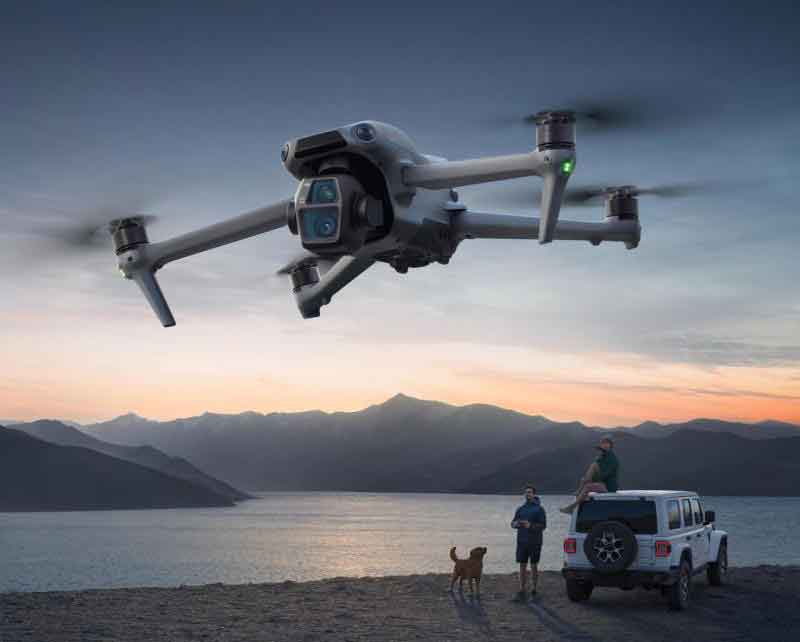
The proliferation of civilian drones is a global phenomenon, yet China’s market scale and growth trajectory are particularly noteworthy. As a leading nation in this aerospace sector, China’s position in the global market for civilian drones is formidable. The inherent advantages of civilian drones—low cost, operational simplicity, high flexibility, and stealth—have also made them attractive tools for public security departments nationwide. However, this explosive growth has created vast regulatory gray zones. Incidents of drones interfering with commercial airspace, causing injuries from crashes, being used for smuggling, espionage, or violating privacy are increasingly common. The theoretical discourse often prioritizes technological advancement over the attendant public security governance challenges. Consequently, there is an urgent need to construct a coherent management system that unifies disparate regulations into a systematic framework, covering production, sale, operation, and airspace to fill the current governance vacuum.
I. Conceptual Clarification and Defining Characteristics
To effectively analyze governance issues, a clear conceptual understanding is paramount. Evolving from military predecessors, civilian drones as a mass-market phenomenon are relatively new. Regulatory definitions, such as those from the Civil Aviation Administration of China (CAAC), often focus on weight classifications (e.g., micro-drones under 7kg) but lack a precise legal definition for the term “civilian drone” itself, leading to ambiguity with model aircraft. Traditional distinctions in aviation law between “civil” and “state” aircraft (for customs, police, military) are increasingly inadequate. A drone used by a government agency for disaster relief or urban monitoring doesn’t neatly fit the “state aircraft” category under traditional definitions, while a privately-owned drone temporarily requisitioned for official duty blurs the line further.
I propose shifting the defining criterion from the entity owning the drone to its purpose of flight. Therefore, for the purpose of this governance discussion, civilian drones are defined as: Unmanned Aerial Vehicles whose flight operations are not for the execution of military, customs, police, or other core government sovereign functions. This functional approach resolves ambiguities in hybrid-use cases and appropriately narrows the scope of analysis for public security governance. Beyond traditional features like small size and agility, three characteristics of China’s civilian drone ecosystem are particularly relevant to security challenges:
- Exceptionally Low Manufacturing Cost: Rapid technological iteration and miniaturization of components have driven costs down, making advanced civilian drones widely accessible and creating a significant price advantage in the global market.
- High Susceptibility to Modification: Modification techniques are widely disseminated online. Consumer-grade civilian drones can be easily改装 to carry surveillance payloads or other prohibited items, with some manufacturers even offering customization services that bypass intended use limitations.
- Enhanced Survivability and Stealth: Their small radar cross-section, low acoustic signature, and ability to fly at varying altitudes and execute evasive maneuvers make many civilian drones difficult to detect and track using conventional methods.
II. Current State of Public Security Governance for Civilian Drones
The governance landscape is struggling to keep pace with technological diffusion. The core issue is the prevalence of unauthorized flights, or “black flights,” which directly undermine regulatory efforts and public safety.
| Governance Element | Current Status & Challenges | Quantitative/Qualitative Indicator |
|---|---|---|
| Operator Qualification | Extremely low barrier to entry. Vast majority of operators lack certification and fly without approvals. Skills and safety awareness vary wildly. | Estimated hundreds of thousands of users; certified pilots are a small minority. High incidence of accidents due to operator error. |
| Drone Acquisition & Sales | Unrestricted online and offline sales. No verification of buyer intent or competency. Market flooded with varied quality and capability. | E-commerce platforms list tens of thousands of models, from toys to high-end units capable of long-range, high-resolution surveillance. |
| Real-Name Registration | Mandatory system exists but suffers from critical verification flaws. Fake information can be registered. Low compliance rate relative to estimated base. | ~371,000 registered owners by end of 2019 (growing), but believed to represent a fraction of total drones in use. System vulnerabilities documented. |
| Enforcement & Airspace Monitoring | Reactive and fragmented. Limited technical means for detection, identification, and neutralization of rogue drones. Enforcement actions are challenging. | Major cities have local no-fly zones; widespread enforcement is inconsistent. Dedicated police UAV units exist but for operational, not regulatory, purposes. |
The operator qualification gap is the most critical soft point. Unlike the rigorous licensing for automobile drivers, anyone can purchase and operate a civilian drone with no formal training. This leads to negligent flights over crowds, near critical infrastructure, and in controlled airspace. The easy acquisition of capable civilian drones, combined with their modifiability, lowers the barrier for malicious use—from privacy invasion to potential weaponization. The real-name registration policy, while a step forward, lacks robust backend verification, undermining its utility as a foundational accountability tool. The security threat $T$ from civilian drones can be conceptualized as a function of multiple vulnerabilities:
$$ T = f(V_{op}, V_{mfg}, V_{reg}, V_{det}) $$
where:
$V_{op}$ = Vulnerability from unqualified operators,
$V_{mfg}$ = Vulnerability from unregulated manufacturing/modification,
$V_{reg}$ = Vulnerability from ineffective registration/accountability,
$V_{det}$ = Vulnerability from inadequate detection and interception capabilities.
Currently, all these vulnerability factors remain high.
III. Systemic Problems in Governance Framework
The challenges outlined above stem from deep-seated, systemic issues within the governance architecture for civilian drones.
| Problem Category | Description | Consequence |
|---|---|---|
| Absence of Unified Industrial Standards | No mandatory national standards for safety, quality, communication protocols, or anti-tampering features. Manufacturers operate with disparate specifications. | Unpredictable performance and safety risks; easy modification for malicious purposes; hinders integrated air traffic management. |
| Inadequate and Fragmented Legal Framework | No national-level specialized law. Reliance on outdated aviation regulations and low-authority departmental rules. Rules are often impractical for widespread consumer use (e.g., requiring pre-approval for every aerial photo flight). | Legal basis for enforcement is weak and inconsistent. Creates confusion for law-abiding users and limits effective punitive action against violators. |
| Unclear and Uncoordinated Regulatory Authority | Multiple agencies have potential stakes (CAAC, MIIT, MPS, SAMR, military) but no clear lead agency or effective inter-departmental coordination mechanism. “Who is in charge?” is a persistent question. | Regulatory gaps, enforcement inaction, and bureaucratic passing of responsibility. Public does not know where to seek guidance or report issues. |
The problem of regulatory authority is particularly debilitating. In practice, when a “black flight” incident occurs, the public reports to the police. However, police often lack the specific legal mandate, technical expertise, or equipment to handle it, needing to involve civil aviation or military authorities, causing critical delays. This disjunction reflects a failure in institutional design. The governance effectiveness $G$ can be modeled as being inversely proportional to the coordination complexity $C$ among $n$ agencies and the lag $L$ of laws behind technology:
$$ G \propto \frac{1}{C(n) \cdot L(t)} $$
where $C(n)$ increases super-linearly with the number of involved agencies lacking a clear hierarchy, and $L(t)$ represents the growing gap between regulatory statutes and technological capability over time $t$.
IV. Proposed Countermeasures for a Robust Governance System
Addressing the security challenges posed by civilian drones requires a multi-pronged strategy that strengthens the framework from top to bottom. The goal is to enable innovation and beneficial use while establishing clear red lines and enforcement capabilities.
| Strategic Pillar | Specific Actions | Expected Outcome |
|---|---|---|
| 1. Develop a Comprehensive Legal Framework |
|
Clear, predictable, and enforceable rules of the air. Provides legal certainty for all stakeholders and empowers law enforcement. |
| 2. Implement Rigorous Certification & Digital Tracking |
|
Creates accountability from factory to flight. Enables rapid identification of non-compliant drones and their owners. |
| 3. Establish a Clear Coordinated Management Mechanism |
|
Eliminates ambiguity in responsibility. Enables proactive monitoring and swift, effective response to incidents. |
| 4. Advance Defensive and Mitigation Technology |
|
Provides the technical “teeth” for enforcement. Protects critical infrastructure and public spaces. Reduces accident risk from novice operators. |
| 5. Institute Tiered Operator Licensing & Public Education |
|
Matches regulatory burden to risk level. Builds a culture of responsibility and awareness among the massive community of civilian drone users. |
The effectiveness of the integrated system $S$ can be seen as the synergistic product of its pillars:
$$ S = (L_{clarity} \cdot A_{coord}) \times (T_{cert} + T_{def}) \times E_{edu} $$
where $L_{clarity}$ is legal clarity, $A_{coord}$ is agency coordination, $T_{cert}$ is certification/tracking strength, $T_{def}$ is defensive technology efficacy, and $E_{edu}$ is education/awareness penetration. The multiplicative relationship indicates that failure in one area can severely degrade overall system performance.
V. Conclusion: Towards Balanced and Secure Innovation
The ascendancy of China’s civilian drone industry is a testament to its innovative capacity. However, the associated public security risks cannot be an afterthought. The current governance framework, characterized by lagging laws, unclear mandates, and technical gaps, is inadequate for the scale and pace of adoption. The path forward requires decisive, systematic action. By constructing a robust legal edifice, implementing a verifiable digital management system from production to flight, clarifying and empowering regulatory authorities, investing in defensive technologies, and fostering a culture of responsible use through tiered education, China can establish a global benchmark for the governance of civilian drones. This balanced approach is essential to safeguard national security, public safety, and individual rights while preserving the freedom to innovate and leverage the tremendous benefits that civilian drones offer to society and the economy. The management of civilian drones is not merely a technical or regulatory issue, but a critical test of modern governance in the age of disruptive technology.