
The era of unmanned aviation is upon us, and I observe its most vibrant and complex manifestation in the civilian sector. The proliferation of civilian drones represents a paradigm shift, fueled by the global trend of opening low-altitude airspace and relentless advancements in intelligent technology. These devices, characterized by low cost, low operational barriers, and the fundamental feature of “separation of operator and machine,” offer unprecedented utility. Yet, this very utility is shadowed by a significant governance dilemma. The core challenge I identify is the inherent difficulty for authorities to effectively monitor the flight status of these countless devices. The rampant issue of unauthorized flights, or “black flights,” poses a tangible and growing threat to public safety, security, and privacy. As I analyze this landscape, it becomes clear that the regulatory framework is struggling to keep pace. The current state is marked by a conspicuous absence of top-level legal planning, a deficit in unified technical standards, and a concerning ambiguity surrounding enforcement responsibilities. This paper is my attempt to navigate this intricate terrain. I aim to dissect the current regulatory ecosystem for civilian drones in China, diagnose its systemic problems, and ultimately, propose a framework for a balanced and effective regulatory mechanism. The goal is to design policies that harmonize technological innovation, multi-stakeholder participation, and safe airspace integration, fostering a win-win scenario for industry, government, and the public.
The Contemporary Regulatory Terrain: A Multi-Actor Stage with Unclear Scripts
From my vantage point, the regulation of civilian drones in China presents a picture of fragmented oversight trying to manage a rapidly unifying technology. A civilian drone is not merely a consumer gadget; it is a sophisticated aircraft system. Its lifecycle—from research and development, manufacturing, and sales to operation, maintenance, and final decommissioning—traverses the jurisdictional boundaries of numerous agencies. The Civil Aviation Administration of China (CAAC), the Ministry of Industry and Information Technology (MIIT), the State Administration for Market Regulation, the Ministry of Public Security, and even the military air traffic management authorities all have stakes in the game.
This multiplicity of regulators, while perhaps theoretically comprehensive, in practice leads to significant coordination challenges. The lines of responsibility are often blurred. For instance, who bears the primary duty for intercepting a rogue drone flying near a critical infrastructure site—civil aviation for airspace violation or public security for potential security threat? This ambiguity creates regulatory grey zones and often results in a reactive, rather than proactive, posture. When a major incident occurs, a scramble of agencies may respond, but for day-to-day oversight, a diffusion of responsibility can mean a dilution of accountability. The current framework feels less like a cohesive system and more like a collection of disparate parts, each operating with limited visibility of the whole.
Compounding this structural issue is the sheer diversity of the regulated objects. The term “civilian drone” encompasses a vast spectrum. They vary drastically in take-off weight, dimensions, endurance, propulsion type (electric, gasoline, hybrid), control methodology (remote-piloted, semi-autonomous, fully autonomous), and operational purpose (photography, surveying, agriculture, logistics). Attempting to apply a one-size-fits-all regulation is not only impractical but could stifle innovation. The existing regulatory approach, such as the categorization based on maximum take-off weight (MTOW) as seen in pilot management rules, is a necessary but crude first step. It fails to adequately address the risk profiles dictated by factors like kinetic energy, operational environment, and data collection capabilities. A drone weighing 5 kg used for rural crop monitoring presents a fundamentally different risk calculus compared to a 2 kg drone flying autonomously over an urban crowd. The lack of a nuanced, multi-parameter classification system is a critical gap.
The legal foundation itself is piecemeal. Over the past decade, authorities, primarily the CAAC, have issued a series of provisional notices and regulations in response to emerging challenges. These include the 2009 *Interim Provisions on the Management of Civilian UAVs*, the 2015 *Interim Provisions on the Operation of Light and Small Unmanned Aircraft Systems (Trial)*, and the pivotal 2017 *Regulation on the Real-Name Registration of Civil Unmanned Aerial Vehicles*. While these documents establish crucial principles like real-name registration and define no-fly zones around airports, they are largely administrative regulations or departmental rules. They lack the force and coherence of a comprehensive national law dedicated to unmanned aircraft systems. This results in a legal patchwork where enforcement power is limited, penalties may be inconsistent, and rights and obligations are not fully delineated. The regulatory landscape feels transitional, a set of temporary measures awaiting a more permanent and solid legislative structure.
Diagnosing the Core Pathologies: Safety, Privacy, and Regulatory Incoherence
Peeling back the layers of the current system reveals several interconnected pathologies that threaten the sustainable growth of the civilian drone ecosystem.
1. The Persistent Specter of Safety Hazards
The most visceral concern surrounding civilian drones is safety. The low barrier to entry—both in cost and skill—has flooded the market with users of vastly differing competencies and attitudes. “Black flights” are not merely regulatory infractions; they are direct threats to aviation safety, as evidenced by airport disruptions, and to people and property on the ground. I attribute this to three sub-factors:
- A Heterogeneous Market: The blurry line between a hobbyist model aircraft and a sophisticated civilian drone has led to a market saturated with products of inconsistent quality. Some manufacturers, prioritizing low cost, compromise on critical components like flight controllers, batteries, and communication links, leading to in-flight failures (“fly-aways” or crashes).
- Uncoordinated Oversight: The aforementioned multi-actor regulatory stage often has no clear director. Without a lead agency empowered with overarching authority, oversight becomes reactive and siloed. Each department may set rules for its purview, but comprehensive lifecycle management—from factory quality control to end-of-life disposal—falls through the cracks.
- The “Consumerization” of Complex Technology: The marketing of drones as “out-of-the-box, ready-to-fly” products belies their nature as aircraft. It creates a perception that no specialized knowledge is required, leading to a proliferation of under-skilled operators who may not understand airspace rules, weather limitations, or basic flight mechanics.
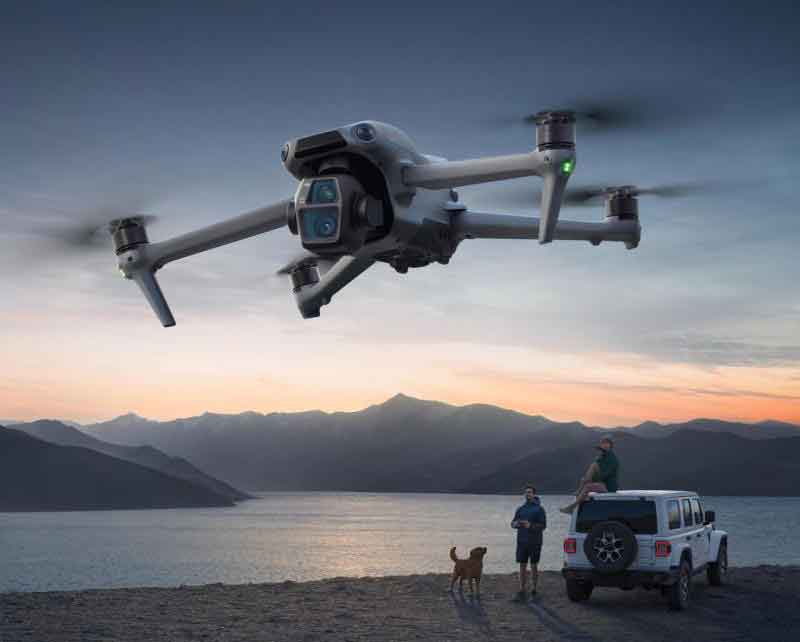
2. The Erosion of Privacy in the Age of the “Eye in the Sky”
The camera-equipped civilian drone is a powerful tool for creativity and inspection, but it is also a potent mobile surveillance platform. Its ability to quietly hover and peer into previously private spaces—backyards, apartment windows, office complexes—represents a significant societal challenge. Current regulatory tools are ill-equipped to handle this.
- Airspace Design Lagging Behind Social Norms: While no-fly zones protect airports and sensitive government installations, the airspace over residential neighborhoods, schools, and private property remains largely unregulated from a privacy perspective. A drone operating legally at 120 meters directly above a home can still capture intimate details of private life.
- The Accountability Vacuum: Even when privacy is clearly violated, holding the operator accountable is difficult. Real-name registration is a step, but enforcement is challenging. Furthermore, legal definitions of what constitutes a privacy violation by drone are underdeveloped. Is capturing a wide-area shot of a neighborhood a violation? What about automatically scanning license plates? The evidentiary standards and legal pathways for redress are murky, often leaving victims without recourse.
3. Systemic Regulatory Incoherence and Ineffectiveness
Ultimately, the safety and privacy issues are symptoms of a deeper systemic malaise within the regulatory framework itself.
| Category of Problem | Specific Manifestation | Consequence |
|---|---|---|
| Legal & Regulatory Lag | Rules are outpaced by technological evolution (e.g., swarming, BVLOS operations). Standards are often provisional or missing. | Creates uncertainty for businesses, fails to address novel risks, leads to erratic enforcement. |
| Unclear Enforcement Mandate | Multiple agencies (CAAC, Police, Local Gov’t) with overlapping, unclear jurisdictions. | Leads to either regulatory “turf wars” or, more commonly, a collective action problem where no one acts (“who’s in charge?”). |
| Ineffective Airspace Integration | Rigid segregation between “isolated” (drone-only) and “integrated” airspace is theoretical. Dynamic, real-time management is absent. | Hampers legitimate commercial use, fails to prevent incursions into controlled airspace, stifles industry growth. |
The concept of “isolated airspace” for drones, as mentioned in some regulations, is largely notional. In reality, the airspace is either prohibited (e.g., near airports) or de facto unmanaged. There is no streamlined, digital process for a logistics company to get rapid approval for a beyond-visual-line-of-sight (BVLOS) delivery route that briefly traverses controlled airspace. This lack of a dynamic, integrated air traffic management system for drones is perhaps the single greatest technical-regulatory hurdle.
Root Cause Analysis: Why the System Struggles
To prescribe effective remedies, I must understand the underlying causes of these pathologies. They are rooted in the interplay between technology, governance models, and legal philosophy.
1. Technological Asymmetry and “Regulatory Capture by Complexity”
A primary driver is the profound information and expertise asymmetry between drone manufacturers/developers and regulatory bodies. The pace of innovation in software (AI flight paths, obstacle avoidance), communication (5G, mesh networks), and hardware is staggering. Regulators, often working with traditional aviation frameworks, find it nearly impossible to draft prescriptive rules that are both safe and not instantly obsolete. This creates a form of “soft capture.” Companies can leverage technical complexity as a shield. For example, if regulation focuses on a parameter like MTOW, manufacturers will ingeniously design lighter yet more capable drones to stay under regulatory thresholds, even if the risk profile changes.
This dynamic can be modeled as a function where the regulatory lag ($L$) increases with the rate of technological change ($\Delta T$) and the opacity of the technology ($O$), while decreasing with regulatory capacity ($C_r$).
$$L = \frac{\Delta T \cdot O}{C_r}$$
Currently, $\Delta T$ and $O$ for civilian drones are high, while $C_r$ (specialized knowledge, agile rulemaking processes) is relatively low, resulting in a large $L$.
2. The “Strategic Importance” Dilemma and Regulatory Forbearance
The drone industry is seen as a strategic high-tech sector, a driver of economic growth and technological prowess. This creates a powerful counter-pressure on regulators. Strict, pre-emptive regulation could be perceived as stifling a golden goose. This leads to what I term “regulatory forbearance”—a hesitation to impose robust controls for fear of curtailing innovation and economic activity. The influence is not necessarily nefarious or corrupt (“capture” in the classic sense) but is a structural consequence of competing state priorities: safety vs. growth. The balance has often tilted towards growth, resulting in a permissive environment where enforcement is lax until a major incident forces a temporary crackdown.
3. The Silo Mentality and Absence of Systems Thinking
Effective regulation of civilian drones requires a holistic, lifecycle approach. However, the government apparatus is organized into vertical silos. The CAAC focuses on airborne operation, MIIT on manufacturing standards and radio spectrum, market regulators on product quality, and police on ground-based security incidents. There is no horizontal mechanism that seamlessly tracks a drone from its birth on a factory line to its final flight. This siloed thinking creates the grey zones I mentioned earlier. Without a systems perspective that maps the entire risk journey of a drone, regulations will always be piecemeal and reactive.
4. The Form vs. Function Problem in Rulemaking
Many existing regulations suffer from being overly formalistic rather than functional. They prescribe specific technical solutions (e.g., “must have a transponder of type X”) rather than defining performance-based outcomes (e.g., “must be continuously identifiable and localizable within Y meters”). Performance-based regulation is more adaptable to technological change. Furthermore, key regulations are ambiguous. The requirement to operate in “isolated airspace” is meaningless without a digital system to create and manage such airspace. The rules, therefore, exist on paper but cannot be effectively implemented in practice, creating a gap between legal theory and operational reality.
Proposing a Balanced Regulatory Framework: The Pillars of Coherent Governance
Moving forward requires a shift from fragmented, reactive control to smart, proportionate, and enabling governance. I propose a framework built on four interconnected pillars.
1. Pillar One: Risk-Based, Performance-Oriented Classification and Regulation
We must move beyond weight-based classification to a multi-dimensional risk matrix. A drone’s regulatory burden should be proportional to the potential harm it can cause. This can be modeled using a simplified risk score ($R$):
$$R = f(K, E, D, A)$$
Where:
$K$ = Kinetic Energy (function of mass and maximum speed)
$E$ = Operational Environment (population density, proximity to critical infrastructure)
$D$ = Data Impact (type and sensitivity of data collected)
$A$ = Autonomy Level (degree of human oversight)
Drones would be categorized into tiers (e.g., Open, Specific, Certified, akin to the EU model) based on their aggregate $R$ score. Each tier carries corresponding requirements for:
– Operator competency (from no license for very low-risk to full pilot licenses for high-risk).
– Technical capabilities (e.g., geo-awareness, remote ID, parachute recovery systems for higher tiers).
– Operational permissions (pre-flight authorization needs, maximum altitude, BVLOS allowances).
This system is adaptable. As a drone’s mission changes (e.g., adding a LiDAR sensor increases $D$), its tier and requirements can be dynamically updated via a digital registry.
2. Pillar Two: Fostering Technological Solutions for Technological Problems (RegTech)
We must use technology to regulate technology. Regulation should mandate and leverage “technological compliance.”
- Universal Remote Identification (Remote ID): This is non-negotiable. Every civilian drone should broadcast a unique identifier, location, altitude, and control station location in real-time, receivable by authorities and the public via smartphone apps. This eliminates anonymity and is the cornerstone of accountability.
- Unmanned Traffic Management (UTM) Ecosystem: A lightweight, digital, and mostly automated air traffic system for low-altitude airspace must be developed. This is not a single government system but an regulated ecosystem of private UTM Service Providers (USP). USPs would provide services like:
– Dynamic geofencing: updating no-fly zones (e.g., temporary event zones) directly to drones in real-time.
– Conflict deconfliction: alerting operators of potential airspace conflicts with other drones or manned aircraft.
– Digital Flight Approval: Providing a seamless API for operators to request and receive near-instant authorization for compliant flights in controlled airspace. - Factory-Embedded Compliance: Regulations should require drones to have built-in, unalterable features like altitude limiters (based on GPS/barometer), mandatory geo-fencing adherence, and secure communication links to prevent hijacking.
3. Pillar Three: Clarifying Governance through a “Lead Agency + Network” Model
| Agency / Entity | Primary Role | Mechanism |
|---|---|---|
| CAAC (Designated Lead) | Overall safety oversight, airspace integration policy, rulemaking for operations & pilot licensing, oversight of USP ecosystem. | Empowered by a dedicated national law on UAS. Hosts the central digital registry and certification body. |
| MIIT | Setting manufacturing & technical standards (Remote ID, cybersecurity), managing radio spectrum allocation. | Collaborates with CAAC on performance-based technical requirements. Issues Type Certificates for drone models. |
| Ministry of Public Security | Enforcing ground-based laws: privacy violations, using drones for illegal activities, emergency response to rogue drones. | Access to real-time Remote ID data. Specialized counter-UAV units for critical protection. |
| Local Governments | Setting local ordinances for privacy-sensitive zones (e.g., bans on drone filming over public gatherings, near hospitals). Managing municipal drone operations. | Can define “Local Zones” in the UTM system that trigger automated alerts or flight restrictions. |
| Industry Associations | Developing best practices, training standards, self-regulation, public education campaigns. | Formal advisory role to CAAC. Manages voluntary insurance schemes and ethical codes. |
This model clarifies the chain of command (CAAC as the clear lead for aviation matters) while maintaining a networked, collaborative approach for cross-cutting issues like privacy (shared between CAAC, Police, and Local Gov’t) and spectrum (MIIT).
4. Pillar Four: Enacting a Foundational Law and Promoting Public Engagement
All the above pillars require a solid legal foundation. A comprehensive “Unmanned Aircraft Systems Act” is essential. This law should:
- Establish the legal status of drones and their operators.
- Formally delegate authority to the CAAC as the lead regulator.
- Enshrine the risk-based classification principle.
- Mandate Remote ID and outline the framework for the UTM ecosystem.
- Clarify privacy protections and liabilities, potentially creating a civil tort for negligent or intentional surveillance.
- Define clear, graduated penalties for violations.
Simultaneously, a major public education campaign is needed. Pilots must understand they are aviators, not just gadget users. The public needs to know their rights regarding privacy and how to access Remote ID information. Communities should be engaged in discussions about local airspace rules.
Conclusion: Towards an Adaptive and Responsible Ecosystem
The journey of integrating civilian drones into our national airspace and social fabric is complex but imperative. The current state of regulation, characterized by reactive measures and institutional ambiguity, is unsustainable. It fails to adequately mitigate risks while simultaneously constraining the tremendous positive potential of this technology. The path forward lies in embracing a new regulatory philosophy—one that is adaptive, proportionate, and collaborative.
By implementing a risk-based classification system, we can focus regulatory resources where they are most needed. By mandating and leveraging technology like Remote ID and UTM, we can create a transparent and manageable operational environment. By clarifying governance through a lead-agency model supported by a clear national law, we eliminate the accountability vacuum. And by engaging industry and the public as partners, we foster a culture of responsibility and trust.
The goal is not to eliminate all risk—an impossible task for any form of aviation—but to manage it intelligently. The proposed framework seeks to create a virtuous cycle: clear and smart regulation provides certainty for businesses, which drives investment and responsible innovation; this, in turn, generates public confidence and broader social acceptance, allowing the benefits of civilian drones—from revolutionizing logistics and agriculture to enhancing emergency response and scientific research—to be fully realized. In navigating this course, we must steer not towards the most restrictive port, but towards the most enlightened one, where safety, innovation, and liberty can coexist and thrive.