
The evolution of modern cities increasingly focuses on renovating and improving existing urban fabric rather than solely expanding into new territories. A critical component of any renovation or “livable transformation” project is the acquisition of highly accurate, comprehensive, and detailed spatial data of the target area. This data forms the foundational digital product upon which cost estimations, material calculations, architectural design, and project planning are entirely dependent. The traditional challenges in such environments—characterized by dense building clusters, complex architectural appendages like varied balconies and unauthorized structural modifications, narrow streets, and limited surveying access—demand a shift from conventional surveying techniques. Our research project was initiated to identify and implement a surveying methodology that balances high accuracy with operational efficiency, safety, and cost-effectiveness for a large-scale urban renovation district. Through a comparative analysis of three distinct methodologies, we conclusively determined and validated that tilt photogrammetry using civilian drones presents the most viable and superior solution.
The project area encompassed approximately 160,000 square meters within a mature urban district. The surveying requirements were exhaustive, necessitating the precise measurement of areas for building facades, windows, total building footprints, balconies, internal roads, peripheral streets, green belts, and pedestrian walkways. The complexity was amplified by the presence of numerous irregular structural additions and modifications, making manual measurement not only tedious but prone to omissions and inaccuracies in hard-to-reach areas. The primary objective was to create a complete digital twin of the area—a detailed 3D model and derived 2D digital line graphics—that would enable accurate area calculations for all classified features.
Comparative Analysis of Surveying Methodologies
We began by evaluating three potential surveying approaches to address the project’s specific constraints: accuracy requirements, complex topography, tight schedule, and budget considerations.
| Methodology | Core Technology | Advantages | Disadvantages for This Project | Feasibility Assessment |
|---|---|---|---|---|
| Traditional Ground Surveying | RTK GNSS, Total Stations, Digital Levels | Highest potential intrinsic accuracy; well-established workflow. | Extremely low efficiency in dense areas; major occlusions and blind spots for upper building parts; significant safety risks for roof access; high labor cost; difficult data verification and prone to requiring rework. | Not Feasible |
| Terrestrial 3D Laser Scanning (TLS) | Lidar-based point cloud acquisition | High density of 3D data; excellent for complex geometries; reduces field time compared to total stations. | Multiple scan stations required due to occlusions, increasing time and cost; high capital cost of equipment; monochromatic point clouds make feature classification and interpretation difficult; data registration and processing is complex. | Less Feasible (Cost & Efficiency) |
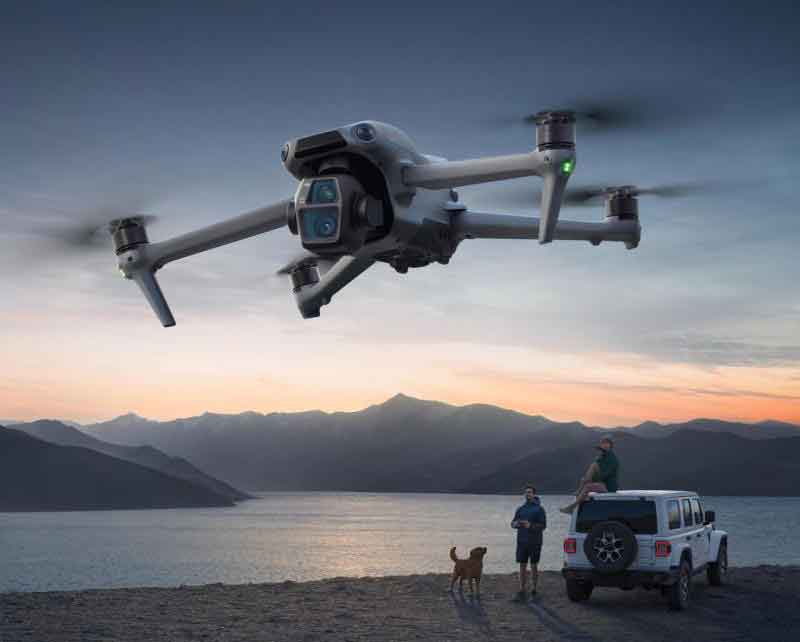
| Aerial Tilt Photogrammetry with Civilian Drones | Multi-view imagery from UAV platforms | Comprehensive coverage from nadir and oblique angles; generates high-resolution, true-color 3D models and orthophotos; safe operation; relatively low cost of platform; efficient data acquisition for large areas. | Accuracy dependent on Ground Control Points (GCPs) and camera quality; requires clear weather and flight permissions; processing requires substantial computational power. | Most Feasible |
The analysis clearly directed the selection towards civilian drones equipped for tilt photogrammetry. This method promised to overcome the critical limitations of the other two: it eliminated blind spots by capturing imagery from multiple angles, drastically reduced field time and personnel exposure to risk, and offered a photorealistic output that simplified the subsequent feature classification and measurement tasks essential for the renovation design.
The Tilt Photogrammetry Workflow with Civilian Drones
The implemented workflow was a systematic sequence of planning, data acquisition, processing, and extraction, tailored to ensure final product accuracy met the project’s stringent standards.
1. Pre-Flight Planning and Ground Control:
A network of nine (9) Ground Control Points (GCPs) was strategically established across the 160,000 m² site. Their coordinates were surveyed with high-precision RTK GNSS equipment to provide the necessary absolute georeferencing and scale for the photogrammetric model. Additionally, eighteen (18) independent Check Points (CPs) were surveyed to later validate the model’s accuracy. The flight plan was designed with parameters optimized for 3D reconstruction. Using a common civilian drone platform (DJI Phantom 4 Pro), we executed multiple flights with different camera angle configurations. The key flight parameters are summarized below:
| Flight Parameter | Value / Setting | Purpose |
|---|---|---|
| Flight Altitude | 70 meters AGL | Balance between ground resolution and coverage. |
| Image Overlap (Front/Side) | 80% / 70% | Ensures robust stereo matching and 3D point cloud generation. |
| Camera Angles | Nadir, 45° Oblique (4 directions) | Captures roof tops (nadir) and building facades (oblique) for complete geometry. |
| Number of Flights | 5 | To systematically capture all required angles without compromising image quality. |
2. Data Processing and 3D Model Reconstruction:
The collected imagery, alongside the GCP coordinates, was processed using specialized photogrammetric software (e.g., ContextCapture, Metashape). The process involves:
Aerial Triangulation (AT): This step solves for the precise position and orientation of every camera station and refines the internal camera parameters. The mathematical model for a single image point is based on the collinearity equations:
$$ x – x_0 = -f \frac{m_{11}(X – X_0) + m_{12}(Y – Y_0) + m_{13}(Z – Z_0)}{m_{31}(X – X_0) + m_{32}(Y – Y_0) + m_{33}(Z – Z_0)} $$
$$ y – y_0 = -f \frac{m_{21}(X – X_0) + m_{22}(Y – Y_0) + m_{23}(Z – Z_0)}{m_{31}(X – X_0) + m_{32}(Y – Y_0) + m_{33}(Z – Z_0)} $$
where \((x, y)\) are the image coordinates, \((x_0, y_0, f)\) are the camera’s interior orientation parameters, \((X, Y, Z)\) are the object space coordinates of the point, \((X_0, Y_0, Z_0)\) are the camera’s object space coordinates, and \(m_{ij}\) are the elements of the 3D rotation matrix defining the camera’s orientation. The AT process uses thousands of such equations from matched points across multiple images to compute a optimal bundle adjustment solution.
Dense Point Cloud Generation: Using the oriented images, a high-density 3D point cloud is computed via multi-view stereo matching algorithms.
3D Mesh and Texture Reconstruction: The point cloud is converted into a continuous triangulated mesh surface, which is then draped with the original imagery to produce a photorealistic 3D model, often referred to as a 3D Mesh (3DM) or Textured Mesh.
3. Accuracy Validation:
The accuracy of the final 3D model was rigorously assessed using the 18 independent Check Points (CPs). The discrepancies between the CP coordinates measured by RTK GNSS and those extracted from the model were calculated. The standard error metrics were computed as follows:
$$ RMSE_{XY} = \sqrt{\frac{\sum_{i=1}^{n} ((\Delta X_i)^2 + (\Delta Y_i)^2)}{n}} $$
$$ RMSE_Z = \sqrt{\frac{\sum_{i=1}^{n} (\Delta Z_i)^2}{n}} $$
Where \(\Delta X_i, \Delta Y_i, \Delta Z_i\) are the coordinate differences for the \(i\)-th check point, and \(n\) is the number of check points. The results demonstrated that the model produced by the civilian drone survey met and exceeded the required mapping accuracy standards for the project scale.
| Accuracy Metric | Value | Interpretation |
|---|---|---|
| Number of Check Points | 18 | All points were valid for analysis. |
| Horizontal RMSE (XY) | 0.059 m | The positional accuracy on the ground plane. |
| Maximum Horizontal Error | 0.135 m | The largest single positional discrepancy. |
| Vertical RMSE (Z) | 0.068 m | The height accuracy of the model. |
| Maximum Vertical Error | 0.105 m | The largest single height discrepancy. |
| Points within 1*RMSE | 14 | ~78% of points, indicating a well-distributed error. |
| Points within 2*RMSE | 4 | ~22% of points; all errors were within acceptable limits. |
Data Extraction and Deliverables
The photorealistic 3D model served as the central, interactive database for all subsequent measurements. Specialized software allowed surveyors to navigate the model in any orientation, zoom into details, and directly extract measurements. The deliverables generated from this model included:
- Digital Line Graphs (DLG): Detailed 2D vector maps of the entire area, including building footprints, roads, and other infrastructure.
- Thematic Area Calculation Maps: Separate maps highlighting and quantifying areas for internal roads, external streets, green spaces, and pedestrian walkways.
- Building Component Statistical Tables: Comprehensive spreadsheets listing calculated areas for each building’s total footprint, window surfaces, and balcony spaces, aggregated for the entire project.
- The 3D Textured Mesh Model: The core digital product, usable for visualization, virtual tours, and further engineering analysis.
The use of civilian drones for this data extraction phase was indirect but crucial; the model they created transformed a traditionally exterior, hazardous, and manual field task into an interior, safe, and efficient office-based task. The ability to visually recognize different materials and structures (e.g., distinguishing a glass window from a concrete wall) directly from the model’s textures greatly accelerated the classification and measurement process.
Conclusion and Future Perspectives
This project conclusively demonstrates that tilt photogrammetry using civilian drones is not only applicable but highly advantageous for engineering surveys in complex, built-up environments like urban renovation districts. The methodology successfully reconciled the often-conflicting demands of high accuracy, complete coverage, operational safety, and economic feasibility. While the technology significantly reduces fieldwork, it currently transfers considerable effort to the data processing and manual feature extraction stages.
The primary sources of error in such projects using civilian drones can be modeled and understood. The overall error \( \sigma_{total} \) in a derived 3D point can be considered a function of several variables:
$$ \sigma_{total} = f(\sigma_{GCP}, \sigma_{image}, \sigma_{processing}, \sigma_{extraction}) $$
Where:
\( \sigma_{GCP} \) is the error in ground control point surveying,
\( \sigma_{image} \) encompasses errors from camera resolution, lens distortion, and motion blur,
\( \sigma_{processing} \) includes errors from feature matching and bundle adjustment algorithms,
\( \sigma_{extraction} \) is the error introduced during manual digitization or measurement on the model.
Mitigation strategies involve using higher-grade sensors on civilian drones, implementing rigorous camera calibration, optimizing flight patterns for better geometry, and increasing the density and quality of the GCP network.
The future trajectory of this technology points towards greater automation. The next significant leap in efficiency will come from integrating artificial intelligence and machine learning directly into the processing pipeline. Imagine an AI-powered platform capable of automatically recognizing and classifying building components (windows, doors, balconies, roof types, surface materials) within the 3D model, and then programmatically extracting their dimensions and areas. This would address the current bottleneck in the interior work phase, further slashing project timelines and costs. The continued advancement and accessibility of civilian drones and associated software will solidify their role as an indispensable tool in the civil engineering and urban planning toolkit, transforming how we measure, understand, and redesign our existing urban spaces.