
In recent years, the rapid proliferation of civilian drones has presented unprecedented challenges and opportunities for airspace management. As an observer and participant in this evolving field, I have witnessed a global push to develop frameworks that ensure the safe, efficient, and scalable integration of these aerial systems into our national airspaces. The core of this integration lies in establishing a robust traffic management system specifically tailored for civilian drones. Current research and regulatory efforts, while significant, often focus on isolated operational scenarios or singular technological solutions, lacking a comprehensive, end-to-end architectural vision that spans the entire spectrum of civilian drone operations. This article, from my perspective, aims to delineate a holistic system framework for civilian drone traffic management (CDTM) and delve into the pivotal technologies required for its realization. The framework must be adaptable, risk-based, and designed to support a sustainable ecosystem for civilian drones.
The inherent characteristics of civilian drone traffic flows fundamentally differ from those of traditional manned aviation. Civilian drones exhibit a unique blend of high traffic density, diverse operating speeds, and operations across highly variable altitudes, often in complex, dynamic environments. This necessitates a departure from conventional air traffic management paradigms. A successful CDTM system must account for the multi-dimensional nature of civilian drone operations—essentially managing a four-dimensional traffic flow where airspace is not static but dynamically adaptable over time. The following table contrasts key traffic flow parameters, highlighting the distinctive profile of civilian drones.
| Traffic Flow Characteristic | Manned Aviation (Aircraft Flow) | Road Traffic (Vehicle Flow) | High-Speed Rail (Train Flow) | Civilian Drones (UAS Flow) |
|---|---|---|---|---|
| Traffic Volume | Relatively Low | Very High | Lowest | High and Growing |
| Operating Speed | Highest | Lower | High | Highly Variable |
| Spatial Density | Lowest | High | Moderate | Potentially Very High |
| Typical Altitude Range | High/Medium | Ground Level | Ground Level | Very Low to High |
This unique profile demands a stratified yet flexible airspace model. I propose that the management of civilian drones should be conceptualized through a layered, multi-scenario approach that gradually integrates them into the National Airspace System (NAS). The foundational element of our framework is the definition of typical operational scenarios for civilian drones, which are categorized based on altitude, airspace class, interaction with manned aircraft, and associated risk levels.
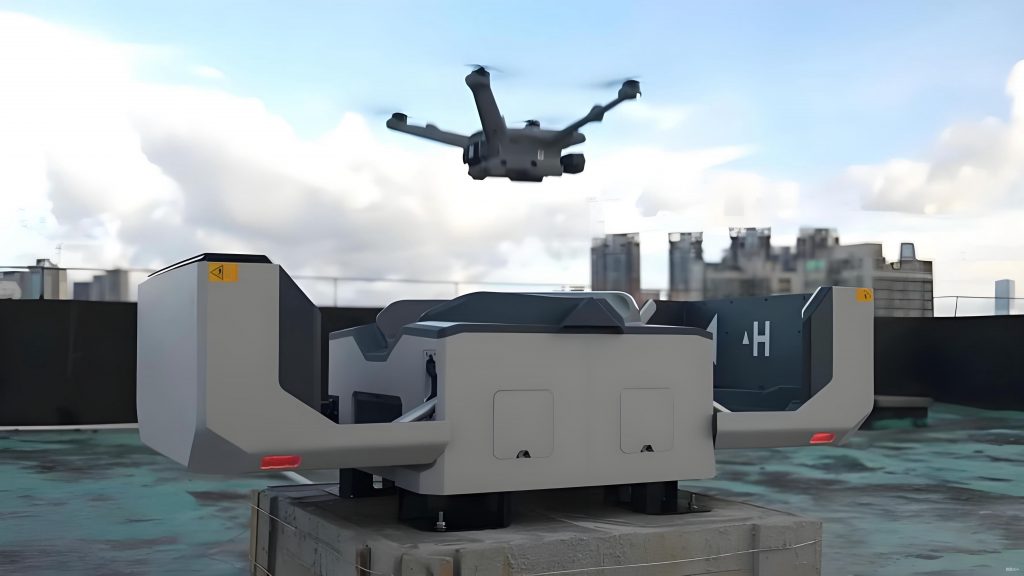
The first scenario involves Very Low-Altitude Segregated Operations, typically below 120 meters Above Ground Level (AGL) and outside controlled airspace. This is the primary domain for micro, light, and small civilian drones conducting visual line-of-sight (VLOS) or beyond visual line-of-sight (BVLOS) flights for applications like photography, agriculture, infrastructure inspection, and last-mile delivery. Here, civilian drones are largely isolated from manned traffic. The second scenario is Low-Altitude Mixed Operations, occurring in low-altitude airspace outside air traffic control zones but above the segregated very low-level zone. All classes of civilian drones may operate here in BVLOS mode, sharing the airspace with general aviation manned aircraft for missions such as regional logistics and emergency services. The third scenario is High-Altitude Integrated Operations within controlled airspace. This involves medium and large civilian drones, often Remotely Piloted Aircraft Systems (RPAS), operating under Instrument Flight Rules (IFR) and fully integrated with commercial air transport. The fourth and final scenario is Very High-Altitude Operations, above Flight Level 600, which may involve specialized civilian drones for missions like atmospheric research.
To govern operations across these diverse scenarios, a risk-based, graded management strategy is essential. For civilian drones, I advocate for a three-tiered regulatory approach. Open Category Management applies to low-risk operations where no prior authorization is needed; operators bear full responsibility for safety and collision avoidance, suitable for basic recreational flights of very small civilian drones in designated areas. Specific Category Management governs medium-risk operations. Operators must obtain authorization by demonstrating a specific operational risk assessment (SORA), and flight plans require submission and approval. Traffic rules are enforced, and service providers may offer traffic management services for civilian drones. Certified Category Management applies to high-risk operations, such as cargo or passenger transport using larger civilian drones. This category requires full aircraft type certification, operator licensing, and is served by traditional Air Navigation Service Providers (ANSPs) under existing ATM rules, akin to manned aviation.
The effective execution of these strategies relies on a collaborative ecosystem. The civilian drone traffic management ecosystem comprises regulators, service providers, operators, infrastructure enablers, and other stakeholders. Service providers, particularly UAS Service Providers (USPs), play a central role, acting as the interface between operators and the broader management system. In segregated or mixed low-altitude airspace, USPs provide services ranging from flight planning and authorization to strategic de-confliction. Crucially, in mixed and integrated airspace, these providers must seamlessly interact and eventually integrate with existing General Aviation Flight Service Stations and Air Traffic Control units. The ecosystem is digitally interconnected through highly automated application programming interfaces (APIs), enabling real-time information exchange critical for managing large-scale civilian drone operations.
Translating this conceptual framework into reality demands breakthroughs across several technological domains. The key technologies can be grouped into operational technologies—spanning strategic, pre-tactical, and tactical layers—and enabling support technologies.
1. Delicate Airspace Management for Civilian Drones
The first cluster of technologies revolves around the精细化管理 of airspace for civilian drones. Traditional airspace classifications are inadequate. We need a new, dynamic schema that considers the operational risk and required performance of the civilian drone. Airspace could be characterized not just in three spatial dimensions but with a fourth temporal dimension, leading to concepts like dynamic geofences, flexible corridors, and adaptive sectors. Formally, we can model a dynamic airspace cell $C$ for civilian drones as a function of time and operational constraints:
$$ C(t) = \{ (x, y, z) | f_{constraints}(x, y, z, t, \Theta_{UAS}) \leq 0 \} $$
where $(x, y, z)$ are spatial coordinates, $t$ is time, and $\Theta_{UAS}$ is a vector of parameters defining the civilian drone’s capabilities (e.g., weight, speed, communication type). The constraint function $f_{constraints}$ incorporates static obstacles, temporary restrictions, weather, and other traffic.
Airspace capacity assessment for civilian drones is more complex than for manned aircraft. Capacity $K$ is not a fixed number but a dynamic set dependent on multiple factors:
$$ K = g(D, S, R, E, W, M) $$
where $D$ is drone type diversity, $S$ is the operational scenario, $R$ is applied separation rules, $E$ is environmental complexity (e.g., urban canyon), $W$ is weather, and $M$ is the CNS/ATM infrastructure maturity. A comparative analysis of different urban airspace structures (e.g., layered, corridor-based, free-routing) and their impact on the capacity for civilian drones can be summarized as follows:
| Airspace Structure Type | Estimated Capacity (drones/hour/sq.km) | Safety (Collision Risk Index) | Routing Flexibility | Infrastructure Complexity |
|---|---|---|---|---|
| Free Routing (Unstructured) | High | Low | Very High | Low |
| Layered (Altitude Segmented) | Medium-High | High | Medium | Medium |
| Corridor/Tube Network | Medium | Very High | Low | High |
| Dynamic Grid-Based | High | Medium-High | High | Very High |
Geofencing, both static and dynamic, is a critical planning tool. A geofence $G$ can be defined as a 4D volume: $G = \{ (lat, lon, alt, t) | conditions met \}$. Advanced algorithms are needed to compute minimum geofence boundaries considering civilian drone performance and wind, optimizing for safety while minimizing airspace exclusion.
2. Operational Safety and Separation Management for Civilian Drones
Ensuring the safe operation of civilian drones hinges on robust risk assessment and well-defined separation standards. Unlike manned aviation with established Target Level of Safety (TLS), civilian drones require an equivalent safety level derived from societal tolerance for ground and air risk. A real-time, quantitative risk assessment framework is vital. For ground risk $R_g$ from a failing civilian drone, a model could integrate probability of failure $P_f$, population density $\rho$, and impact energy $E$:
$$ R_g = P_f \cdot \int_{A} \rho(x,y) \cdot H(E(d(x,y))) \, dA $$
where $A$ is the potential impact area, $d(x,y)$ is the distance from the failure point, and $H$ is a harm function. For mid-air collision risk $R_a$ between two civilian drones or a civilian drone and a manned aircraft, a modified Reich/Marks model can be applied, considering the 4D traffic density $\lambda(x,y,z,t)$ and the effective collision cross-section $\sigma$:
$$ P_{collision} \approx \int_{T} \int_{V} \lambda_1 \cdot \lambda_2 \cdot \sigma(v_{rel}) \, dV \, dt $$
Separation minima for civilian drones are scenario-dependent. They can be based on distance ($d_{min}$), time ($t_{min}$), or a combination. For instance, in a controlled corridor, a pairwise distance-based separation might be used: $d_{ij}(t) > d_{min}, \forall i \neq j$. A more sophisticated time-based separation for merging streams of civilian drones could be: $ |t_{i}^{arrival} – t_{j}^{arrival}| > t_{min} $ at a defined merge point. The table below proposes illustrative separation standards for different encounter scenarios involving civilian drones.
| Encounter Scenario | Suggested Separation Type | Illustrative Standard | Primary Assurance Method |
|---|---|---|---|
| VLOS Civilian Drone vs. VLOS Civilian Drone | Visual / Time-Based | t_min = 10-30 seconds | Pilot See-and-Avoid |
| BVLOS Civilian Drone vs. BVLOS Civilian Drone | Distance & Time Hybrid | d_min = 50m, t_min = 15s | UTM System De-confliction |
| Civilian Drone vs. Manned GA Aircraft (VFR) | Distance-Based | d_min = 500m horizontal, 200ft vertical | Electronic Detect and Avoid (DAA) |
| Civilian Drone vs. Manned Airliner (IFR) | ATM Standard / Distance-Based | Apply existing ATC separation (e.g., 5NM, 1000ft) | ATC Instruction & DAA |
Emergency management protocols for civilian drone traffic must be automated and scalable. Contingency events (e.g., lost link, engine failure) and emergency events (e.g., fly-away) require predefined response trees. The effectiveness of a contingency plan $E_{cp}$ can be modeled as a function of response time $t_r$, available mitigations $M$, and situational awareness $SA$: $E_{cp} = h(t_r, M, SA)$. The goal is to minimize the risk propagation $R_{prop}$ across the network of civilian drones during an event.
3. Traffic Guidance and Control for Civilian Drones
This domain addresses the tactical management of civilian drone movements. It encompasses vertiport/airport management, dynamic routing, and real-time conflict resolution. Vertiport throughput is a critical bottleneck for urban air mobility involving civilian drones. Modeling a vertiport with $n$ pads and $m$ approach/departure routes, the maximum service rate $\mu$ can be approximated using queuing theory, considering average service time per drone $\tau$ and inter-arrival variance $\sigma_a^2$:
$$ \mu \approx \frac{n}{\tau} \cdot f(\sigma_a^2, m) $$
where $f$ is a factor accounting for traffic randomness and route conflicts. Dynamic routing for civilian drones is essentially a large-scale, real-time path planning problem with multiple constraints (no-fly zones, weather, traffic, energy). The objective is to find an optimal 4D trajectory $T^*$ for a civilian drone $i$ from start $S_i$ to goal $G_i$:
$$ T^*_i = \arg\min_{T \in \mathcal{F}_i} \left( w_t \cdot J_{time}(T) + w_e \cdot J_{energy}(T) + w_r \cdot J_{risk}(T) \right) $$
subject to: $ \dot{T}(t) \in Dynamics_i, \quad T(t) \notin \bigcup Obstacles(t), \quad and \quad SeparationConstraint(T(t), T_{-i}(t)) $. Here, $\mathcal{F}_i$ is the set of feasible trajectories, $J$ are cost functions, $w$ are weights, and $T_{-i}$ represents trajectories of other civilian drones.
Conflict detection and resolution (CD&R) for civilian drones must handle high-density, high-speed encounters. A conflict is predicted when the predicted miss distance $d_{pred}$ between two civilian drones falls below the required minimum $d_{min}$ within a look-ahead time $\Delta t$. Resolution maneuvers $\Delta v$ (velocity change) can be computed using optimization or force-field methods. For example, a simple potential field method for civilian drone $i$ attracted to its goal and repelled from obstacle/drone $j$ has a control law:
$$ \vec{a}_i = -\nabla U_{goal}(\vec{r}_i) – \sum_{j \neq i} \nabla U_{rep}^{ij}(|\vec{r}_i – \vec{r}_j|) $$
where $U_{goal}$ is an attractive potential and $U_{rep}^{ij}$ is a repulsive potential that becomes significant when $|\vec{r}_i – \vec{r}_j| < d_{min}$. For large-scale coordination, distributed algorithms using multi-agent Markov Decision Processes (MDPs) are promising.
4. Planning and Application of Intelligent Infrastructure for Civilian Drones
The physical and digital infrastructure forms the backbone of any large-scale civilian drone operation. Vertiport network planning is a facility location problem. The objective is to place $k$ vertiports among candidate locations $L$ to maximize coverage of demand $D$ (e.g., population centers, logistics hubs) while minimizing cost $C$ and noise impact $N$. A simplified model could be:
$$ \text{Maximize } Z = \sum_{d \in D} a_d \cdot y_d – \alpha \sum_{l \in L} c_l \cdot x_l – \beta \sum_{l \in L} n_l \cdot x_l $$
$$ \text{Subject to: } y_d \leq \sum_{l \in L: dist(d,l) \leq R} x_l \quad \forall d \in D, \quad \sum_{l \in L} x_l = k $$
where $x_l$ is a binary variable for selecting location $l$, $y_d$ indicates demand $d$ is covered, $a_d$ is demand weight, $c_l$ and $n_l$ are cost and noise index, $R$ is service radius, and $\alpha, \beta$ are weighting factors.
Communications, Navigation, and Surveillance (CNS) technologies for civilian drones must be robust, secure, and scalable. A heterogeneous network is likely, combining cellular (4G/5G), satellite, and dedicated aeronautical links. The required data rate $DR$ for a civilian drone can be estimated based on its operations: $ DR = f_{C2} + f_{surveillance} + f_{payload} $. For instance, command and control (C2) might require 100 kbps, ADS-B-like surveillance 1 Mbps, and a high-definition video payload 10 Mbps. Navigation accuracy, especially in urban canyons, may rely on sensor fusion, combining GNSS (like GPS or BeiDou), inertial measurement units (IMU), and visual odometry. The combined position estimate $\hat{\mathbf{p}}$ uncertainty $P$ can be modeled by a covariance matrix updated via a Kalman filter:
$$ \hat{\mathbf{p}}_k = \hat{\mathbf{p}}_{k|k-1} + K_k (\mathbf{z}_k – H_k \hat{\mathbf{p}}_{k|k-1}) $$
$$ P_k = (I – K_k H_k) P_{k|k-1} $$
where $K_k$ is the Kalman gain, $\mathbf{z}_k$ are sensor measurements, and $H_k$ is the observation matrix. Surveillance of non-cooperative civilian drones requires sensors like radar or electro-optics, with detection probability $P_d$ modeled by radar range equation or similar.
In conclusion, the integration of civilian drones into our airspace is not merely an incremental change but a paradigm shift requiring a fundamentally new traffic management architecture. The framework I have outlined—built upon risk-stratified operational scenarios, a graded management strategy, and a collaborative ecosystem—provides a roadmap for this integration. The realization of this vision is inextricably linked to advancements in the key technological areas discussed: delicate airspace modeling, quantitative safety and separation management, intelligent guidance and control algorithms, and the deployment of smart infrastructure. Future research and development must holistically consider the multi-scenario, multi-type, multi-stage, interactive, large-scale, and highly autonomous nature of civilian drone operations. The focus should be on creating systems that are not only safe and efficient but also flexible and scalable enough to foster the sustainable growth of the civilian drone ecosystem, unlocking its vast potential for economic and social benefit. Continuous iteration between concept development, technological innovation, and regulatory adaptation will be essential to safely and efficiently welcome civilian drones as a routine part of our national airspace. The journey of integrating countless civilian drones has just begun, and its success hinges on our collective ability to build this intelligent, adaptive, and resilient traffic management fabric.