
As an observer of technological integration into modern society, I have witnessed the profound impact of big data, artificial intelligence, and the Internet of Things. Among these, civilian drones stand out as a technology rapidly revealing its latent value across numerous sectors. Their ascent is not merely a commercial trend but a strategic national priority, as underscored by their inclusion in key developmental plans. The imperative to establish a robust legal and regulatory framework for these devices is no longer prospective; it is immediate. The absence of such governance poses tangible threats to public safety, national security, and individual privacy. Therefore, my analysis will delve into the nature, risks, and necessary legal structures surrounding civilian drones, drawing from international precedents to propose a cohesive path forward for effective oversight.
Concept, Characteristics, and Classification of Civilian Drones
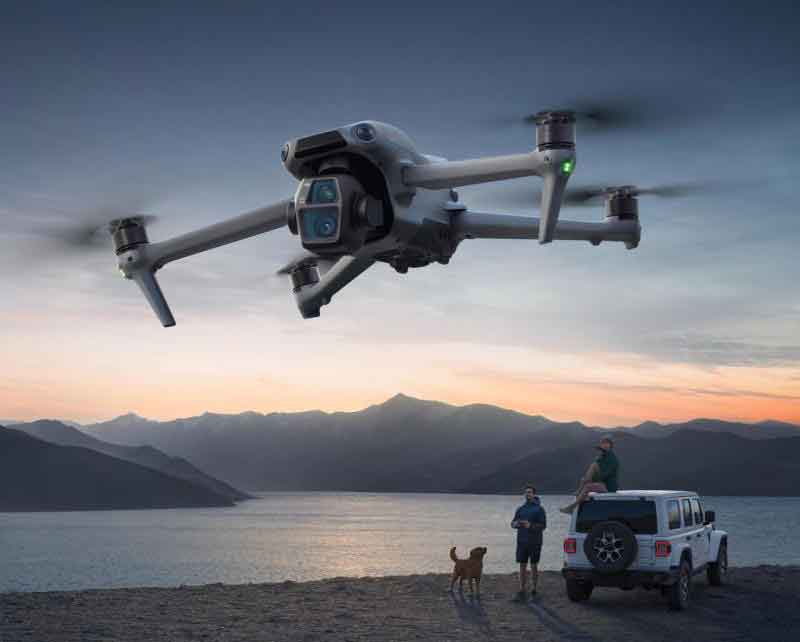
From my perspective, defining civilian drones is the foundational step for any regulatory discourse. A civilian drone, or Unmanned Aerial Vehicle (UAV), is typically understood as a powered, reusable aircraft that operates without a human pilot on board, controlled either remotely or autonomously via a flight control system. It is distinct from model aircraft, which are generally used for recreational purposes and lack sophisticated mission-oriented capabilities. The operational scope of civilian drones is defined by their system, known as the Unmanned Aircraft System (UAS), which includes the aircraft itself, the ground control station, and the communication data links.
The defining characteristics of civilian drones are as follows:
- Absence of Onboard Pilot: The core feature is the lack of a human operator within the vehicle, allowing operations in environments deemed too risky or inaccessible for manned aircraft.
- Integrated Flight Control System: They possess a dedicated system enabling stable flight, navigation, and task execution, differentiating them from simple radio-controlled models.
- Flexible Operational Range: Civilian drones can operate within Visual Line of Sight (VLOS), where the pilot maintains direct visual contact, or Beyond Visual Line of Sight (BVLOS) for extended missions, though often within segregated airspace.
- Mission-Specific Capability: They are equipped with payloads (e.g., cameras, sensors, delivery mechanisms) to perform specific commercial, industrial, or public service tasks.
The landscape of civilian drones is diverse, and classification helps tailor regulatory approaches. The table below summarizes common classification criteria:
| Classification Criteria | Types | Key Attributes |
|---|---|---|
| By Airframe | Fixed-Wing | Resemble airplanes; require runway; long endurance. |
| Single-Rotor Helicopter | Helicopter-like; can hover and take off vertically. | |
| Multi-Rotor (e.g., Quadcopter) | Multiple rotors; highly maneuverable; common for hobbyists. | |
| By Mass | Micro, Small, Medium, Large | Regulatory thresholds (e.g., under 250g, 25kg) often determine permit requirements. |
| By Application | Aerial Photography & Filming | Equipped with high-resolution cameras. |
| Precision Agriculture | Sensors for crop health, spraying. | |
| Infrastructure Inspection | For power lines, pipelines, bridges. | |
| Public Safety & Delivery | Search & rescue, medical supply delivery. |
The proliferation of civilian drones is driven by their significant advantages: operational versatility, reduced cost compared to manned alternatives, and enhanced safety for personnel. However, these benefits are counterbalanced by inherent vulnerabilities, including susceptibility to communication interference, limited endurance, and evolving technical challenges in areas like sense-and-avoid systems.
Analysis of Societal Risks Posed by Civilian Drones
In my assessment, the unregulated or inadequately regulated operation of civilian drones presents a spectrum of societal risks that escalate with their increasing accessibility. These risks can be modeled as a function of probability and potential impact: $$ R_{drone} = P_{event} \times I_{event} $$ where $R_{drone}$ is the aggregate risk, $P_{event}$ is the probability of a hazardous incident (e.g., collision, loss of control), and $I_{event}$ is the impact severity (e.g., property damage, injury, national security breach). The following key risk domains illustrate high-impact scenarios:
- Aviation Safety and Airspace Intrusion: The most acute risk is collision with manned aircraft. A drone ingested into a jet engine or striking a cockpit can be catastrophic. Incidents of civilian drones disrupting airport operations, causing delays, diversions, and emergency responses, highlight this tangible threat to public safety. The risk probability increases near airports and in low-altitude shared airspace.
- Ground Safety and Accident Liability: Failures due to technical malfunction, operator error, or external interference can lead to crashes in populated areas. The kinetic energy of a falling civilian drone poses a direct threat to people and property. The question of liability—whether it falls on the operator, the manufacturer, or the software developer—remains complex in the absence of clear legal statutes.
- Privacy Infringement: The surveillance capability of civilian drones is a double-edged sword. They can easily be used to conduct unwarranted surveillance, peering into private residences, gardens, or spaces where individuals have a reasonable expectation of privacy. This challenges existing privacy laws not designed for aerial, mobile, and discreet data collection platforms.
- National and Critical Infrastructure Security: Civilian drones can be weaponized, modified to carry explosives or contraband, or used for reconnaissance over sensitive government, military, or industrial facilities. Their low altitude and small radar cross-section make detection and mitigation difficult, presenting a novel vector for espionage and attack.
- Cybersecurity and Malicious Use: The data links and control systems of civilian drones are potential cyber-attack targets. A hijacked drone can be used as a weapon or a tool for broader network infiltration. Furthermore, civilian drones themselves can be used as platforms to launch cyber-attacks, such as deploying rogue Wi-Fi access points or interfering with communication networks.
The following table estimates the relative risk level and primary mitigation lever for each domain:
| Risk Domain | Potential Impact | Probability (Current State) | Primary Mitigation Lever |
|---|---|---|---|
| Mid-Air Collision | Catastrophic | Low (but increasing) | Airspace Management & Geo-fencing |
| Ground Impact Accident | High (Localized) | Medium | Operator Training & Product Standards |
| Privacy Invasion | Medium-High (to individuals) | High | Clear Privacy Laws & No-Fly Zones |
| Security Breach | Catastrophic | Low-Medium | Physical & Electronic Counter-Drone Systems |
| Cyber-Attack Vector | High-Variable | Increasing | Secure Communication Protocols & Standards |
Comparative Analysis of International Regulatory Approaches
Examining global regulatory frameworks for civilian drones provides valuable insights. Different jurisdictions have adopted models balancing innovation with risk management, often centered on operator certification, aircraft registration, and operational limitations.
| Jurisdiction | Regulatory Body | Key Regulatory Pillars | Notable Operational Restrictions |
|---|---|---|---|
| United States | Federal Aviation Administration (FAA) | Part 107 Rule for small UAS; Remote ID mandate; Online registration for drones >0.55 lbs. | VLOS only (under Part 107); Max altitude 400 ft; No flying over people or at night without waiver. |
| European Union | European Union Aviation Safety Agency (EASA) | Unified EU-wide regulation (2019/947 & 2019/945); Categorization based on risk (‘Open’, ‘Specific’, ‘Certified’). | Operational categories dictate requirements; Geo-awareness mandatory; Remote ID for most. |
| United Kingdom | Civil Aviation Authority (CAA) | Operator ID and Flyer ID required; Follows EASA-derived rules post-Brexit. | Generally max 400 ft; Stay 50m away from people & property; No-fly zones around airports. |
| Japan | Ministry of Land, Infrastructure, Transport and Tourism (MLIT) | Registration for drones >200g; Permit required for flights in populous areas/BVLOS/near airports. | Strict no-fly zones over critical facilities; Night flights require permission. |
| Singapore | Civil Aviation Authority of Singapore (CAAS) | Permits required for most activities outside enclosed premises; Online registration. | No-fly in protected zones; Max altitude 200 ft without permission. |
The trend is clearly towards comprehensive registration, remote identification (a digital license plate for drones), and risk-based operational rules. The EU’s model is particularly instructive, using a formulaic approach to classify operations. For instance, the ‘Specific’ category risk assessment might involve a scoring system considering factors like drone characteristics, operational environment, and operator competence to determine the necessary authorization pathway. This can be conceptually represented as: $$ Authorization_{level} = f(M_{drone}, E_{op}, C_{operator}) $$ where the required authorization is a function of the drone’s Mass/Energy ($M$), the operational Environment risk ($E$), and the operator’s Competence ($C$).
Current State and Proposals for Enhancing Legal Oversight
In my view, the current regulatory environment for civilian drones is fragmented and reactive, built largely on administrative notices and provisional regulations from the civil aviation authority. These cover essential areas like driver (pilot) management, real-name registration for civilian drones, and provisional rules for commercial flight activities. However, they lack the authority, comprehensiveness, and inter-agency coordination of a formal law. A piecemeal approach leads to gaps in enforcement, unclear liability adjudication, and difficulty in keeping pace with technological evolution.
Therefore, I propose a multi-faceted strategy to construct a robust governance ecosystem for civilian drones:
- Enact Specialized Legislation and Define Legal Status: A dedicated “Civilian Drone Management Law” is paramount. This law should explicitly define the legal attributes of civilian drones—clarifying whether they are treated as aircraft, movable property, or a new category—for the purposes of liability, insurance, and property rights. It must establish foundational principles for production, airworthiness, registration, flight operations, data protection, and law enforcement.
- Establish a Clear Regulatory Architecture and Dedicated Agency: The law should designate a lead agency (e.g., a strengthened Civil Aviation Authority) with the mandate to coordinate across all stakeholders: public security, spectrum management, market regulation, and local governments. A national drone management coordination committee can facilitate this. The regulatory focus must be holistic, covering the entire lifecycle of civilian drones.
- Implement a Risk-Based, Technology-Enabled Regulatory Regime: Adopt a tiered regulatory model based on risk. Key elements include:
- Mandatory Remote Identification: All civilian drones must broadcast identity and location, enabling real-time monitoring.
- Universal Geo-fencing and UTM Integration: Enforce dynamic no-fly zones (around airports, critical infrastructure) through embedded software and develop a national Unmanned Traffic Management (UTM) system for airspace integration.
- Enhanced Operator Certification: Move beyond basic licensing to competency-based training for different risk categories of civilian drone operations.
- Clarify Liabilities and Penalties for Offenses: The legal code must clearly stipulate civil, administrative, and criminal liabilities for offenses involving civilian drones, such as endangering flight safety, invading privacy, or compromising state secrets. Penalties should be severe enough to deter malicious use, including the weaponization of civilian drones.
- Promote Technical Countermeasures and Standardization: Invest in and regulate counter-UAS technology (e.g., radio frequency jammers, net-capture systems) for authorized security forces. Simultaneously, promote national and international standards for the manufacturing, communication security, and software resilience of civilian drones to mitigate inherent technical risks.
The effectiveness of this regulatory framework can be conceptualized as a function of its components: $$ E_{framework} = \alpha L + \beta I + \gamma T + \delta C $$ where the Effectiveness ($E$) depends on the strength of the Legal foundation ($L$), the quality of Institutional coordination ($I$), the deployment of enabling Technology ($T$), and the level of industry and public Compliance ($C$), with $\alpha, \beta, \gamma, \delta$ representing the respective weighting coefficients determined by the national context.
In conclusion, the integration of civilian drones into our socio-economic fabric is irreversible. The challenge lies not in stifling innovation but in erecting intelligent guardrails that maximize societal benefit while minimizing risk. This requires a proactive, legally grounded, and technologically savvy governance approach. By learning from global models and addressing unique national needs, a future can be built where the vast potential of civilian drones is realized securely, safely, and responsibly for all.