
In recent years, the rapid advancement of UAV drone technology has catalyzed their widespread adoption across numerous sectors, including aerial photography, surveying and mapping, logistics delivery, and precision agriculture. The operational efficacy of these UAV drones fundamentally relies on robust communication links. Typically, a video downlink (or video transmission signal) streams real-time footage from the drone’s camera back to the ground control station (GCS), while a command uplink (or control signal) delivers pilot instructions for precise flight control. However, these critical radio frequency (RF) links are inherently vulnerable to degradation and interference within increasingly congested and complex electromagnetic environments. Furthermore, the signal characteristics can vary significantly between different models and manufacturers of UAV drones, posing substantial challenges for ensuring stable flight operations and implementing effective regulatory oversight. Consequently, a precise and detailed understanding of the spectral signatures of UAV drone video and control signals is of paramount importance for optimizing communication link budgets, enhancing operational safety, and enabling informed spectrum management and policy decisions.
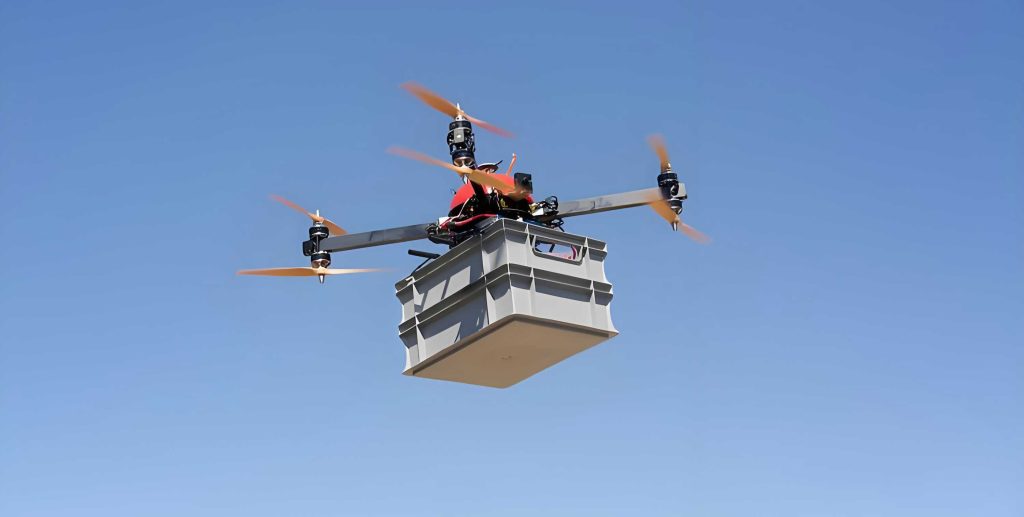
While considerable research has focused on the applications and autonomy of UAV drones, meticulous studies dissecting their RF signal characteristics remain relatively scarce. Moreover, empirical measurements conducted in open environments are often contaminated by external electromagnetic noise, limiting the accuracy and repeatability of the acquired data. To address these gaps, we conducted controlled measurements within a professional electromagnetic shielded chamber to eliminate ambient interference. Using a PR100 portable monitoring receiver, we captured high-fidelity spectrum data from several mainstream commercial UAV drones. This paper presents a comprehensive analysis of their spectral properties, aiming to establish a reliable dataset that can support further research into UAV drone communications, interference mitigation, and spectral fingerprinting for identification.
1. Experimental Methodology and Setup
To obtain pristine, noise-free spectral signatures of UAV drones, the entire measurement campaign was conducted inside a specialized electromagnetic shielded enclosure. This setup is crucial for isolating the signals emitted by the UAV drones from the ubiquitous background RF noise present in typical urban or laboratory settings.
1.1 Electromagnetic Shielded Chamber
The experiments were performed within a professional shielded chamber offering high attenuation across a broad frequency range. The shielding effectiveness (SE) meets or exceeds the following specifications, ensuring a highly isolated environment for characterizing UAV drones signals:
- SE ≥ 80 dB for frequencies from 10 kHz to 18 GHz.
- Magnetic field SE > 75 dB at 14 kHz.
- Magnetic field SE > 100 dB at 150 kHz.
- Electric field SE > 110 dB from 200 kHz to 50 MHz.
- Plane wave SE > 110 dB from 50 MHz to 1 GHz.
- Microwave SE > 100 dB from 1 GHz to 10 GHz.
The chamber’s shell is constructed from 2mm cold-rolled steel plates for walls and ceiling, and a 3mm plate for the floor, all seamlessly welded using CO2 gas shield welding. It is equipped with an electrically (and manually) sealed door, ventilation waveguides, and filtered power and signal interfaces to maintain integrity while supporting experimental operations.
1.2 Signal Acquisition Equipment
The primary instrument for capturing the RF signatures of the UAV drones was the PR100 portable monitoring receiver. Its key specifications make it exceptionally suitable for this analysis:
| Parameter | Specification |
|---|---|
| Frequency Coverage | 9 kHz – 7.5 GHz |
| Maximum Sampling Rate | 12.8 MS/s |
| Dynamic Range | Wide, suitable for varying signal strengths |
| Resolution Bandwidth (RBW) | Adjustable; set to 6.25 kHz and 12.5 kHz for this study |
The adjustable RBW is particularly important. A narrower RBW (6.25 kHz) provides finer frequency resolution to examine detailed spectral shapes and closely spaced components, ideal for control signals. A wider RBW (12.5 kHz) offers better noise averaging and is suitable for capturing the broader spectral occupancy of video downlink signals from UAV drones.
1.3 Test Configuration and UAV Drones Under Test
We selected three popular and representative commercial UAV drones, spanning consumer and professional tiers:
- DJI Mavic 2: A high-end consumer-grade UAV drone known for its balance of performance and portability.
- DJI Mini 3 Pro: A ultra-portable, lightweight consumer UAV drone designed for accessibility.
- DJI Inspire 2: A professional-grade UAV drone built for high-end cinematography and demanding industrial applications.
These UAV drones were chosen as they likely employ distinct RF communication architectures tailored to their performance envelopes (e.g., data rate, range, power consumption). The test setup was designed to simulate a typical close-range operational scenario:
- The UAV drone was positioned at the center of the shielded chamber.
- The PR100 receiver was connected to a wideband omnidirectional antenna mounted at a height of 1.5 meters.
- The horizontal separation between the UAV drone and the receiving antenna was fixed at 5 meters.
Each UAV drone was subjected to a sequence of standardized flight modes while the PR100 captured continuous spectrum data over 10-minute intervals per mode. The operational parameters were meticulously logged. The tested modes included:
| Flight Mode | Description |
|---|---|
| Stationary Hover (Mode A) | Video resolution set to 1080p at 30 fps. |
| Stationary Hover (Mode B) | Video resolution set to 4K at 60 fps. |
| Level Flight | Constant velocity of 5 m/s in a straight line. |
| Vertical Ascent/Descent | Altitude variation between 1 and 3 meters. |
Battery levels were maintained above 80% to ensure consistent RF power amplifier performance from the UAV drones.
2. Spectral Signature Analysis of UAV Drones
The captured spectrum data reveals distinct signatures for the video downlink and control uplink of each UAV drone model. The analysis focuses on key parameters: center frequency, -3 dB bandwidth, peak power level, and spectral shape.
2.1 Individual UAV Drone Signal Characteristics
2.1.1 DJI Mavic 2 UAV Drone
Video Downlink Signal: This UAV drone’s video transmission is anchored in the 2.4 GHz ISM band. The spectral occupancy is relatively focused.
$$ f_{center, video} \approx 2.412 \text{ GHz} $$
$$ BW_{-3dB, video} \approx 4 \text{ MHz} $$
The spectrum exhibits a classic “soft-rise, peak, soft-fall” shape characteristic of digital modulations with controlled out-of-band emissions. The peak measured power level reached +40.4 dBµV. A notable observation was a 3 dB increase in peak power when switching from 1080p/30fps to 4K/60fps mode, indicating an adaptive power control mechanism in this UAV drone that scales with data rate demand:
$$ P_{peak, 4K} \approx P_{peak, 1080p} + 3 \text{ dB} $$
The out-of-band roll-off was measured at approximately 30 dB per MHz, demonstrating compliance with spectral mask regulations.
Control Uplink Signal: The control signal for this UAV drone shares the 2.4 GHz band with the video downlink, employing a Time-Division Duplexing (TDD) scheme. Analysis shows a distinct spectral “notch” or power dip of about 15 dB within the video band during control packet transmission, confirming timesharing. The control signal itself utilizes frequency-hopping spread spectrum (FHSS), with each hop dwell time estimated to be less than 20 ms ($\tau_{dwell} < 20 ms$), enhancing the robustness of this UAV drone against narrowband interference.
2.1.2 DJI Mini 3 Pro UAV Drone
Video Downlink Signal: The portable Mini 3 Pro UAV drone also operates in the 2.4 GHz band but employs a distinct strategy. With an RBW of 12.5 kHz, the spectrum revealed multiple discrete power peaks across segments like 2447–2463 MHz, indicative of a frequency-hopping pattern for the video link. The peak power was recorded at +57.8 dBµV. The overall occupied bandwidth is wider than that of the Mavic 2 UAV drone.
$$ BW_{occupied, video} \approx 16 \text{ MHz} $$
This approach may help mitigate interference in congested bands for this type of UAV drone.
Control Uplink Signal: The control signal for this UAV drone is concentrated in a narrower band.
$$ f_{center, control} \approx 2.468 \text{ GHz} $$
$$ BW_{-3dB, control} \approx 2 \text{ MHz} $$
Its spectrum shows a sharp rise to a peak of +38.6 dBµV, followed by a gradual decline. The lower peak power compared to its video signal and other models suggests a low-power design philosophy for this lightweight UAV drone, prioritizing extended flight time and reduced interference potential.
2.1.3 DJI Inspire 2 UAV Drone
Video Downlink Signal: The professional Inspire 2 UAV drone demands high data throughput for low-latency HD video. Its spectrum reflects this need, exhibiting a broad, multi-peak profile.
$$ f_{center, video} \approx 2.465 \text{ GHz} $$
$$ BW_{-3dB, video} \approx 20 \text{ MHz} $$
The peak power level was +36.2 dBµV. The multi-carrier or wideband multi-subcarrier nature of the signal is evident from the multiple spectral peaks, a design likely chosen to support the high-fidelity video transmission required from this class of UAV drone.
Control Uplink Signal: The control link for this UAV drone is characterized by high power and wide bandwidth to ensure utmost reliability in complex professional environments.
$$ BW_{occupied, control} \approx 10 \text{ MHz} \text{ (covering 2451–2461 MHz)} $$
With an RBW of 12.5 kHz, the spectrum appears as a continuous, undulating shape, reaching a peak power of +55.2 dBµV—the highest among all tested UAV drones. This high-power, wideband control signal is a hallmark of professional-grade UAV drones where control link integrity is critical.
2.2 Comparative Analysis of UAV Drones Spectra
The following table synthesizes and contrasts the key spectral features extracted from the three UAV drones, highlighting their design trade-offs.
| Feature | DJI Mavic 2 (High-end Consumer) | DJI Mini 3 Pro (Portable Consumer) | DJI Inspire 2 (Professional) |
|---|---|---|---|
| Video Downlink | |||
| -3 dB Bandwidth | ~4 MHz | ~16 MHz (Hopping) | ~20 MHz |
| Peak Power (dBµV) | +40.4 | +57.8 | +36.2 |
| Spectral Shape | Continuous, single main lobe | Discrete hopping peaks | Multi-peak, broad continuum |
| Control Uplink | |||
| Occupied Bandwidth | ~1 MHz (FHSS in TDD notch) | ~2 MHz | ~10 MHz |
| Peak Power (dBµV) | +50.6 (estimated in notch) | +38.6 | +55.2 |
| Key Technique | TDD with FHSS | Focused carrier | Wideband, high-power |
| Design Philosophy | Balanced performance & efficiency | Low power, lightweight, hopping agility | Maximum reliability & data throughput |
The progression is clear: from the efficient, balanced design of the Mavic 2 UAV drone, through the power-conserving, agile design of the Mini 3 Pro UAV drone, to the robust, high-performance design of the Inspire 2 UAV drone. The bandwidth and power levels of the control signals, in particular, scale directly with the intended operational criticality of the UAV drone.
2.3 Band Coexistence and Interference Potential
All tested UAV drones predominantly utilize the 2.4 GHz ISM band (2400–2483.5 MHz). This band is shared with ubiquitous technologies like Wi-Fi (IEEE 802.11b/g/n), Bluetooth, and numerous IoT devices. The measured power levels of UAV drones signals, especially the high-power control signal of the Inspire 2 (+55.2 dBµV) or the concentrated video signal of the Mavic 2, are sufficient to cause significant co-channel or adjacent-channel interference to other services, and vice-versa. The interference risk ($I_{risk}$) can be conceptualized as a function of spectral overlap, power disparity, and proximity:
$$ I_{risk} \propto \int_{f_1}^{f_2} S_{UAV}(f) \cdot L(f) \cdot S_{Victim}(f) \, df $$
where $S_{UAV}(f)$ and $S_{Victim}(f)$ are the power spectral densities of the UAV drone signal and the victim receiver, respectively, and $L(f)$ represents the coupling loss. This underscores the necessity for sophisticated spectrum-sharing mechanisms and careful operational planning, especially for professional UAV drones in urban or Wi-Fi-dense environments.
3. Synthesis and Implications for UAV Drones Operations
3.1 Common Traits and Divergent Strategies
The analysis reveals fundamental commonalities among modern commercial UAV drones. The universal selection of the 2.4 GHz ISM band is driven by global regulatory acceptance, readily available low-cost RF components, and reasonable propagation characteristics. All models implement some form of dynamic power control, adapting transmission power ($P_{tx}$) based on link conditions or data demand, which can be modeled as:
$$ P_{tx} = P_{base} + \alpha \cdot R + \beta \cdot \Gamma^{-1} $$
where $P_{base}$ is a baseline power, $R$ is the data rate, $\Gamma$ is the measured signal-to-interference-plus-noise ratio (SINR), and $\alpha, \beta$ are scaling factors. Furthermore, all exhibit disciplined out-of-band emissions with roll-off slopes exceeding 30 dB/MHz, a key aspect of their electromagnetic compatibility (EMC).
The divergent strategies are equally telling. The Inspire 2 UAV drone employs a maximization of robustness strategy: wide bandwidths and high control power ensure link integrity under duress, at the cost of higher spectral footprint and power consumption. The Mini 3 Pro UAV drone follows a minimization of resource usage strategy: lower power, efficient hopping, and a focus on essential functionality to maximize flight time and minimize size/weight. The Mavic 2 UAV drone strikes a middle ground with an optimization of balance strategy, offering robust performance for its class without extreme resource demands.
3.2 Implications for Spectrum Monitoring, Identification, and Counter-UAV
The distinct spectral signatures provide a foundation for RF-based detection, classification, and even identification of UAV drones—a critical capability for security, safety, and spectrum enforcement.
Monitoring & Fingerprinting: A spectral fingerprint database can be constructed using the parameters in Table 1. For instance, a detected signal with a 20 MHz video bandwidth and a >10 MHz wide, >+55 dBµV control signal strongly suggests a professional UAV drone like the Inspire 2. A signal showing a sharp ~4 MHz wide video peak and a TDD-induced spectral notch is characteristic of the Mavic 2 series UAV drone. Machine learning classifiers can be trained on these features (bandwidth, peak power, spectral kurtosis, etc.) for real-time, automated identification of UAV drone types from their RF emissions.
Counter-UAV (C-UAV) Considerations: Effective RF-based mitigation requires understanding the target UAV drone’s spectral vulnerabilities.
- For the Inspire 2 UAV drone, a wideband barrage jamming signal across its entire control band (e.g., 2450–2470 MHz) would be most effective due to its wide operational bandwidth. The required jamming-to-signal ratio (JSR) must overcome its high native power:
$$ JSR_{req} = P_{jamming} – P_{UAV\_signal} + L_{coupling} > JSR_{threshold} $$ - For the Mavic 2 UAV drone, a more efficient, narrowband aimed jamming approach could target its specific video downlink center frequency (~2.412 GHz) to disrupt the primary data stream, potentially triggering a failsafe.
- For the Mini 3 Pro UAV drone using hopping, a follow-on jammer that detects and rapidly jams the frequency of each hop could be effective, exploiting the potentially lower power margin of its control link.
These strategies highlight that a “one-size-fits-all” jamming approach is inefficient; tailored strategies based on prior spectral intelligence are superior.
3.3 Limitations and Future Research Directions for UAV Drones Signal Analysis
This study provides a high-fidelity baseline but has inherent limitations that point toward valuable future work on UAV drones signals:
- Sample Diversity: Only three models from a single manufacturer (DJI) were tested. Future work must include UAV drones from other leading (e.g., Autel, Skydio) and niche manufacturers, as well as custom-built or open-source UAV drones, which may use different frequency bands (notably 5.8 GHz) or modulation schemes.
- Environment: Measurements were taken in an ideal, static, anechoic (shielded) environment. Real-world propagation effects—multipath fading, Doppler shifts from high-speed motion, attenuation through foliage—will alter the received spectral signature. Future studies must characterize these effects:
$$ H_{channel}(f, t) = \sum_{k=1}^{N} a_k(t) e^{-j2\pi f \tau_k(t)} $$
where $H_{channel}$ is the time-varying channel transfer function, and $a_k$ and $\tau_k$ are the complex gain and delay of the $k^{th}$ multipath component. Field measurements in urban, suburban, and rural settings are essential. - Operational States: The impact of low battery voltage on RF power amplifier linearity and output power was not investigated. Signal characteristics during aggressive maneuvering (high acceleration, rotational spins) may also vary due to changes in antenna pattern orientation relative to the receiver.
Promising research avenues include: expanding the spectral fingerprint library to dozens of UAV drone models; developing channel-resilient feature extraction algorithms for identification; and investigating the spectral signatures of coordinated UAV drone swarms, where multiple signals interact and create a composite, time-varying RF profile.
4. Conclusion
Through controlled, high-resolution spectrum measurements, this work has delineated the distinct RF signatures of three representative commercial UAV drones. We have quantitatively characterized their video downlink and control uplink signals in terms of bandwidth, power, spectral shape, and operational strategy. The DJI Mavic 2 UAV drone exemplifies a balanced design with a focused spectrum and TDD coordination. The DJI Mini 3 Pro UAV drone demonstrates a low-power, frequency-hopping approach suited for portability. The DJI Inspire 2 UAV drone adopts a high-reliability, wideband paradigm with the most powerful control signal.
These spectral characteristics are more than technical curiosities; they form the empirical basis for advanced spectrum management tools, UAV drone detection and classification systems, and informed counter-UAV strategies. As the population of UAV drones in the national airspace continues to grow, understanding their “RF DNA” becomes crucial for ensuring safe, secure, and interference-free coexistence with other wireless services. The methodology and findings presented here provide a foundational framework for this ongoing critical analysis of UAV drones communication systems.