
The rapid ascent of the civilian drone industry represents a paradigm shift in technology application, permeating sectors from aerial photography and precision agriculture to logistics and infrastructure inspection. This explosive growth, however, is accompanied by formidable regulatory challenges concerning their production, sale, and, most critically, their flight operations. The regulatory framework for civilian drones is often nascent and fragmented, a lagging response to technological advancement. This governance gap has led to the rampant phenomenon of unauthorized or “black flights” (hei fei), posing significant risks to individual privacy, industry health, public safety, and national security. This article argues that optimizing the regulatory regime for civilian drones necessitates a holistic approach: strengthening oversight at the source through standardized production and robust registration; intensifying control during the flight phase via refined pilot licensing, scientific airspace management, and traffic rules; and constructing supporting systems for maintenance and end-of-life recycling.
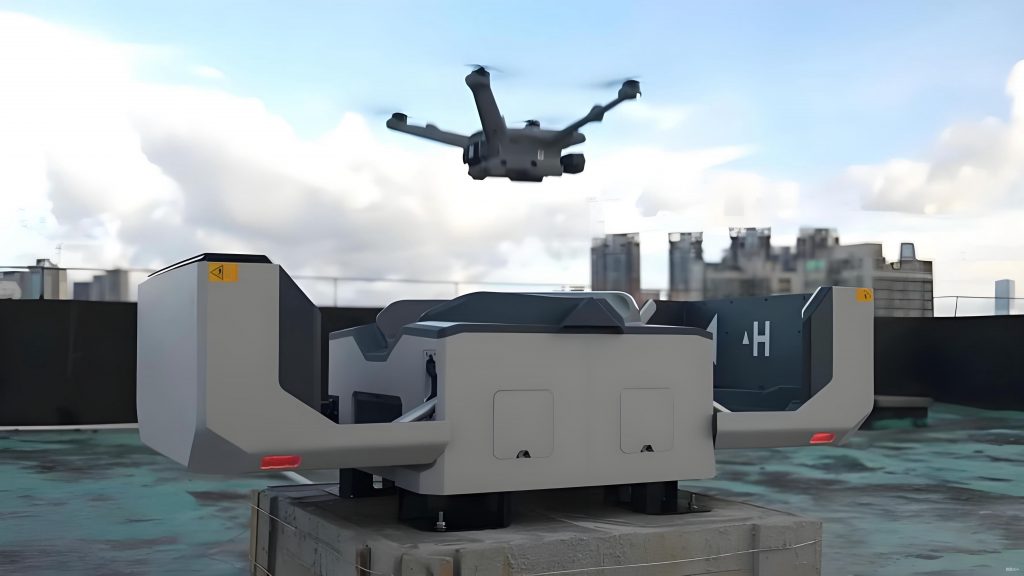
The proliferation of civilian drones is undeniable. Once confined to military domains, these versatile systems have become commercially ubiquitous. While definitive global market shares fluctuate, the industry’s expansion is evidenced by the proliferation of manufacturers and ambitious national growth targets, such as aiming for an annual output value of 60 billion yuan with over 40% growth. This trajectory underscores the urgent need for a regulatory ecosystem that fosters innovation while mitigating risk.
The Multifaceted Hazards of “Black Flights”
Unregulated operations of civilian drones generate a cascade of negative externalities across multiple strata of society.
| Aspect | Primary Hazard | Specific Manifestations & Consequences |
|---|---|---|
| Individual Privacy | Erosion of Personal Privacy Rights | High-resolution, stealthy surveillance capabilities enable intrusive data collection, tracking, and unauthorized sharing of personal activities and spaces. |
| Industry Development | Constrained Growth & Investment | Frequent incidents trigger regulatory crackdowns, stifling market expansion, dampening investor confidence, and limiting capital for R&D essential for technological progress. |
| Public Safety | Threat to Lives & Critical Infrastructure | Collision risks with manned aircraft (especially near airports), crashes in densely populated areas causing physical injury, and interference with critical public operations. |
| National Security | Compromise of Sensitive Data & Sites | Unauthorized incursions into restricted airspace (military bases, government facilities) enabling espionage, data breaches, and disruption of secure operations. |
The risk to aviation safety can be conceptually framed. The kinetic energy upon impact is a primary concern, which relates to the potential damage a civilian drone can cause. A simplified model highlights the risk:
$$E_k = \frac{1}{2}mv^2$$
Where $E_k$ is the kinetic energy, $m$ is the mass of the civilian drone, and $v$ is the relative velocity between the drone and another object (e.g., an aircraft). Even a small civilian drone, given high relative speeds near airports, possesses significant destructive potential, akin to bird strikes which are known to cause critical damage.
Deficiencies in the Current Regulatory Framework for Civilian Drones
Existing regulations for civilian drones are characterized by their reactive nature, low statutory hierarchy, and internal inconsistencies. The legal landscape is a patchwork of provisional rules and guidelines rather than a cohesive, principled code. This results in several critical institutional shortcomings.
| Regulatory Stage | Key Deficiencies | Practical Implications |
|---|---|---|
| Source (Production & Sale) | Lack of unified national & application-specific standards; weak enforcement of real-name registration at point of sale. | Inconsistent quality and safety features; untraceable ownership; easy access for malicious actors; DIY assemblies with unknown airworthiness. |
| Flight Operations | Vague airspace classification (no-fly zones); cumbersome/no-clear flight approval processes; inconsistent pilot qualification management. | Pilots unaware of boundaries; legal flight paths inaccessible; prevalence of unlicensed flying (“black flights”). |
| Maintenance & Recycling | No established system for certified maintenance or environmentally sound end-of-life disposal. | Unsafe modifications; security risks from refurbished, non-airworthy drones; environmental pollution from battery/components. |
| Liability & Enforcement | Ambiguous assignment of liability (operator, owner, manufacturer); underdeveloped civil/administrative penalty frameworks. | Difficulty in attributing responsibility after incidents; insufficient deterrent effect against violations. |
The problem of airspace management can be further elucidated. If we consider total managed airspace $A_{total}$, the portion currently legally accessible to most civilian drones ($A_{accessible}$) is disproportionately small, often limited to segregated zones far from urban centers. The vast “grey” or prohibited zone $A_{prohibited}$, where rules are unclear or access is overly restricted, incentivizes non-compliance.
$$A_{total} = A_{accessible} + A_{prohibited} + A_{grey}$$
The regulatory challenge is to rationally expand $A_{accessible}$ through clear classification and dynamic management, while sharply defining and protecting $A_{prohibited}$, thereby shrinking the ambiguous $A_{grey}$ that fosters civilian drone “black flights”.
Reconstructing the Regulatory Pathway for Civilian Drones
A forward-looking regulatory regime must be built on the principles of safety, traceability, and graduated responsibility, covering the entire lifecycle of the civilian drone.
1. Fortifying Oversight at the Source
Regulation must begin where civilian drones are created and enter the market.
- Standardization: Develop a dual-layer standard system. First, mandatory General Technical Standards for all civilian drones (e.g., mandatory geofencing, remote identification, fail-safe mechanisms). Second, Application-Specific Standards tailored for sectors like logistics (sense-and-avoid for urban delivery), agriculture (spray drift control), and surveying (positional accuracy).
- Production & Airworthiness Certification: Implement a formal type-certification and production approval process for manufacturers. Each commercially sold civilian drone model should undergo airworthiness assessment, akin to manned aviation but scaled appropriately. A formal Certificate of Airworthiness (CoA) for individual units or batches should be considered for higher-risk categories.
- Real-Name Registration & Sale Tracking: Enforce a rigorous, digitally integrated registration system. For consumer-grade civilian drones, a owner-based registration (one ID linking to multiple drones) may suffice. For all commercial/complex civilian drones, a strict drone-based registration (unique identifier per unit) linked to the owner’s verified identity is essential. This requires legal mandates for sellers to complete registration at point-of-sale, with penalties for non-compliance.
2. Enhancing Oversight During the Flight Phase
This is the most critical and complex layer of regulating civilian drones.
| Component | Proposed Regulatory Measure |
|---|---|
| Pilot Competency | Graduated licensing tiers based on drone weight, complexity, and operational risk (e.g., VLOS/BVLOS, over populated areas). Integrate theoretical knowledge (airspace, meteorology, regulations) with practical skill assessments specific to unmanned operations. |
| Airspace Management | Implement a transparent, digitally accessible UAS Traffic Management (UTM) ecosystem. Clearly publish dynamic and static no-fly zones (NFZs). Create streamlined, online portals for flight plan submission and automated approval for low-risk operations in designated zones. For operations in controlled or complex airspace, maintain rigorous human-in-the-loop ATC coordination. |
| In-Flight Monitoring | Mandate the use of approved civilian drone cloud platforms for real-time tracking of certain drone categories. These platforms should provide pilots with airspace information, weather, and traffic alerts, while providing authorities with situational awareness. |
3. Establishing a Traffic Rulebook for Civilian Drones
As the density of civilian drone operations increases, basic “rules of the sky” are required to prevent mid-air conflicts and manage right-of-way. These can be adapted from manned aviation principles and emerging global norms:
- Right-of-Way Rules: For example: A civilian drone shall give way to manned aircraft at all times. When two civilian drones are converging head-on, both shall alter course to the right. A drone being overtaken has the right-of-way.
- Strategic Deconfliction: The UTM/cloud system should provide automated alerts and suggested maneuvers to prevent conflicts, acting as a virtual “air traffic signal” system for civilian drones.
- Accident Liability Framework: Develop clear procedures for investigating civilian drone incidents. Liability should be assessed based on a chain of responsibility, potentially involving the pilot-in-command, the owner (if different), the manufacturer (in case of proven product defect), or the entity that commissioned the flight. A risk-calculation model for insurance purposes could consider factors like:
$$Risk\ Score = f(Pilot\ License\ Tier, \ Drone\ Category, \ Operational\ Airspace\ Complexity, \ Historical\ Compliance)$$
4. Building Supporting Lifecycle Systems
A comprehensive regime must look beyond just the first flight.
- Maintenance & Modification: Establish standards and certification for entities performing maintenance or modifications on civilian drones, particularly for commercial-grade systems. Significant modifications should require re-validation of airworthiness.
- Recycling & Decommissioning: Create regulations for the environmentally responsible disposal of civilian drones and their components, especially lithium batteries. Implement “take-back” schemes or certified recycling channels to prevent hazardous waste and the re-entry of unsafe, refurbished drones into the market.
In conclusion, the integration of civilian drones into our shared airspace and economy is irreversible. The central challenge is not to stifle innovation but to channel it responsibly through intelligent regulation. The path forward requires a multi-stakeholder effort to build a regulatory architecture that is clear, risk-proportionate, technologically enabled, and lifecycle-comprehensive. Only by addressing the deficiencies at the source, during flight, and through end-of-life can we mitigate the hazards of “black flights” and unlock the full, safe potential of civilian drones for societal benefit. The governance of civilian drones will ultimately serve as a benchmark for our ability to manage the convergence of emerging technologies with public welfare and security.