
Throughout history, terrorists have consistently sought to leverage emerging technologies to achieve asymmetric advantages against more powerful adversaries. The rapid proliferation and advancement of civilian drones represent one of the most significant technological shifts with profound implications for global security. As a researcher analyzing contemporary asymmetric threats, I observe that what began as tools for recreation, photography, and commercial delivery are now being scrutinized for their potential weaponization. The core of my analysis focuses on how these accessible technologies are reshaping terrorist strategies and, consequently, how our defensive paradigms must evolve.
The evolution of terrorist tactics is intrinsically linked to technological availability. Traditionally, asymmetry was achieved through the unrestricted use of violence—targeting civilians, employing suicide tactics, and using simple, readily available weapons like firearms and improvised explosive devices (IEDs). Data from conflict studies consistently shows that explosive and armed assaults constitute the overwhelming majority of terrorist incidents globally. This preference is rooted in their simplicity, proven effectiveness, and low technical barrier. However, a persistent misconception is to view terrorist organizations as static and low-tech. Their most devastating successes often stem from tactical innovation, such as the weaponization of commercial airliners on September 11, 2001. This event was not merely an attack but a paradigm shift, demonstrating a capacity for strategic and technical adaptation. Today, I argue we are on the cusp of another such shift, driven by the democratization of unmanned systems. The paradigm is moving from person-borne, contact-based attacks towards intelligent, remote, and non-contact methodologies. Civilian drones, or commercial off-the-shelf (COTS) unmanned aerial systems (UAS), are the primary vectors enabling this shift towards智能化 (intelligentization) and non-contact warfare at a tactical level.
The appeal of civilian drones for malicious actors is multifaceted. First is their accessibility. High-performance multi-rotor and fixed-wing platforms are available globally at low cost, with open-source software and modular designs that facilitate modification. Second is the asymmetric advantage they confer. They act as a force multiplier, allowing a single operator to project influence, conduct reconnaissance, or deliver a payload from a safe distance, severing the physical and psychological link between attacker and target. This dramatically lowers the threshold for conducting certain types of attacks, potentially attracting individuals unwilling to commit suicide. Third is the potent psychological impact. The violation of traditional, ground-based security perimeters by a small, silent aerial platform creates a profound sense of vulnerability and can cause disproportionate panic, especially in crowded spaces. The symbolic power of turning a symbol of modern innovation into a weapon is not lost on propagandists.
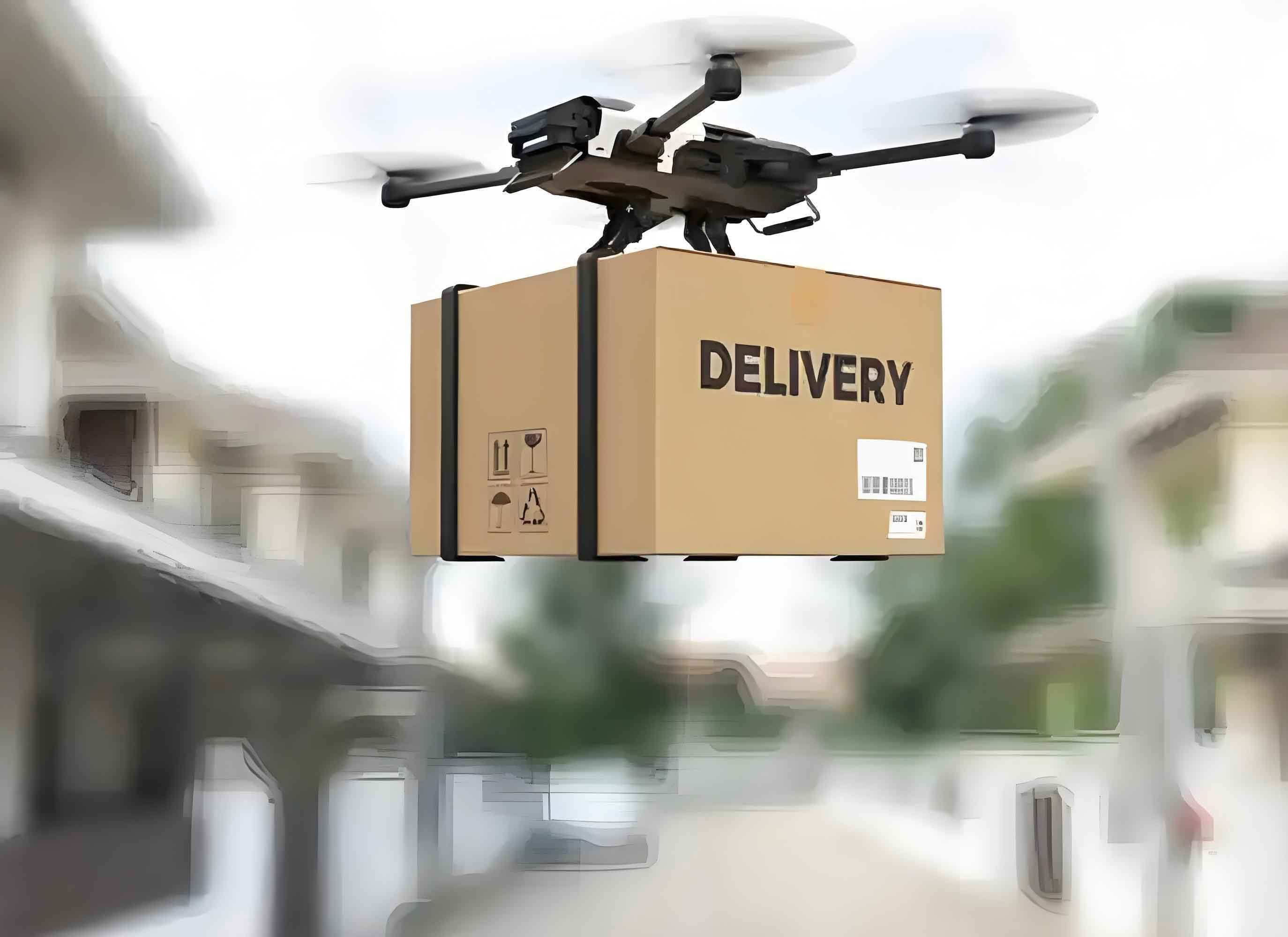
My assessment of the current threat landscape, however, must be calibrated. Despite keen interest from various terrorist entities over the past two decades—from Aum Shinrikyo’s early plans to Hezbollah’s operational use and the Islamic State’s (IS) recent experimentation—widespread, effective use of civilian drones for high-casualty attacks remains limited. Most groups still lack the integrated technical expertise to reliably modify, arm, and deploy these systems at scale for complex attacks. The technical limitations of consumer-grade civilian drones, including short flight times, limited payload capacity, vulnerability to electronic interference, and dependency on commercial control links, constrain their reliability as primary attack vectors. Therefore, at this global strategic level, the threat from weaponized civilian drones is not yet a high-probability, high-consequence tier-one risk compared to conventional IEDs or armed assaults.
Nevertheless, this is a dynamic risk. The trajectory is concerning. The technology is improving exponentially: payloads are increasing, autonomy is enhancing, and counter-detection features are being developed. Online communities freely share modification blueprints, from simple release mechanisms to advanced jamming-resistant control systems. Furthermore, terrorist doctrine is clearly adapting. Instructions for drone-based attacks have been disseminated in extremist propaganda, aiming to inspire “lone actor” attacks. Consequently, the risk is not static but an escalating function of technological diffusion and tactical learning. The critical task, from my perspective, is to conduct a granular risk assessment based on the platform’s capabilities and to build defensive systems that are resilient to this evolving threat.
Risk Assessment: The Platform Extension Framework
To systematically evaluate the threat, I propose a “Platform Extension” framework. The risk associated with civilian drones is not inherent to the device itself but emerges from its extension as a platform for various malicious functions. We must move beyond seeing it merely as a “small flying object” and analyze it as a modular system capable of hosting different payloads and executing different mission sets. The overall risk $R$ to a specific target can be conceptualized as a function of the drone’s capability ($C$), the intent and capability of the adversary ($A$), the vulnerability of the target ($V$), and the potential consequences ($L$).
$$R = f(C, A, V, L)$$
Where the drone’s capability $C$ is further broken down into its performance as a Mobility Platform, an Information Platform, and a Weaponized Platform. The following table provides a qualitative risk assessment based on this platform-extension model, categorizing different attack modalities by their technical requirements, potential consequences, and overall threat level.
| Platform Extension | Attack Modality | Technical Complexity | Potential Consequences | Overall Risk Level |
|---|---|---|---|---|
| Mobility Platform | Airspace Violation / Nuisance (e.g., flying near airports) | Low | Transport disruption, economic cost, public anxiety | Medium (High frequency, medium impact) |
| Facilitation (e.g., smuggling contraband into prisons) | Low-Medium | Undermining security protocols, enabling other crimes | Medium | |
| Kinetic Impact (e.g., crashing into crowds or critical infrastructure) | Low | Localized casualties, structural damage, major psychological terror | Medium-High (Low barrier to entry, significant psychological payoff) | |
| Information Platform | Surveillance & Reconnaissance | Low | Intelligence gathering on security layouts, VIP movements, critical infrastructure | High (Enables and precedes higher-level attacks) |
| Cyber-Physical Attack Vector (e.g., Wi-Fi hacking platform) | High | Data theft, network intrusion, disruption of industrial control systems | Medium (High complexity limits widespread use) | |
| Weaponized Platform | Delivery of Explosive Payload (IED) | Medium | Casualties, destruction, symbolic impact. Effectiveness limited by payload weight. | High (Directly translates to casualties, actively pursued by groups) |
| Delivery of CBRN (Chemical, Biological, Radiological, Nuclear) material | High (for effective dispersal) | Catastrophic mass casualties, widespread contamination, profound terror. | Currently Low, Future High (Technical hurdles are significant but not insurmountable) | |
| Delivery of Non-Lethal Payload (e.g., harassing chemicals, leaflets) | Low-Medium | Panic, disruption, psychological operations, propaganda dissemination | Medium (High likelihood for harassment and propaganda) |
This framework clarifies that the highest immediate risks stem from the use of civilian drones as surveillance tools and as delivery mechanisms for small explosives. The information-gathering capability fundamentally lowers the risk for all subsequent physical attacks against a target. Meanwhile, the kinetic and psychological impact of even a crude explosive-laden civilian drone can be substantial, as seen in conflict zones. The risk of CBRN delivery, while often highlighted in sensational discourse, currently remains low due to the significant challenges of miniaturization, effective dispersal, and safe handling—but it represents a critical horizon for long-term threat assessment.
Defensive Strategy: A Multi-Layered, Defensive-In-Depth Model
Given the spectrum of risks posed by civilian drones, a single-point solution is doomed to fail. I advocate for a defensive-in-depth strategy, inspired by cybersecurity principles. This model acknowledges that an adversary must overcome multiple, independent layers of security to succeed. A failure at one layer does not equate to total system failure. This strategy aligns with the temporal sequence of a terrorist attack—from planning to execution—and applies countermeasures at each phase. The core layers of this model are: Regulation & Prevention, Area Denial, Detection & Tracking, and Neutralization & Defeat.
| Defense Layer | Objective | Key Measures & Technologies | Challenges & Considerations |
|---|---|---|---|
| 1. Regulation & Prevention | Reduce the opportunity and means for malicious use at the source. |
|
|
| 2. Area Denial | Make it physically or technically difficult for a drone to enter or operate in a protected zone. |
|
|
| 3. Detection & Tracking | Provide early warning, classification, and tracking of unauthorized drone activity. |
|
|
| 4. Neutralization & Defeat | Safely intercept, disable, or destroy the identified threat. |
|
|
The effectiveness $E$ of this layered defense can be modeled as the probability that at least one layer succeeds in thwarting an attack. If each layer $i$ has an independent probability of failure $p_i$, the overall probability of system failure $P_f$ is the product of individual failure probabilities:
$$P_f = \prod_{i=1}^{n} p_i$$
Therefore, the system’s effectiveness is:
$$E = 1 – P_f = 1 – \prod_{i=1}^{n} p_i$$
This formula underscores the power of defense-in-depth: even if individual layers are imperfect (e.g., a detection system with a 20% miss rate, $p_{detect}=0.2$), combining it with an interdiction layer with a 30% failure rate ($p_{interdict}=0.3$) reduces the overall failure probability to $0.06$, achieving 94% effectiveness. The key is ensuring layer independence—an adversary’s method to bypass regulation should not automatically help them bypass detection.
Future Trajectory and Concluding Synthesis
The landscape of threat posed by civilian drones is not plateauing; it is accelerating. We are witnessing a co-evolution between commercially available technology and asymmetric tactics. The next generation of civilian drones will feature greater autonomy through improved machine vision and AI, enabling swarming behaviors and target recognition without constant human control. They will have longer endurance, quieter propulsion, and better payload integration. Concurrently, the knowledge to weaponize them is diffusing through digital networks.
My conclusion is twofold. First, while the current existential threat level from weaponized civilian drones may be moderate on a global scale, the risk trajectory is pointed upward. The precursor activities—surveillance, harassment, probing of defenses—are already occurring and provide invaluable intelligence to adversaries. Second, a reactive, one-dimensional defense is insufficient. The defensive-in-depth model provides a robust framework, but its implementation requires significant investment in technology, training, and inter-agency coordination. Regulation must be smart and global, aiming to control the threat without stifling the immense positive potential of this technology. Detection systems must become more affordable and integrated into the security apparatus of critical infrastructure and major urban centers. Interdiction technologies must mature, with clear rules of engagement developed for their safe use in civilian spaces.
Ultimately, the challenge presented by civilian drones is a microcosm of the broader security dilemma in the age of democratized technology. It demands a proactive, agile, and layered approach that stays ahead of the adversarial learning curve. By understanding the risk through the Platform Extension framework and building resilience through the Defensive-in-Depth model, we can mitigate this evolving threat while safeguarding the transformative benefits that civilian drones bring to society.